Trigger Finger — Explained by Medical Evidence, Not Myths

Trigger finger happens when a flexor tendon becomes irritated and cannot move smoothly through the pulley at the base of the finger. Common signs include clicking, pain in the palm, morning stiffness, and a finger that locks in a bent position.
Key Takeaways
- Trigger finger happens when a flexor tendon becomes irritated and cannot move smoothly through the pulley at the base of the finger.
- Common signs include clicking, pain in the palm, morning stiffness, and a finger that locks in a bent position.
- Risk is higher in people with repetitive gripping, diabetes, rheumatoid arthritis, and middle age, especially in women.
- Treatment may include rest, splinting, anti-inflammatory measures, hand therapy, steroid injection, or a minor release procedure.
- Medical evaluation is important if the finger locks often, cannot fully straighten, or symptoms interfere with daily tasks.
Trigger finger is a common hand condition in which a finger or thumb catches, clicks, or locks because the tendon cannot glide smoothly through its sheath. It is usually treatable, and early care can often reduce pain, stiffness, and loss of hand function.
What trigger finger is
Trigger finger is a condition that affects the tendons that bend the fingers or thumb. The medical name is stenosing tenosynovitis. In simple terms, the tendon becomes irritated and thickened, or the tunnel it passes through becomes too tight, so the tendon does not glide smoothly. This can make the finger catch, click, or lock when a person tries to bend or straighten it.
The condition often starts gradually. A person may first notice stiffness in the morning or tenderness in the palm near the base of the affected finger. Over time, the movement may become more jerky, and the finger may briefly stay bent before suddenly releasing. This is why it is called “trigger” finger: the motion can resemble a trigger being pulled and released.
Although it can feel worrying, trigger finger is usually not dangerous. It is, however, a mechanical problem that can interfere with everyday tasks such as gripping a cup, buttoning clothing, writing, or opening a jar. The thumb, ring finger, and middle finger are commonly affected, and more than one digit can be involved at the same time.
How trigger finger feels and behaves
Symptoms can vary from mild annoyance to significant limitation. At first, there may be a clicking sensation without much pain. As irritation increases, discomfort may develop at the base of the finger on the palm side, especially during gripping. Some people feel a small tender bump in this area, which can reflect thickening around the tendon.
One of the more typical patterns is stiffness after rest, particularly in the morning. The finger may move more easily after some gentle use. In more advanced cases, the digit may lock in a bent position and need help from the other hand to straighten. Occasionally it can lock in a straight position as well, though this is less common.
- Clicking, popping, or catching when bending or straightening the finger
- Pain or tenderness in the palm at the base of the affected finger or thumb
- Morning stiffness or a feeling of tightness
- A finger that temporarily or repeatedly locks
- Reduced grip comfort or difficulty with daily hand tasks
Symptoms may come and go at first, but repeated strain can make them more persistent. A locked finger that is becoming harder to move is a sign that medical assessment is worthwhile.
Why it happens: causes and risk factors

Trigger finger develops when there is a mismatch between the size of the tendon and the space available in the tendon sheath, especially at a structure called the A1 pulley near the base of the finger. Repeated friction can lead to swelling, thickening, or inflammation. Once that happens, the tendon may snag as it moves, producing the familiar catching or locking sensation.
Not every case has a single clear cause. In many people, it appears after a period of increased hand use, especially activities involving forceful or repetitive gripping. This may include manual work, using tools, gardening, some sports, or repetitive household tasks. Still, trigger finger can also occur without obvious overuse.
Certain health conditions increase the likelihood of trigger finger. These include diabetes and inflammatory conditions such as rheumatoid arthritis. It is also more common in middle age and tends to affect women more often than men. People who have had related hand problems may also have a higher chance of developing conditions such as carpal tunnel syndrome, although they are different disorders and need separate evaluation.
Myths can be misleading here. Trigger finger is not caused by “cracking knuckles,” poor circulation, or a lack of willpower to move the hand through pain. It is a structural tendon-gliding problem, and treatment focuses on reducing irritation and restoring smooth movement.
How doctors diagnose trigger finger
Diagnosis is usually based on a medical history and physical examination. A doctor asks about pain, locking, morning stiffness, work or hobby activities, and any medical conditions such as diabetes or arthritis. During the examination, they look for tenderness at the base of the finger, observe the range of motion, and assess whether the tendon catches or locks during movement.
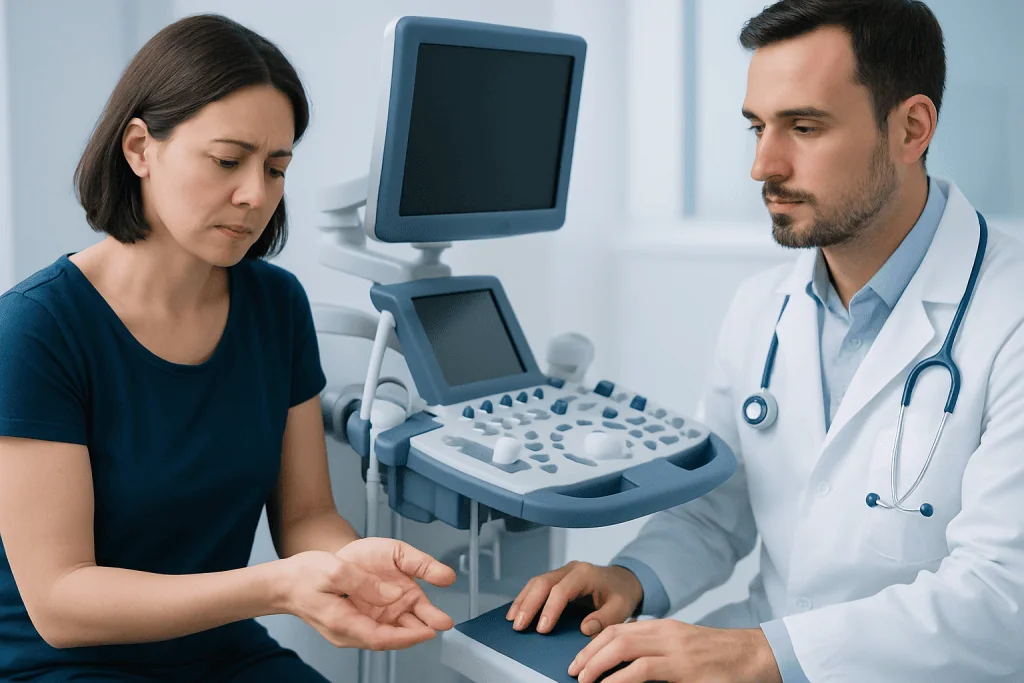
Most people do not need imaging tests to confirm trigger finger. The condition is often clear from the way the finger moves and where the pain is located. In some situations, ultrasound may be used to look at the tendon and pulley, especially if symptoms are atypical or another hand condition is also being considered.
Part of diagnosis is ruling out other causes of finger pain or stiffness. These may include arthritis of the joints, tendon injury, Dupuytren-related contracture, or nerve compression. If there is numbness, widespread joint swelling, severe trauma, or signs of infection, the doctor will consider other explanations and may request further testing.
Treatment options based on severity
Treatment depends on how severe the symptoms are, how long they have been present, and whether the finger is locking. Mild cases may improve with activity modification and avoiding repeated forceful gripping for a period of time. A splint, often worn at night, can help rest the tendon and reduce triggering. Some patients also benefit from guided stretching and hand therapy to maintain motion while reducing strain.
Doctors may suggest anti-inflammatory strategies for symptom relief, though these do not correct the mechanical problem by themselves. A corticosteroid injection into the tendon sheath is a common non-surgical treatment and can be effective, particularly in earlier stages. However, response can vary, and people with diabetes should discuss glucose effects and expected outcomes with their doctor.
If symptoms continue, recur, or the finger remains locked, a release procedure may be recommended. This involves opening or releasing the tight pulley so the tendon can glide freely again. It is typically a minor procedure performed by a hand or orthopedic specialist. In broader cases of persistent hand problems, evaluation by orthopedic specialists or, when appropriate, physical therapy and rehabilitation may support recovery and function.
When inflammatory joint disease is contributing, treatment of the underlying condition also matters. For example, people with rheumatoid arthritis may need coordinated care so both the hand symptoms and the systemic disease are addressed.
Self-care, prevention, and daily hand habits
Self-care can ease symptoms and help prevent worsening, especially in the early stages. The most useful step is often to reduce or pause activities that repeatedly strain the hand. This does not mean complete immobility, but rather making movement gentler and less repetitive while the tendon calms down.
Helpful habits include taking short breaks during gripping tasks, using larger or padded handles when possible, and alternating hands for repetitive work. Gentle range-of-motion exercises may help prevent stiffness, but forceful stretching through locking or pain is not advised. If symptoms are ongoing, a clinician or hand therapist can show safer exercises and splinting options.
- Limit repeated forceful gripping for a period of time
- Use ergonomic tools or larger handles when available
- Warm the hand before tasks if morning stiffness is a problem
- Manage underlying conditions such as diabetes or inflammatory arthritis
- Seek reassessment if self-care is not helping after a short trial
Prevention is not always possible, especially when medical conditions contribute, but reducing hand strain and treating associated diseases can lower the chance of persistent symptoms. Good control of chronic conditions may also improve treatment response.
When to seek medical care
Medical care is appropriate if a finger repeatedly catches, clicks painfully, or locks. It is especially important to be assessed if the finger cannot fully straighten, daily activities are affected, or symptoms have lasted more than a few weeks despite rest and activity changes. Earlier treatment can sometimes prevent increasing stiffness.
Urgent medical attention is needed if the hand is red, hot, very swollen, or if there is fever, sudden injury, or severe inability to move the finger, because these features can point to problems other than typical trigger finger. New numbness or widespread weakness should also be evaluated, since nerve-related conditions may need different care.
For people who need specialist evaluation, hand and musculoskeletal symptoms may be assessed through hand surgery services when a procedure is being considered. Acibadem International’s multidisciplinary specialists and JCI-accredited hospitals diagnose and treat trigger finger and related hand conditions for international patients using individualized care plans.
Frequently asked questions
Can trigger finger go away on its own?
Mild trigger finger can sometimes improve with rest, reduced gripping, and temporary splinting. However, symptoms that persist, worsen, or involve locking should be assessed by a doctor because early treatment may help prevent more stiffness.
Is trigger finger a form of arthritis?
Trigger finger is not the same as arthritis. It is mainly a tendon and pulley problem, although inflammatory conditions such as rheumatoid arthritis can increase the risk of developing it.
Who is most likely to get trigger finger?
It is more common in middle-aged adults, women, and people whose work or hobbies involve repetitive gripping. The risk is also higher in people with diabetes or inflammatory joint disease.
Do all cases of trigger finger need surgery?
No. Many cases are treated successfully with rest, splinting, hand therapy, or a corticosteroid injection. Surgery or a release procedure is usually considered when symptoms are persistent, severe, or the finger remains locked.
Why is trigger finger often worse in the morning?
After a period of rest, the tendon may move less smoothly through the tight sheath, so stiffness and catching can be more noticeable on waking. Gentle movement sometimes improves symptoms as the hand warms up.
Can trigger finger affect the thumb?
Yes. The thumb is one of the most commonly affected digits. In the thumb, people may notice pain at the base, clicking, or trouble bending and straightening it smoothly.
References
- American Academy of Orthopaedic Surgeons
- American Society for Surgery of the Hand
- National Institute of Arthritis and Musculoskeletal and Skin Diseases
- Mayo Clinic
- MedlinePlus
This article is for general information only and is not a substitute for professional medical advice. Please consult a qualified doctor about your individual situation.
Joint and spine care in Turkey — expert assessment & treatment
JCI-accredited · board-certified surgeons · reply within 24h
Add us as a Preferred Source to see more of our trusted health content across Google Search, AI Overviews and Discover.

More from the Health Library



Related Specialists

Assoc. Prof. Dr. Seher Tanrıkulu
Endocrinology
Prof. Dr. Cihan Aksoy
Physical Medicine & Rehabilitation
Pdg. Gülşah Kızıl
Podiatry & Foot Health
Dt. Gülçin Doğusal İşgüder
Dentistry