Trigger Finger: Finger Locking, Causes, and Treatment

Trigger finger occurs when a flexor tendon has difficulty gliding through its tendon sheath, often due to thickening or irritation. Typical symptoms include clicking, catching, stiffness, pain at the base of the finger, or a finger that locks in a bent position.
Key Takeaways
- Trigger finger occurs when a flexor tendon has difficulty gliding through its tendon sheath, often due to thickening or irritation.
- Typical symptoms include clicking, catching, stiffness, pain at the base of the finger, or a finger that locks in a bent position.
- Diabetes, rheumatoid arthritis, repetitive gripping, and certain hand-intensive activities can increase risk.
- Treatment may include activity changes, splinting, anti-inflammatory measures, corticosteroid injection, hand therapy, or a minor surgical release.
- A doctor should assess persistent locking, worsening pain, loss of motion, or symptoms affecting daily activities.
Trigger finger is a common hand condition in which a finger or thumb catches, clicks, or locks during movement. With timely diagnosis and appropriate care, most people can reduce discomfort and restore smoother finger motion.
Overview
Trigger finger, also called stenosing tenosynovitis, is a condition that affects the tendons that bend the fingers and thumb. A person may notice that one finger catches, clicks, or locks when trying to straighten or bend it. The ring finger and thumb are commonly affected, but any finger can develop the condition.
Finger movement depends on smooth gliding of the flexor tendons through a protective tunnel called the tendon sheath. In trigger finger, the tendon or the sheath becomes irritated and thickened. As a result, the tendon may not pass easily through a narrow area near the base of the finger, creating a catching sensation.
Although the symptoms can be frustrating, trigger finger is usually manageable. Some cases improve with rest, splinting, and reduced strain, while others require an injection or a simple procedure to release the tight sheath. Early evaluation can help prevent prolonged stiffness and guide the most suitable treatment plan.
Symptoms of Trigger Finger
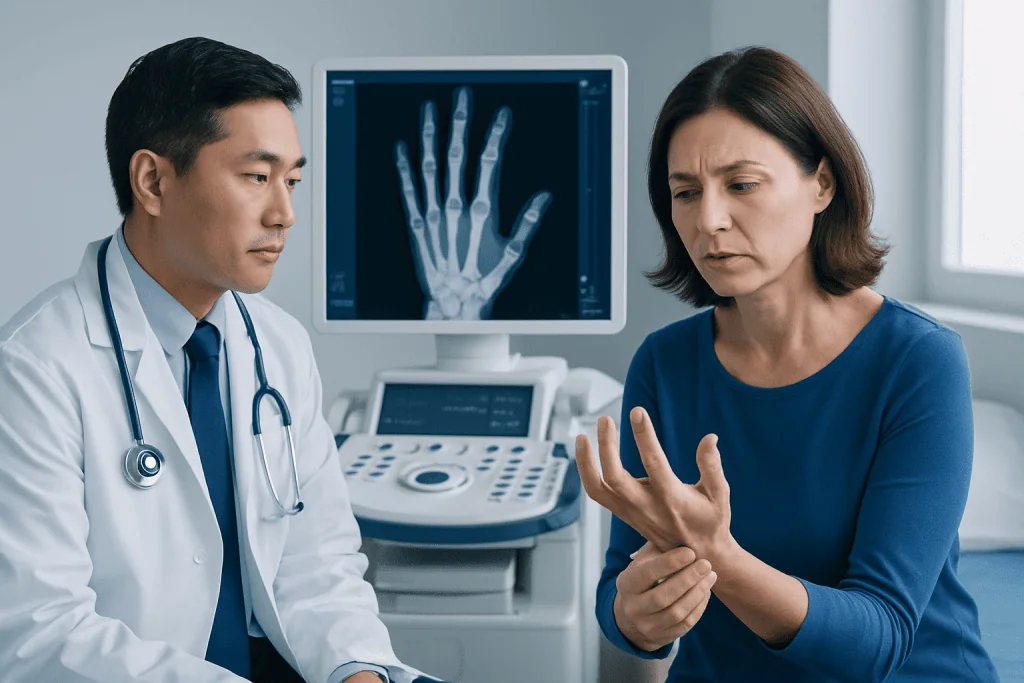
The symptoms of trigger finger may develop gradually or appear after a period of increased hand use. Many people first notice morning stiffness or a mild clicking sensation when opening and closing the hand. Over time, the catching may become more noticeable and may interfere with writing, holding a cup, using tools, or gripping objects.
Common symptoms include pain or tenderness at the base of the affected finger or thumb, especially in the palm. A small, tender bump may be felt in this area. The finger may pop or snap when straightened, and some people need to use the other hand to help release it.
In more advanced cases, the finger may lock in a bent position and then suddenly release. Occasionally, it may become stuck and difficult to straighten without assistance. Symptoms can vary from mild irritation to significant limitation, and they may worsen after repetitive gripping or forceful hand activity.
- Clicking, popping, or catching during finger movement
- Pain in the palm near the base of the finger or thumb
- Morning stiffness that improves with gentle movement
- A finger or thumb that locks in a bent position
- Reduced ability to grip, pinch, or perform fine hand tasks
Causes and Risk Factors
Trigger finger occurs when the flexor tendon or its surrounding sheath becomes inflamed, thickened, or narrowed. The tendon may develop a small swelling or nodule, making it harder to glide through the tight opening of the sheath. Each time the tendon moves through this narrowed area, it can catch and then release, creating the characteristic triggering sensation.
The exact reason this irritation begins is not always clear. In some people, it is associated with repeated gripping, prolonged use of hand tools, gardening, playing certain instruments, or work tasks that strain the fingers. However, many cases occur without a single identifiable cause.
Certain health conditions can increase the likelihood of trigger finger. People with diabetes are more prone to tendon thickening and may have more than one finger affected. Rheumatoid arthritis and other inflammatory conditions may also contribute by causing swelling around the tendons and joints.
- Diabetes or impaired glucose metabolism
- Rheumatoid arthritis or other inflammatory joint diseases
- Repeated gripping, grasping, or forceful finger use
- Previous hand or wrist conditions, including carpal tunnel syndrome
- Age-related tendon changes, especially in middle-aged and older adults
- More frequent occurrence in women than men, according to clinical experience
Diagnosis
Trigger finger is usually diagnosed through a medical history and physical examination. The doctor asks when symptoms began, which finger is affected, whether locking occurs, and whether daily activities or work tasks worsen the problem. Information about diabetes, arthritis, previous hand injuries, or other tendon conditions can also help guide diagnosis.
During the examination, the doctor may ask the patient to open and close the hand while observing the movement of the affected finger. They may gently press the palm at the base of the finger to check for tenderness, swelling, or a small nodule along the tendon. The doctor also evaluates finger motion, grip function, and whether the finger locks or releases with a snap.
Imaging tests are not usually needed for typical trigger finger. However, ultrasound, X-ray, or other tests may be considered if symptoms suggest another condition, such as arthritis, a fracture, tendon injury, or a mass. A clear diagnosis is important because treatment depends on the severity of symptoms and the patient’s overall health.
Treatment Options
Treatment for trigger finger depends on how long symptoms have been present, how severe the locking is, and how much the condition affects daily life. Mild cases may improve with conservative care. More persistent or severe cases may need a corticosteroid injection or a minor surgical procedure to allow the tendon to glide freely.
Non-surgical treatment may include reducing or modifying activities that require forceful gripping, using a splint to keep the affected finger in a resting position, and applying cold packs for short periods to ease discomfort. A doctor may recommend anti-inflammatory medication when appropriate, considering the patient’s medical history. Hand therapy can also help with gentle stretching, tendon-gliding exercises, and safe return to activity.
Corticosteroid injection is a common treatment when symptoms do not settle with basic measures. The medication is placed near the tendon sheath to reduce inflammation and swelling. Some people experience significant improvement after one injection, while others may need further evaluation if symptoms return or do not improve.
If locking is persistent, painful, or functionally limiting, surgical release may be recommended. This procedure opens the narrowed part of the tendon sheath so the tendon can glide more smoothly. It is usually performed as a short procedure, often under local anesthesia, and recovery focuses on wound care, finger movement, and gradual return to normal hand use under medical guidance.
Prevention and Self-care
Not all cases of trigger finger can be prevented, especially when underlying medical conditions are involved. However, reducing repeated strain on the fingers may help lower irritation and limit symptom flare-ups. People who use their hands intensively can benefit from taking short breaks, alternating tasks, and avoiding prolonged forceful gripping when possible.
Using ergonomic tools with larger, padded handles may reduce pressure on the flexor tendons. When lifting or carrying objects, distributing force across the whole hand rather than relying on one or two fingers can also help. For hobbies or work tasks, adjusting technique and posture may decrease repetitive stress.
Gentle range-of-motion exercises may help maintain mobility, but exercises should not be painful or force the finger through locking. If diabetes or inflammatory arthritis is present, good management of the underlying condition is an important part of overall tendon and joint health. Any splint, exercise program, or medication should be used according to a qualified clinician’s advice.
When to See a Doctor
A person should consider seeing a doctor if finger clicking or stiffness lasts more than a short time, worsens, or interferes with daily activities. Medical evaluation is especially important if the finger locks, becomes difficult to straighten, or causes persistent pain at the base of the finger or thumb. Early care may help prevent ongoing stiffness and loss of function.
People with diabetes, rheumatoid arthritis, multiple affected fingers, or recurrent symptoms should seek assessment because treatment choices may need to be individualized. A doctor can also rule out other causes of hand pain and stiffness, such as arthritis, tendon injury, nerve compression, or infection.
Urgent medical attention is needed if the hand becomes red, hot, swollen, or very painful, or if symptoms follow a significant injury. These features may suggest a different problem that requires prompt care. For international patients, Acibadem International’s multidisciplinary specialists and JCI-accredited hospitals can provide diagnosis and treatment planning for hand and orthopedic conditions, including trigger finger.
Frequently asked questions
What is trigger finger?
Trigger finger is a condition in which a finger or thumb catches, clicks, or locks during movement. It happens when the flexor tendon has trouble gliding through its tendon sheath, usually because of thickening or irritation. The medical term is stenosing tenosynovitis.
Can trigger finger go away on its own?
Mild trigger finger may improve with rest, activity modification, and splinting, especially if symptoms are recent. However, persistent locking or pain often needs medical treatment. A doctor can advise whether conservative care, injection, or another approach is most appropriate.
Is trigger finger related to arthritis?
Trigger finger is not the same as arthritis, but it can be associated with inflammatory conditions such as rheumatoid arthritis. Arthritis mainly affects joints, while trigger finger affects the tendon and tendon sheath. A clinician can distinguish these conditions during an examination.
Are corticosteroid injections safe for trigger finger?
Corticosteroid injections are commonly used for trigger finger and can reduce inflammation around the tendon sheath. As with any treatment, they may not be suitable for everyone, and possible risks should be discussed with a doctor. People with diabetes should mention their condition because steroid injections can temporarily affect blood sugar levels.
When is surgery needed for trigger finger?
Surgery may be considered when symptoms are severe, the finger repeatedly locks, or non-surgical treatments do not provide enough relief. The procedure releases the tight part of the tendon sheath to improve tendon movement. A hand or orthopedic specialist can explain expected recovery and any personal risks.
How long does recovery take after trigger finger treatment?
Recovery varies depending on the treatment used and the severity of the condition. After an injection, improvement may occur gradually, while after surgery, finger movement is usually encouraged early under medical guidance. Full comfort and strength may take longer, particularly if stiffness has been present for a long time.
References
- American Academy of Orthopaedic Surgeons
- American Society for Surgery of the Hand
- Mayo Clinic
- National Health Service
- Cleveland Clinic
This article is for general information only and is not a substitute for professional medical advice. Please consult a qualified doctor about your individual situation.
Joint and spine care in Turkey — expert assessment & treatment
JCI-accredited · board-certified surgeons · reply within 24h
Add us as a Preferred Source to see more of our trusted health content across Google Search, AI Overviews and Discover.

Orthopedics & Spine
Care for bones, joints and the musculoskeletal system, including joint replacement, sports injuries and trauma.
125 specialists in this unit