Tumor Staging: A Complete Medical Overview

Tumor staging explains how advanced a cancer is at the time of diagnosis or after treatment. Many cancers use the TNM system, which looks at the primary tumor, lymph nodes, and distant spread.
Key Takeaways
- Tumor staging explains how advanced a cancer is at the time of diagnosis or after treatment.
- Many cancers use the TNM system, which looks at the primary tumor, lymph nodes, and distant spread.
- Stage is different from grade: stage describes extent, while grade describes how abnormal cancer cells look.
- Staging may involve imaging, lab tests, endoscopy, biopsy, and sometimes surgery.
- Accurate tumor staging helps guide treatment decisions, follow-up plans, and communication among specialists.
Tumor staging is the medical process used to describe the size of a tumor, whether nearby lymph nodes are involved, and whether cancer has spread to other parts of the body. It helps doctors choose treatment, estimate outlook, and compare results across patients in a consistent way.
What tumor staging means
Tumor staging is the way doctors describe how much cancer is present in the body. In simple terms, it answers questions such as: How big is the tumor? Has it grown into nearby tissues? Are lymph nodes involved? Has it spread to distant organs? These details are important because they shape the next steps in care.
For many people, the word “stage” can feel overwhelming. Medically, however, staging is a practical tool. It helps the care team use a shared language, compare similar cases, and choose treatments that fit the cancer’s extent. It also helps researchers evaluate which approaches work best for particular groups of patients.
Tumor staging is not exactly the same for every cancer. Some cancers follow well-known systems such as TNM, while others use disease-specific approaches. Blood cancers, for example, are staged differently from solid tumors. This is why a doctor explains stage in the context of the exact cancer type, not as a one-size-fits-all label.
Why staging matters in cancer care
Staging matters because treatment depends not only on the cancer type, but also on where it is and how far it has spread. A small, localized tumor may be managed differently from a cancer that has reached lymph nodes or distant organs. In many cases, stage helps determine whether surgery, radiation therapy, systemic medicines, or a combination of treatments is most appropriate.
It also helps doctors discuss prognosis in a clearer way. Prognosis means the likely course of a disease over time. While no stage can predict exactly what will happen for one person, it gives a structured starting point for understanding risk, expected response to treatment, and follow-up needs.
Another reason staging matters is coordination. Cancer care often involves several specialists, such as surgeons, medical oncologists, radiation oncologists, radiologists, and pathologists. A defined stage helps the multidisciplinary team communicate efficiently and plan care together. When needed, patients may be evaluated for options such as medical oncology care or radiation oncology.
How doctors stage a tumor

Doctors usually gather stage information from several sources rather than from one test alone. The process begins with a medical history and physical examination, followed by tests chosen for the suspected cancer type. These may include blood tests, imaging scans, endoscopy, and tissue sampling.
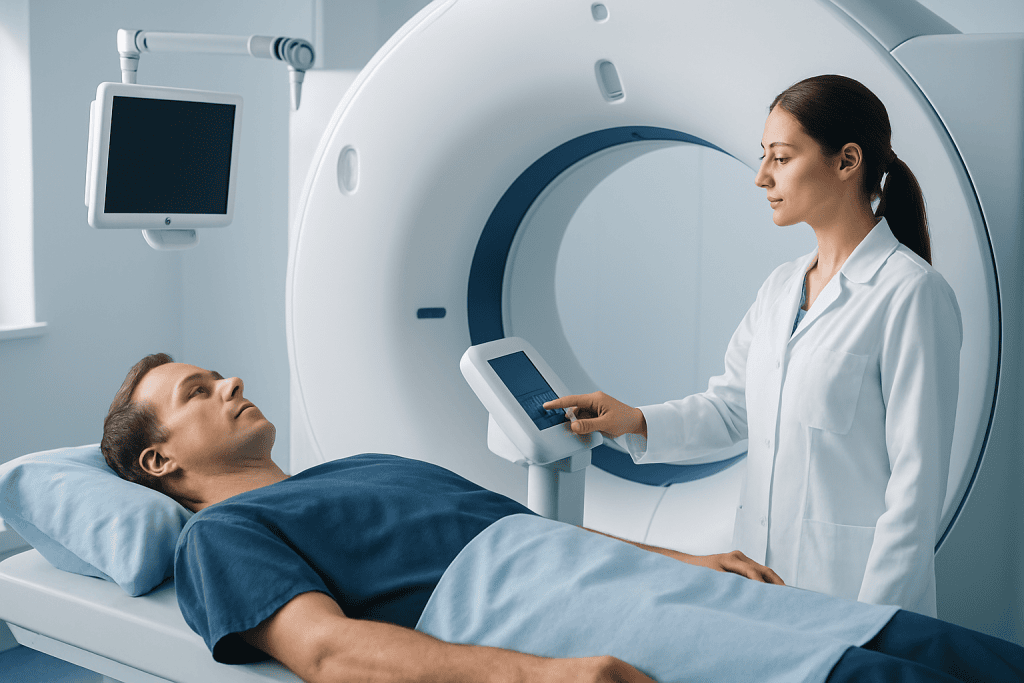
Imaging often plays a central role. Tests such as ultrasound, CT, MRI, PET-CT, bone scan, or chest imaging can help show the tumor’s size, its relationship to nearby structures, and whether there are signs of spread elsewhere. Different scans are useful for different organs, so the choice depends on the clinical situation.
A biopsy is often needed to confirm the diagnosis and can also provide clues that influence staging and treatment. Under the microscope, a pathologist identifies the cancer type and may report features such as grade, invasion, or receptor status. For some cancers, surgery provides the most accurate stage because the surgeon can remove tissue and lymph nodes for detailed examination. This may include diagnostic or therapeutic approaches such as biopsy procedures or surgical oncology.
- Clinical stage: based on exams, imaging, and biopsy before treatment.
- Pathologic stage: based on what is found after surgery and tissue analysis.
- Post-treatment stage: used after therapies such as chemotherapy or radiation to describe remaining disease.
The TNM system and stage groups
Many solid tumors are staged using the TNM system. In this framework, T refers to the primary tumor, including its size and whether it has grown into nearby tissues. N refers to regional lymph nodes and whether cancer is found there. M refers to metastasis, meaning spread to distant organs such as the liver, lungs, bones, or brain.
Each letter is paired with a number or descriptor. For example, a lower T number usually means a smaller or less invasive tumor, while a higher T number suggests greater local extent. N categories range from no lymph node involvement to more extensive nodal disease. M is often recorded as either absent or present, though some cancers have more detailed metastatic categories.
After TNM details are collected, they may be grouped into an overall stage, often from Stage 0 to Stage IV. In general, lower stages usually describe more localized disease, while Stage IV usually means distant spread. Still, this pattern is not identical in every cancer. A Stage II cancer in one organ is not directly comparable to a Stage II cancer in another organ, which is why specialists interpret stage within the specific diagnosis such as cancer.
Doctors may also use additional letters or terms. For instance, “c” can indicate clinical staging and “p” pathologic staging. Recurrent cancer means cancer has come back after treatment. Restaging may be done if the disease returns or changes over time.
Stage, grade, and other terms that are often confused
People often hear several medical terms around the same time, and they can sound similar. Stage describes where the cancer is and how far it has spread. Grade, by contrast, describes how abnormal the cancer cells look under the microscope and how quickly they may be behaving. A high-grade tumor is not automatically the same as a high-stage cancer.
Another term is “localized,” which generally means the cancer appears limited to where it started. “Regional” often means nearby tissues or lymph nodes are involved. “Metastatic” means the cancer has spread to distant sites. These categories are broader than full staging, but they can be helpful in discussion.
Molecular or biomarker testing is different again. Some cancers are assessed for gene changes, hormone receptors, proteins, or other biological markers. These findings may strongly affect treatment choices even when the stage is the same. For example, two tumors of the same stage may be managed differently if their biology differs.
This is one reason modern cancer care goes beyond stage alone. Doctors combine staging with pathology, biomarkers, overall health, age, symptoms, and patient preferences. Together, these factors create a more complete picture for treatment planning.
What staging can and cannot tell a patient
Staging can give patients and families a clearer framework for understanding the diagnosis. It helps explain why one person may be offered surgery first while another may start with chemotherapy, immunotherapy, targeted therapy, or radiation. It can also help clarify the goal of treatment, such as cure, disease control, symptom relief, or prevention of recurrence.
At the same time, staging has limits. It does not guarantee how an individual cancer will behave, and it does not fully capture differences in tumor biology. People with the same stage can have different responses to treatment based on the cancer subtype, genetic features, and general health.
Staging may also change as more information becomes available. A scan can suggest one stage, but surgery or pathology may refine it. In some cases, treatment given before surgery can shrink a tumor, and doctors then use a post-treatment stage to record what remains. This does not mean the original information was wrong; it reflects a more complete understanding over time.
Because cancer care can be complex, many patients find it helpful to ask their doctor to explain the exact stage in plain language. Questions such as what the letters and numbers mean, whether lymph nodes are involved, and whether the stage was determined clinically or pathologically can make consultations easier to follow.
How tumor staging guides treatment and follow-up
Once stage is defined, the care team uses it to build a treatment plan. Early-stage cancers may sometimes be treated with one main therapy, often surgery or radiation, depending on the tumor type and location. More advanced stages may need combined treatment, such as surgery plus chemotherapy, radiation, targeted therapy, or immunotherapy.
Staging also influences whether treatment is aimed at the entire body or focused on one area. If disease appears confined, local treatment may be emphasized. If there is evidence of spread, systemic treatment is often important because it can reach cancer cells throughout the body. Follow-up schedules are also shaped by stage, with different imaging, clinic visits, and monitoring plans depending on recurrence risk.
In some situations, a patient may hear about a tumor board or multidisciplinary review. This means several specialists discuss the case together before recommending a plan. For people seeking care across borders, Acibadem International’s multidisciplinary specialists in JCI-accredited hospitals diagnose and treat cancer for international patients, with staging and treatment decisions coordinated across teams.
Doctors may also watch for conditions related to spread or recurrence in particular organs. For instance, if a cancer affects or spreads to the liver, evaluation may overlap with broader information on liver cancer or other organ-specific disease pathways. The exact treatment plan always depends on the original cancer type and the stage at that point in care.
When to seek medical care
A person should seek medical care if they have a new lump, unexplained weight loss, unusual bleeding, persistent pain, a lasting change in bowel or bladder habits, a cough that does not improve, or ongoing fatigue without a clear reason. These symptoms do not always mean cancer, but they deserve assessment if they persist, recur, or worsen.
Medical review is also important when a test has already suggested a tumor or when a biopsy has confirmed cancer. Prompt staging helps avoid unnecessary delays in treatment planning. If symptoms are severe, rapidly changing, or affecting breathing, swallowing, neurological function, or the ability to eat and drink, urgent evaluation is appropriate.
Patients who have already been treated for cancer should contact their doctor if new symptoms appear during follow-up. A care team can decide whether these changes are related to treatment effects, recurrence, or another condition entirely. Early communication often makes the next steps clearer and more manageable.
Frequently asked questions
What is tumor staging in simple terms?
Tumor staging is a way doctors describe how much cancer is in the body. It usually considers the size of the tumor, whether nearby lymph nodes are involved, and whether the cancer has spread to distant organs.
Is tumor stage the same as cancer grade?
No. Stage describes the extent or spread of the cancer, while grade describes how abnormal the cancer cells look under a microscope. Both matter, but they answer different questions and can affect treatment in different ways.
Can the stage change after surgery?
Yes. Before treatment, doctors often assign a clinical stage based on exams, imaging, and biopsy results. After surgery, the pathologic stage may be more precise because removed tissue and lymph nodes can be examined directly.
Does Stage IV always mean there is no treatment?
No. Stage IV usually means the cancer has spread to distant parts of the body, but treatment is often still possible and may help control disease, relieve symptoms, or sometimes achieve long periods of remission. The best approach depends on the cancer type, its biology, and the person’s overall health.
Why are scans and biopsies both needed for tumor staging?
Scans show where the tumor is, how large it may be, and whether there are signs of spread. A biopsy confirms the diagnosis and identifies the cancer type, which is essential because treatment and staging rules differ among cancers.
Can two people with the same tumor stage have different treatments?
Yes. Stage is one important factor, but doctors also consider the tumor’s grade, biomarkers, exact location, symptoms, previous treatments, and the patient’s general health. Because of this, treatment can differ even when the stage is similar.
References
- National Cancer Institute
- American Joint Committee on Cancer
- World Health Organization
- American Cancer Society
- National Comprehensive Cancer Network
This article is for general information only and is not a substitute for professional medical advice. Please consult a qualified doctor about your individual situation.
Oncology care in Turkey — second opinion and treatment plan
JCI-accredited · board-certified surgeons · reply within 24h
Add us as a Preferred Source to see more of our trusted health content across Google Search, AI Overviews and Discover.