Turkey teeth Recovery: Week-by-Week Timeline

Recovery depends on whether treatment involves veneers, crowns, implants, extractions, gum procedures, or a combination of treatments. Mild sensitivity, gum tenderness, and adapting to the bite are common after crowns or veneers and usually improve over days to weeks.
Key Takeaways
- Recovery depends on whether treatment involves veneers, crowns, implants, extractions, gum procedures, or a combination of treatments.
- Mild sensitivity, gum tenderness, and adapting to the bite are common after crowns or veneers and usually improve over days to weeks.
- Many patients return to desk-based work within one to three days, while strenuous exercise may need to wait longer after surgery or extractions.
- Good aftercare includes gentle oral hygiene, following food guidance, wearing a night guard if prescribed, and attending follow-up appointments.
- Increasing pain, swelling, fever, persistent bleeding, a loose restoration, or a bite that feels significantly wrong needs prompt dental assessment.
Turkey teeth recovery varies with the dental treatment performed, such as veneers, crowns, implants, or treatment for gum disease. Most people can resume light daily activities quickly, but comfort, gum healing, and adjustment to the new bite can continue for several weeks.
Turkey Teeth Recovery: What to Expect
Turkey teeth recovery refers to the healing and adjustment period after cosmetic or restorative dental care undertaken in Turkey. The phrase is often used broadly, but the experience differs substantially depending on whether a person has received veneers, crowns, dental implants, gum treatment, root canal treatment, or tooth extractions. A personalised plan from the treating dentist is therefore more reliable than a generic timeline.
After non-surgical crown or veneer treatment, many people feel well enough for routine daily activities within a few days. Temporary sensitivity to hot, cold, pressure, or chewing is common while the teeth and gums settle. If surgery, extractions, or implants are involved, recovery may take longer because the gum and bone also need to heal.
The aim of recovery is not only for discomfort to resolve, but also for the restorations to feel natural, the bite to be balanced, and oral tissues to remain healthy. For an overview of assessment and planning for this type of treatment, see Turkey teeth treatment.
How the Procedure Works and Who May Be Suitable
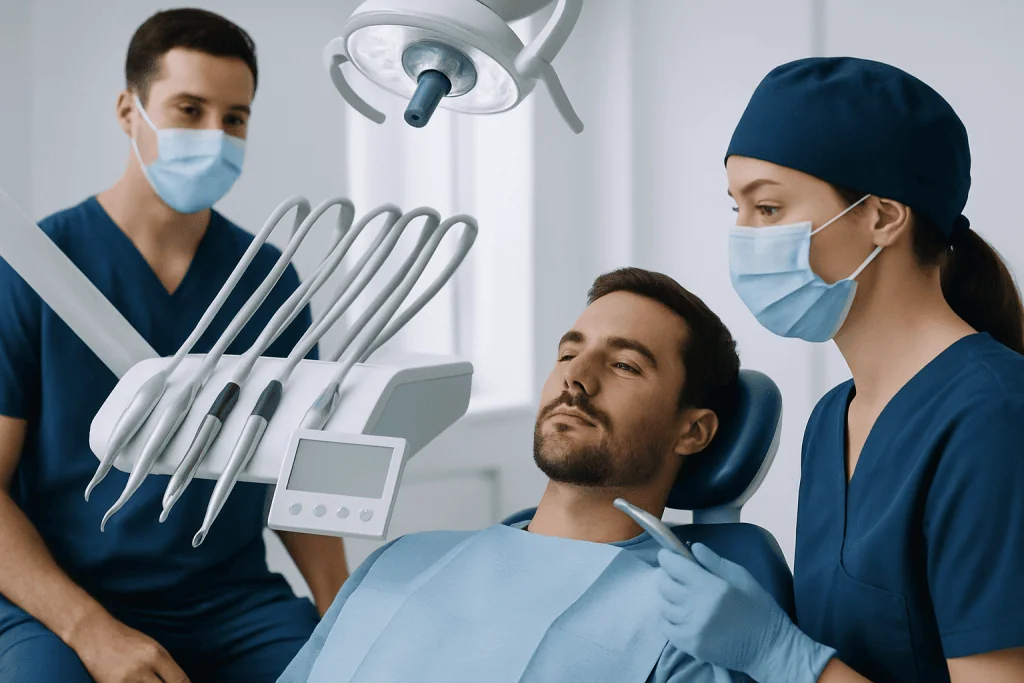
“Turkey teeth” is not a clinical diagnosis or one single procedure. It may describe a smile makeover using porcelain veneers or dental crowns, sometimes alongside whitening, gum contouring, fillings, root canal treatment, or replacement of missing teeth. Veneers are thin shells bonded to the front of selected teeth. Crowns cover the entire visible portion of a prepared tooth and may be recommended when a tooth is significantly worn, weakened, heavily filled, or already root-treated.
Suitability depends on the health of the teeth, gums, bite, jaw joint, and supporting bone. A dentist should assess for untreated decay, active gum disease, cracked teeth, tooth grinding, and infection before cosmetic restorations are planned. X-rays, photographs, scans, and a bite assessment may be used to support safe treatment decisions.
People with healthy gums and sufficient natural tooth structure may be candidates for veneers or crowns. Those with uncontrolled gum disease, active infection, severe tooth grinding without protection, or complex bite concerns may need treatment or stabilisation first. Missing teeth may require a separate plan, potentially including dental implant treatment, before a final smile restoration is completed.
Typical Steps in Crown or Veneer Treatment
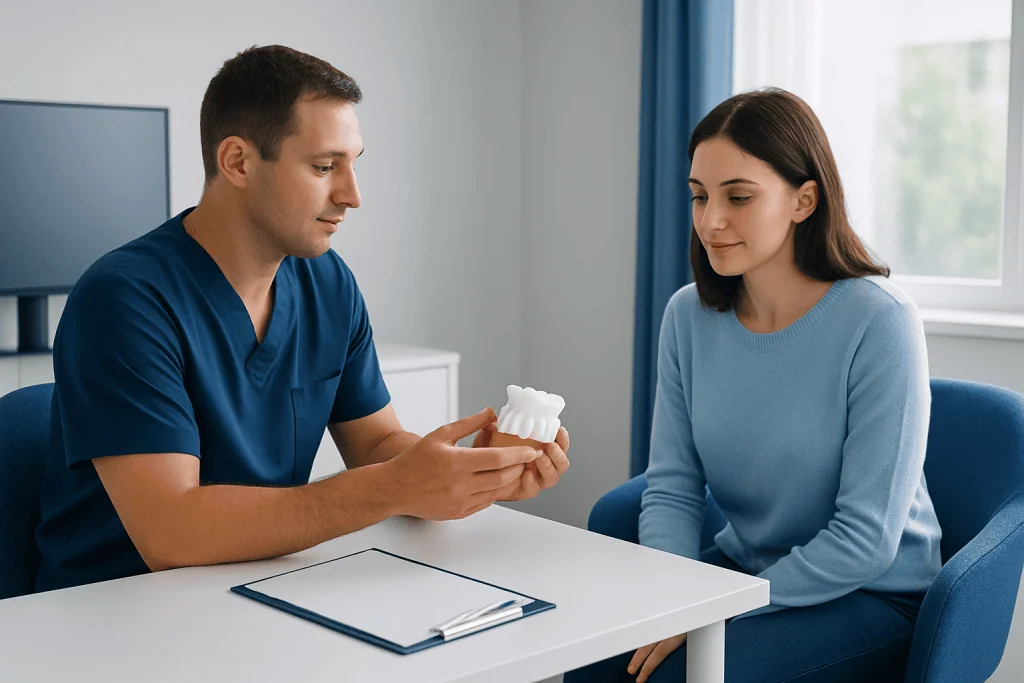
Planning usually begins with a consultation, medical and dental history, clinical examination, imaging where needed, and discussion of the person’s goals. The dentist should explain the alternatives, likely tooth preparation, expected longevity, possible complications, and the care needed after treatment. A diagnostic design or temporary mock-up may help the patient understand the planned shape and appearance.
For crowns, the dentist gently reshapes the tooth to create room for the restoration. For veneers, preparation may be minimal in some cases but can still involve removing a small amount of enamel; the amount depends on the tooth position and planned result. Impressions or digital scans are taken, and temporary restorations may be fitted while the final crowns or veneers are made.
At the fitting visit, the dentist checks colour, shape, contact points, and bite before bonding or cementing the final restoration. Small bite adjustments can be needed after treatment. If several teeth have been restored, adapting to changes in tooth shape and bite may take time, and a review appointment is important if chewing feels uneven or uncomfortable.
When root canal treatment, gum procedures, extractions, or implant surgery are part of the plan, the dentist may stage treatment over more than one visit. These procedures have their own healing requirements and may extend the overall recovery period.
Turkey Teeth Recovery Timeline: Week by Week
Day 0 to day 3: Following crowns or veneers, the mouth may feel unfamiliar and the gums may be mildly sore, particularly if they were retracted during the procedure. Local anaesthetic can leave the lips, cheeks, or tongue numb for several hours, so it is sensible to avoid chewing until normal feeling returns. Choose softer foods if chewing feels tender, and follow the dentist’s advice about pain relief and cleaning.
Days 4 to 7: Mild sensitivity and gum tenderness often begin to improve. Many people can eat a more normal diet, although very hard, sticky, or crunchy foods should be approached cautiously until the bite feels comfortable. A desk-based return to work is often possible within one to three days after non-surgical treatment, provided the person feels well. After extractions or surgery, work plans should be guided by the procedure and the clinician’s advice.
Week 2: The gums commonly look calmer and the teeth usually feel more familiar. A small amount of temperature sensitivity can persist, especially if teeth were prepared for crowns. If the teeth touch too soon, chewing causes repeated discomfort, or the jaw feels strained, a bite review may be needed rather than waiting for symptoms to settle on their own.
Weeks 3 to 6: Most adjustment after straightforward veneer or crown treatment should be largely complete. The person should be able to brush and floss comfortably and chew without ongoing pain. If implants, gum surgery, or extraction sites are involved, deeper healing continues for weeks to months, even after outward swelling has resolved.
Longer term: Restorations need regular professional review and home care. Brushing twice daily with fluoride toothpaste, cleaning between the teeth, and attending dental examinations help protect the margins of crowns and veneers from decay and gum inflammation. People who clench or grind may be advised to use a custom night guard.
Returning to Work, Exercise, and Everyday Activities
After crowns or veneers without surgery, many people can travel locally, work at a computer, and manage normal light activities shortly after treatment. It may be helpful to keep the first day relatively quiet, particularly if several teeth were treated or sedation was used. Anyone who has received sedation should not drive, make important decisions, or return to work requiring full concentration until the effects have fully worn off and the treating team confirms it is safe.
Light walking is generally reasonable when the person feels well. After dental implant placement, tooth extraction, gum surgery, or other surgical care, strenuous exercise, heavy lifting, swimming, and contact sports are often postponed initially because they can increase bleeding, swelling, or discomfort. The exact return-to-exercise timing should come from the treating dentist or oral surgeon because it depends on the procedure and healing progress.
For the first few days after non-surgical restorations, avoid using the front teeth to bite hard foods such as ice, nuts, hard candy, or packaging. If temporary restorations are in place, sticky foods may dislodge them. Alcohol and tobacco can interfere with healing after surgical treatment, and stopping smoking supports oral and general health.
Patients travelling home after dental care should arrange follow-up with their local dentist if recommended. It is useful to take copies of treatment records, radiographs where available, details of restoration materials, and instructions for temporary or final restorations.
Benefits, Limitations, and Possible Risks
Well-planned crowns and veneers can improve the appearance of discoloured, worn, chipped, uneven, or damaged teeth. Crowns can also strengthen teeth that have lost significant structure. The benefits depend on careful diagnosis, appropriate material selection, healthy gums, a stable bite, and good long-term oral hygiene.
It is important to understand the limitations. Crown preparation is irreversible because tooth structure is removed. Veneers may also require enamel reduction and may not be suitable for every tooth. Neither treatment makes teeth immune to decay, gum disease, fracture, or damage from grinding. Restorations can eventually require repair or replacement.
Possible complications include temporary or persistent sensitivity, gum inflammation, bite discomfort, chipping, loosening, fracture, decay at restoration edges, and the need for root canal treatment in a tooth that becomes inflamed after preparation. Surgical procedures carry additional risks such as bleeding, infection, swelling, delayed healing, and, in some cases, altered sensation. A clinician should discuss individual risks before treatment.
Seeking care from appropriately qualified dental professionals, allowing sufficient time for planning and review, and avoiding treatment that is not clinically necessary can reduce avoidable risks. If gum disease is identified, it should be managed before cosmetic restorations; read more about gum disease and why gum health matters.
Aftercare and When to Seek Medical Care
Aftercare should follow the dental team’s written instructions. Gentle brushing with a soft toothbrush, daily cleaning between the teeth, and fluoride toothpaste are commonly advised. Do not stop cleaning around crowns or veneers because plaque can collect at the gumline and restoration margins. If a dentist recommends a night guard, wearing it consistently can help protect restorations from grinding-related stress.
A mild ache or sensitivity that steadily improves can be expected after some dental procedures. Contact the treating dentist promptly if pain is severe, worsening, or lasts longer than expected; if swelling increases after initially improving; or if there is fever, pus, persistent bleeding, trouble swallowing, or difficulty breathing. Urgent medical assessment is needed for breathing difficulty, rapidly spreading facial or neck swelling, or signs of a serious allergic reaction.
A dental review is also appropriate if a crown or veneer feels loose, cracks, falls off, has a sharp edge, or causes a bite that feels noticeably high or uneven. Do not attempt to glue a restoration back in place at home. A local dentist can provide urgent assessment if the original dental team is not nearby.
Acibadem International’s multidisciplinary specialists and JCI-accredited hospitals diagnose and treat dental concerns for international patients, with follow-up recommendations tailored to the procedure and individual recovery needs.
Frequently asked questions
How long does turkey teeth recovery take?
After uncomplicated crowns or veneers, many people return to routine daily activities within a few days. Gum tenderness and sensitivity may take one to two weeks to settle, while adapting fully to a changed bite can take several weeks. Recovery is longer if treatment includes extractions, implants, gum surgery, or infection treatment.
Can a person return to work after crowns or veneers?
Many people can return to desk-based work the next day or within a few days after non-surgical treatment. The timing may be different after sedation, extensive treatment, surgery, or extraction. The treating dentist should provide individual advice based on the procedures performed and the person’s job demands.
When can exercise resume after dental treatment?
Light activity may be possible soon after non-surgical crowns or veneers if the person feels well. Strenuous exercise is often delayed after an extraction, implant placement, or gum surgery because it may worsen bleeding, swelling, or discomfort. The dental surgeon’s specific instructions should be followed.
Is sensitivity normal after crowns or veneers?
Brief sensitivity to temperature, air, or biting pressure can occur after teeth are prepared and restorations are fitted. It should gradually improve rather than worsen. Persistent, severe, throbbing, or spontaneous pain should be assessed by a dentist.
What foods should be avoided during recovery?
Soft foods may be more comfortable for the first few days, especially when gums are tender. Very hard foods, ice, sticky sweets, and biting directly into hard items can damage temporary restorations or place excess pressure on new crowns and veneers. The dentist may give more specific dietary advice after surgical treatment.
What should a person do if a crown or veneer comes off after returning home?
The restoration should be kept safely and a dentist should be contacted as soon as possible. It should not be glued back using household adhesive, as this can damage the tooth or make professional replacement harder. A local dentist can assess the tooth, protect it if necessary, and advise on re-cementation or repair.
References
- American Dental Association
- National Institute of Dental and Craniofacial Research
- NHS
- European Federation of Periodontology
This article is for general information only and is not a substitute for professional medical advice. Please consult a qualified doctor about your individual situation.
Explore treatments in Turkey — costs, top hospitals & a free quote
JCI-accredited · board-certified surgeons · reply within 24h
Add us as a Preferred Source to see more of our trusted health content across Google Search, AI Overviews and Discover.