Ultherapy: A Complete Medical Overview

Ultherapy uses focused ultrasound energy to stimulate collagen production beneath the skin. It is commonly used to improve mild to moderate skin laxity on the face, neck, jawline, and brow.
Key Takeaways
- Ultherapy uses focused ultrasound energy to stimulate collagen production beneath the skin.
- It is commonly used to improve mild to moderate skin laxity on the face, neck, jawline, and brow.
- Results are usually gradual, appearing over weeks to months rather than immediately.
- The procedure is not a substitute for surgical lifting when skin sagging is advanced.
- Temporary redness, swelling, tenderness, or tingling can occur after treatment.
- A qualified doctor should assess skin type, goals, and medical history before treatment.
Ultherapy is a non-surgical cosmetic procedure that uses focused ultrasound energy to lift and tighten certain areas of the skin. It is most often used on the face, neck, and under the chin, with results that develop gradually as the body produces new collagen.
What Is Ultherapy?
Ultherapy is a non-surgical procedure that uses focused ultrasound energy to target deeper layers of tissue under the skin. Its purpose is to stimulate the body’s natural collagen-building response, which can gradually improve skin firmness and create a mild lifting effect. It is best known as a treatment for mild to moderate skin laxity rather than a replacement for cosmetic surgery.
The treatment is commonly used on the brow area, under the chin, along the jawline, and on the neck. In some cases, it may also be used on the upper chest area to improve the appearance of lines and loose skin. Because it works below the skin surface without cutting or injections into deeper tissues, recovery time is usually limited compared with surgery.
One feature that distinguishes ultherapy from many other aesthetic procedures is the use of ultrasound imaging during treatment. This allows the clinician to visualize the tissue layers and place energy at specific depths. That added precision helps guide treatment planning and supports a more individualized approach.
How Ultherapy Works
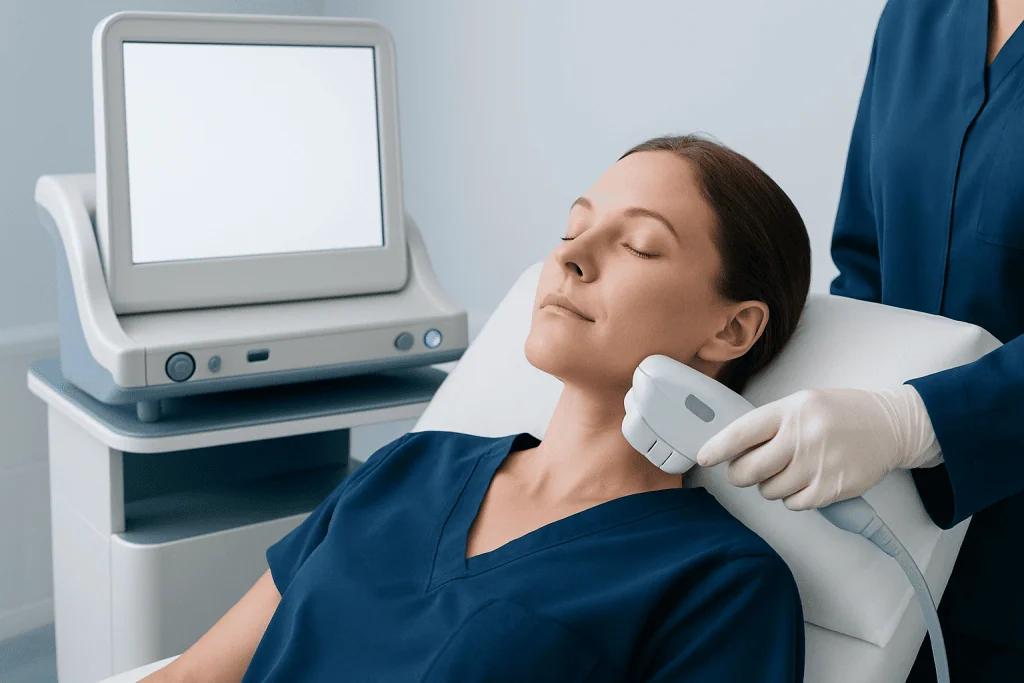
Ultherapy delivers focused ultrasound energy to selected tissue depths beneath the skin. The heat created at these precise points triggers a healing response, encouraging the formation of new collagen over time. Collagen is a structural protein that helps skin stay firm, elastic, and supported.
Unlike treatments that mainly target the skin surface, ultherapy aims deeper support structures while leaving the outer layer of skin largely intact. This is why results usually appear gradually rather than immediately. Most people notice subtle changes first, followed by continued improvement over two to three months, with some changes continuing beyond that period.
Because ultherapy relies on the body’s own repair mechanisms, outcomes can vary from person to person. Age, baseline skin laxity, collagen quality, and general skin health all affect the final result. For people interested in broader facial rejuvenation, a doctor may discuss whether ultherapy should be used alone or as part of a more comprehensive plan such as plastic surgery or other skin-focused procedures.
Who May Benefit and What Areas Can Be Treated

Ultherapy is generally considered for adults who have mild to moderate looseness of the skin and want a non-surgical option. Typical concerns include a softening jawline, mild drooping under the chin, a lowered brow, or early neck laxity. The treatment is often chosen by people who are not ready for surgery or who prefer little downtime.
It is important to have realistic expectations. Ultherapy can create a modest lifting and tightening effect, but it does not remove excess skin the way surgery can. It usually works best when skin laxity is still relatively limited and the underlying tissue quality remains reasonably good.
Common treatment areas include:
- Brow area, to create a subtle lifting effect
- Under the chin and along the jawline
- Front and sides of the neck
- Upper chest or décolletage, to improve lines and texture
A careful assessment is especially helpful when concerns overlap with other skin conditions. For example, changes in firmness may occur alongside pigmentation, scarring, or acne-related concerns, and those may need separate evaluation such as for acne or other dermatologic issues.
What to Expect Before, During, and After the Procedure
Before treatment, the clinician usually reviews the person’s medical history, skin concerns, and cosmetic goals. The skin is examined to determine whether the degree of laxity is suitable for ultherapy and to identify areas that may respond best. Photographs may be taken to help compare progress over time.
During the procedure, ultrasound gel is applied and a handheld device is placed on the skin. The clinician uses imaging to identify the right tissue depth, then delivers energy in a planned pattern. People often describe the sensation as brief heat, tingling, or small pulses of discomfort as the energy is delivered. The intensity varies depending on the treatment area and individual sensitivity.
Afterward, many people return to normal activities the same day. Mild redness, swelling, tenderness, or a tingling sensation can occur and usually settle over time. There is often no need for special dressings or extended recovery, although the doctor may advise gentle skincare and sun protection while the skin settles.
Some people seek a treatment plan that combines skin tightening with contouring or repair of deeper age-related changes. Depending on the findings, a specialist may explain whether face lift surgery or neck lift would better match the desired outcome when sagging is more pronounced.
Benefits, Limitations, and Possible Side Effects
The main benefit of ultherapy is that it offers a non-surgical approach to skin lifting and tightening with little downtime. It does not require incisions, and results develop through the body’s own collagen response. For suitable candidates, this can make the treatment appealing when the goal is subtle, natural-looking improvement.
Its limitations are just as important to understand. Ultherapy does not provide the same degree of correction as surgery, and it is not ideal for severe skin laxity or heavy tissue descent. The changes are usually gradual and moderate, so people expecting dramatic reshaping may be disappointed if they are not selected carefully.
Possible side effects are usually temporary and may include redness, swelling, tenderness, bruising, tingling, numbness, or sensitivity when touching the treated area. Rarely, temporary nerve irritation or changes in sensation may occur. This is one reason the procedure should be performed by a properly trained medical professional who understands facial and neck anatomy.
For broader age-related changes, a doctor may also assess whether other concerns such as skin cancer warning signs, unusual lesions, or persistent skin changes need medical evaluation before proceeding with a cosmetic treatment.
How Doctors Assess Suitability and Compare Options
Choosing the right treatment starts with understanding the concern clearly. A doctor looks at skin thickness, laxity, facial structure, age-related tissue descent, and overall skin quality. They also ask about previous aesthetic procedures, medications, pregnancy status, implanted devices if relevant, and any history of unusual scarring or nerve sensitivity.
Ultherapy is one option among several approaches to rejuvenation. Depending on the main issue, alternatives may include surface treatments for texture, injectables for volume loss, or surgery for significant sagging. A person whose main concern is dynamic wrinkles, pigmentation, or deep folds may benefit from a different plan than someone whose main issue is mild lifting of the lower face or neck.
This step is valuable because skin aging has many components, including collagen loss, fat redistribution, sun damage, and changes in muscle and support tissues. A personalized evaluation helps match the treatment to the underlying cause rather than choosing a procedure based only on name recognition.
Self-care, Long-term Results, and When to Seek Medical Care
Results from ultherapy are not permanent because the skin continues to age naturally. Many people maintain their results best with ongoing sun protection, a gentle skincare routine, healthy lifestyle habits, and follow-up reviews with their clinician. Avoiding smoking and protecting the skin from ultraviolet exposure can support collagen health over time.
Practical self-care after treatment usually includes keeping the skin clean, avoiding excessive friction, and following any specific aftercare instructions given by the treating team. If there is mild tenderness or swelling, the clinician may suggest simple comfort measures. It is wise to avoid introducing new active skincare products immediately unless approved by the doctor.
Medical advice should be sought if symptoms seem unusual or do not improve as expected. A person should contact their clinician promptly if they develop severe pain, marked swelling, blistering, persistent numbness, facial weakness, signs of infection, or any symptom that feels concerning. Anyone considering ultherapy should also arrange a medical consultation if they are pregnant, have significant skin disease in the treatment area, or are unsure whether their goals are better met by another procedure.
For international patients, Acibadem International’s multidisciplinary specialists and JCI-accredited hospitals evaluate skin concerns and offer appropriate treatment planning when procedures such as ultherapy or related aesthetic options are being considered.
Frequently asked questions
Is ultherapy the same as a facelift?
No. Ultherapy is a non-surgical ultrasound treatment that can produce a mild lifting and tightening effect, while a facelift is an operation designed to reposition deeper tissues and remove excess skin. People with more advanced sagging usually need surgical assessment if they want a stronger result.
How long does it take to see results from ultherapy?
Results usually appear gradually because the treatment works by stimulating collagen production. Some people notice early changes within a few weeks, but clearer improvement often develops over two to three months and may continue beyond that.
Does ultherapy hurt?
Comfort levels vary. Many people feel brief heat, tingling, or small pulses of discomfort during treatment, especially when energy is delivered to deeper tissue levels. The treating clinician may use measures to improve comfort depending on the area being treated and individual sensitivity.
Who is a good candidate for ultherapy?
The best candidates usually have mild to moderate skin laxity and want a non-surgical option with limited downtime. It is often considered for concerns involving the brow, jawline, under-chin area, neck, or upper chest. A doctor should confirm whether the skin changes are suitable for this approach.
Are there risks or side effects after ultherapy?
Temporary redness, swelling, tenderness, bruising, or tingling can occur after treatment. These effects are often mild and settle over time. Rarely, there may be temporary nerve irritation or changes in sensation, which is why treatment should be performed by a qualified professional.
How long do ultherapy results last?
Results vary because aging continues and collagen production differs from person to person. Many people enjoy improvement for months to a year or longer, but maintenance planning may be discussed depending on the individual’s skin and goals. Good sun protection and healthy skincare habits can help support longer-lasting results.
This article is for general information only and is not a substitute for professional medical advice. Please consult a qualified doctor about your individual situation.
Explore treatments in Turkey — costs, top hospitals & a free quote
JCI-accredited · board-certified surgeons · reply within 24h
Add us as a Preferred Source to see more of our trusted health content across Google Search, AI Overviews and Discover.

More from the Health Library

Signs of UTI in Women: Procedure, Recovery and Results

Spermatic Cord: An Evidence-Based Guide for Patients

Widowmaker heart attack: Symptoms, Causes, and Treatment — Complete Patient Guide

Vegan Collagen: An Evidence-Based Guide for Patients

Emulsifier: An Evidence-Based Guide for Patients