Under Eye Laser: How It Works, Results and What to Expect

Under eye laser treatment is mainly used for skin texture, fine lines and selected pigmentation concerns around the eyes. The eye area is delicate, so treatment should be planned and performed by an appropriately qualified clinician using eye protection.
Key Takeaways
- Under eye laser treatment is mainly used for skin texture, fine lines and selected pigmentation concerns around the eyes.
- The eye area is delicate, so treatment should be planned and performed by an appropriately qualified clinician using eye protection.
- Recovery may range from a few days of redness to one or two weeks of visible peeling and swelling, depending on the laser.
- Results develop gradually as skin heals and produces new collagen; maintenance may be needed.
- Laser treatment does not correct every cause of under-eye darkness, puffiness or hollowness.
- Persistent irritation, vision changes or signs of infection after treatment need prompt medical assessment.
Under eye laser treatment uses controlled laser energy to renew selected layers of skin around the eyes. It may improve fine lines, sun-related pigment changes and skin texture, but suitability, expected results and recovery depend on the laser type and the cause of the concern.
Overview: What Is Under Eye Laser Treatment?
Under eye laser treatment is a cosmetic skin procedure that delivers precisely controlled light energy to the skin beneath and around the eyes. Depending on the technology used, it removes tiny columns or layers of damaged surface skin, heats deeper tissue to stimulate collagen, or targets pigment. The aim is usually to soften fine lines, improve skin texture and address selected forms of discoloration.
Under eye laser results vary because dark circles and an aged appearance can have several causes. These include thin skin, visible blood vessels, inherited pigmentation, sun damage, allergies, facial volume loss, under-eye bags and shadowing from the tear trough. A laser may be helpful for some of these concerns but cannot reliably correct all of them.
A qualified dermatologist, plastic surgeon or ophthalmic specialist should assess the skin and eye area before recommending treatment. This helps identify whether laser resurfacing, a pigment-focused laser, skin care, injectable treatment, eyelid surgery or no procedure is the most appropriate option.
How Under Eye Laser Works
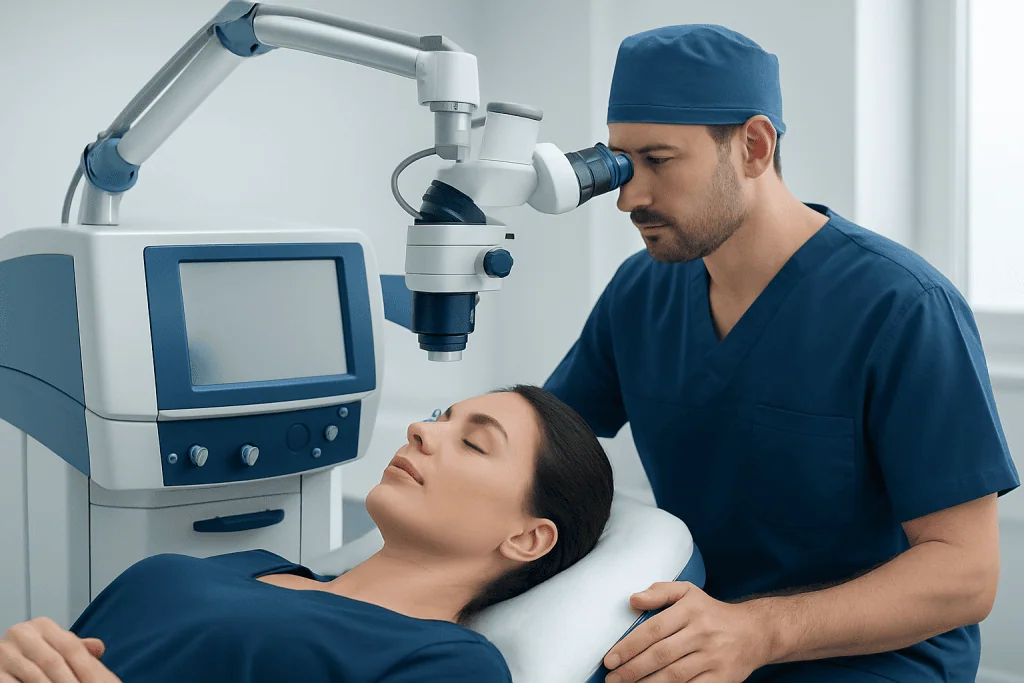
Laser devices use a focused wavelength of light that interacts with water, pigment or blood vessels in the skin. Resurfacing lasers, including ablative and non-ablative fractional devices, create controlled microscopic treatment zones. During healing, the skin replaces damaged cells and produces collagen, which can improve smoothness and firmness over time.
Ablative lasers remove part of the outer skin layer and can provide more noticeable resurfacing, but they generally involve longer healing. Non-ablative lasers heat deeper layers without removing as much surface skin, often allowing a shorter recovery period but sometimes requiring a series of sessions. Pigment-targeting lasers may be considered when discoloration is the primary concern.
Because the skin near the eyes is thin, settings must be tailored carefully. Protective metal eye shields or other specialist-grade eye protection are essential when treatment is performed near the eyelids. The choice of device should reflect skin tone, previous pigment changes, medical history and the specific concern being treated.
Who May Be a Candidate?

A person may be a candidate for under eye laser treatment if they have fine wrinkles, crepey texture, mild skin laxity or certain pigment-related dark circles and understand that improvement is usually gradual rather than immediate. A consultation should include a discussion of skin type, sun exposure, previous cosmetic procedures, medications and expectations.
Laser treatment may be less suitable for people with an active skin infection, open wounds, uncontrolled inflammatory skin disease around the eyes, a recent tan, or a history of abnormal scarring. People prone to post-inflammatory hyperpigmentation, including many individuals with darker skin tones, need particularly careful device selection and treatment planning.
Under-eye hollowness, prominent fat pads and loose eyelid skin are structural concerns that may not respond sufficiently to laser treatment alone. In these situations, a clinician may discuss alternatives such as carefully selected injectable treatments or eyelid procedures. Assessment is especially important when dark circles are new, one-sided or associated with eye symptoms.
- Fine lines and sun-related texture changes may respond well to resurfacing approaches.
- Brown pigmentation may require a pigment-focused approach and strict sun protection.
- Blue, purple or shadow-related darkness may have limited response to laser treatment.
- Under-eye bags and significant laxity may need a different treatment plan.
What Happens During the Procedure?
Before the procedure, the clinician reviews medical history, examines the under-eye area and may take standardized photographs for planning and later comparison. Patients are usually advised to avoid tanning and to follow individualized guidance about skin products, medications and supplements that could increase irritation or bruising risk. The clinician may recommend a test area for people at greater risk of pigment changes.
On the day of treatment, the skin is cleansed and a topical numbing medicine may be applied. Protective eye shields are placed before laser energy is used near the eyelids. The laser is passed over the planned area in a controlled pattern; sensations may include warmth, brief stinging or snapping. Treatment time is often relatively short, although preparation and aftercare instructions take longer.
Afterward, the skin may be cooled and covered with a gentle protective product. Some people need one session, while others benefit from a treatment series, particularly with non-ablative devices. The number and spacing of sessions should be based on the laser type, treatment goal and the skin’s healing response.
Benefits, Limits and Under Eye Laser Results
The potential benefits of under eye laser treatment include smoother-looking skin, less visible fine lines, improved texture and a more even appearance of selected superficial pigmentation. Collagen remodeling continues after the skin has settled, so under eye laser results commonly become clearer over several weeks to months. Results are usually subtle to moderate rather than a complete transformation.
It is important to separate skin resurfacing from treatments that change eye shape or correct refractive vision. Under-eye laser treatment works on skin around the eye; it is not laser eye surgery for vision correction and does not treat conditions such as cataracts, retinal disease or dry eye.
Photographs can be useful in a clinical consultation when they are standardized for lighting, angle and time after treatment. However, individual before-and-after images cannot predict a particular person’s outcome. Skin tone, anatomy, laser type, aftercare and the original cause of dark circles all influence the visible change.
Recovery Timeline and Aftercare
Under eye laser treatment recovery time depends largely on whether the device is ablative or non-ablative and how intensively it is used. Mild redness, warmth, swelling and sensitivity are common early effects. With gentler treatments, visible redness may settle within a few days; with more intensive resurfacing, swelling, bronzing, crusting or peeling can remain noticeable for about one to two weeks.
During recovery, patients should use only the clinician-recommended gentle cleanser, moisturizer or healing ointment. Scrubbing, picking, exfoliating acids, retinoids and fragranced products may irritate healing skin and should be avoided until the clinician says they can be restarted. Cool compresses may help swelling when used as directed, without pressure on the treated skin.
Daily broad-spectrum sun protection and physical sun avoidance are important after treatment because ultraviolet exposure can worsen redness and pigment changes. Makeup should only be resumed when the skin barrier has recovered and the clinician agrees. The full under eye laser recovery time includes the longer phase of collagen remodeling, even after visible peeling or redness has resolved.
- Days 1 to 3: redness, puffiness, warmth and sensitivity are common.
- Days 3 to 7: skin may darken temporarily, feel dry or begin to flake, depending on treatment depth.
- Weeks 2 to 6: surface healing continues and early texture changes may be noticed.
- Months 2 to 6: collagen remodeling may further refine the result.
Risks, Safety and When to Seek Medical Care
When performed appropriately, laser treatment can be safe, but every procedure has risks. Possible effects include prolonged redness, swelling, dryness, acne-like eruptions, infection, cold sore reactivation, scarring and temporary or persistent lightening or darkening of the skin. Eye injury is an uncommon but serious risk if proper eye protection and expert technique are not used.
A clinician should explain the expected healing pattern and provide clear instructions for contacting the treatment team. Patients should seek medical care promptly for increasing pain, spreading redness, pus or fever, marked blistering, severe swelling, reduced vision, eye pain, flashes of light, new floaters or any concern that the eye itself has been affected.
Medical assessment is also appropriate before cosmetic treatment when under-eye discoloration appears suddenly, affects only one side, follows an injury, or occurs with persistent eye redness, pain, swelling or changes in vision. These symptoms may need evaluation for an eye or medical condition rather than cosmetic laser treatment.
Acibadem International’s multidisciplinary specialists and JCI-accredited hospitals can assess skin and eye-area concerns and discuss appropriate treatment options for international patients.
Frequently asked questions
Is under-eye laser treatment worth it?
Under-eye laser treatment may be worth considering for people whose main concerns are fine lines, uneven texture or selected pigment changes. Its value depends on a correct diagnosis of the cause of dark circles or aging changes and on realistic expectations. It is less likely to be the best option for prominent bags, deep hollows or shadowing caused by facial anatomy.
What is the fail rate of laser eye surgery?
There is no single fail rate for “laser eye surgery” because this phrase can describe very different procedures. Laser vision correction and under-eye cosmetic laser treatment have different goals, techniques and outcome measures. For under-eye laser treatment, clinicians generally assess improvement, safety and patient satisfaction rather than a universal pass-or-fail rate; an individual consultation is needed to discuss likely benefit and risk.
How long does laser under-eye treatment last?
How long laser under-eye treatment lasts depends on the laser type, the concern treated, skin aging, sun exposure and daily skin care. Texture and collagen-related improvements may last for years, while pigmentation can recur with sun exposure and natural aging continues. Some people choose maintenance treatments or ongoing topical skin care to preserve the result.
Can you show me pictures of under-eye laser treatments before and after?
A treatment clinic may be able to show standardized before-and-after photographs from patients who gave appropriate consent. These images should be viewed as examples rather than promises, since lighting, facial expression, skin tone and the underlying cause of the concern affect appearance. A personal assessment is the best way to understand what changes may be realistic.
Is under eye laser treatment painful?
Most patients describe warmth, stinging or a snapping sensation rather than severe pain. A topical anesthetic is often used, and cooling methods may be used during or after treatment. Comfort measures vary by laser type and treatment intensity.
How soon can someone wear makeup after under-eye laser treatment?
Makeup should not be applied until the treated skin has healed enough and the clinician confirms that it is appropriate. This may be within a few days after a gentle treatment, while deeper resurfacing often requires more time. Applying makeup too early can irritate skin or increase infection risk.
References
- American Academy of Dermatology
- American Society for Dermatologic Surgery
- American Academy of Ophthalmology
- U.S. Food and Drug Administration
- Mayo Clinic
This article is for general information only and is not a substitute for professional medical advice. Please consult a qualified doctor about your individual situation.
Eye Laser in Turkey — costs, top hospitals & a free quote
JCI-accredited · board-certified surgeons · reply within 24h
Add us as a Preferred Source to see more of our trusted health content across Google Search, AI Overviews and Discover.

Ophthalmology
Comprehensive eye care from laser vision correction to retina, cornea and cataract surgery.
74 specialists in this unit