Underbite Jaw Surgery: Procedure, Recovery and Results

Underbite jaw surgery is usually considered after jaw growth is complete and when braces alone cannot correct the bite. Treatment planning combines orthodontic records, dental imaging and detailed facial and jaw assessment.
Key Takeaways
- Underbite jaw surgery is usually considered after jaw growth is complete and when braces alone cannot correct the bite.
- Treatment planning combines orthodontic records, dental imaging and detailed facial and jaw assessment.
- Most people return gradually to daily activities within several weeks, while complete bone healing and bite refinement take months.
- Expected short-term effects include swelling, restricted eating and numbness; risks should be discussed individually with the surgical team.
- A coordinated orthodontist and oral and maxillofacial surgeon team is essential for a stable, functional result.
Underbite jaw surgery, also called orthognathic surgery, changes the position of one or both jaws when orthodontic treatment alone cannot correct a significant underbite. It can improve how the teeth meet, chewing, speech and facial balance, but it requires careful planning and a months-long healing process.
Overview: What Is Underbite Jaw Surgery?
Underbite jaw surgery is a corrective operation used when the lower jaw sits too far forward, the upper jaw is too far back, or both jaw positions contribute to a significant underbite. The operation repositions the jawbones so the upper and lower teeth can meet more appropriately. It is often combined with orthodontic treatment before and after surgery.
An underbite may be mild and mainly cosmetic, or it may affect chewing, biting, speech, tooth wear, jaw comfort or confidence in facial appearance. Surgery is not needed for every underbite. Some cases can be managed with orthodontic treatment, while more pronounced skeletal differences may need orthognathic surgery for meaningful correction.
The treatment is planned jointly by an oral and maxillofacial surgeon and orthodontist. The goal is not simply to move teeth into a different position; it is to create a bite that functions well while considering facial proportions, airway considerations and long-term dental stability.
How Underbite Jaw Surgery Works and Who May Be a Candidate
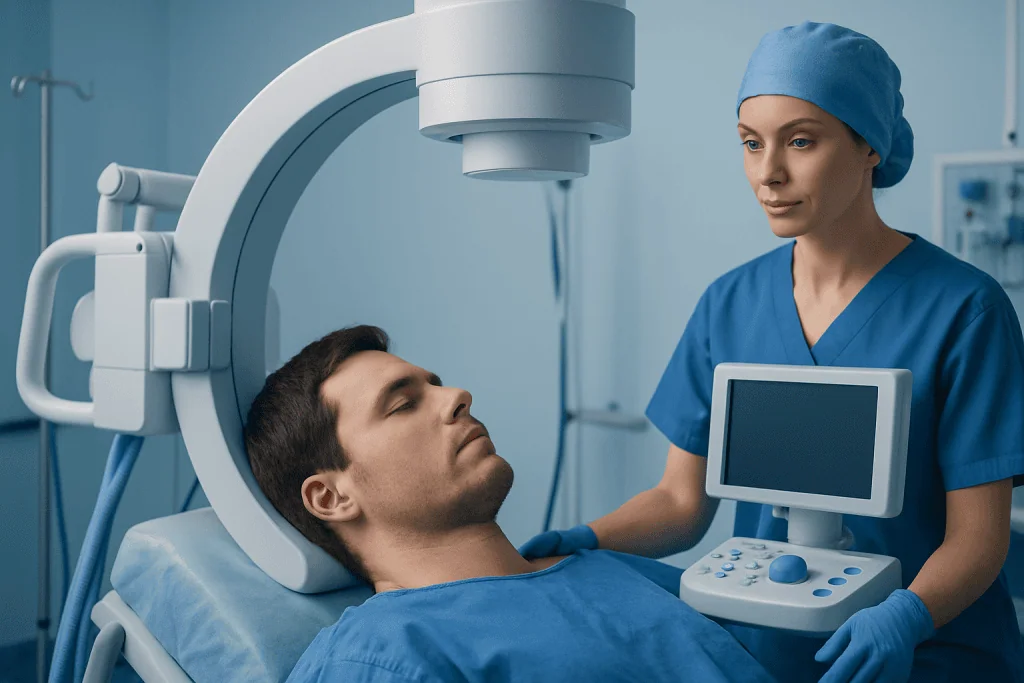
Underbite jaw surgery changes the underlying jaw position rather than only moving the teeth. Depending on the individual anatomy, the surgeon may advance the upper jaw, move the lower jaw backward, adjust both jaws, or make a small chin adjustment as part of the overall treatment plan. The exact approach is based on the source and severity of the bite discrepancy.
Suitable candidates commonly have a moderate to severe skeletal underbite, sometimes described as a Class III malocclusion, that cannot be predictably corrected with braces alone. Surgery is generally delayed until facial growth is largely complete. The appropriate timing varies, so the team considers skeletal maturity rather than age alone.
Assessment includes a dental examination, photographs, bite records, X-rays or three-dimensional imaging and orthodontic analysis. The team also reviews general health, gum and tooth health, smoking or nicotine use, medications and expectations. Existing concerns such as temporomandibular joint symptoms should be evaluated, although surgery is not automatically a treatment for jaw-joint pain.
- Persistent difficulty biting or chewing food
- Excessive tooth wear or repeated dental trauma from the bite
- Speech concerns related to jaw and tooth position
- A marked facial imbalance that causes distress
- An underbite that remains after, or is unsuitable for, orthodontic correction alone
Underbite Jaw Surgery: Step by Step

Preparation often begins with braces or clear orthodontic appliances. Before surgery, teeth may be moved into positions that look less aligned temporarily but allow the jaws to be positioned correctly during the operation. This preparatory phase is an important reason the whole treatment journey can take more than a year.
The operation is performed in hospital under general anaesthesia. In many cases, incisions are made inside the mouth, so visible facial scars are usually avoided. The surgeon carefully cuts the bone in planned locations, moves the upper jaw, lower jaw or both into the intended position, and secures the bones with small plates and screws designed to remain in place unless removal is later needed.
Computer-assisted planning, surgical splints and detailed measurements may support accuracy. The teeth are commonly guided into the planned bite with elastic bands after surgery. The jaws are usually not wired fully shut in modern treatment, but the type and duration of elastic use depend on the surgical plan.
Following an initial period of monitoring, the patient receives instructions on pain control, oral hygiene, nutrition, activity and follow-up appointments. Orthodontic treatment usually resumes after early healing to refine the bite and achieve the final dental alignment.
How Long Is Recovery From Underbite Jaw Surgery?
Recovery from underbite jaw surgery occurs in stages. Most patients remain in hospital for a short period, although the length of stay depends on the procedure, general health and recovery progress. Swelling, bruising, fatigue, facial tightness and difficulty opening the mouth are expected in the early days.
Many people need around two to four weeks away from work, school or usual responsibilities, depending on their role and the extent of surgery. Swelling is often most noticeable during the first week and gradually improves over several weeks. Residual swelling, stiffness and changes in sensation can take longer to settle.
A liquid or smooth-food diet is commonly needed at first, followed by soft foods as advised by the surgical team. Chewing is restricted while the bone heals. The jawbones generally need several months to heal securely, and contact sports or activities with a risk of facial injury are usually postponed until the surgeon confirms that it is safe.
Follow-up is important because healing is not only about comfort. The surgeon and orthodontist monitor the bite, jaw position, oral hygiene and return of sensation. Final orthodontic adjustments and complete settling of the result may continue for many months after surgery.
How Painful Is Jaw Surgery for Underbite?
Jaw surgery is a major procedure, but pain is usually managed with a tailored plan prescribed by the clinical team. In the first days, patients often describe pressure, tightness, swelling and congestion-like discomfort more prominently than sharp pain. Pain levels differ between individuals and can depend on whether one or both jaws are treated.
Medication may be provided to control pain and nausea, and cold compresses, head elevation and adequate rest can help reduce discomfort and swelling. Patients should take only medicines recommended by their surgeon and should not add over-the-counter products without checking, particularly if they take regular medication or have another health condition.
Numbness or altered sensation in the lips, chin, cheeks or upper teeth can occur because nerves are close to the surgical area. This commonly improves gradually, but recovery can be slow and a degree of persistent altered sensation is a recognized risk. The surgeon can explain the likelihood based on the planned operation and individual anatomy.
Benefits, Risks and Is Jaw Surgery to Fix Underbite Worth It?
For an appropriately selected patient, underbite jaw surgery can create a more functional bite and make chewing easier. It may reduce uneven pressure on teeth, help protect dental restorations from bite-related stress and improve facial balance. Some people also notice improvements in speech or day-to-day confidence, although experiences and priorities vary.
Whether surgery is worth it is a personal decision made after balancing expected benefits against treatment time, recovery and risk. The answer depends on how much the underbite affects function, oral health and wellbeing, whether alternatives are feasible, and whether the person feels ready for orthodontic and surgical care. A thorough consultation helps set realistic expectations.
Possible complications include bleeding, infection, delayed bone healing, bite changes, relapse toward the original jaw relationship, temporary or lasting altered sensation, problems with plates or screws, and a need for further treatment. Anaesthesia also has its own risks. These complications are not inevitable, but they should be discussed openly before consent.
Patients who smoke, vape nicotine or use other tobacco products may have a higher risk of healing problems. Following instructions on nutrition, mouth care, elastic wear, activity restrictions and follow-up can support recovery and the stability of the surgical result.
What Is the Success Rate of Underbite Jaw Surgery?
There is no single success rate that applies to every underbite jaw surgery. Studies define success differently, such as improvement in the bite, stability of jaw position, patient satisfaction, chewing function or absence of complications. Results also vary with the starting jaw relationship, the type of operation, orthodontic planning, healing and long-term follow-up.
In experienced multidisciplinary care, orthognathic surgery is widely used to correct significant skeletal bite discrepancies and often produces predictable functional and facial changes. However, no procedure can promise an exact appearance, a completely symptom-free outcome or permanent stability in every person. Small changes in the bite or jaw position can occur as tissues adapt during healing.
Clear communication is central to a good outcome. Patients should ask what changes are realistic for their bite and facial profile, what recovery milestones to expect, and how the team monitors stability. Digital simulations can be useful for planning, but they are guides rather than guarantees of the final result.
At Acibadem International, multidisciplinary specialists in oral and maxillofacial surgery, orthodontics and related fields can assess and treat complex jaw alignment concerns for international patients in JCI-accredited hospitals.
When to Seek Medical Care
Anyone with an underbite that affects eating, speech, dental wear, jaw function or confidence can arrange an assessment with a dentist, orthodontist or oral and maxillofacial surgeon. An evaluation does not commit a person to surgery; it helps clarify the cause of the underbite and the available treatment options.
After jaw surgery, the patient should contact the surgical team promptly for increasing rather than improving pain or swelling, fever, persistent bleeding, pus-like drainage, a foul taste with worsening symptoms, breathing difficulty, dehydration, or an inability to take prescribed medicines. Emergency care is needed for severe breathing problems, heavy bleeding or symptoms that feel immediately serious.
Routine follow-up should not be skipped, even when healing appears to be progressing well. The team can identify bite shifts, oral hygiene problems, nutritional concerns or signs of infection early, when they are generally easier to manage.
Frequently asked questions
Can braces fix an underbite without jaw surgery?
Braces can correct many mild underbites, especially when the main issue is tooth position rather than jawbone position. When the underbite is caused by a substantial difference in upper and lower jaw position, braces alone may not provide a stable or complete correction. An orthodontic and surgical assessment can determine which approach is appropriate.
How long is recovery from underbite jaw surgery?
Many patients need two to four weeks before returning gradually to school, work or normal daily routines. Initial swelling improves over several weeks, while jawbone healing takes months. Orthodontic finishing and full settling of the bite can continue longer.
Is jaw surgery to fix underbite worth it?
It may be worthwhile when an underbite significantly affects chewing, tooth wear, speech, facial balance or quality of life and cannot be corrected adequately with orthodontics alone. The decision is individual and should include a clear discussion of likely benefits, risks, recovery demands and alternatives. A consultation can help patients decide whether the expected improvements match their goals.
What is the success rate of underbite jaw surgery?
A single percentage is not meaningful because success can refer to bite improvement, facial change, long-term stability, satisfaction or complication rates. Orthognathic surgery is an established treatment for significant skeletal underbites, but outcomes depend on anatomy, planning, healing and follow-up. The surgical team can discuss expected results for the individual case.
How painful is jaw surgery for underbite?
Pain is expected after surgery but is usually managed with medication and supportive care directed by the surgical team. Swelling, tightness, fatigue and nasal congestion may be more noticeable than severe sharp pain for many people. Discomfort generally improves during the first weeks, although numbness or stiffness can take longer to resolve.
Will the jaw be wired shut after underbite surgery?
Modern surgery often uses plates and screws to stabilize the jawbones, so full wiring of the jaws is not routinely required. Elastic bands may be used to guide the bite during early healing. The exact approach depends on the operation and the surgeon's treatment plan.
References
- American Association of Oral and Maxillofacial Surgeons
- American Association of Orthodontists
- National Institute of Dental and Craniofacial Research
- British Association of Oral and Maxillofacial Surgeons
- Mayo Clinic
This article is for general information only and is not a substitute for professional medical advice. Please consult a qualified doctor about your individual situation.
Explore treatments in Turkey — costs, top hospitals & a free quote
JCI-accredited · board-certified surgeons · reply within 24h
Add us as a Preferred Source to see more of our trusted health content across Google Search, AI Overviews and Discover.