Understanding Nail Psoriasis Treatment: A Complete Patient Guide

Nail psoriasis can affect fingernails or toenails and may cause pitting, thickening, color change, or nail separation. Treatment often takes time because nails grow slowly, so visible improvement may take months.
Key Takeaways
- Nail psoriasis can affect fingernails or toenails and may cause pitting, thickening, color change, or nail separation.
- Treatment often takes time because nails grow slowly, so visible improvement may take months.
- The best nail psoriasis treatment depends on symptom severity, how many nails are affected, and whether skin or joint psoriasis is also present.
- Gentle nail care can reduce irritation and help prevent worsening or secondary infection.
- A dermatologist should assess persistent nail changes because fungal infection and other conditions can look similar.
Nail psoriasis treatment focuses on easing symptoms, improving nail growth, and preventing long-term damage to the nail unit. Care may include topical medicines, steroid injections, phototherapy, or whole-body treatment when nail disease is severe or linked to skin or joint psoriasis.
Overview: What nail psoriasis treatment involves
Nail psoriasis treatment aims to control inflammation in and around the nail, improve the way the nail grows, and reduce discomfort or functional problems. The condition can affect the nail plate, nail bed, or nail matrix, so treatment plans vary from person to person. Some people mainly want help with appearance, while others need treatment because the nails are painful, fragile, or interfering with daily tasks.
Unlike a rash on the skin, nail changes usually improve slowly. Nails grow gradually, so even an effective treatment may need several months before results become clear. This can feel frustrating, but a steady and realistic approach often gives the best outcome.
Nail psoriasis may happen on its own, but it is also common in people who have skin psoriasis or psoriatic arthritis. Because of this, treatment is not only about the nails themselves. Doctors also consider overall skin health, joint symptoms, and how much the condition affects work, sleep, exercise, and confidence.
Symptoms and how nail psoriasis can look
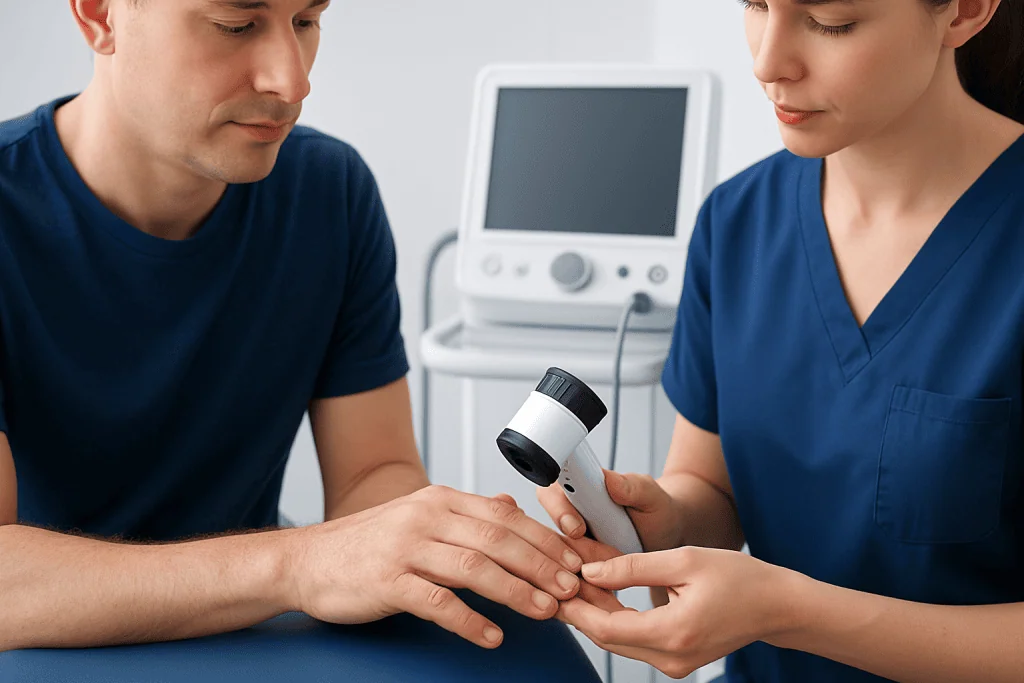
Nail psoriasis can cause several different changes, and not everyone has the same pattern. One of the most common signs is pitting, which looks like tiny dents on the surface of the nail. The nail may also become thick, rough, crumbly, or discolored, sometimes developing a yellow-brown patch often called an oil-drop change.
Another common feature is onycholysis, which means the nail lifts away from the skin underneath. This can create a white or yellow area at the tip or side of the nail and may make the nail more likely to catch on clothing or break. In some cases, debris builds up under the nail, making it feel bulky or uncomfortable.
Symptoms can affect both appearance and function. Fine hand movements such as buttoning clothes, typing, or opening containers may become more difficult if the nails are tender or deformed. Toenail involvement can also make walking or wearing shoes uncomfortable.
- Pitting or small dents in the nail surface
- Thickening, crumbling, or ridging
- Yellow, brown, or white discoloration
- Nail separation from the nail bed
- Debris or scaling under the nail
- Pain, tenderness, or pressure in shoes
Why nail psoriasis happens and who is at risk
Nail psoriasis happens when the immune system triggers inflammation that affects nail-forming tissues. Psoriasis is a long-term inflammatory condition, and the same process that causes skin plaques can also disrupt normal nail growth. Depending on which part of the nail unit is inflamed, the result may be pitting, thickening, lifting, or shape changes.
People with plaque psoriasis have a higher chance of developing nail changes than the general population. Nail involvement is also more common in people with joint symptoms related to psoriasis. Family history may play a role, and symptoms can wax and wane over time.
Friction and injury may worsen nail psoriasis. Repeated trauma from manicures, tight shoes, nail biting, or hands-on work can aggravate already sensitive nails. In addition, fungal nail infection can occur alongside psoriasis, which may make the nails look worse and can complicate treatment decisions.
How doctors diagnose nail psoriasis
Diagnosis usually begins with a clinical examination of the nails, skin, and sometimes the joints. A dermatologist looks at the pattern of nail changes and asks about personal or family history of psoriasis. If there are skin plaques on the scalp, elbows, knees, or other areas, the diagnosis may be more straightforward.
Because other conditions can mimic nail psoriasis, testing is sometimes needed. Fungal infections are a common example, especially when the nail is thickened, yellow, or separated from the nail bed. A doctor may take nail clippings or scrapings for laboratory analysis before deciding on treatment.
If joint pain, morning stiffness, swollen fingers, or heel pain are present, assessment for psoriatic arthritis may be recommended. This matters because nail disease can be linked to joint inflammation, and whole-body treatment may help more than nail-directed therapy alone. In selected cases, imaging or referral to a rheumatologist may be useful.
Nail psoriasis treatment options
The best nail psoriasis treatment depends on how many nails are affected, which nail structures are involved, and whether there is psoriasis elsewhere on the body. Mild cases may respond to topical medicines, while more severe or widespread disease may need procedures or systemic therapy. Doctors also consider pain, daily function, and cosmetic concerns when planning care.
Topical treatments are commonly used first, especially when only a few nails are involved. These may include corticosteroids, vitamin D analogs, tazarotene, or other anti-inflammatory preparations applied to the nail folds or under the free edge of the nail when possible. Because nails are hard and slow-growing, topical treatment requires patience and consistent use.
For stubborn disease affecting limited nails, a dermatologist may recommend steroid injections into the skin around the nail. This can target inflammation more directly, though the procedure may be uncomfortable and is not suitable for everyone. In some centers, light-based treatment or carefully selected laser approaches may be discussed as part of dermatology care.
When nail psoriasis is severe, affects many nails, or occurs with significant skin or joint disease, systemic treatment may be the most effective option. These medicines work throughout the body and can include conventional oral therapies or biologic medicines used for psoriasis treatment. If joint inflammation is part of the picture, the plan may overlap with rheumatology care to address both nail and musculoskeletal symptoms together.
Self-care, nail protection, and daily habits
Medical treatment works best when combined with gentle nail care. Nails with psoriasis are more easily damaged, so protecting them from repeated trauma is important. Keeping nails trimmed short can reduce catching and lifting, and wearing gloves for wet work or household cleaning may help protect the nail unit.
Moisturizing the hands, cuticles, and surrounding skin can support comfort and reduce cracking. People are often advised to avoid aggressive manicures, picking at the nails, cutting the cuticles, or using nails as tools. Toenails may benefit from roomy shoes that reduce pressure, especially if the nails are thick or tender.
Good daily habits also support long-term skin health. Smoking cessation, stress management, and following the treatment plan closely may help some people reduce flares. If there is concern about a secondary infection or athlete’s foot, prompt evaluation is sensible, because infection can worsen discomfort and make nail changes more difficult to interpret.
- Trim nails regularly and keep edges smooth
- Use gloves during cleaning or prolonged water exposure
- Avoid picking, biting, or forceful cuticle trimming
- Choose comfortable footwear with enough toe room
- Use moisturizers on nails and surrounding skin
When to seek medical care
Medical advice is important if nail changes are new, spreading, painful, or interfering with normal use of the hands or feet. A doctor should also assess nails that become very thick, start separating from the nail bed, or develop significant discoloration, because fungal infection and other nail disorders can look similar.
People should seek care sooner if they have swollen joints, prolonged morning stiffness, or finger and toe pain, since these symptoms can suggest psoriatic arthritis. Prompt assessment can help protect joint health and guide the most suitable treatment plan. It is also wise to seek care if home nail care has not helped or if there are signs of infection such as increasing redness, warmth, drainage, or severe tenderness.
In complex cases, coordinated specialist care can be useful. Acibadem International’s multidisciplinary specialists in JCI-accredited hospitals diagnose and treat nail psoriasis and related conditions for international patients, especially when symptoms involve the skin, nails, and joints together.
Outlook and what to expect from treatment
Nail psoriasis is usually a chronic condition, but symptoms can improve significantly with the right approach. The main challenge is time: fingernails and toenails grow slowly, so even successful treatment may not be obvious right away. Many people need a period of consistent treatment before healthier nail growth becomes visible.
Results vary depending on how long the condition has been present, how severe it is, and whether related skin or joint disease is active. Some people achieve good control with local treatments and nail care alone, while others need whole-body therapy to gain lasting improvement. Follow-up visits help doctors decide whether to continue, adjust, or combine treatments.
Long-term management is often about control rather than a one-time cure. Understanding triggers, protecting the nails, and treating flares early can improve comfort and appearance over time. With a personalized plan and realistic expectations, many patients are able to reduce symptoms and maintain better nail function.
Frequently asked questions
What is the most effective nail psoriasis treatment?
The most effective treatment depends on how severe the nail disease is and whether psoriasis also affects the skin or joints. Mild cases may improve with topical medicines, while more severe disease may need steroid injections or systemic treatment. A dermatologist can help match treatment to the pattern of nail involvement.
How long does nail psoriasis treatment take to work?
Improvement is usually slow because nails grow slowly. Fingernails may take several months to show change, and toenails often take even longer. Consistent treatment and follow-up are important before deciding whether a therapy is helping.
Can nail psoriasis go away on its own?
Symptoms can sometimes improve for a period, but nail psoriasis is usually a chronic condition with flares and remissions. Without treatment, nail changes may persist or gradually worsen in some people. Early care may help reduce damage and improve nail appearance over time.
Is nail psoriasis the same as a fungal nail infection?
No, they are different conditions, although they can look similar. Both can cause thickening, discoloration, and nail separation. A doctor may test the nail to check for fungus before starting treatment, and sometimes both conditions are present at the same time.
Can nail psoriasis be a sign of psoriatic arthritis?
Yes, nail psoriasis is associated with a higher chance of psoriatic arthritis. It does not mean everyone with nail symptoms will develop joint disease, but joint pain, swelling, or morning stiffness should be assessed. Identifying arthritis early can help protect joint function.
What should people avoid if they have nail psoriasis?
It is best to avoid repeated nail trauma, picking, biting, harsh manicures, and cutting the cuticles aggressively. Tight shoes can worsen painful toenail disease, and wet work without gloves may irritate the nails and surrounding skin. Gentle care helps support medical treatment.
References
- American Academy of Dermatology
- National Psoriasis Foundation
- National Institute of Arthritis and Musculoskeletal and Skin Diseases
- British Association of Dermatologists
- Mayo Clinic
This article is for general information only and is not a substitute for professional medical advice. Please consult a qualified doctor about your individual situation.
Joint and spine care in Turkey — expert assessment & treatment
JCI-accredited · board-certified surgeons · reply within 24h
Add us as a Preferred Source to see more of our trusted health content across Google Search, AI Overviews and Discover.