Understanding Necrotizing Fasciitis: A Complete Patient Guide

Necrotizing fasciitis is a medical emergency that needs immediate hospital treatment. Pain that seems much worse than the skin appearance can be an important early clue.
Key Takeaways
- Necrotizing fasciitis is a medical emergency that needs immediate hospital treatment.
- Pain that seems much worse than the skin appearance can be an important early clue.
- Treatment usually includes urgent surgery, intravenous antibiotics, and intensive supportive care.
- Anyone can develop it, but diabetes, immune suppression, wounds, and recent surgery can increase risk.
- Fast action can limit tissue damage and improve the chance of recovery.
Necrotizing fasciitis is a rare but very serious infection that destroys tissue beneath the skin and can spread quickly. Early recognition, emergency medical care, surgery, and antibiotics are the main reasons some people recover well.
What necrotizing fasciitis is
Necrotizing fasciitis is a severe infection of the deeper layers of skin, connective tissue, and fascia, the thin tissue that surrounds muscles, nerves, fat, and blood vessels. It is sometimes called a “flesh-eating” infection, but that phrase can be misleading because the problem is not that bacteria literally eat tissue. Instead, germs and the body’s inflammatory response rapidly damage tissue and reduce blood flow, which can cause tissue death.
This condition is rare, but it is a true medical emergency. It can begin after a cut, puncture, burn, insect bite, surgical wound, or even a skin injury so small that it goes unnoticed. In some cases, it develops from an infection deeper in the body, including around the abdomen or perineum. Because the infection can spread in hours rather than days, people with possible symptoms should not wait to see if it improves on its own.
Several different bacteria can cause necrotizing fasciitis. Group A Streptococcus is one well-known cause, but mixed bacterial infections and other organisms are also possible. Doctors often use the broader term “necrotizing soft tissue infection” because the infection may involve skin, fat, fascia, and sometimes muscle as well.
How it may feel and look early on
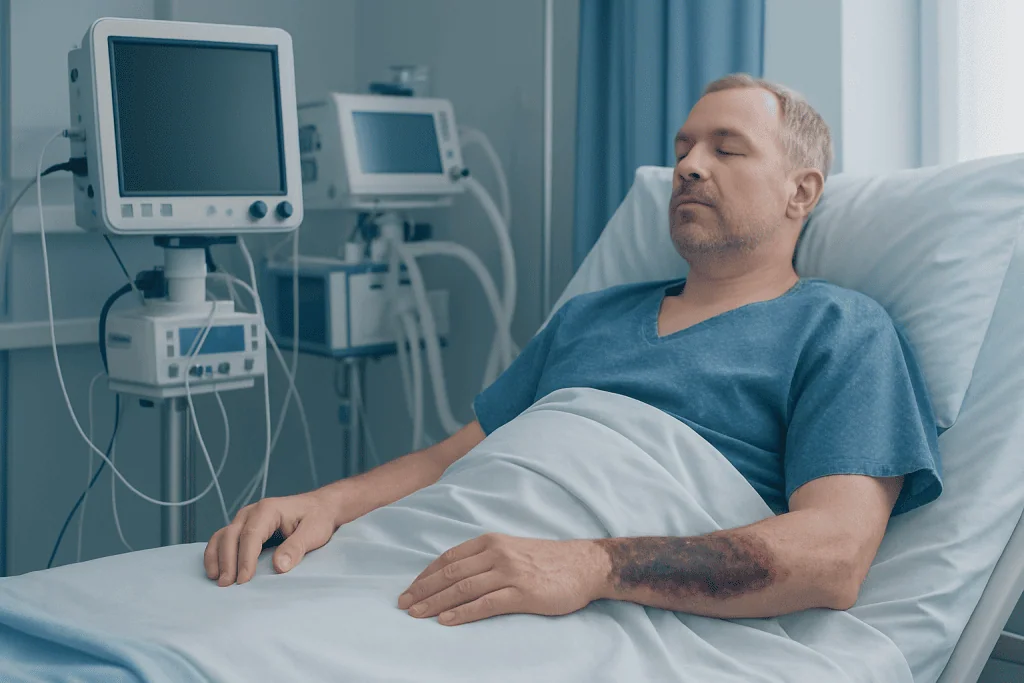
One reason necrotizing fasciitis can be hard to recognize early is that it may first resemble a more common skin infection. The area may start with redness, warmth, swelling, tenderness, or flu-like symptoms such as fever, chills, weakness, nausea, or body aches. A person may think they have a mild wound infection, cellulitis, or a strained muscle.
A key warning sign is pain that feels much more severe than the skin changes would suggest. The skin may look only mildly red at first, while the pain is intense, deep, or rapidly worsening. As the infection spreads, the skin can become darker, shiny, tense, purple, gray, or blistered. Numbness may later appear if nerves become damaged.
Symptoms may include:
- Severe pain or rapidly increasing tenderness
- Swelling that spreads quickly
- Red, hot, or discolored skin
- Fever, chills, fatigue, or confusion
- Blisters, drainage, or a crackling feeling under the skin
- Dizziness or signs of low blood pressure in advanced illness
Not every person has all of these symptoms. In children, older adults, and people with weakened immune systems, the warning signs may be less typical. Any rapidly worsening skin or soft tissue infection should be treated as urgent.
Why it happens and who is at higher risk

Necrotizing fasciitis happens when bacteria enter the body and multiply in deeper tissues. This may follow an obvious injury, but not always. A recent operation, injection, IV drug use, pressure ulcer, chronic wound, animal bite, or traumatic injury can create an entry point. Some infections begin from the bowel, urinary tract, or genital region and spread into nearby tissue.
Although healthy people can develop necrotizing fasciitis, certain conditions increase risk. These include diabetes, poor circulation, chronic kidney disease, liver disease, obesity, alcohol misuse, cancer, and immune suppression from illness or medicines. Skin conditions that break the barrier, such as eczema, may also increase vulnerability. Doctors may also evaluate related concerns such as cellulitis when symptoms are at an earlier or less severe stage.
Different bacteria can be involved. Sometimes one type of bacteria is responsible, and sometimes several act together. This is one reason treatment usually begins with broad intravenous antibiotics before laboratory tests fully identify the exact organism. The speed of spread depends on the bacteria, the person’s general health, and how quickly treatment starts.
How doctors diagnose necrotizing fasciitis
Diagnosis begins with a careful physical examination and a high level of suspicion. Doctors ask about recent injuries, surgery, injections, fever, pain severity, and how quickly symptoms developed. In many cases, the diagnosis is based on the pattern of rapid progression and the person’s overall condition rather than on one single test.
Blood tests can show signs of infection, inflammation, organ stress, and dehydration, but they cannot rule the condition in or out on their own. Imaging such as ultrasound, CT, or MRI may help show gas in tissues, fluid collections, or the spread of infection. When the diagnosis is uncertain, imaging can support decision-making, but it should not delay urgent treatment. In some situations, evaluation may involve MRI or CT scanning to define the extent of tissue involvement.
The most definitive step is often surgery. During an operation, the surgical team can directly inspect the tissue, remove dead tissue, collect samples for culture, and begin treatment at the same time. Because waiting can be dangerous, doctors may recommend emergency surgery even before all test results are available.
Treatment and hospital care
Necrotizing fasciitis is treated in the hospital, usually with a combination of emergency surgery, intravenous antibiotics, fluids, pain control, and close monitoring. Surgery is the cornerstone of treatment because dead or severely infected tissue must be removed so the infection can be controlled. Many people need more than one operation over several days, depending on how much tissue is affected.
Antibiotics are started immediately and then adjusted when culture results become available. Supportive care may include oxygen, blood pressure support, wound care, and treatment in an intensive care unit if the infection has affected the whole body. If the infection leads to sepsis, doctors treat both the local infection and the wider effects on the organs. In severe cases, care may involve specialists in intensive care and reconstructive planning after the infection is controlled.
After the infection is stabilized, some people need skin grafts, reconstructive procedures, physical therapy, nutritional support, and emotional support during recovery. Recovery can be lengthy, especially if a large area was involved. Hospitals with multidisciplinary teams are often best placed to coordinate emergency surgery, infectious disease care, wound management, rehabilitation, and follow-up. Acibadem International’s multidisciplinary specialists in JCI-accredited hospitals diagnose and treat necrotizing soft tissue infections for international patients.
Recovery, self-care, and reducing future risk
Recovery after necrotizing fasciitis varies widely. Some people improve steadily after early treatment, while others need weeks or months of wound care and rehabilitation. Fatigue, stiffness, changes in appearance, and emotional distress are not unusual after a serious infection and repeated surgeries. Follow-up appointments are important to monitor wound healing, nutrition, pain control, and functional recovery.
Self-care after discharge should follow the hospital team’s instructions closely. This usually includes keeping wounds clean and dressed as advised, taking prescribed medicines exactly as directed, watching for fever or increasing redness, eating enough protein and calories to support healing, and attending all follow-up visits. Gentle movement and rehabilitation may help restore strength and mobility when approved by the care team.
Prevention focuses on lowering infection risk rather than on any one guaranteed step. Good hand hygiene, prompt cleaning of cuts, proper care of surgical wounds, and early medical review of worsening skin infections all help. People with diabetes should aim for good glucose control and regular foot and skin checks, because unnoticed wounds can become infected more easily.
When to seek medical care
Possible necrotizing fasciitis needs immediate emergency care. A person should seek urgent medical attention if they have severe pain, rapidly spreading redness or swelling, fever with a wound, skin that is turning dark or blistered, or a sudden decline in how they feel overall. It is especially important not to ignore pain that seems out of proportion to what is visible on the skin.
People at higher risk, including those with diabetes, poor circulation, immune suppression, recent surgery, or deep wounds, should have a low threshold for being checked by a doctor. If a healthcare professional suspects a deep or dangerous skin infection, rapid hospital evaluation is usually safer than home treatment. Early treatment of related infections such as sepsis may also be needed if the infection has begun to affect the whole body.
It is reasonable to ask whether symptoms could be due to a more common problem, but it is not safe to rely on that possibility if the illness is worsening quickly. Necrotizing fasciitis is uncommon, yet the consequences of delay can be serious. Prompt assessment gives doctors the best chance to confirm the diagnosis early and begin life-saving care.
Frequently asked questions
Is necrotizing fasciitis the same as a regular skin infection?
No. Necrotizing fasciitis is much deeper and more aggressive than a routine skin infection such as mild cellulitis. It spreads quickly through tissue under the skin and usually requires emergency surgery and hospital care.
Can a healthy person get necrotizing fasciitis?
Yes, although it is more likely in people with certain risk factors. Even healthy people can develop it after an injury, surgery, or sometimes without a clearly recognized wound.
What is the earliest warning sign?
One important early clue is severe pain that seems much worse than the visible skin changes. Rapidly increasing swelling, fever, and fast progression over hours should also raise concern.
How is necrotizing fasciitis treated?
Treatment usually includes emergency surgery to remove dead tissue, intravenous antibiotics, and close monitoring in the hospital. Some people need repeated operations, wound care, and rehabilitation during recovery.
Can antibiotics alone cure necrotizing fasciitis?
Usually not. Antibiotics are essential, but surgery is often needed because damaged tissue has poor blood flow and medicines may not reach it well enough on their own.
How long does recovery take?
Recovery depends on how quickly treatment started, how much tissue was involved, and the person’s overall health. Some people recover over weeks, while others need a much longer period of wound care, reconstruction, and rehabilitation.
References
- Centers for Disease Control and Prevention
- National Institute of Diabetes and Digestive and Kidney Diseases
- Mayo Clinic
- National Health Service
- World Health Organization
This article is for general information only and is not a substitute for professional medical advice. Please consult a qualified doctor about your individual situation.
Explore treatments in Turkey — costs, top hospitals & a free quote
JCI-accredited · board-certified surgeons · reply within 24h
Add us as a Preferred Source to see more of our trusted health content across Google Search, AI Overviews and Discover.
Check your numbers in seconds
BMI, calories, due date, blood pressure and 30+ more clinical calculators — free, instant, doctor-reviewed ranges.