Understanding Spindle Cell Sarcoma: A Complete Patient Guide

Spindle cell sarcoma is not one single disease but a descriptive pattern seen in certain sarcomas under the microscope. A painless lump that grows over time is a common warning sign, though symptoms vary by location.
Key Takeaways
- Spindle cell sarcoma is not one single disease but a descriptive pattern seen in certain sarcomas under the microscope.
- A painless lump that grows over time is a common warning sign, though symptoms vary by location.
- Diagnosis usually requires both imaging and a biopsy interpreted by an experienced pathology team.
- Treatment often combines surgery with radiotherapy and sometimes chemotherapy, depending on the case.
- Early specialist assessment can help improve planning, preserve function, and guide the most appropriate treatment.
Spindle cell sarcoma is a rare type of cancer that develops from connective tissues such as muscle, fat, fibrous tissue, or blood vessel support structures. Because it can resemble other tumors, diagnosis usually depends on imaging and a biopsy reviewed by specialists, and treatment is tailored to the tumor’s type, size, location, and stage.
Overview: What spindle cell sarcoma means
Spindle cell sarcoma is a rare cancer that begins in the body’s connective tissues. The term “spindle cell” describes the shape of the cancer cells when they are examined under a microscope: they look long and narrow, like spindles. This pattern can appear in several different sarcoma subtypes, so the name is often part of a broader diagnosis rather than a final diagnosis by itself.
These tumors most often arise in soft tissues, including muscle, fibrous tissue, fat, and supporting tissues around blood vessels or nerves. They can occur almost anywhere in the body, but many are found in the arms, legs, trunk, or retroperitoneum, the area deep in the abdomen. Some spindle cell sarcomas also involve bone, although soft tissue forms are more common.
Because spindle cell sarcoma is uncommon and may look similar to noncancerous growths or other cancers, careful evaluation is important. The diagnosis usually involves imaging tests and a tissue biopsy, followed by detailed laboratory analysis. In many cases, a multidisciplinary sarcoma team is the best setting for confirming the diagnosis and planning treatment.
Symptoms and how it may feel
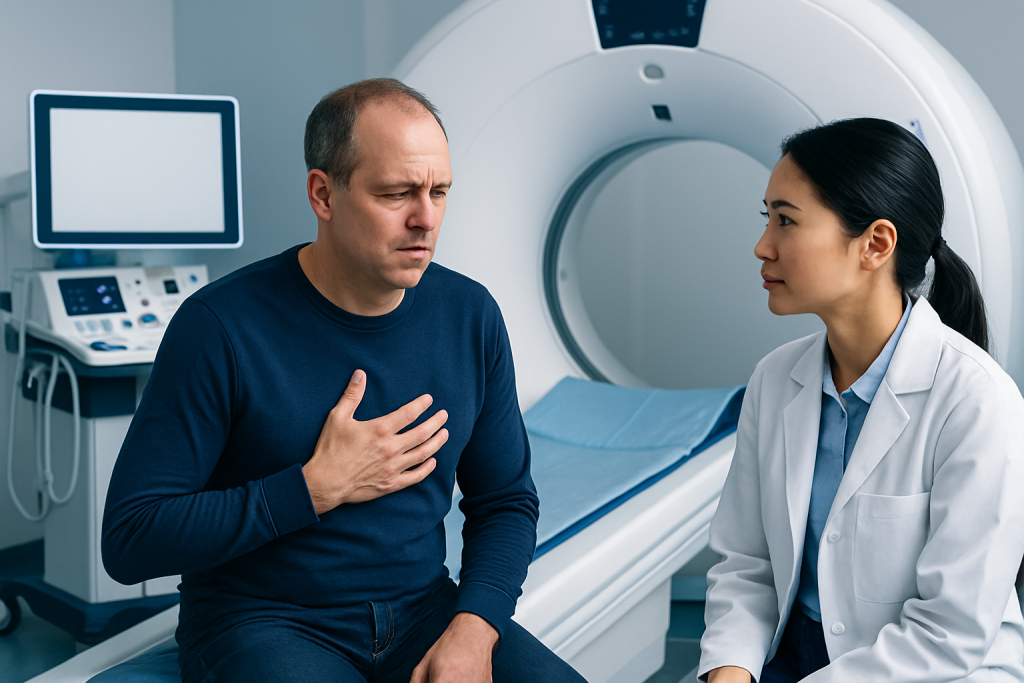
The symptoms of spindle cell sarcoma depend mainly on where the tumor is located and how large it has become. A common first sign is a lump or swelling that gradually increases in size. This lump may be painless at first, which is one reason some people delay seeking medical advice.
When the tumor grows deeper in the tissues, it can press on nearby muscles, nerves, or organs. This may cause pain, a feeling of pressure, weakness, numbness, or reduced movement in the affected area. Tumors in the abdomen or pelvis may not be noticed until they become larger, and they may cause fullness, abdominal discomfort, constipation, or urinary symptoms.
Some symptoms can overlap with more common and less serious conditions. However, certain features deserve attention, especially a lump that is enlarging, a mass that feels deep rather than just under the skin, or pain that persists without a clear injury. Possible symptoms include:
- A growing lump or swelling
- Pain or tenderness in one area
- Reduced range of motion or stiffness
- Numbness, tingling, or weakness from pressure on nerves
- Abdominal bloating, fullness, or bowel or bladder changes if the tumor is internal
Causes, risk factors, and who may be affected

In most people, the exact cause of spindle cell sarcoma is not known. Like other sarcomas, it develops when cells in connective tissue acquire genetic changes that lead them to grow in an uncontrolled way. These changes usually happen sporadically, meaning they are not caused by anything a person did and are not inherited in most cases.
Although no single lifestyle factor explains most cases, some known risk factors can increase the likelihood of developing a sarcoma. Previous radiation therapy, certain inherited genetic syndromes, long-term lymphatic swelling, and rare chemical exposures have all been linked with some forms of soft tissue sarcoma. Still, many patients with spindle cell sarcoma have no clear risk factor at all.
Doctors may also consider whether the tumor belongs within the broader group of sarcoma or is related to a specific subtype of soft tissue cancer. Age can vary depending on the subtype, and these tumors can affect both younger and older adults. Because the biology differs from one sarcoma to another, detailed testing is important to identify the exact type and estimate how it may behave.
How spindle cell sarcoma is diagnosed
Diagnosis begins with a medical history and physical examination. A doctor will ask how long the lump has been present, whether it is growing, and whether there are symptoms such as pain, weakness, weight loss, or abdominal changes. The examination helps determine the mass’s size, depth, mobility, and relationship to nearby structures.
Imaging is usually the next step. Ultrasound may help assess a superficial lump, but magnetic resonance imaging is often preferred for soft tissue masses in the arms, legs, or trunk because it shows the tumor’s extent in detail. Computed tomography may be used for tumors in the chest, abdomen, or pelvis, and chest imaging is often performed because the lungs are a common site where sarcomas can spread.
A biopsy is essential to confirm spindle cell sarcoma. In most cases, specialists use a core needle biopsy to obtain tissue before any major surgery. Pathologists then examine the cells under the microscope and may use immunohistochemistry and molecular tests to distinguish spindle cell sarcoma from other tumors that can look similar. This step is very important because treatment decisions depend on the precise diagnosis and grade.
Once cancer is confirmed, doctors stage the tumor by looking at its size, depth, grade, and whether it has spread. This information guides decisions about cancer treatment and helps the team discuss goals such as complete removal, preserving function, and lowering the risk of recurrence.
Treatment options and how decisions are made
Treatment for spindle cell sarcoma is individualized. The main factors are the exact sarcoma subtype, tumor grade, size, location, and whether the cancer is localized or has spread. Care is often planned by a team that may include surgical oncologists, orthopedic oncologists, medical oncologists, radiation oncologists, radiologists, and pathologists with sarcoma expertise.
Surgery is commonly the cornerstone of treatment for localized disease. The goal is to remove the tumor completely with a margin of healthy tissue when possible, while also preserving nearby nerves, blood vessels, and limb or organ function. In selected cases, reconstructive techniques may be needed after tumor removal.
Radiotherapy may be given before or after surgery to lower the risk of the tumor returning in the same area. Some patients may also benefit from radiation therapy as part of a combined treatment plan. Chemotherapy is not needed for every spindle cell sarcoma, but it may be recommended for higher-grade tumors, larger tumors, specific sarcoma subtypes, or disease that has spread. In some situations, systemic treatment is used before surgery to shrink the tumor or after treatment to address microscopic disease.
For advanced or metastatic sarcoma, treatment may focus on controlling the disease, relieving symptoms, and maintaining quality of life. Options can include chemotherapy, targeted treatments for selected tumor types, surgery for limited spread, and supportive care. Patients may also hear about medical oncology input when discussing systemic therapies and follow-up planning.
Living with spindle cell sarcoma: recovery, follow-up, and self-care
Recovery after treatment depends on the tumor’s location and the type of therapy used. After surgery, some people need physical therapy or rehabilitation to regain strength, flexibility, and daily function. Fatigue is common during or after radiotherapy and chemotherapy, and recovery often happens gradually rather than all at once.
Regular follow-up is an important part of care because sarcomas can sometimes return locally or spread to other areas. Follow-up visits may include physical examinations and imaging scans at intervals chosen by the treating team. The schedule varies according to the tumor grade, stage, and treatment received, so patients should ask what monitoring plan is appropriate for them.
Self-care should focus on supporting overall health during recovery. Helpful steps may include keeping follow-up appointments, reporting new symptoms promptly, eating a balanced diet, staying as active as recovery allows, and discussing emotional wellbeing with the care team. For some people, counseling, support groups, pain management, or rehabilitation services can make day-to-day life easier.
Near the end of the treatment journey, some patients seek care in centers with broad cancer expertise. Acibadem International’s multidisciplinary specialists in JCI-accredited hospitals diagnose and treat complex cancers, including sarcomas, for international patients when specialized evaluation is needed.
When to seek medical care
Medical assessment is advisable for any lump that is new, growing, deep, firm, or larger than expected, especially if it has been present for several weeks. A mass does not have to be painful to deserve attention. Early evaluation helps doctors decide whether the lump is benign or whether further testing is needed.
People should also contact a doctor if they have unexplained persistent pain, weakness, numbness, abdominal fullness, or changes in bowel or bladder habits that do not improve. Anyone previously treated for sarcoma should report new lumps, new pain, or breathing symptoms promptly, rather than waiting for the next routine follow-up.
In urgent situations, such as severe pain, sudden swelling, breathing difficulty, or significant bleeding after a procedure, prompt medical care is important. While many lumps are not cancer, it is safer to have concerning symptoms assessed by a qualified clinician, ideally one familiar with soft tissue tumors.
Frequently asked questions
Is spindle cell sarcoma the same as soft tissue sarcoma?
Spindle cell sarcoma is usually considered a description within the broader soft tissue sarcoma group rather than a completely separate disease. “Spindle cell” refers to how the cells look under a microscope, and several sarcoma subtypes can have this appearance.
Is a spindle cell sarcoma lump always painful?
No. Many spindle cell sarcomas begin as painless lumps that slowly enlarge over time. Pain may develop later if the tumor presses on nerves, muscles, or other nearby structures.
Can imaging alone diagnose spindle cell sarcoma?
Imaging is very useful for showing the size, location, and spread of a mass, but it cannot usually confirm the exact diagnosis on its own. A biopsy is generally needed so a pathologist can examine the tissue and perform specialized tests.
What is the usual treatment for spindle cell sarcoma?
Treatment often includes surgery when the tumor is localized and can be removed. Depending on the tumor’s subtype, size, grade, and location, doctors may also recommend radiotherapy, chemotherapy, or other systemic treatments.
Can spindle cell sarcoma come back after treatment?
Yes, some spindle cell sarcomas can recur in the same area or spread to other parts of the body, which is why follow-up is important. The risk varies based on the tumor type, grade, stage, and how completely it was treated.
Does having a lump mean a person has spindle cell sarcoma?
No. Most lumps are not sarcoma and may be caused by cysts, lipomas, injuries, or other benign conditions. Still, any lump that is growing, deep, firm, or unexplained should be assessed by a doctor.
References
- National Cancer Institute
- American Cancer Society
- National Comprehensive Cancer Network
- World Health Organization
- European Society for Medical Oncology
This article is for general information only and is not a substitute for professional medical advice. Please consult a qualified doctor about your individual situation.
Oncology care in Turkey — second opinion and treatment plan
JCI-accredited · board-certified surgeons · reply within 24h
Add us as a Preferred Source to see more of our trusted health content across Google Search, AI Overviews and Discover.