Understanding Sprained Ankle Physiotherapy Treatment: A Complete Patient Guide

Physiotherapy is often an important part of ankle sprain recovery, especially when pain, swelling, weakness, or instability continue after the first few days. Treatment usually progresses in phases, from protecting the joint and restoring motion to rebuilding strength, balance, and confidence.
Key Takeaways
- Physiotherapy is often an important part of ankle sprain recovery, especially when pain, swelling, weakness, or instability continue after the first few days.
- Treatment usually progresses in phases, from protecting the joint and restoring motion to rebuilding strength, balance, and confidence.
- Not every ankle injury is a simple sprain; persistent pain or inability to bear weight may require medical assessment and imaging.
- Early, appropriate rehabilitation can lower the risk of chronic ankle instability and repeated sprains.
- A personalized plan is safer and more effective than returning to sport or exercise too quickly.
Sprained ankle physiotherapy treatment is a structured rehabilitation approach that helps control pain and swelling, restore strength and balance, and support a safe return to walking, work, and sport. The right plan depends on the severity of the sprain, associated injuries, and how stable the ankle feels during recovery.
Overview: What sprained ankle physiotherapy treatment involves
Sprained ankle physiotherapy treatment is rehabilitation designed to help an injured ankle heal well and function normally again. In most cases, it includes guidance on pain and swelling control, gentle movement, progressive strengthening, balance training, and a gradual return to daily activities or sport. For many people, this approach improves comfort, mobility, and long-term ankle stability.
An ankle sprain happens when one or more ligaments are stretched or torn, often after the foot rolls inward or outward suddenly. Mild sprains may improve with basic self-care, but physiotherapy becomes especially helpful when walking remains difficult, swelling lasts, or the ankle feels weak or unstable. A structured plan can also help reduce the chance of another sprain.
Recovery is not one-size-fits-all. Age, activity level, the grade of the sprain, previous ankle injuries, and whether there are associated problems such as tendon irritation or a small fracture all influence treatment. Physiotherapists and doctors look at the whole picture rather than focusing only on pain.
How an ankle sprain affects movement and stability
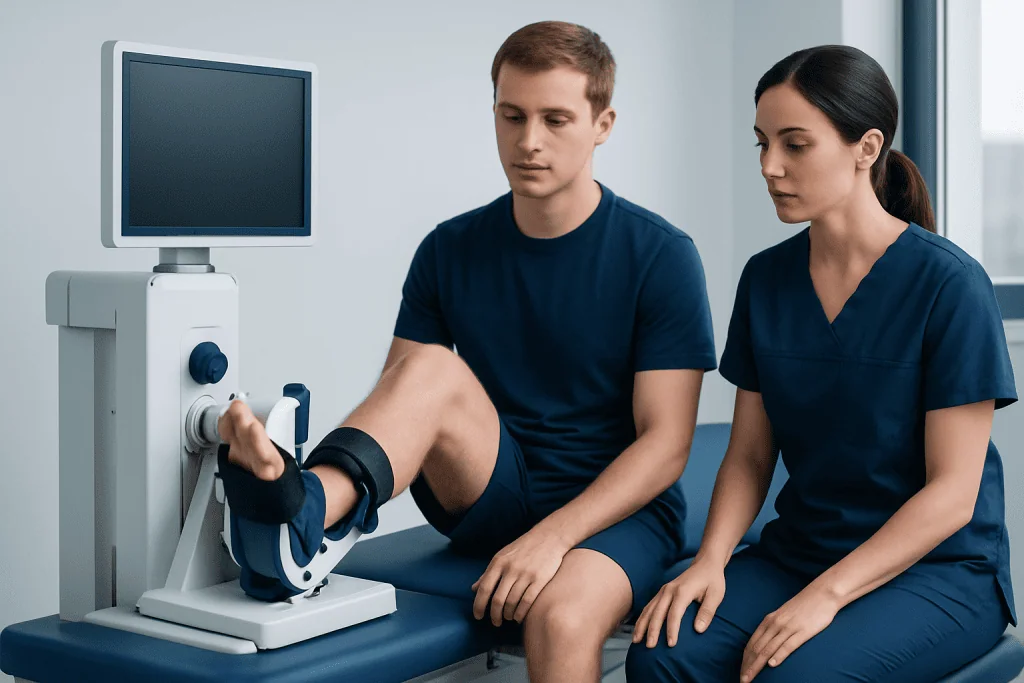
The ankle depends on ligaments, tendons, muscles, and joint surfaces working together. When a ligament is injured, the ankle may become painful, swollen, and less responsive to quick changes in position. This can affect walking, climbing stairs, running, and uneven-ground balance.
One reason rehabilitation matters is that a sprain can disturb proprioception, the body’s sense of joint position. Even after swelling improves, many people notice hesitation, wobbling, or a feeling that the ankle may “give way.” Physiotherapy often addresses this through balance and control exercises, not just strengthening alone.
Sprains are commonly graded from mild stretching of the ligament to partial or complete tearing. A more severe injury usually needs a longer rehabilitation period and closer supervision. In some cases, an ankle sprain may occur alongside other problems such as a tendon injury, cartilage damage, or a higher ankle sprain, which can change the treatment pathway.
Because symptoms can overlap with other injuries, an ankle problem that is severe or not improving should be properly assessed. Some patients benefit from specialist evaluation in orthopedics to clarify whether the issue is a ligament sprain alone or part of a more complex foot and ankle injury.
Common symptoms and signs that rehabilitation may help
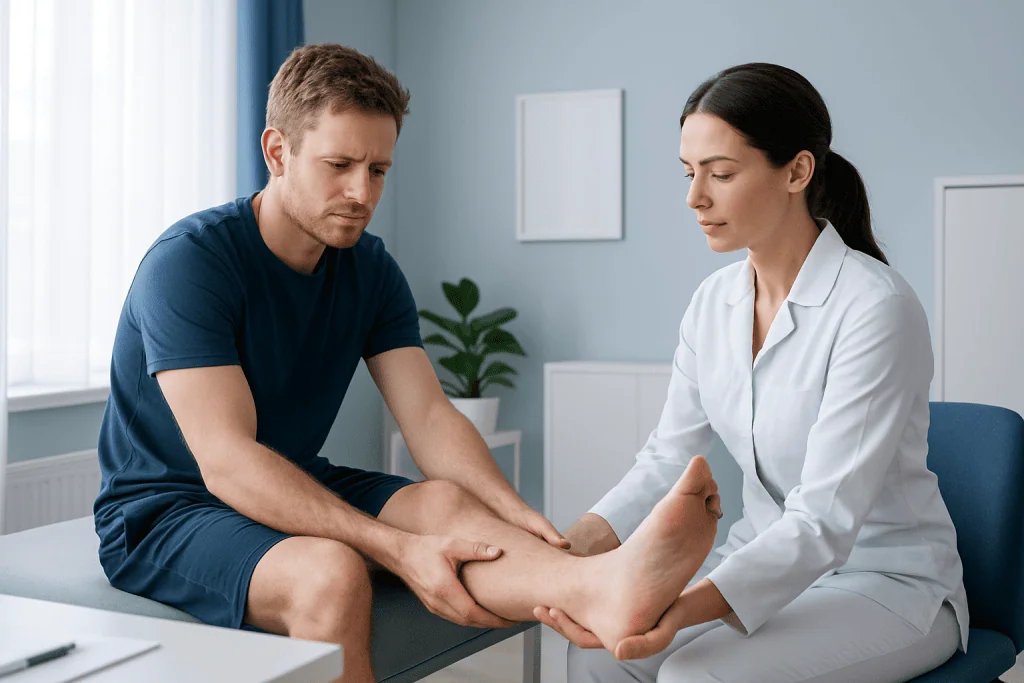
Typical symptoms of an ankle sprain include pain around the outer or inner ankle, swelling, bruising, tenderness to touch, and difficulty bearing weight. Some people hear or feel a pop at the time of injury, while others mainly notice swelling that develops over several hours. The ankle may feel stiff in the morning or after rest.
Physiotherapy is often considered when symptoms interfere with normal activity beyond the very early phase. Examples include ongoing limping, reduced ankle movement, weakness during push-off, difficulty standing on one leg, or repeated twisting episodes. Athletes may also notice reduced speed, jumping confidence, or poor control when changing direction.
Certain features may suggest the need for closer medical review rather than home exercises alone. These include marked swelling, severe pain over the bones, numbness, visible deformity, inability to take several steps, or symptoms that continue without clear improvement. A careful examination helps decide whether rehabilitation can begin immediately or whether further investigation is needed first.
- Pain when walking or turning the ankle
- Swelling and bruising around the joint
- Stiffness and reduced range of motion
- Weakness, instability, or repeated giving way
- Difficulty returning to work, exercise, or sport
Assessment and diagnosis before physiotherapy
Before starting a rehabilitation plan, a clinician usually asks how the injury happened, whether weight bearing was possible, and whether there have been previous ankle sprains. The physical examination often checks swelling, tenderness, ligament stability, walking pattern, and range of motion. This helps identify the likely severity and whether the ankle is ready for guided exercise.
Imaging is not needed in every case, but it may be useful when a fracture, significant instability, or another injury is suspected. X-rays can help assess for broken bones, while MRI or ultrasound may be used in selected situations to look at ligaments, tendons, cartilage, or persistent pain. Imaging decisions are based on symptoms and examination findings rather than routine use alone.
It is also important to distinguish a standard lateral ankle sprain from other causes of ongoing pain, such as Achilles problems, peroneal tendon injury, osteochondral lesions, or a high ankle sprain. When imaging is appropriate, MRI may help define associated soft-tissue damage and guide rehabilitation planning.
For people with severe swelling, locking, recurrent instability, or unclear findings, multidisciplinary assessment may be useful. This can include sports medicine, physical medicine and rehabilitation, radiology, and orthopedic review, depending on the pattern of injury and the person’s goals.
What happens during sprained ankle physiotherapy treatment
Sprained ankle physiotherapy treatment usually moves through stages rather than relying on a single exercise sheet. In the early phase, the aim is to protect the joint, manage swelling, and maintain comfortable movement. Advice may include short-term activity modification, elevation, compression, and gradual weight bearing as tolerated, sometimes with a brace or support if recommended by a clinician.
As pain settles, the program typically shifts toward restoring range of motion and normal walking. Gentle mobility work may be followed by calf and ankle strengthening, foot control exercises, and progressive loading. Later stages often focus on balance, proprioception, direction changes, and sport-specific drills so the ankle can cope with real-life demands.
Rehabilitation may include supervised sessions, home exercises, or both. Depending on the injury, patients may benefit from individualized physical therapy and rehabilitation that addresses not only the ankle but also calf strength, hip control, posture, and movement patterns that contribute to reinjury risk.
Some people recover quickly within a few weeks, while others need longer, especially after moderate or severe sprains. Progress is usually measured by pain, swelling, walking quality, single-leg balance, confidence, and the ability to perform daily tasks or sport movements without instability.
Other treatment options and when specialist care is needed
Physiotherapy is one part of treatment, but it may be combined with other measures depending on the injury. These can include temporary bracing, supportive taping, activity modification, and pain-relief strategies advised by a clinician. Rest alone is rarely the full answer, because prolonged inactivity may lead to stiffness and weakness.
If an ankle remains unstable despite rehabilitation, or if there is a complete ligament tear, cartilage injury, or associated fracture, specialist treatment may be discussed. In selected cases, doctors may recommend more advanced interventions after careful assessment. This is particularly relevant for competitive athletes, people with repeated sprains, or those with chronic symptoms affecting daily life.
When ongoing instability or associated structural injury is suspected, assessment within orthopedics and traumatology can help determine whether conservative care is still appropriate or whether another treatment pathway should be considered. The goal is to restore function while avoiding unnecessary procedures.
Near the end of the care journey, some international patients seek coordinated evaluation and rehabilitation in one setting. Acibadem International’s multidisciplinary specialists and JCI-accredited hospitals diagnose and treat foot and ankle conditions for international patients when advanced assessment or integrated follow-up is needed.
Self-care, prevention, and safe return to activity
Good self-care supports the work done in physiotherapy. During recovery, it usually helps to follow the prescribed exercise schedule, wear any recommended support correctly, and avoid rushing back to high-impact activity before the ankle is ready. Swelling often improves gradually rather than all at once, so steady progress is more realistic than instant recovery.
Preventing future sprains often means training balance and lower-limb strength even after pain has largely gone. Calf muscles, foot control, and hip stability all contribute to safer movement. People returning to court sports, trail running, or activities with frequent jumps and pivots may especially benefit from continued proprioception work and a graded return plan.
A safe return to sport is usually based on function, not the calendar alone. Patients are often advised to return only when they can walk briskly, rise onto the toes, balance on one leg, and perform direction changes or light hopping with good control and without meaningful pain. For some, temporary bracing during higher-risk activity may be recommended.
- Follow a phased exercise plan rather than stopping when pain first improves
- Use supportive footwear, especially on uneven ground
- Warm up before exercise and rebuild intensity gradually
- Continue balance and strengthening work after returning to activity
- Seek reassessment if the ankle repeatedly gives way
When to seek medical care
Medical care is important if the ankle cannot bear weight, looks deformed, or has severe swelling or bone tenderness. Prompt evaluation is also sensible if there is numbness, significant weakness, a wound, or pain that seems out of proportion to the injury. These features may suggest a fracture or another injury that needs more than routine rehabilitation.
Even if the initial injury seemed mild, a doctor or physiotherapist should review the ankle if symptoms are not improving over time. Ongoing pain, repeated twisting, persistent limping, or a feeling that the joint is unstable may mean the injury is more complex than expected. Early reassessment can help prevent chronic problems.
People with diabetes, poor circulation, nerve conditions, or a history of major ankle injuries should be especially cautious and may benefit from earlier professional advice. When in doubt, it is safest to seek evaluation from a qualified clinician who can confirm the diagnosis and recommend the most appropriate rehabilitation plan.
Frequently asked questions
How soon should physiotherapy start after an ankle sprain?
In many cases, gentle rehabilitation begins early, once serious injury has been excluded and pain allows safe movement. The exact timing depends on the severity of the sprain, swelling, weight-bearing ability, and whether a fracture or tendon injury is suspected.
Can a mild ankle sprain heal without physiotherapy?
Some mild sprains improve with self-care, time, and gradual return to normal movement. However, physiotherapy may still be helpful if stiffness, weakness, poor balance, or repeated sprains develop.
How long does sprained ankle physiotherapy treatment usually take?
Recovery time varies widely. Mild sprains may improve over a few weeks, while moderate or severe injuries can need a longer rehabilitation period, especially if the ankle remains unstable or the person is returning to sport.
What exercises are usually included in ankle sprain rehabilitation?
Programs often begin with gentle range-of-motion work and progress to strengthening, calf loading, balance training, and functional exercises. A physiotherapist usually adjusts the plan based on pain, swelling, stability, and activity goals.
Is it normal for the ankle to feel unstable after the swelling goes down?
Yes, some people continue to feel wobbliness or a giving-way sensation even after visible swelling improves. This can happen because ankle sprains may affect balance control and joint position sense, which is why rehabilitation often includes proprioception training.
When is imaging needed for an ankle sprain?
Imaging may be recommended when there is concern about a fracture, severe ligament injury, tendon damage, or persistent pain that is not improving. X-rays are often used to check bones, while MRI or ultrasound may be considered in selected cases.
References
- American Academy of Orthopaedic Surgeons
- National Institute for Health and Care Excellence
- American Physical Therapy Association
- National Health Service
- Mayo Clinic
This article is for general information only and is not a substitute for professional medical advice. Please consult a qualified doctor about your individual situation.
Explore treatments in Turkey — costs, top hospitals & a free quote
JCI-accredited · board-certified surgeons · reply within 24h
Add us as a Preferred Source to see more of our trusted health content across Google Search, AI Overviews and Discover.

More from the Health Library



Related Specialists

Prof. Dr. Yavuz Atar
Otorhinolaryngology
Asst. Prof. Dr. Özer Öztürk
Orthopedic Surgery & Traumatology
Prof. Dr. Mert İlker Hayıroğlu
Cardiology
Dr. Dilara Akman
Infectious Diseases & Clinical Microbiology