Understanding Teratoma with Eyes: A Complete Patient Guide

Teratomas arise from germ cells that can develop into several different body tissues. Rarely, a teratoma may contain highly organized eye-like structures or other recognizable tissues.
Key Takeaways
- Teratomas arise from germ cells that can develop into several different body tissues.
- Rarely, a teratoma may contain highly organized eye-like structures or other recognizable tissues.
- Most mature teratomas are benign, but the location, appearance, symptoms, and pathology findings determine management.
- Imaging and surgical pathology are central to confirming the diagnosis and excluding concerning changes.
- Surgical removal is commonly recommended for symptomatic, growing, uncertain, or potentially complicated teratomas.
A teratoma with eyes is an uncommon type of teratoma that contains organized tissues resembling parts of the eye. Although these findings can be unsettling, they do not mean the tumor is a developing fetus; careful imaging, pathology review, and specialist care guide diagnosis and treatment.
What Does “Teratoma with Eyes” Mean?
A teratoma with eyes describes a rare teratoma containing tissue arranged in a way that resembles one or more eye structures. Teratomas are tumors made from germ cells, which are early cells capable of forming many types of tissue. As a result, they may contain skin, fat, hair, cartilage, bone, nerve tissue, or gland-like tissue.
In unusual cases, the tissues within a teratoma become more organized than usual and can form eye-like structures, sometimes called a highly differentiated or fetiform appearance. This can sound alarming, but it is not the same as a fetus developing in the body. A teratoma is a tumor with disorganized or partially organized tissue development, and its diagnosis depends on imaging and microscopic examination by a pathologist.
Teratomas can occur in several areas of the body, including the ovaries, testes, chest, abdomen, pelvis, brain, and in newborns near the tailbone. The most appropriate next steps depend mainly on where the tumor is located, the person’s age, symptoms, and whether testing suggests a mature benign teratoma or a less common immature or malignant form.
Why Can a Teratoma Contain Eye-Like Tissue?
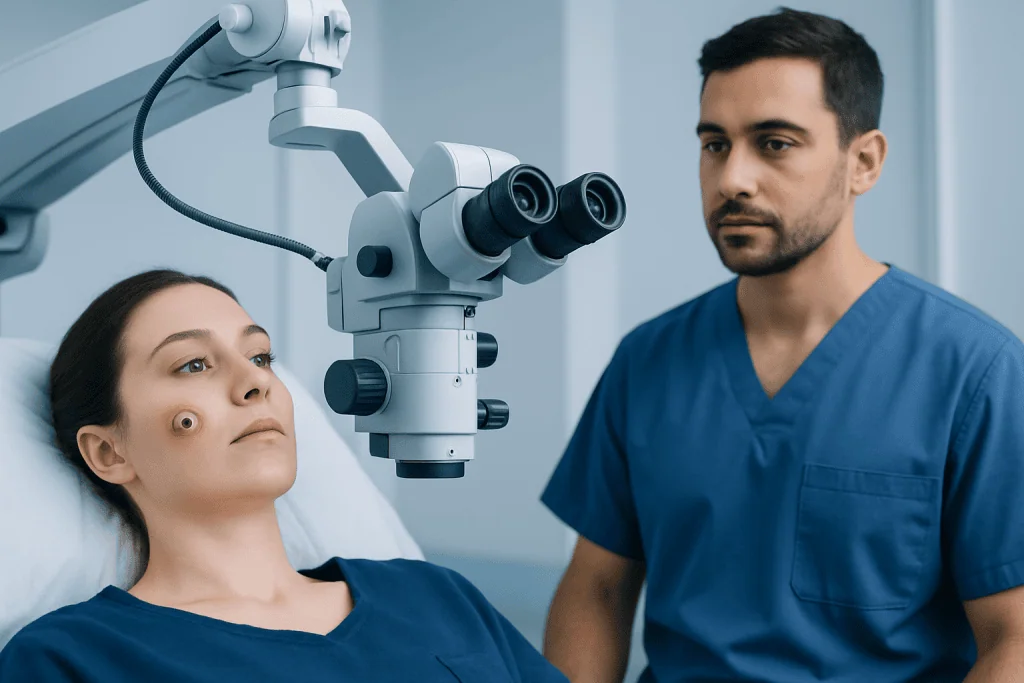
Germ cells normally develop into eggs or sperm. During early development, however, they retain the potential to form tissues related to the body’s major tissue layers. When a germ cell gives rise to a teratoma, this broad developmental potential can result in a mixture of tissues that would not normally be found together in one location.
Most teratomas contain tissue in a scattered pattern. Rarely, tissue can become sufficiently organized to resemble an organ or body part, such as skin with hair follicles, teeth, or components resembling an eye. The term “with eyes” usually refers to this visual or microscopic finding, rather than a fully functioning eye.
Researchers do not consider these tumors to be caused by a person’s actions, diet, stress level, or everyday exposures. In most cases, there is no known way to prevent a teratoma from forming. The finding of eye-like tissue alone does not determine whether a teratoma is benign or malignant; the complete pathology assessment is important.
Where Teratomas Occur and What Symptoms They May Cause
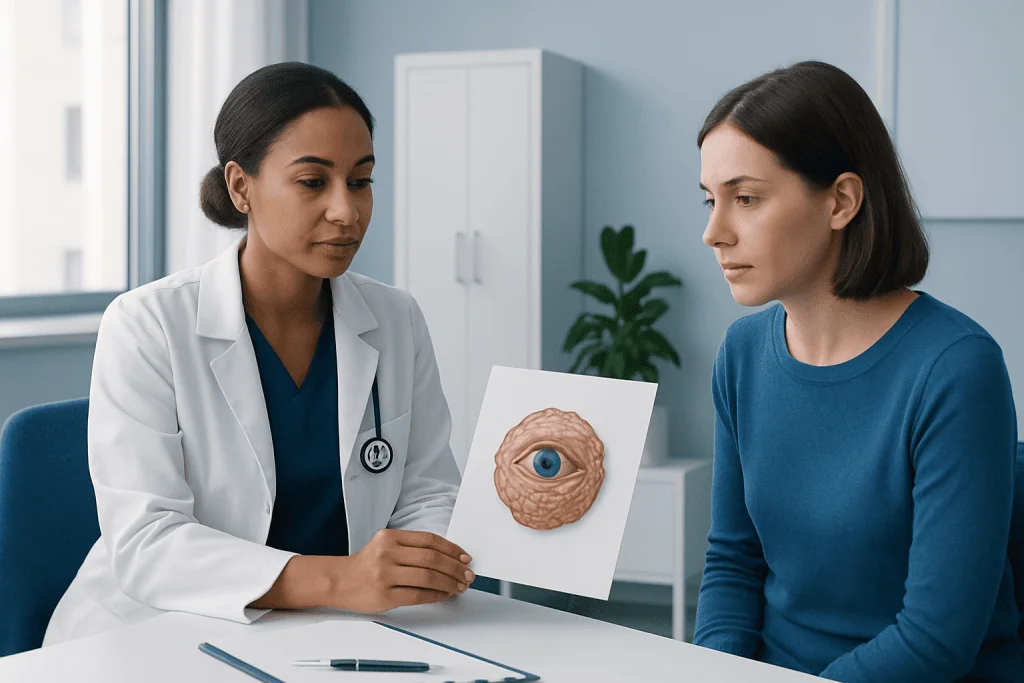
Symptoms vary substantially according to the tumor’s location and size. Some teratomas are discovered incidentally during an ultrasound, CT scan, MRI scan, or surgery performed for another reason. Others cause symptoms by pressing on nearby tissues, becoming twisted, growing, bleeding, or affecting the function of an organ.
Ovarian mature cystic teratomas, often called dermoid cysts, may cause pelvic discomfort, a feeling of fullness, bloating, or no symptoms at all. Sudden severe pelvic pain with nausea or vomiting can occur if an ovarian mass twists the ovary, known as torsion, and needs urgent assessment. Information about related ovarian masses is available in ovarian cyst guidance.
Testicular teratomas may present as a painless lump, swelling, heaviness, or change in testicular size. Teratomas in the chest can cause cough, chest discomfort, breathlessness, or swallowing difficulty, while those in the abdomen or pelvis may cause pressure symptoms. In infants and children, a visible mass or symptoms related to the affected area may be noticed.
- New or enlarging lump or swelling
- Persistent localized pain or pressure
- Abdominal or pelvic fullness
- Changes in bowel, bladder, breathing, or swallowing function
- Unexpected findings on a routine imaging examination
How Doctors Diagnose a Teratoma
Diagnosis usually begins with a medical history, physical examination, and imaging. Ultrasound is often used for pelvic or testicular masses because it can identify cystic and solid components. CT and MRI provide more detailed information about the tumor’s size, location, internal tissues, and relationship to nearby organs.
Teratomas may show characteristic features on imaging, such as fat, fluid, calcification, or tooth- and bone-like material. However, imaging cannot always establish the exact type of tumor or reliably rule out immature or malignant tissue. Doctors may also request blood tests, including selected tumor markers, depending on the person’s age, sex, and tumor location. These tests support assessment but do not diagnose a teratoma on their own.
When a mass is removed or biopsied, a pathologist examines the tissue under a microscope. Pathology can confirm whether the tumor is mature, immature, or contains malignant components. It also identifies unusual organized structures, including eye-like tissue. This detailed review helps the care team plan follow-up and discuss whether additional treatment is appropriate.
Treatment Options and Follow-Up
Treatment is individualized. A small, clearly benign-appearing teratoma may sometimes be monitored with planned imaging, particularly when it causes no symptoms and the risks of surgery outweigh the expected benefit. More often, doctors recommend removal when a mass is symptomatic, growing, has uncertain features, creates a risk of twisting or rupture, or needs definitive diagnosis.
Surgery aims to remove the tumor as safely as possible while preserving normal organ function when appropriate. For ovarian teratomas, this may involve cyst removal while retaining healthy ovarian tissue, depending on age, fertility goals, the appearance of the mass, and surgical findings. Minimally invasive approaches may be suitable in some cases; more extensive surgery may be needed for larger or suspicious tumors. Patients can discuss appropriate laparoscopic surgery options with their surgical team.
Mature teratomas are commonly benign and may need no further treatment after complete removal. Immature teratomas or teratomas with malignant elements require specialist oncology assessment, and treatment can include surgery with carefully selected chemotherapy or other therapies. Follow-up may involve examinations, imaging, and blood tests based on the final pathology report.
Acibadem International’s multidisciplinary specialists and JCI-accredited hospitals evaluate and treat teratomas for international patients, coordinating imaging, surgery, pathology, and oncology care when needed.
Living With a Teratoma Diagnosis
Learning that a tumor contains unusual tissues can bring understandable worry, especially when reports mention eye-like structures, hair, teeth, or other recognizable tissues. It can help to remember that these descriptions reflect the developmental potential of germ cells. They do not, by themselves, predict a poor outcome or indicate that the mass is cancerous.
Patients may find it useful to ask for a clear explanation of the imaging report, the likely type of teratoma, why observation or surgery is being advised, and what the pathology report means. For people with ovarian or testicular teratomas, discussing fertility preservation and organ-sparing options before treatment can be important when relevant.
There is no proven home remedy, supplement, or lifestyle program that dissolves a teratoma. Maintaining usual health habits, attending planned appointments, and reporting new symptoms promptly are practical parts of care. Emotional support from trusted relatives, a counselor, or a patient support service can also be helpful while awaiting tests or treatment.
When to Seek Medical Care
A person should arrange a medical assessment for a new lump, persistent pelvic or abdominal discomfort, testicular swelling, unexplained pressure symptoms, or an imaging report showing a mass. Early evaluation does not assume a serious diagnosis; it helps identify the cause and determine whether monitoring, specialist referral, or treatment is needed.
Urgent medical care is important for sudden, severe pelvic, abdominal, or testicular pain, particularly if it occurs with nausea, vomiting, fever, fainting, or a rapidly enlarging swelling. These symptoms can have several causes, including complications such as torsion, and should not be managed at home.
People who are pregnant, have a child with a suspected teratoma, or have been told that a mass may be immature or malignant should seek timely advice from an appropriate specialist. A gynecologist, urologist, pediatric surgeon, general surgeon, oncologist, or multidisciplinary tumor team may be involved depending on the tumor’s location and pathology.
Frequently asked questions
Is a teratoma with eyes a fetus?
No. A teratoma with eye-like tissue is a germ cell tumor containing unusually organized body tissues. It is not a developing fetus and does not have the normal organized anatomy or developmental capacity of a fetus.
Are teratomas with eyes cancerous?
The presence of eye-like structures does not by itself mean a teratoma is cancerous. Many teratomas, especially mature cystic teratomas, are benign, but pathology testing is needed to determine the exact type and whether any malignant components are present.
Can a teratoma with eyes be seen on an ultrasound?
Ultrasound may show a mass with cystic, solid, fatty, or calcified components, particularly in the ovary or testis. It may not identify eye-like tissue specifically, and CT, MRI, surgery, and pathology may provide more definitive information.
Does every teratoma need surgery?
Not always. The decision depends on the location, size, symptoms, imaging features, growth pattern, risk of complications, and confidence in the diagnosis. Many teratomas are removed because surgery provides a diagnosis and can prevent symptoms or complications.
Can a teratoma return after removal?
A completely removed mature teratoma often does not return, but follow-up needs vary by tumor type and location. Some people can develop a new teratoma in another site or, less commonly, have residual or recurrent disease, so clinicians may recommend scheduled review.
Can teratoma treatment affect fertility?
It can, depending on the tumor location and the operation required. When treating ovarian or testicular teratomas, surgeons often aim to preserve healthy tissue when it is safe to do so, and fertility concerns should be discussed before treatment.
References
- National Cancer Institute
- American Cancer Society
- National Organization for Rare Disorders
- Merck Manual Consumer Version
- World Health Organization
This article is for general information only and is not a substitute for professional medical advice. Please consult a qualified doctor about your individual situation.
Hair transplant in Turkey — costs, graft counts & a free assessment
JCI-accredited · board-certified surgeons · reply within 24h
Add us as a Preferred Source to see more of our trusted health content across Google Search, AI Overviews and Discover.