Understanding Tinnitus Retraining Therapy Treatment: A Complete Patient Guide

Tinnitus retraining therapy treatment aims to reduce distress and awareness of tinnitus rather than make a promise to erase sound completely. The program usually combines expert counseling with sound therapy tailored to the person's hearing and symptom pattern.
Key Takeaways
- Tinnitus retraining therapy treatment aims to reduce distress and awareness of tinnitus rather than make a promise to erase sound completely.
- The program usually combines expert counseling with sound therapy tailored to the person's hearing and symptom pattern.
- Improvement is often gradual and may take months, so regular follow-up and consistent use are important.
- A full evaluation is needed first to look for hearing loss, ear disease, medication effects, or other causes of tinnitus.
- Urgent medical assessment is important for sudden hearing loss, one-sided new tinnitus, severe dizziness, or neurologic symptoms.
Tinnitus retraining therapy treatment is a structured approach that helps people become less bothered by ongoing ringing, buzzing, or other ear sounds. It usually combines education, counseling, and carefully selected sound therapy so the brain can gradually treat tinnitus as a neutral background signal.
Overview: what tinnitus retraining therapy treatment does
Tinnitus retraining therapy treatment is a long-term management approach for people who hear sound without an outside source, such as ringing, buzzing, hissing, or clicking. Its main goal is not simply to cover up tinnitus, but to help the brain react to it less strongly. Over time, the sound becomes easier to ignore and less emotionally upsetting.
This approach is based on the idea of habituation. Habituation is the brain’s natural ability to stop focusing on signals that are not dangerous or important, such as the hum of an air conditioner or distant traffic. In tinnitus retraining therapy, education and sound therapy work together to reduce the alarm response linked to tinnitus and support this process.
People often ask whether this treatment is a cure. A more accurate way to describe it is that it is a rehabilitation strategy. For many people, it can reduce how often tinnitus is noticed, improve sleep and concentration, and lessen stress related to symptoms. Results vary, and success depends on the cause of tinnitus, associated hearing loss, and how consistently the plan is followed.
How tinnitus feels and why it affects daily life
Tinnitus can sound different from person to person. Some hear a high-pitched ring, while others notice humming, roaring, pulsing, or static-like noise. It may be constant or intermittent, heard in one ear or both, and become more noticeable in quiet settings, at bedtime, or during stress.
The sound itself is only part of the problem. Tinnitus can trigger frustration, anxiety, poor sleep, difficulty focusing, and a sense that silence is no longer restful. This is one reason tinnitus retraining therapy treatment emphasizes the person’s emotional and mental response, not just the ear symptom.
Tinnitus is also commonly linked with hearing loss. When hearing is reduced, the brain may become more aware of internal sound signals. A complete hearing check can help identify this connection and guide whether hearing support may be useful alongside therapy.
- Common tinnitus descriptions include ringing, buzzing, hissing, whistling, clicking, or roaring.
- Symptoms may worsen with fatigue, stress, loud noise exposure, or silence.
- Related problems can include hearing difficulty, sleep disturbance, irritability, and trouble concentrating.
Who may benefit and what causes need attention first

Tinnitus retraining therapy treatment is generally considered for people with persistent tinnitus that continues to cause distress or interferes with daily life. It may be especially helpful when the main problem is the brain’s strong awareness of the sound, fear about what it means, or trouble adjusting to it over time.
Before starting therapy, doctors first look for possible causes or associated conditions. Tinnitus can occur with age-related hearing loss, noise exposure, earwax blockage, middle ear disease, inner ear disorders, jaw problems, some medications, and less commonly neurological or vascular conditions. A pulsing sound in time with the heartbeat needs separate medical evaluation because it can have a different cause.
Related ENT conditions may also need treatment in their own right. For example, clinicians may evaluate symptoms in the context of tinnitus itself or investigate balance problems if there is concern about vertigo. In some cases, specialists may also assess whether hearing support or other ear-focused treatment should be added to the care plan.
What happens during assessment and diagnosis
A proper assessment usually begins with a detailed history. The clinician asks when the tinnitus started, whether it affects one ear or both, what it sounds like, and whether there are related symptoms such as hearing loss, dizziness, ear fullness, jaw pain, headaches, or exposure to loud noise. Medication history is also important because some drugs may contribute to tinnitus in certain people.
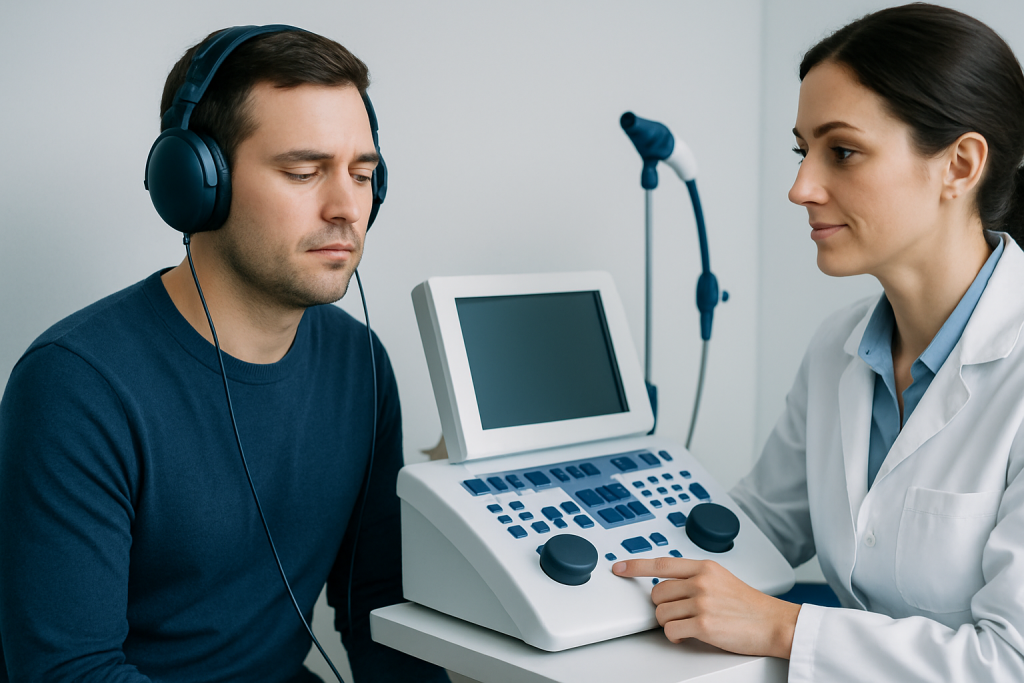
The physical examination may include the ears, nose, throat, jaw, and basic neurologic checks. Hearing tests are central to evaluation because tinnitus and hearing loss often occur together. Audiology testing helps define the hearing pattern and may guide treatment choices such as sound generators or hearing devices.
Not everyone needs scans or advanced testing. Imaging or specialist investigations are more likely if tinnitus is new on one side, pulsatile, linked to sudden hearing loss, or accompanied by neurologic symptoms. This stepwise approach helps identify people who need targeted treatment while avoiding unnecessary tests for others.
What tinnitus retraining therapy treatment includes
The core of tinnitus retraining therapy treatment is a combination of structured counseling and sound therapy. Counseling explains how tinnitus is generated and why the brain can learn to respond to it differently. This education can reduce fear and the constant monitoring that often makes tinnitus seem louder or more intrusive.
Sound therapy provides low-level background sound that decreases the contrast between tinnitus and silence. This can come from environmental sound, bedside devices, wearable sound generators, or, in some cases, hearing aids if hearing loss is present. The aim is not to drown out tinnitus completely, but to make it less dominant so habituation can happen more naturally.
Treatment plans are individualized. Some people may benefit from hearing aid support when hearing loss contributes to symptom awareness. Others may need assessment through ENT evaluation to address ear-related conditions before or during therapy. Follow-up visits are important because sound settings, coping strategies, and progress are usually adjusted over time.
Many programs also address sleep, stress, and attention habits. Relaxation techniques, healthy sleep routines, and reducing repeated checking of the sound can all support progress. For people with significant anxiety or low mood related to tinnitus, clinicians may recommend additional psychological support alongside retraining therapy.
Expected results, time frame, and treatment options that may be combined
Improvement with tinnitus retraining therapy treatment is usually gradual rather than immediate. Many people notice that tinnitus becomes less intrusive over months as their stress response decreases and their attention shifts away from the sound. The goal is often better quality of life, improved sleep, and less emotional burden, even if the sound is still present at times.
The exact time frame varies, but this therapy generally requires patience and consistent participation. Skipping follow-up or changing devices without guidance can make progress harder to judge. A realistic expectation is that the brain can learn to place tinnitus in the background more often, much like other neutral everyday sounds.
TRT may be combined with other evidence-based options depending on the person’s needs. These can include hearing rehabilitation, management of ear disease, treatment of anxiety or insomnia, and practical sound enrichment at home. Some people also undergo ear surgery if a specific structural ear problem is found, but surgery is not a standard treatment for most subjective tinnitus.
Self-care and when to seek medical care
Self-care can make a meaningful difference alongside professional treatment. Helpful steps include protecting the ears from excessive noise, but not overusing earplugs in ordinary quiet settings, because too much silence can make tinnitus stand out more. Good sleep habits, stress reduction, regular exercise, and moderate use of caffeine or alcohol may also help some people manage symptoms.
At home, many people benefit from gentle background sound, especially at night. Examples include a fan, soft music, nature sounds, or a white-noise device. It is usually best to avoid focusing on whether tinnitus is better or worse from moment to moment, as constant monitoring can reinforce awareness.
Medical care should be sought promptly if tinnitus starts suddenly, affects only one ear, comes with sudden hearing loss, severe dizziness, ear pain, drainage, facial weakness, or neurologic symptoms such as numbness or difficulty speaking. Pulsatile tinnitus, which sounds like a heartbeat, also deserves medical review. If tinnitus causes significant distress, poor sleep, or trouble functioning, a planned appointment with an ENT specialist or audiologist is appropriate.
For international patients who need coordinated assessment, Acibadem International’s multidisciplinary specialists and JCI-accredited hospitals diagnose and treat ear and hearing conditions, including persistent tinnitus, with individualized care plans.
Frequently asked questions
Is tinnitus retraining therapy treatment a cure for tinnitus?
It is better described as a management and rehabilitation approach than a guaranteed cure. The aim is to help the brain treat tinnitus as a less important signal so it becomes less noticeable and less distressing over time.
How long does tinnitus retraining therapy usually take?
Progress is usually gradual and often takes months rather than days or weeks. The exact timeline varies from person to person, depending on hearing status, stress levels, the cause of tinnitus, and how consistently the plan is followed.
Who is a good candidate for tinnitus retraining therapy?
People with persistent tinnitus that affects sleep, concentration, mood, or quality of life may benefit. A full evaluation is important first to check for hearing loss, ear disease, medication effects, or other medical causes that may need separate treatment.
Does tinnitus retraining therapy use hearing aids?
Sometimes. If hearing loss is present, hearing aids may improve access to outside sounds and make tinnitus less prominent, and they may be combined with counseling or sound therapy as part of the overall plan.
Can sound therapy make tinnitus worse?
When it is properly selected and adjusted, sound therapy is generally designed to be comfortable and supportive, not harmful. The goal is usually low-level sound enrichment rather than loud masking, so follow-up with a qualified clinician is important.
When should someone see a doctor about tinnitus?
Medical review is important if tinnitus is new, one-sided, pulsatile, or linked to hearing loss, dizziness, ear pain, or neurologic symptoms. Anyone whose tinnitus is causing ongoing distress or sleep problems should also arrange a professional assessment.
References
- American Academy of Otolaryngology–Head and Neck Surgery
- National Institute on Deafness and Other Communication Disorders
- National Health Service
- Mayo Clinic
- American Tinnitus Association
This article is for general information only and is not a substitute for professional medical advice. Please consult a qualified doctor about your individual situation.
Explore treatments in Turkey — costs, top hospitals & a free quote
JCI-accredited · board-certified surgeons · reply within 24h
Add us as a Preferred Source to see more of our trusted health content across Google Search, AI Overviews and Discover.