Uspstf Colorectal Cancer Screening: How It Works, Results and What to Expect
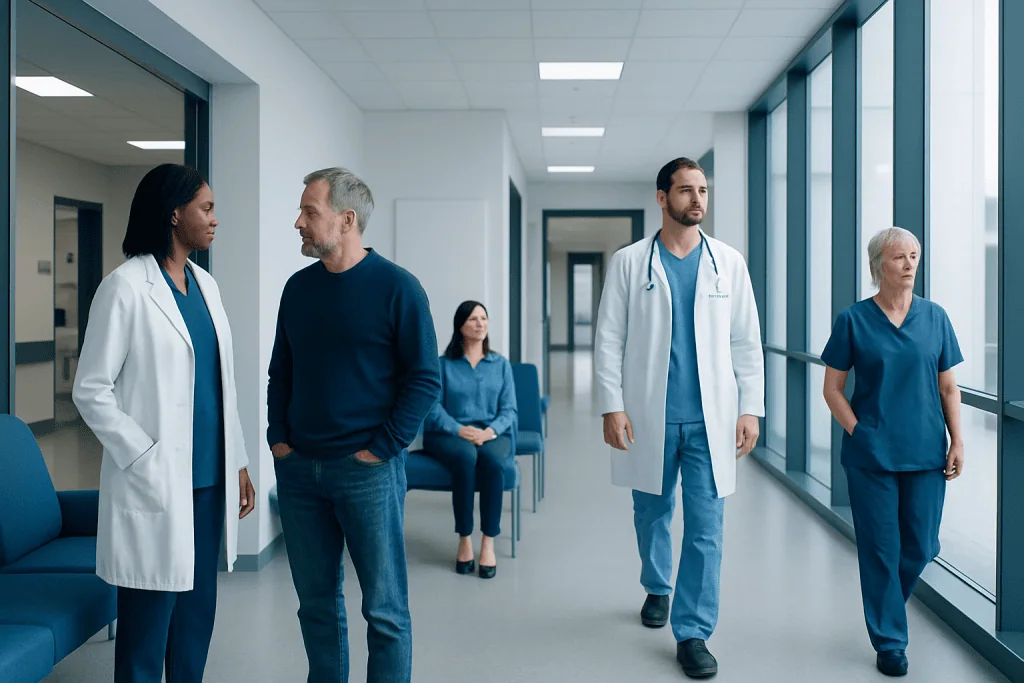
The USPSTF recommends colorectal cancer screening for all average-risk adults aged 45 to 75 years. Adults aged 76 to 85 may benefit from selective screening based on health, previous screening, and personal preferences.
Key Takeaways
- The USPSTF recommends colorectal cancer screening for all average-risk adults aged 45 to 75 years.
- Adults aged 76 to 85 may benefit from selective screening based on health, previous screening, and personal preferences.
- Stool tests are convenient but a positive result must be followed by a colonoscopy.
- Colonoscopy can detect cancer and remove many precancerous polyps during the same examination.
- Screening is designed for people without symptoms; rectal bleeding, persistent bowel changes, or unexplained weight loss need medical assessment.
USPSTF colorectal cancer screening recommends that most adults at average risk begin screening at age 45 and continue through age 75. Several effective test options are available, and the best choice is usually the one a person can complete on schedule with appropriate follow-up.
Overview: how USPSTF colorectal cancer screening works
USPSTF colorectal cancer screening is a set of evidence-based recommendations from the United States Preventive Services Task Force (USPSTF). It advises regular screening for colorectal cancer in adults who do not have symptoms and are at average risk. Screening can find cancer before it causes symptoms, when treatment is often simpler, and some tests can identify polyps that may be removed before they develop into cancer.
The recommendations do not identify one test as best for every person. Instead, they recognize several effective options, including stool-based tests and visual examinations of the colon. A clinician can help match the test to a person’s age, risk factors, medical history, access to care, and likelihood of completing repeat testing when needed.
Colorectal cancer includes cancers of the colon and rectum. Risk rises with age, but it can also be higher in people with a close family history of colorectal cancer or polyps, certain inherited cancer syndromes, inflammatory bowel disease, or a personal history of colorectal polyps. Those individuals may need earlier or more frequent testing than average-risk screening guidance suggests.
What are the USPSTF guidelines for colon cancer screening?
The USPSTF recommends screening for colorectal cancer in adults aged 45 to 75 years. This is a strong recommendation for average-risk adults without symptoms. The aim is to offer a screening method that is appropriate and acceptable, then ensure timely follow-up if a result is abnormal.
For adults aged 76 to 85 years, the USPSTF recommends selective screening rather than routine screening for everyone. The potential benefit depends on overall health, life expectancy, prior screening history, and personal preferences. People who have never been screened may be more likely to benefit than those with consistently negative prior screening tests.
Routine screening is generally not recommended after age 85. These age ranges are intended for average-risk people. A gastroenterologist may recommend a different plan for someone with a first-degree relative diagnosed at a young age, known hereditary cancer risk, prior adenomatous polyps, or inflammatory bowel disease affecting the colon.
- Annual fecal immunochemical test (FIT).
- Annual high-sensitivity guaiac fecal occult blood test (gFOBT).
- Stool DNA-FIT testing every 1 to 3 years.
- CT colonography every 5 years.
- Flexible sigmoidoscopy every 5 years, or every 10 years with annual FIT.
- Colonoscopy every 10 years.
Candidacy and choosing a screening test

Average-risk screening applies to people without warning symptoms and without a history that substantially raises colorectal cancer risk. Before choosing a test, a clinician will ask about previous colonoscopies and polyp findings, family history, bowel conditions, medicines that affect bleeding, and whether there are current symptoms such as blood in the stool or ongoing changes in bowel habits.
Stool-based tests are completed at home and do not require sedation or bowel preparation. They detect blood, altered DNA markers, or both. They are useful options for people who prefer a noninvasive approach, but they need to be repeated at their recommended interval. Importantly, any positive stool test requires a diagnostic colonoscopy; repeating the stool test is not considered an adequate substitute.
Visual tests allow clinicians to look inside the colon. Colonoscopy examines the entire colon and allows many polyps to be removed immediately. CT colonography uses imaging to look for larger polyps or cancer, but it still requires bowel preparation and a follow-up colonoscopy if an abnormality is found. The appropriate choice is a shared decision between the patient and clinician.
Step by step: what happens during a screening colonoscopy
Colonoscopy is commonly used for screening and for investigating an abnormal stool test. Before the procedure, the bowel must be emptied with a prescribed preparation. This usually includes dietary changes for a short period and drinking a bowel-cleansing solution as instructed. A clean colon helps the clinician see small polyps and reduces the chance that an important finding will be missed.
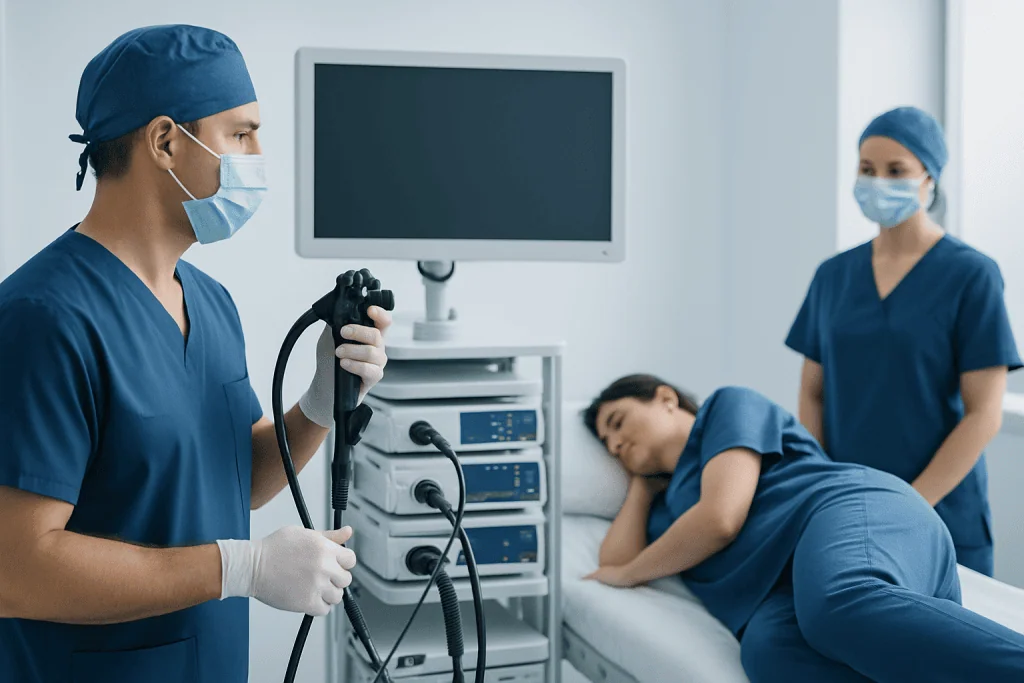
At the appointment, the care team reviews medical history, allergies, medicines, and the preparation. Sedation is often given to improve comfort. A flexible instrument with a small camera is then gently passed through the rectum and advanced through the colon. The examination often takes less than an hour, although the overall visit takes longer because of check-in, preparation, and recovery.
If a polyp is found, it may be removed during the same procedure and sent to a laboratory for analysis. Tissue samples may also be taken when needed. For people considering this examination, colonoscopy screening and polyp removal can provide a direct way to detect and address many precancerous changes in one visit.
Are your private parts exposed during a colonoscopy?
No. A patient’s privacy and dignity are protected throughout a colonoscopy. Patients usually change into a medical gown, and sheets or drapes cover the body. Only the small area needed for the procedure is uncovered briefly, and trained staff take steps to limit unnecessary exposure.
Before sedation, the patient may be asked to lie on the left side with knees bent. Once the procedure begins, the clinical team focuses on safe positioning, monitoring, and comfort. Patients can ask ahead of time about privacy procedures, who will be in the room, and whether a support person may accompany them before or after the examination.
Sedation may make the procedure feel less memorable, but it also means a responsible adult generally needs to take the patient home. The care team will provide specific instructions based on the type of sedation used and the person’s health needs.
Results, recovery timeline, benefits and risks
After a colonoscopy, mild bloating, gas, or cramping can occur as air is removed from the bowel. These symptoms usually settle within hours. Many people can eat and drink after the procedure, following individual instructions, but should avoid driving, operating machinery, drinking alcohol, or making important decisions until sedation has fully worn off—typically for the rest of the day.
Results may be discussed soon after the procedure, especially when the colon appears normal or polyps were removed. Laboratory analysis of removed tissue can take several days. A normal result may mean the next routine colonoscopy is due in 10 years for an average-risk person, while polyps, bowel preparation quality, family history, and pathology findings can shorten the interval.
The major benefit of colonoscopy is that it can find cancer and remove many polyps during the same examination. Risks are uncommon but include bleeding, especially after polyp removal, reactions to sedation, infection, and a tear in the colon wall. CT colonography can also reveal findings outside the colon that may need additional testing, while stool tests can produce false-positive or false-negative results. A clinician can explain how these considerations apply to an individual situation.
What is the 3/2:1 rule for colorectal cancer?
The “3/2:1 rule” is not a USPSTF screening recommendation and is not a standard medical rule used to diagnose colorectal cancer. The phrase may be used informally in some educational settings to describe patterns of family history that could suggest an inherited cancer syndrome, but its meaning is not consistent across clinical sources.
Rather than relying on a shorthand rule, clinicians assess the details of a family history: which relatives were affected, their ages at diagnosis, whether cancers occurred across generations, and whether there are related cancers such as endometrial, ovarian, stomach, urinary tract, or pancreatic cancer. This can help identify people who may benefit from genetic counseling or earlier surveillance.
A person with several relatives affected by colorectal cancer, a relative diagnosed at a young age, or a known inherited genetic variant should discuss screening with a doctor. Their plan may differ substantially from average-risk USPSTF colorectal cancer screening intervals.
Why don't doctors like Cologuard?
Doctors do not generally “dislike” Cologuard; it is a stool DNA-FIT screening option recognized by the USPSTF for appropriate average-risk adults. However, it is not ideal for every person. It needs to be repeated regularly, may produce a positive result when cancer is not present, and cannot remove polyps or confirm a diagnosis.
A positive stool DNA-FIT result must be followed by a colonoscopy. Some clinicians may recommend FIT instead because it is performed annually, is simpler, and may fit certain health systems or patient preferences. Others may favor colonoscopy for people who want a longer screening interval and the ability to remove polyps during the examination.
Cologuard and other stool-based tests are screening tools, not tests for evaluating symptoms. A person with visible rectal bleeding, persistent abdominal pain, unexplained iron-deficiency anemia, or a continuing bowel habit change should seek medical evaluation rather than rely on an at-home screening kit.
When to seek medical care
Screening is for people who feel well and do not have symptoms. Medical assessment should be arranged promptly for rectal bleeding, black or tar-like stools, a persistent change in bowel habits, ongoing abdominal pain, unexplained weight loss, unusual fatigue, or anemia. These symptoms have many possible causes, but they should not be self-diagnosed or delayed.
Urgent medical care is appropriate for heavy rectal bleeding, fainting, severe or worsening abdominal pain, fever with abdominal symptoms, or signs of dehydration. After colonoscopy, patients should contact their care team promptly for severe abdominal pain, persistent vomiting, fever, dizziness, or significant bleeding.
For international patients, Acibadem International’s multidisciplinary specialists and JCI-accredited hospitals can assess colorectal symptoms, organize screening, and provide coordinated care when needed. A gastroenterologist can help determine whether routine screening, diagnostic colonoscopy, genetic assessment, or another evaluation is appropriate.
Frequently asked questions
At what age should average-risk adults begin colorectal cancer screening?
The USPSTF recommends that average-risk adults begin colorectal cancer screening at age 45. Screening should continue through age 75. People with higher risk may need to begin earlier, based on medical and family history.
How often is a colonoscopy needed for screening?
For an average-risk person with a normal, high-quality colonoscopy, the typical screening interval is 10 years. The interval can be shorter if polyps are found, bowel preparation was inadequate, or personal or family risk factors are present. The clinician who reviews the results will recommend the appropriate timing.
Is a positive FIT or stool DNA test cancer?
No. A positive stool test does not diagnose cancer. It means that blood, DNA markers, or both were found and a colonoscopy is needed to identify the cause. Polyps, hemorrhoids, inflammation, and cancer can all contribute to an abnormal result.
Can screening prevent colorectal cancer?
Some screening methods can help prevent colorectal cancer by finding and removing precancerous polyps. Colonoscopy and flexible sigmoidoscopy allow removal of certain polyps during the procedure. Stool tests can help detect possible cancer or polyps early but do not remove polyps themselves.
Do people need screening if they have no family history of colorectal cancer?
Yes. Most colorectal cancers occur in people without a known family history. Average-risk adults should follow age-based screening recommendations unless a clinician advises a different plan. A family history is only one of several factors used to assess risk.
Is colonoscopy painful?
Most people receive sedation and do not feel significant discomfort during colonoscopy. Mild cramping, bloating, or gas may occur afterward and usually resolves within a few hours. The care team can discuss sedation choices and ways to improve comfort before the procedure.
References
- United States Preventive Services Task Force
- American Cancer Society
- National Cancer Institute
- Centers for Disease Control and Prevention
- American College of Gastroenterology
This article is for general information only and is not a substitute for professional medical advice. Please consult a qualified doctor about your individual situation.
Oncology care in Turkey — second opinion and treatment plan
JCI-accredited · board-certified surgeons · reply within 24h
Add us as a Preferred Source to see more of our trusted health content across Google Search, AI Overviews and Discover.

More from the Health Library

Related Specialists

Dr. Müzeyyen İyigün
Anesthesiology
Prof. Dr. Esra Nur Ademoğlu Dilekçi
Endocrinology
Assoc. Prof. Dr. Suat Bilici
Otorhinolaryngology
Prof. Dr. İbrahim Yıldız
Medical Oncology