

Uterine Fibroids: Symptoms, Fertility Impact, and Treatment Choices
Uterine fibroids are usually benign and may cause no symptoms, but some women experience heavy periods, pelvic pressure, pain, or urinary and bowel symptoms. Fibroids can affect fertility or pregnancy mainly when they distort the uterine cavity, especially submucosal fibroids.
Key Takeaways
- Uterine fibroids are usually benign and may cause no symptoms, but some women experience heavy periods, pelvic pressure, pain, or urinary and bowel symptoms.
- Fibroids can affect fertility or pregnancy mainly when they distort the uterine cavity, especially submucosal fibroids.
- Diagnosis is commonly made with pelvic examination and ultrasound, with MRI used when more detail is needed for treatment planning.
- Treatment ranges from monitoring and medication to fertility-preserving procedures such as myomectomy and definitive surgery such as hysterectomy.
- A gynecologist can help match treatment to symptom severity, fibroid type, overall health, and future pregnancy wishes.
Uterine fibroids are common, noncancerous growths of the uterus that may cause heavy bleeding, pelvic pressure, pain, or fertility concerns. Many treatment options are available, and the best choice depends on symptoms, fibroid size and location, age, and pregnancy plans.
Overview
Uterine fibroids, also called leiomyomas or myomas, are noncancerous growths that develop from the muscle layer of the uterus. They are very common during the reproductive years and can vary greatly in size, number, and location. Some are small and found only during a routine pelvic ultrasound, while others may enlarge the uterus or affect nearby organs.
Fibroids are not the same as uterine cancer, and most do not become cancerous. However, they can still affect quality of life when they cause heavy menstrual bleeding, anemia, pelvic pressure, pain, or reproductive concerns. Symptoms often depend less on size alone and more on where the fibroid is located in relation to the uterine cavity and surrounding pelvic structures.
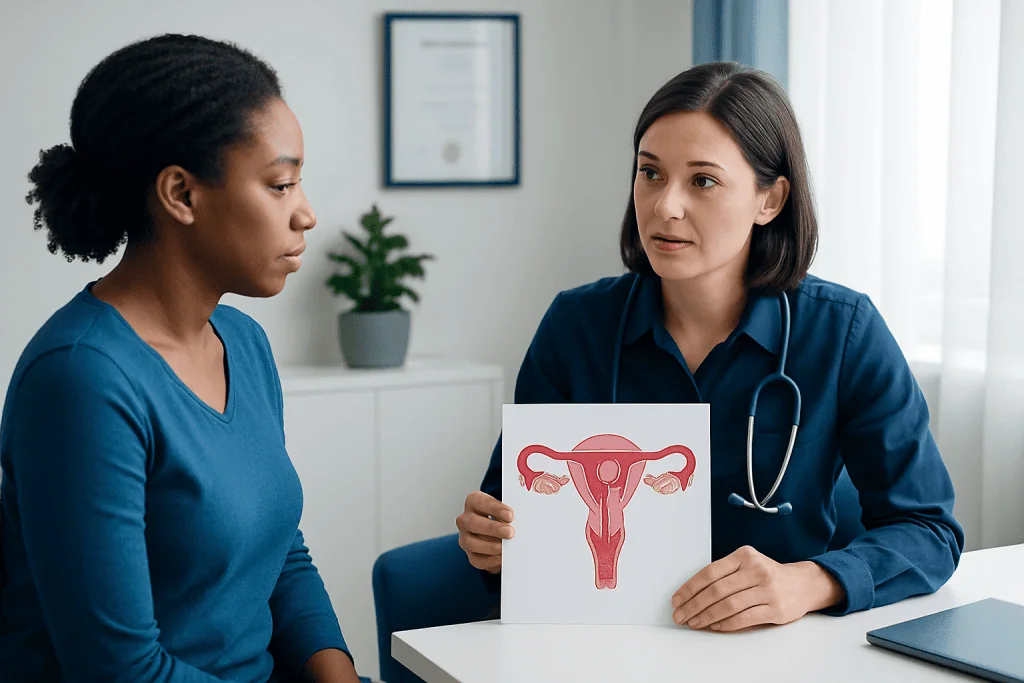
Doctors commonly describe fibroids by location. Submucosal fibroids grow toward or into the uterine cavity, intramural fibroids develop within the muscular wall, and subserosal fibroids project toward the outer surface of the uterus. A fibroid may also be attached by a stalk, called a pedunculated fibroid. This classification helps guide decisions about fertility impact and treatment choices.
Common Symptoms
Many women with uterine fibroids have no symptoms and need only periodic monitoring. When symptoms occur, heavy menstrual bleeding is one of the most common concerns. Periods may last longer than usual, include clots, or require frequent changes of sanitary protection. Over time, heavy bleeding can contribute to iron-deficiency anemia, which may cause tiredness, weakness, dizziness, or shortness of breath with exertion.
Fibroids can also create a feeling of pelvic fullness, bloating, or pressure. Depending on their position, they may press on the bladder and cause frequent urination, difficulty emptying the bladder, or nighttime urination. Pressure on the bowel can contribute to constipation or a sensation of incomplete emptying. Some women notice lower back pain, discomfort during sex, or cramps that are stronger than their usual menstrual pain.
Symptoms that may be linked to fibroids include:
- Heavy or prolonged menstrual periods
- Bleeding between periods
- Pelvic pressure, swelling, or a sense of heaviness
- Frequent urination or bladder pressure
- Constipation or rectal pressure
- Painful periods or pelvic pain
- Difficulty becoming pregnant or repeated pregnancy loss in selected cases
Because these symptoms can overlap with other gynecologic conditions, including endometriosis, adenomyosis, polyps, hormonal disorders, and, rarely, more serious disease, medical evaluation is important when symptoms are persistent, new, or disruptive.
Causes and Risk Factors
The exact cause of uterine fibroids is not fully understood. Research suggests that fibroids arise from changes in a single smooth muscle cell in the uterus, followed by growth influenced by hormones, genetics, and local growth factors. Estrogen and progesterone appear to play important roles, which helps explain why fibroids usually develop during the reproductive years and often shrink after menopause.
Risk factors can include family history, earlier onset of menstruation, and certain reproductive and lifestyle factors. Fibroids are also more common and may occur at younger ages in women of African ancestry. Having no prior pregnancies may be associated with higher risk, while pregnancies may have a protective effect for some women. Obesity and high blood pressure have also been linked with fibroid risk in some studies.
It is important to note that having risk factors does not mean a woman will develop fibroids, and not having them does not rule fibroids out. Fibroids are not caused by anything a patient did wrong. A balanced lifestyle supports overall health, but diet or exercise alone cannot reliably prevent or remove fibroids that are already present.
Fibroids, Fertility, and Pregnancy
Many women with fibroids become pregnant naturally and have uncomplicated pregnancies. The effect on fertility depends mainly on the fibroid location, size, and whether it changes the shape of the uterine cavity. Submucosal fibroids, and some intramural fibroids that distort the cavity, are more likely to interfere with implantation, embryo growth, or sperm and embryo transport. Subserosal fibroids on the outside of the uterus usually have less impact on fertility unless they are very large or cause other anatomical issues.
Fibroids may be considered during an infertility evaluation, especially when no other cause has been found, when menstrual bleeding is heavy, or when imaging shows distortion of the uterine cavity. In some cases, removing a cavity-distorting fibroid can improve the chances of conception or reduce the risk of miscarriage. However, not every fibroid needs to be removed before pregnancy, and unnecessary surgery can create its own risks, including adhesions or uterine scarring.
During pregnancy, fibroids may remain stable, grow, or occasionally cause pain due to changes in blood supply. Some are associated with a higher chance of certain pregnancy complications, such as malpresentation, preterm birth, placental concerns, or cesarean delivery, particularly when fibroids are large or located near the placenta or cervix. Most pregnancies with fibroids are managed with careful observation and individualized obstetric planning.
Women planning pregnancy should discuss treatment timing with a gynecologist or fertility specialist. The decision may involve balancing symptom relief, fertility goals, the type of procedure, recovery time, and whether the uterus needs time to heal before attempting conception.
Diagnosis
Diagnosis usually begins with a medical history and pelvic examination. A clinician may ask about menstrual bleeding patterns, pelvic pain, pressure symptoms, pregnancy plans, previous surgeries, medications, and family history. During a pelvic exam, an enlarged or irregularly shaped uterus may suggest fibroids, although imaging is needed to confirm the diagnosis and define the fibroids more precisely.
Ultrasound is the most common first imaging test. A transvaginal ultrasound provides detailed views of the uterus and ovaries, while an abdominal ultrasound may be useful for larger fibroids. If heavy bleeding is present, blood tests may be ordered to check for anemia or iron deficiency. Pregnancy testing, thyroid testing, or other hormonal assessments may be considered depending on the symptoms.
Additional tests may be recommended when the uterine cavity needs closer evaluation or when surgery is being planned. Saline infusion sonography uses sterile fluid to outline the cavity during ultrasound. Hysteroscopy allows a doctor to look inside the uterus with a thin camera and may also be used to treat some submucosal fibroids. MRI can provide a detailed map of fibroid number, size, and location, and is especially helpful before certain procedures such as uterine artery embolization or complex myomectomy.
Treatment Options
Treatment depends on symptoms, fibroid characteristics, age, general health, and whether future pregnancy is desired. If fibroids are small and not causing problems, watchful waiting with periodic follow-up may be appropriate. Because fibroids often grow slowly and may shrink after menopause, immediate treatment is not always necessary.
Medication can help control symptoms, especially heavy menstrual bleeding and pain, but it usually does not remove fibroids permanently. Options may include nonsteroidal anti-inflammatory medicines for cramps, tranexamic acid for heavy bleeding during periods, hormonal contraceptives, progestin-releasing intrauterine systems, or medicines that temporarily reduce hormone stimulation of fibroids. Gonadotropin-releasing hormone agonists or antagonists may be used in selected situations, often for a limited time or before surgery, because side effects and bone health considerations require medical supervision.
Procedural and surgical choices include fertility-preserving and definitive options. Myomectomy removes fibroids while leaving the uterus in place and may be performed hysteroscopically, laparoscopically, robotically, or through open abdominal surgery depending on fibroid size and location. Uterine artery embolization reduces fibroid blood supply and can improve bleeding and bulk symptoms, though it may not be the first choice for women strongly planning future pregnancy. Radiofrequency ablation and MRI-guided focused ultrasound are minimally invasive options for selected patients.
Hysterectomy, the surgical removal of the uterus, is the only definitive treatment that prevents fibroids from returning. It may be considered for women with severe symptoms who do not wish to become pregnant in the future and when other treatments are not suitable or have not helped. The ovaries do not always need to be removed during hysterectomy; that decision depends on age, risk factors, and individual medical circumstances.
Prevention, Self-Care, and When to See a Doctor
There is no guaranteed way to prevent uterine fibroids. However, general health habits may support hormonal and cardiovascular well-being. Maintaining a healthy weight, staying physically active, managing blood pressure, limiting alcohol, and eating a balanced diet rich in vegetables, fruits, whole grains, and iron-containing foods may be helpful for overall health. For women with heavy periods, a doctor may recommend checking iron levels and using iron supplementation when appropriate.
Self-care can help reduce the impact of symptoms while medical evaluation is underway. Tracking periods, bleeding volume, pain levels, urinary symptoms, and any missed work or daily activities can help the doctor assess severity. Heat therapy, rest, hydration, and doctor-approved pain relievers may ease menstrual discomfort. Patients should avoid starting herbal products or supplements for fibroids without medical advice, as some may interact with medications or be unsafe before surgery.
A doctor should be consulted if periods become very heavy or prolonged, bleeding occurs between periods or after menopause, pelvic pain persists, the abdomen feels increasingly enlarged, urination or bowel function changes, or pregnancy is difficult to achieve. Urgent medical care is appropriate for very heavy bleeding with faintness, severe sudden pelvic pain, or symptoms of significant anemia. At Acibadem International, multidisciplinary specialists in JCI-accredited hospitals evaluate and treat uterine fibroids for international patients, including those seeking fertility-focused care.
Frequently asked questions
Are uterine fibroids cancerous?
Uterine fibroids are benign growths and are not the same as cancer. It is very rare for a growth thought to be a fibroid to be a cancerous tumor. A doctor may recommend further evaluation if a mass grows rapidly after menopause, symptoms are unusual, or imaging findings are unclear.
Can fibroids go away on their own?
Fibroids may shrink after menopause because estrogen and progesterone levels decrease. Before menopause, they may grow, remain stable, or occasionally shrink, but they usually do not disappear completely without treatment. If symptoms are mild, monitoring may be a reasonable approach.
Do all fibroids need treatment?
No. Many fibroids cause no symptoms and are found incidentally during an ultrasound or pelvic examination. Treatment is usually recommended when fibroids cause heavy bleeding, pain, pressure symptoms, anemia, fertility concerns, or pregnancy-related issues.
Which fibroids are most likely to affect fertility?
Submucosal fibroids that grow into the uterine cavity are most likely to affect fertility. Intramural fibroids may also matter if they distort the cavity or are large. Fibroids on the outside of the uterus generally have less effect on becoming pregnant.
Can fibroids come back after myomectomy?
Yes, new fibroids can develop after myomectomy because the uterus remains in place. The chance of recurrence depends on age, number of fibroids, family history, and time until menopause. Follow-up with a gynecologist helps monitor for new symptoms or growth.
Is hysterectomy the only effective treatment for fibroids?
Hysterectomy is the only definitive treatment that prevents fibroids from returning, but it is not the only effective option. Many women improve with medication, myomectomy, uterine artery embolization, ablation techniques, or focused ultrasound. The best choice depends on symptoms, fibroid type, overall health, and future pregnancy plans.
References
- American College of Obstetricians and Gynecologists
- Mayo Clinic
- National Institute for Health and Care Excellence
- European Society of Human Reproduction and Embryology
- World Health Organization
This article is for general information only and is not a substitute for professional medical advice. Please consult a qualified doctor about your individual situation.
Uterine Fibroids in Turkey — costs, top hospitals & a free quote
JCI-accredited · board-certified surgeons · reply within 24h
Add us as a Preferred Source to see more of our trusted health content across Google Search, AI Overviews and Discover.
Check your numbers in seconds
BMI, calories, due date, blood pressure and 30+ more clinical calculators — free, instant, doctor-reviewed ranges.

Gynecology & Obstetrics
Women’s health across pregnancy, gynecologic surgery and high-risk pregnancy care.
187 specialists in this unitMore from the Health Library



Related Specialists

Prof. Dr. Dilek Biyik Özkaya
Dermatology
Dr. Hakan Erkman
Pediatrics
Prof. Dr. Alper Fındıkcioğlu
Thoracic Surgery
Dr. Nihat Ağar
General Surgery