Valgus: An Evidence-Based Guide for Patients
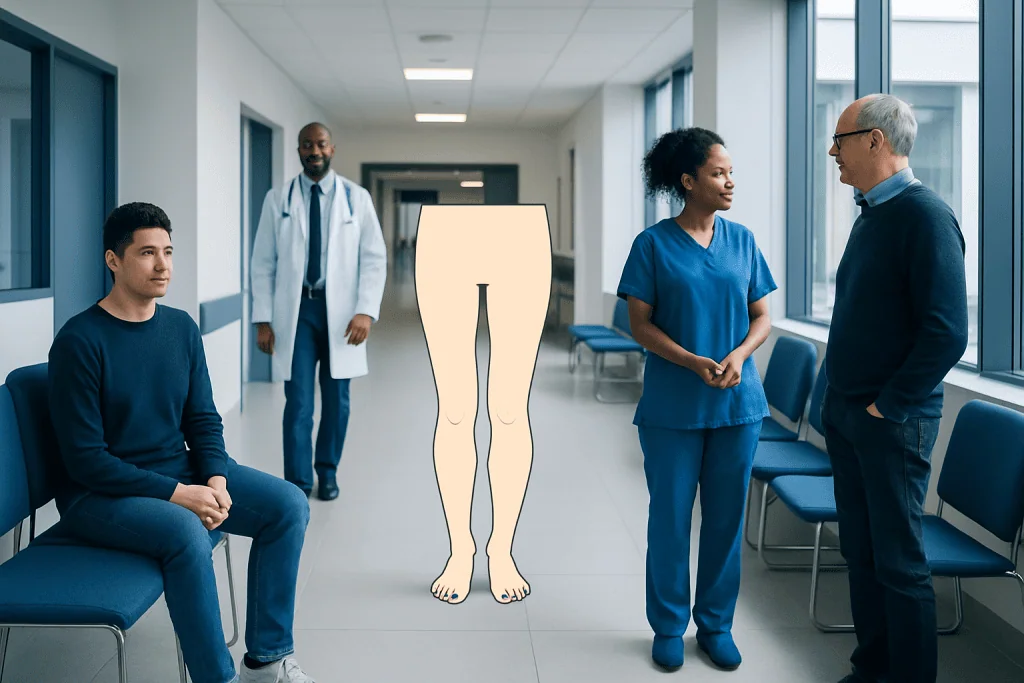
Valgus describes an outward angulation of a bone or joint, not one specific diagnosis. Common examples include knee valgus and hallux valgus, also known as a bunion.
Key Takeaways
- Valgus describes an outward angulation of a bone or joint, not one specific diagnosis.
- Common examples include knee valgus and hallux valgus, also known as a bunion.
- Some valgus changes are mild and need only monitoring, supportive footwear, exercise, or physical therapy.
- Persistent pain, worsening deformity, walking difficulty, or swelling should be assessed by a doctor.
- Treatment depends on the underlying cause and may include rehabilitation, orthotics, pain relief, or surgery.
Valgus is a medical term for outward angling of part of a limb or joint, most commonly seen in the knees, ankles, or big toe. It is not a single disease but a pattern of alignment that can range from harmless to painful, depending on the cause, location, and severity.
What valgus means
Valgus is a medical term used to describe an outward angling of a joint or bone away from the body’s midline. In simple terms, it refers to alignment where one part of a limb shifts outward relative to the part above it. Doctors use the term to describe findings on examination or imaging rather than as a diagnosis on its own.
Valgus can affect different parts of the body. Common examples include the knee turning inward while the lower leg angles outward, the heel tilting outward, or the big toe drifting toward the smaller toes. The best-known foot example is hallux valgus, which is commonly called a bunion.
Not all valgus alignment is harmful. Mild variation can be normal in children during growth, and some adults have slight alignment differences without pain or disability. Problems tend to arise when the change is pronounced, causes symptoms, affects walking or balance, or develops after injury or arthritis.
Where valgus is commonly seen in the body
Valgus most often comes up in discussions about the knees and feet. In the knee, the term may describe a position in which the knees move inward relative to the hips and ankles. Some people notice this during standing, squatting, running, or climbing stairs. It may be related to muscle weakness, joint structure, ligament injury, or arthritis.
In the foot, valgus may involve the heel, ankle, or big toe. Hallux valgus causes the big toe to angle toward the second toe and can create a painful bump at the base of the toe. Heel or hindfoot valgus can appear with flat feet, where the arch drops and the heel tilts outward.
Doctors also use the term after trauma or surgery. For example, a bone may heal in a valgus position after a fracture, or a joint replacement may be assessed for proper alignment. Because the meaning depends on the body part involved, an evaluation focuses on exactly where the angulation occurs and whether it is changing function.
Symptoms and possible complications
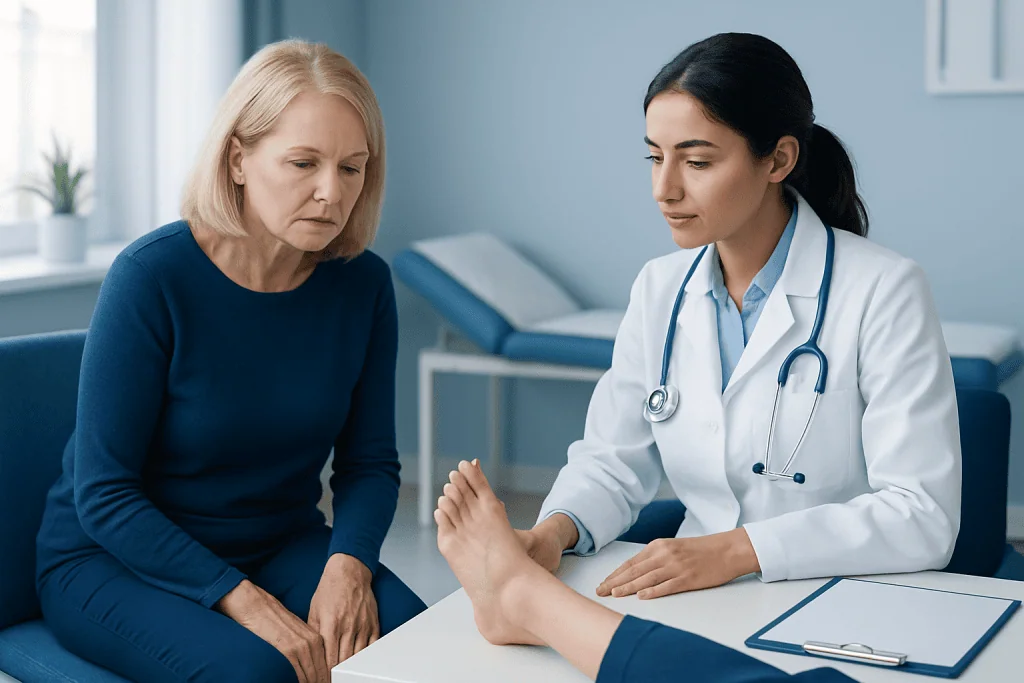
Symptoms vary depending on the location and cause. Some people have visible misalignment but no discomfort. Others develop pain with activity, tenderness over the joint, stiffness, fatigue in the affected limb, shoe-fitting problems, or difficulty walking long distances.
In knee valgus, symptoms may include knee pain, a feeling of instability, altered walking pattern, or discomfort during sports and exercise. In foot valgus or bunions, patients may notice rubbing in shoes, swelling, redness, corns, calluses, or overlapping toes. A child with marked lower-limb valgus may tire easily or trip more often.
If significant valgus is left untreated, it can place uneven stress on cartilage, ligaments, tendons, and surrounding muscles. Over time this may contribute to joint wear, reduced mobility, and chronic pain. Complications are more likely when there is progressive deformity, inflammatory disease, previous injury, or poor shoe support.
- Pain during standing, walking, or exercise
- Joint stiffness or swelling
- Visible change in alignment
- Shoe pressure, bunion pain, or calluses
- Loss of balance, instability, or reduced function
Causes and risk factors
Valgus can develop for several reasons. In children, alignment changes are often part of normal growth, although persistent or severe cases may need assessment. In adults, common causes include genetics, foot structure, ligament laxity, arthritis, muscle imbalance, obesity, previous fractures, tendon problems, and wearing shoes that do not support the foot well.
For knee valgus, the issue may be influenced by weakness around the hips and thighs, poor movement control, prior ligament injury, or joint degeneration such as osteoarthritis. In the foot, hallux valgus often runs in families and is more common in people with flexible joints, flat feet, or long-term pressure from narrow footwear.
Some medical conditions can also affect alignment, including inflammatory arthritis, nerve or muscle disorders, and problems with bone growth. Doctors look at the whole picture because treatment is most effective when the underlying reason is identified, rather than only addressing the visible angulation.
How doctors diagnose valgus
Diagnosis starts with a medical history and physical examination. A doctor asks when the alignment change began, whether it is getting worse, and what symptoms it causes. They also review injuries, family history, footwear, exercise habits, and any underlying joint or neurologic conditions.
During the examination, the doctor checks posture, gait, joint range of motion, tenderness, muscle strength, and flexibility. They may observe standing and walking patterns and compare both sides of the body. In children, growth stage and overall limb alignment are especially important in deciding whether the finding is a normal developmental phase or needs further review.
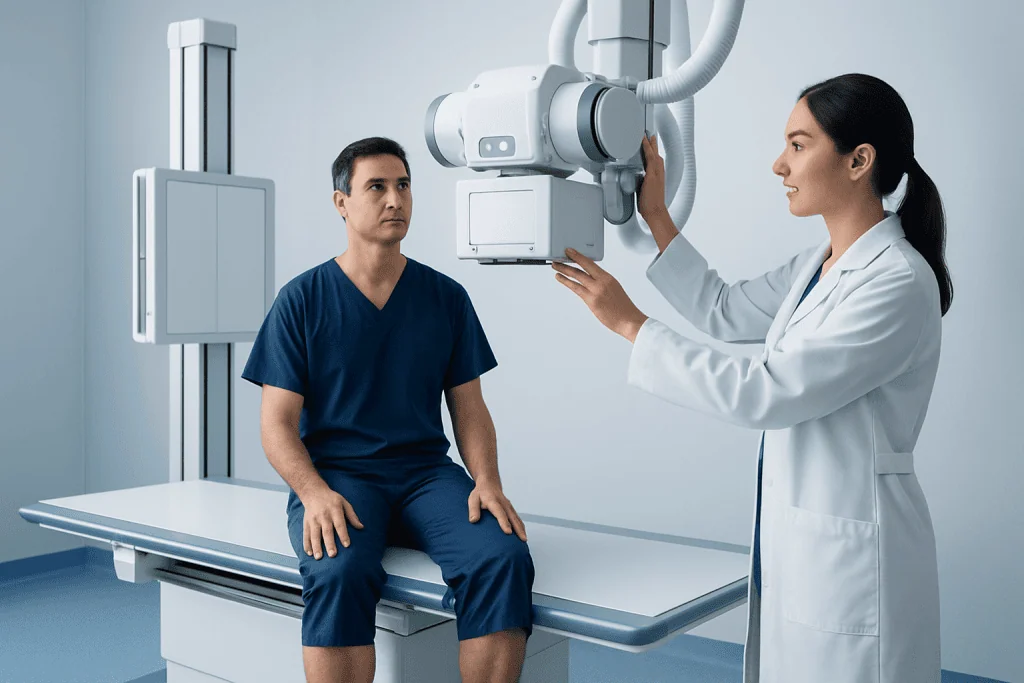
Imaging can help confirm the diagnosis and measure the degree of deformity. X-rays are often used for knees, feet, and toes, especially if pain, arthritis, trauma, or surgery is being considered. Depending on the case, further evaluation may include gait analysis, ultrasound, or advanced imaging. In some patients, referral for orthopedic assessment or physical therapy and rehabilitation is helpful to guide care.
Treatment options
Treatment depends on the cause, severity, age of the patient, and how much the alignment affects daily life. Mild valgus without pain may only need observation and periodic review. When symptoms are present, treatment usually begins with conservative measures designed to reduce pain, improve alignment control, and support function.
Common non-surgical options include activity modification, weight management if appropriate, supportive footwear, toe spacers for some bunions, custom or prefabricated orthotics, and targeted exercises to improve strength and balance. For painful knee valgus, rehabilitation may focus on hip, thigh, and core muscles as well as movement patterns during walking, running, or squatting. Some people also benefit from foot and ankle care when valgus affects the heel or forefoot.
Surgery is considered when pain is persistent, deformity is severe, walking becomes difficult, or conservative treatment does not provide enough relief. The type of procedure depends on the site of the problem and may aim to realign bone, repair soft tissues, or treat joint damage. For advanced knee disease with major malalignment, options discussed by specialists can include reconstructive procedures or knee replacement in selected patients. A personalized treatment plan is important because the same valgus pattern can have very different causes in different people.
Self-care and ways to reduce strain
Self-care can help many people manage symptoms and protect the joint from further stress. Wearing well-fitting, supportive shoes is especially important for foot-related valgus. Shoes should have enough room in the toe box and should not compress the forefoot. Replacing worn-out athletic shoes may also improve comfort and alignment control.
Exercise can be useful, but it should be chosen carefully. Strengthening the muscles around the hips, thighs, calves, and feet may improve movement quality and reduce strain on the affected area. Stretching tight muscles, improving balance, and using low-impact activities such as cycling or swimming can also help some patients. A clinician or physiotherapist can recommend exercises that match the person’s anatomy and goals.
Other practical steps include avoiding activities that sharply worsen pain, using cold packs for short-term swelling after activity, and maintaining a healthy body weight where appropriate. Self-treatment should not replace medical evaluation if the deformity is progressing, if pain is increasing, or if walking becomes difficult.
When to seek medical care
Medical review is recommended if valgus causes ongoing pain, swelling, limping, repeated shoe problems, or limits work, exercise, or daily activities. Care is also important when the alignment is clearly worsening, develops after an injury, or is associated with numbness, weakness, or joint instability.
Parents should ask for assessment if a child has marked asymmetry, pain, frequent falls, or leg alignment that does not improve as expected with growth. Adults should seek evaluation if bunion pain, knee pain, or foot collapse interferes with walking or if there are signs of arthritis. Early assessment can help identify whether simple measures are enough or whether more targeted treatment is needed.
Near the end of the care pathway, some patients may benefit from a multidisciplinary review involving orthopedics, rehabilitation, and imaging specialists. Acibadem International’s multidisciplinary specialists and JCI-accredited hospitals diagnose and treat valgus-related conditions for international patients when specialist assessment is needed.
Frequently asked questions
Is valgus a disease?
No. Valgus is a descriptive medical term for outward angulation of a bone or joint. It may be a normal variation, a sign of a structural problem, or part of a condition such as bunions or arthritis.
What is the difference between valgus and varus?
Valgus means the lower part of a limb or joint angles outward from the body's midline. Varus is the opposite pattern, where the lower part angles inward. These terms help doctors describe alignment on examination and imaging.
Can valgus correct itself?
Sometimes, especially in children, mild valgus can improve naturally as bones grow and alignment changes with age. In adults, spontaneous correction is less common, although symptoms may improve with exercise, supportive footwear, or treatment of the underlying cause. A doctor can advise whether monitoring is enough.
Is hallux valgus the same as a bunion?
Hallux valgus is the medical name for the alignment change that causes the big toe to drift toward the smaller toes. A bunion refers to the prominent bump that often forms at the base of the big toe. The two terms are closely related and are often used together.
Does valgus always need surgery?
No. Many people improve with non-surgical treatment such as physical therapy, orthotics, better footwear, activity changes, and pain management strategies. Surgery is usually reserved for persistent pain, significant deformity, or loss of function.
What kind of doctor treats valgus?
The most appropriate specialist depends on where the valgus occurs and what is causing it. Orthopedic surgeons, foot and ankle specialists, physiatrists, physical therapists, and pediatric specialists may all be involved. Primary care doctors often help coordinate the first assessment.
This article is for general information only and is not a substitute for professional medical advice. Please consult a qualified doctor about your individual situation.
Joint and spine care in Turkey — expert assessment & treatment
JCI-accredited · board-certified surgeons · reply within 24h
Add us as a Preferred Source to see more of our trusted health content across Google Search, AI Overviews and Discover.

More from the Health Library

Diphtheria: An Evidence-Based Guide for Patients

Epidural Needle: What Patients Need to Know

Poached Eggs Egg Poacher: A Complete Medical Overview

Dine Gluten Free: A Complete Medical Overview

Bleeding Mole: An Evidence-Based Guide for Patients