Varicocele: Causes of Male Infertility and Treatment Choices

Varicocele is a widening of veins around the testicle, most often on the left side. Many men have no symptoms, but some notice a dull ache, heaviness, or fertility problems.
Key Takeaways
- Varicocele is a widening of veins around the testicle, most often on the left side.
- Many men have no symptoms, but some notice a dull ache, heaviness, or fertility problems.
- Diagnosis usually involves a physical examination and often a scrotal ultrasound.
- Treatment depends on symptoms, fertility goals, and testicular health, and may include observation or repair.
- A doctor should assess any new scrotal lump, pain, swelling, or fertility concern.
Varicocele is a common condition in which veins inside the scrotum become enlarged, similar to varicose veins in the legs. It may cause no symptoms, but in some men it can affect testicular growth, comfort, or fertility and may benefit from medical evaluation.
Overview of varicocele
A varicocele is an enlargement of the veins within the scrotum, the skin sac that holds the testicles. These veins are part of the pampiniform plexus, a network that helps regulate testicular temperature. When the valves inside the veins do not work effectively, blood can pool and the veins can stretch and widen.
Varicoceles are common and often develop during adolescence or early adulthood. In many cases they are found during a routine examination or an infertility evaluation rather than because of severe symptoms. The condition is usually not dangerous, but it can matter because healthy sperm production depends on the right environment inside the scrotum.
Most varicoceles occur on the left side because of differences in vein anatomy and blood flow. Some men have a varicocele on both sides. Although many men with varicocele remain fertile and never need treatment, others may develop discomfort, testicular shrinkage, or reduced semen quality over time.
Symptoms and possible effects on fertility
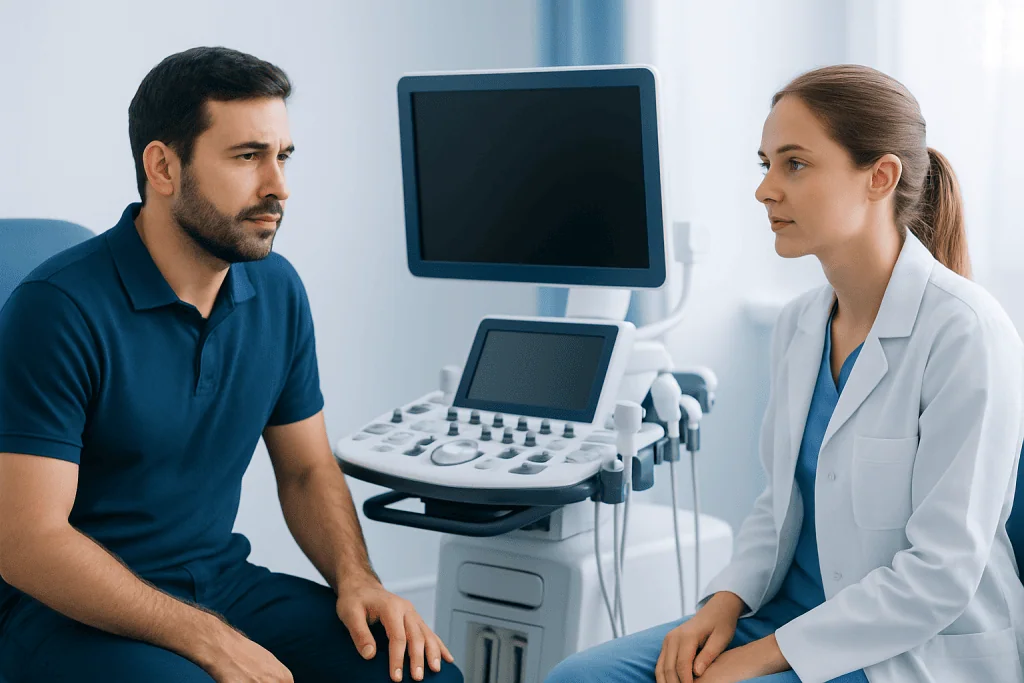
Many varicoceles cause no clear symptoms. When symptoms do occur, they often develop gradually. A man may notice a dull ache, a dragging sensation, or a feeling of heaviness in the scrotum, especially after standing for long periods, physical activity, or at the end of the day. Symptoms may improve when lying down.
Some men describe visible or palpable enlarged veins that can feel like a “bag of worms” above the testicle. The affected testicle may appear smaller, especially if the varicocele developed during adolescence and affected normal growth. Pain is usually mild to moderate rather than sudden or severe.
Varicocele is one of the most common findings in men being assessed for fertility problems. It may affect sperm production and function by raising testicular temperature, altering blood flow, increasing oxidative stress, or affecting hormone balance within the testicle. Not every varicocele causes infertility, but it can be an important and treatable factor in some cases of male infertility.
- Dull scrotal ache or heaviness
- Visible or enlarged scrotal veins
- Difference in testicle size
- Reduced semen quality on testing
- No symptoms at all in many cases
Causes and risk factors
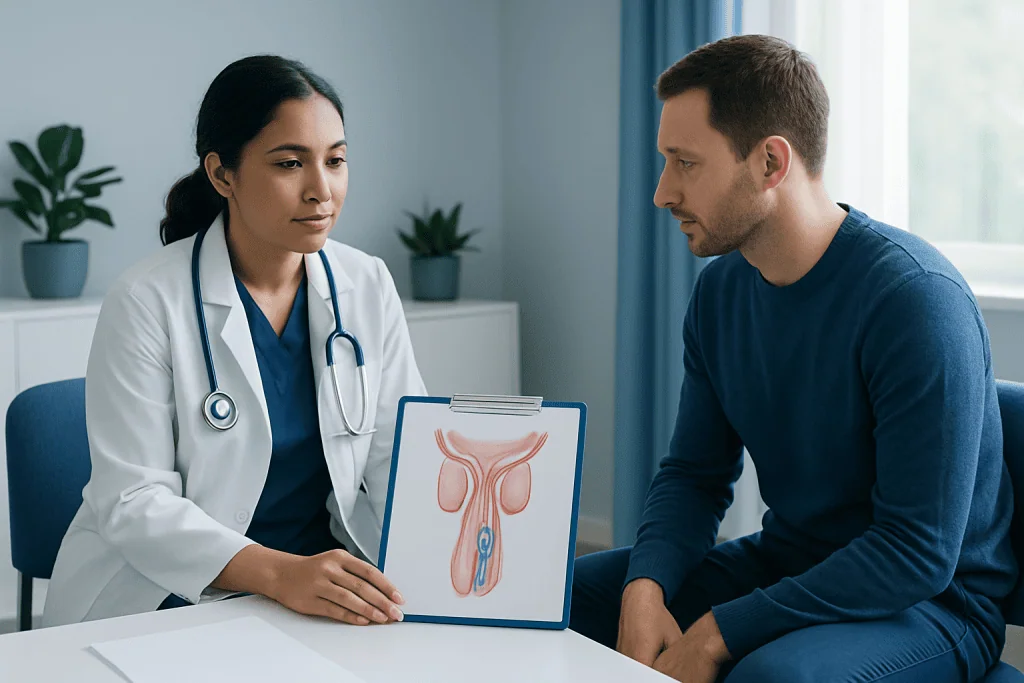
The exact cause of varicocele is usually related to impaired function of the valves inside the testicular veins. These valves normally help blood move upward toward the heart. When they become weak or do not close properly, blood can flow backward and collect in the veins, causing them to enlarge.
Body anatomy helps explain why the condition is more often found on the left side. The left testicular vein drains into the left renal vein at a different angle and under different pressure conditions than the right side. This makes the left side more prone to blood pooling. In some men, both sides can be affected.
Varicocele often appears during puberty, when blood flow to the genitals increases. It is not usually caused by anything the person did or did not do. However, doctors pay closer attention when a varicocele appears suddenly, occurs only on the right side, or develops later in life, because uncommon underlying causes may need to be ruled out.
How varicocele is diagnosed
Diagnosis starts with a medical history and physical examination. The doctor may examine the scrotum while the patient is standing and again while lying down. Sometimes the patient is asked to perform a Valsalva maneuver, such as bearing down, which can make enlarged veins easier to feel.
Varicoceles are often graded by size. Small ones may only be detected during examination with straining, while larger ones can be felt easily or seen through the scrotal skin. Because other scrotal conditions can resemble varicocele, imaging is often used to confirm the diagnosis.
A scrotal ultrasound is the most common imaging test. It can show enlarged veins, assess blood flow, and measure testicular size. If fertility is a concern, the evaluation may also include semen analysis and sometimes hormone blood tests. These help determine whether the varicocele may be contributing to reduced sperm count, movement, or shape.
If a patient has ongoing fertility concerns, a doctor may also look for other possible causes, because varicocele is only one part of the bigger picture. In some cases, men may need assessment for related conditions such as azoospermia or other reproductive issues before deciding on the most suitable treatment plan.
Treatment options and when repair may help
Not every varicocele needs active treatment. If there is no pain, no testicular shrinkage, and no concern about fertility, a doctor may recommend observation with follow-up visits. Supportive underwear and avoiding activities that worsen discomfort may also help some men manage mild symptoms.
Treatment is more likely to be considered when there is persistent pain, abnormal semen analysis in a man hoping for children, testicular atrophy, or delayed testicular development in adolescents. The decision is individual and should be based on symptoms, examination findings, ultrasound results, and reproductive goals.
The main treatment is varicocele repair, also called varicocelectomy, which blocks the abnormal veins so blood can be redirected through healthier pathways. This can be performed using different approaches, including microsurgical techniques, laparoscopic surgery, or radiologic embolization in selected cases. If surgery is advised, the doctor may discuss varicocelectomy as a standard option to improve symptoms or support fertility in suitable patients.
For men whose primary concern is conception, treatment may be part of a broader fertility plan. Depending on the overall reproductive evaluation, doctors may also discuss semen preservation or advanced reproductive care such as IVF treatment or ICSI when appropriate. Improvement after repair is not immediate, because sperm production takes time, and follow-up semen testing is usually done over the following months.
Recovery, self-care, and monitoring
Recovery depends on the treatment approach. After surgery or embolization, most men can return to light daily activities within a short period, but strenuous exercise, heavy lifting, and sexual activity may need to be limited for a while based on the doctor’s advice. Mild soreness, bruising, or swelling can occur temporarily.
Self-care for mild or untreated varicocele usually focuses on comfort rather than cure. Supportive underwear, avoiding prolonged standing when possible, and taking doctor-approved pain relief may reduce discomfort. Applying a cold pack briefly may sometimes help with temporary swelling, provided it is used safely and not directly on the skin.
Follow-up matters, especially in adolescents and in men being treated for fertility. Doctors may repeat physical examination, ultrasound, or semen analysis to see whether testicular growth is normal, symptoms have improved, or sperm parameters are changing. Continued monitoring helps guide whether further treatment is needed.
Near the end of the treatment journey, coordinated care can be helpful, especially for international patients. Acibadem International’s multidisciplinary specialists in JCI-accredited hospitals diagnose and treat varicocele as part of broader urology and fertility care.
When to see a doctor
A doctor should evaluate any new scrotal swelling, lump, persistent ache, difference in testicle size, or concern about fertility. While varicocele is common and usually benign, similar symptoms can occur with other conditions that need different treatment. A professional examination is the safest way to know the cause.
Urgent medical attention is important if scrotal pain is sudden, severe, associated with nausea, fever, redness, or follows an injury. These symptoms are not typical of an uncomplicated varicocele and may point to a more urgent problem such as testicular torsion or infection.
Men trying to conceive should consider evaluation if pregnancy has not occurred after a reasonable period, especially if there is a known varicocele or abnormal semen test. Early assessment can help identify whether simple monitoring is enough or whether treatment may improve comfort, testicular health, or the chance of conception.
Frequently asked questions
What is a varicocele?
A varicocele is an enlargement of the veins inside the scrotum. It is similar to varicose veins in the legs and most often affects the left side. Many men do not notice it unless it causes discomfort or is found during a fertility evaluation.
Can a varicocele cause infertility?
Yes, in some men a varicocele can affect sperm production, sperm movement, or overall semen quality. However, not every varicocele causes infertility, and many men with the condition can still father children naturally. A semen analysis and medical assessment help clarify its significance.
Does every varicocele need surgery?
No, many varicoceles do not require treatment if they cause no symptoms and are not affecting fertility or testicular growth. Doctors often recommend monitoring in these cases. Surgery or another repair procedure is usually considered only when there is pain, testicular atrophy, or fertility-related concern.
How is varicocele diagnosed?
Doctors usually diagnose varicocele with a physical examination and often confirm it with a scrotal ultrasound. If fertility is a concern, semen analysis may also be performed. In some cases, hormone tests are added to better understand testicular function.
Can varicocele go away on its own?
A varicocele usually does not disappear completely on its own. Mild cases may remain stable and never cause important problems, which is why observation is often appropriate. If symptoms worsen or fertility becomes a concern, treatment options can be discussed.
What is recovery like after varicocele treatment?
Most men recover well and can return to normal daily activities relatively soon, depending on the type of procedure performed. Temporary soreness or swelling can occur, and doctors usually advise avoiding heavy lifting for a short time. Follow-up is important to check symptom relief and, when needed, semen test results.
References
- American Urological Association
- European Association of Urology
- American Society for Reproductive Medicine
- National Institute of Diabetes and Digestive and Kidney Diseases
- Mayo Clinic
This article is for general information only and is not a substitute for professional medical advice. Please consult a qualified doctor about your individual situation.
Male Infertility in Turkey — costs, top hospitals & a free quote
JCI-accredited · board-certified surgeons · reply within 24h
Add us as a Preferred Source to see more of our trusted health content across Google Search, AI Overviews and Discover.

Urology
Treatment of the urinary system and male reproductive health, including robotic and laser procedures.
63 specialists in this unit