Walking Stick: An Evidence-Based Guide for Patients

A walking stick can help with balance, stability, and weight transfer during walking. Correct height and proper use are essential for comfort and safety.
Key Takeaways
- A walking stick can help with balance, stability, and weight transfer during walking.
- Correct height and proper use are essential for comfort and safety.
- A walking stick should usually be held on the opposite side of a painful or weaker leg.
- New walking difficulty, falls, or sudden weakness should be assessed by a doctor.
- Some people need a different aid, such as a walker, rehabilitation program, or treatment for the underlying condition.
A walking stick is a simple mobility aid that can improve balance, reduce pressure on a painful leg or joint, and make walking feel safer. The right fit, technique, and medical evaluation matter, especially if weakness, numbness, or repeated falls are part of the problem.
Overview: what a walking stick does
A walking stick is a handheld mobility aid used to improve stability during standing and walking. For many people, it helps by widening the base of support, improving confidence on uneven ground, and reducing some of the load placed on a painful hip, knee, ankle, or foot. It can be useful after an injury, during recovery, or as part of longer-term support for age-related balance changes or chronic conditions.
Not every walking stick is the same. Some are simple single-point canes, while others have ergonomic handles, adjustable height, folding designs, or broader bases for extra stability. The best option depends on why support is needed, how much assistance is required, and whether the main issue is pain, weakness, dizziness, or balance impairment.
A walking stick can be very helpful, but it is not a substitute for diagnosis when walking becomes difficult. Trouble walking may be linked to joint disease, nerve problems, inner-ear disorders, muscle weakness, recovery after surgery, or conditions affecting the brain and spinal cord. If the reason for needing support is unclear, a medical assessment can help identify the cause and guide treatment.
Who may benefit from a walking stick
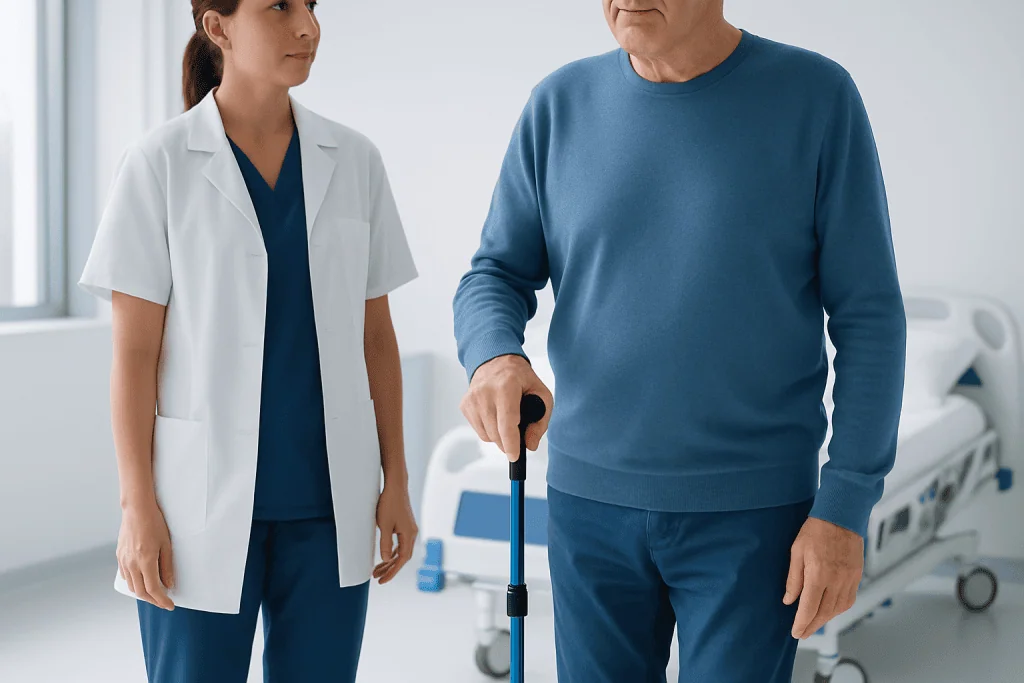
People often use a walking stick when they feel unsteady, have pain in one leg, or notice reduced strength or endurance while walking. It may be recommended for osteoarthritis, recovery from minor injuries, mild balance difficulties, or after some operations as mobility returns. Older adults may also benefit if they feel less secure outdoors or on stairs, provided the aid is correctly fitted and they are shown how to use it.
A walking stick may also help people with certain neurological or musculoskeletal conditions. For example, support may be needed after a stroke, with peripheral nerve problems, or when back or leg symptoms affect gait. In some cases, the walking problem is related to a condition such as Parkinson’s disease or joint degeneration that may need broader treatment beyond the stick itself.
However, a walking stick is not ideal for everyone. If a person has significant weakness in both legs, severe balance impairment, marked shortness of breath, poor hand grip, or frequent falls, a stick may not provide enough support. A walker or supervised rehabilitation may be safer. Assessment by a clinician or physical therapist is often the best way to choose the most appropriate aid.
Choosing the right walking stick

The main goal when choosing a walking stick is to match the aid to the person’s body, symptoms, and daily environment. A lightweight adjustable stick is often practical for occasional use and travel. A contoured or offset handle may provide more comfort and improve weight distribution for people who need to lean on the stick more consistently. Non-slip rubber tips are important because they improve traction and reduce the chance of slipping.
Correct height matters. In general, when the stick tip rests on the floor beside the foot and the person stands upright with arms relaxed, the top of the handle should reach around the wrist crease. This usually allows a slight bend in the elbow when holding the stick. A stick that is too short can encourage leaning and poor posture; one that is too tall can strain the shoulder and reduce control.
People should also think about where they will use it most. Outdoor use may require a stable tip and durable shaft. Indoor use may call for a lighter design that is easier to move in tight spaces. If hand pain or arthritis makes gripping difficult, an ergonomic handle or review by a rehabilitation specialist may improve comfort and safety.
- Choose a height-adjustable model if footwear changes often.
- Check the rubber tip regularly for wear.
- Make sure the handle feels secure and not slippery.
- Ask for a professional fitting if balance is poor or pain is significant.
How to use a walking stick correctly
Many people are surprised to learn that a walking stick is usually held in the hand opposite the painful or weaker leg. For example, if the left knee hurts, the stick is generally held in the right hand. This helps shift some weight away from the affected side and can make the walking pattern smoother and more stable.
When walking, the stick and the weaker or painful leg usually move forward together, followed by the stronger leg. On level ground, steps should be small and controlled at first. Good footwear, upright posture, and looking ahead rather than down can also improve safety. If a person feels unsure, supervised practice with a physical therapist can be very helpful.
Stairs require extra care. A common principle is “up with the stronger leg, down with the weaker leg and stick,” but the safest approach can vary with the person’s condition and home setup. Handrails should be used whenever possible. If dizziness, leg buckling, or repeated missteps occur, the person should stop using the stairs alone until a clinician has reviewed the problem.
Some people benefit from formal physical therapy and rehabilitation to improve gait mechanics, muscle strength, and confidence. This is especially useful when the stick is needed after surgery, after a fall, or because of a neurological condition.
Common reasons someone may need one
A walking stick is not a diagnosis; it is a tool used for many different problems. One common reason is pain from arthritis, especially in the hip or knee, where shifting a small amount of body weight can make movement more comfortable. Another is temporary weakness after an injury, period of bed rest, or an operation involving the lower limb or spine.
Balance problems are another major reason. These may come from age-related changes, medication side effects, vision issues, inner-ear conditions, diabetic nerve damage, or disorders affecting the brain and nerves. In some people, poor walking is linked to spinal compression, severe joint disease, or conditions that may eventually require more targeted treatment such as knee replacement or hip replacement.
A doctor may also consider whether symptoms suggest a broader medical issue. Walking difficulty combined with tremor, shuffling steps, one-sided weakness, numbness, or speech changes may point to a neurological cause and should not be attributed to normal aging alone. In those situations, the stick may help in the short term, but the priority is understanding and treating the underlying condition.
Assessment, diagnosis, and when a different aid is better
If walking has become more difficult, clinicians usually look at the whole picture rather than only the need for a stick. They may ask when symptoms started, whether pain or dizziness is involved, how often falls happen, and whether there is weakness, numbness, or fatigue. Examination often includes posture, strength, reflexes, joint movement, footwear, and the person’s natural walking pattern.
Depending on the findings, tests may include X-rays for joint problems, blood tests, balance assessment, or imaging of the spine or brain. Some people benefit from evaluation by orthopedics, neurology, geriatrics, or rehabilitation specialists. If the person has advanced joint pain or structural damage, treatments such as orthopedic care may be part of the plan.
A walking stick may be enough for mild one-sided pain or minor instability. But if support is needed on both sides, if the person leans heavily on the stick, or if falls continue, a walker or rollator may be more appropriate. Choosing a stronger aid is not a setback; it is often the safest and most practical option for preserving mobility and independence.
Self-care, home safety, and adapting daily life
Using a walking stick successfully involves more than carrying it. Regular movement, muscle strengthening, and balance training can all improve long-term walking ability. Many people also benefit from reviewing footwear, since shoes with poor grip, loose backs, or high heels can cancel out the stability the stick is meant to provide.
At home, fall prevention is important. Removing loose rugs, improving lighting, securing electrical cords, and installing handrails or grab bars can make daily movement safer. The walking path should be clear and wide enough to let the stick move naturally. On wet or uneven surfaces outdoors, extra caution is needed even when using the stick properly.
People should also review medications if they feel sleepy, lightheaded, or unsteady, since some medicines can affect balance. Vision and hearing checks may help as well. In selected cases, rehabilitation, joint care, or treatment of a nerve disorder can reduce dependence on the stick over time by addressing the cause of the walking problem rather than only the symptom.
Near the end of the care journey, some patients seek coordinated evaluation across specialties. Acibadem International’s multidisciplinary specialists and JCI-accredited hospitals diagnose and treat mobility problems for international patients when a broader assessment is needed.
When to seek medical care
A walking stick can support safer movement, but medical review is important if the need for one is new, unexplained, or rapidly worsening. A person should arrange medical care if walking becomes painful, balance problems are increasing, or falls are happening more than once. Ongoing difficulty getting out of a chair, climbing stairs, or walking short distances also deserves attention.
Urgent medical care is needed for sudden weakness, facial drooping, new confusion, loss of coordination, severe dizziness, chest pain, or trouble speaking. These symptoms may signal a serious condition and should not be managed with a walking aid alone. Severe joint pain after a fall, inability to bear weight, or suspected fracture also needs prompt evaluation.
It is also sensible to seek guidance if the stick itself seems to make walking harder. Shoulder pain, hand pain, stooping posture, tripping, or uncertainty on stairs may mean the height is wrong or the wrong type of aid has been chosen. A doctor or physical therapist can correct technique and help decide whether another mobility aid would be safer.
Frequently asked questions
What is the main purpose of a walking stick?
A walking stick helps improve stability and reduce strain during walking. It can support balance, transfer some weight away from a painful leg, and make movement feel more secure.
Which side should a walking stick be used on?
In most cases, it should be held on the side opposite the painful or weaker leg. This helps distribute weight more effectively and can improve walking mechanics.
How high should a walking stick be?
A walking stick should usually reach the wrist crease when the person stands upright with the arm relaxed by the side. This tends to create a slight bend in the elbow, which improves comfort and control.
Can a walking stick prevent falls?
It can reduce fall risk for some people by improving balance and confidence, but it does not prevent all falls. Proper fit, correct technique, safe footwear, and attention to the underlying cause of instability are all important.
Is a walking stick better than a walker?
Not always. A walking stick works best for mild one-sided pain or limited balance support, while a walker may be safer for more significant weakness, poor balance, or repeated falls.
Should someone see a doctor before using a walking stick?
If the reason for needing it is new, unclear, or getting worse, medical advice is a good idea. A doctor or physical therapist can identify the cause of walking difficulty and make sure the aid is appropriate.
This article is for general information only and is not a substitute for professional medical advice. Please consult a qualified doctor about your individual situation.
Joint and spine care in Turkey — expert assessment & treatment
JCI-accredited · board-certified surgeons · reply within 24h
Add us as a Preferred Source to see more of our trusted health content across Google Search, AI Overviews and Discover.

More from the Health Library

Chamomile Tea — Explained by Medical Evidence, Not Myths

Breech Baby: An Evidence-Based Guide for Patients

Widow Maker Artery — Explained by Medical Evidence, Not Myths

Flu Med: An Evidence-Based Guide for Patients

Lip Biting: A Complete Medical Overview