Waterproof Cast — Explained by Medical Evidence, Not Myths

A waterproof cast is not fully risk-free; it needs correct fitting, drainage, and drying. Not all casts are waterproof, and not all injuries can be managed with one.
Key Takeaways
- A waterproof cast is not fully risk-free; it needs correct fitting, drainage, and drying.
- Not all casts are waterproof, and not all injuries can be managed with one.
- Fiberglass outer material and a water-resistant liner are what make a cast "waterproof."
- Pain, swelling, numbness, bad odor, or skin irritation should be assessed by a clinician.
- Patients should follow their orthopedic team's instructions rather than relying on myths or home tips.
A waterproof cast is usually a traditional fiberglass cast paired with a water-resistant liner, allowing bathing or showering in selected patients. It can be convenient, but it is not suitable for every fracture, every person, or every stage of healing.
What Is a Waterproof Cast?
A waterproof cast is most often a fiberglass cast placed over a special water-resistant liner. This design can allow a person to shower, and sometimes bathe, without damaging the cast materials in the same way that a standard cotton-lined cast would be damaged by water. In practical terms, the cast is more accurately described as water-resistant rather than completely immune to all moisture-related problems.
The main advantage is convenience. People may find it easier to maintain daily hygiene, especially during longer periods of immobilization for a broken bone, sprain, or after certain orthopedic procedures. Children and active adults often ask about waterproof options because standard casts can be difficult to keep dry.
However, a waterproof cast is not simply a regular cast that can be soaked without consequences. It still has to fit properly, drain well, and dry as instructed. If water remains trapped, the skin underneath can become irritated, and in some cases a cast may still need to be changed.
The decision to use one depends on the type of injury, swelling, skin condition, age, and the treating clinician’s judgment. For injuries related to fractures, immobilization choices are based on healing needs first and convenience second.
How It Differs From a Standard Cast
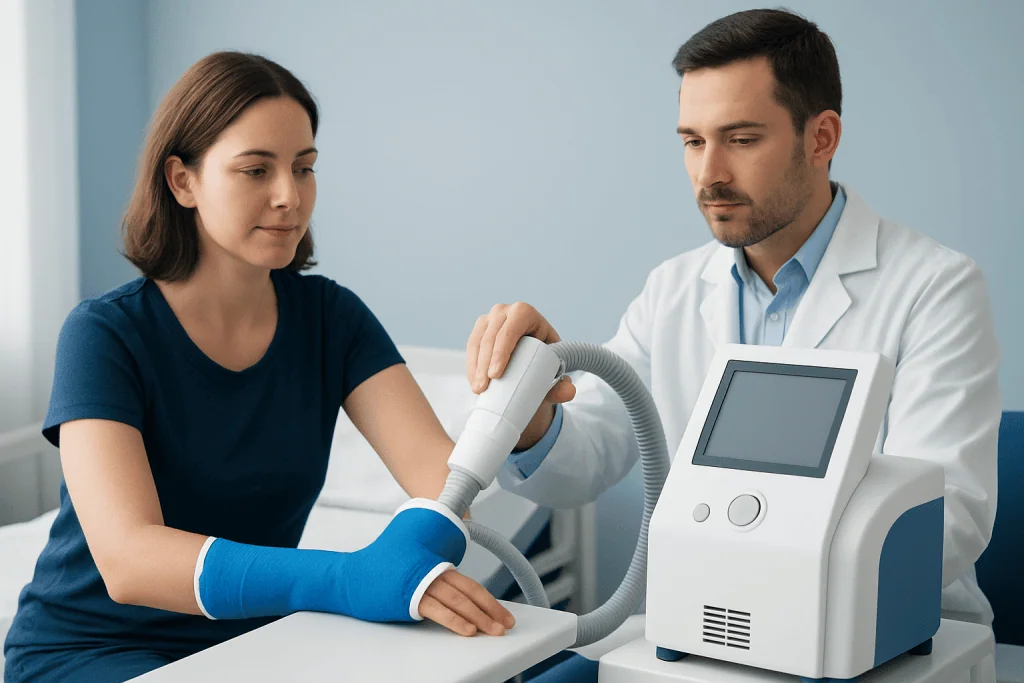
The most important difference is the liner. A standard cast often uses padding that absorbs water and stays damp, which can soften the skin, create odor, and increase the risk of skin breakdown. A waterproof cast uses a liner designed to repel water and allow it to drain more easily.
The outer shell is usually fiberglass rather than plaster. Fiberglass is lighter, more durable, and more resistant to water exposure than plaster. Even so, the cast itself is not meant for every environment. Saltwater, lake water, and heavily chlorinated water may irritate the skin or leave residue in the liner.
Another key difference is the level of monitoring needed. Because people may use a waterproof cast more confidently around water, they may assume it needs less attention. In fact, it still requires regular skin checks around the edges, careful drying, and prompt medical review if there is discomfort or odor.
A clinician may also avoid waterproof materials during the early phase after injury when swelling is expected, or if there is any wound, skin infection, or concern about drainage. In those cases, a conventional cast, splint, or another form of support may be safer.
Who May Benefit and Who May Not

A waterproof cast may be helpful for people with stable fractures, some soft tissue injuries, or selected postoperative cases where a clinician wants immobilization but also wants to support easier hygiene. It can be especially practical for children, people living in warm climates, and anyone likely to struggle with keeping a standard cast dry during daily activities.
Still, it is not right for everyone. It may be unsuitable if there is significant swelling, an open wound, skin sensitivity, ongoing drainage, certain complex fractures, or a need for very close skin observation. Some people may also have difficulty following the drying instructions, which can reduce the benefit of the waterproof liner.
Doctors also consider where the injury is located. A wrist cast, leg cast, or ankle cast may each present different challenges for balance, pressure, and drying. In some situations, a removable brace or a tailored plan through orthopedic care may be more appropriate than a cast.
Because immobilization decisions depend on the injury pattern, people should not request a waterproof cast based only on comfort or preference. The safest option is the one that protects healing while minimizing complications.
Common Myths About Waterproof Casts
One common myth is that a waterproof cast can be treated as if nothing is there. In reality, it still protects an injured area, and too much activity can worsen pain or delay healing. Water resistance does not mean the underlying fracture or injury has healed.
Another myth is that any cast with a hard outer shell is waterproof. That is not true. Many fiberglass casts still use absorbent padding underneath, so they should be kept dry unless the care team specifically says otherwise.
Some people also believe that odor means a cast just “needs airing out.” Mild odor can occur, but a strong or worsening smell may suggest trapped moisture, skin irritation, or infection. It should not be ignored, especially if there is itching, pain, discharge, or fever.
It is also a myth that waterproof casts are suitable for swimming in any type of water. Even when a clinician allows brief water exposure, natural bodies of water can introduce dirt and microorganisms. Patients with sports injuries that may later need sports injury treatment should ask specifically what activities are safe during recovery.
Care, Cleaning, and Daily Use
Patients should follow the exact instructions given when the cast is applied. In general, after the cast gets wet, clean water should be allowed to run through it briefly if advised, and then the cast should be drained and allowed to dry thoroughly. Many teams recommend positioning the cast so water can drip out and using airflow from a fan or cool hair dryer setting if approved.
The skin around the edges should be kept clean and checked daily. People should not insert objects into the cast to scratch itching skin, because this can injure the skin and increase the risk of infection. Powders, lotions, and oils should not be used inside the cast unless a doctor specifically recommends them.
Even with a waterproof liner, prolonged soaking may be discouraged. Hot tubs, lakes, and the sea are often not recommended because of heat, bacteria, salt, sand, and chemicals. If the cast is exposed to anything other than clean fresh water, the patient should ask whether extra rinsing or a cast check is needed.
Daily living with a cast also includes protecting the injured limb from falls and pressure. Elevation, movement of free fingers or toes, and attending follow-up visits remain important. If the cast becomes loose as swelling changes, or if pain increases rather than improves, reassessment may be necessary. In some cases, a specialist in physical therapy and rehabilitation may guide safe movement after the immobilization period ends.
Possible Risks and Warning Signs
Waterproof casts can still cause problems. If moisture does not drain properly, the skin underneath may stay damp and become macerated, meaning soft, pale, and irritated. Friction at the cast edges can also lead to redness or sores, especially if the cast fit changes over time.
Pressure-related symptoms are particularly important. Increasing pain, burning, numbness, tingling, cold fingers or toes, swelling that does not improve with elevation, or difficulty moving the digits should be assessed promptly. These symptoms can mean the cast is too tight or that circulation or nerve function is affected.
Warning signs of infection include worsening odor, discharge, fever, and skin redness spreading beyond the cast edges. A damaged cast is also a concern. Cracks, soft spots, rough edges, or a cast that feels unstable may no longer support the injured area properly.
Children may not always describe symptoms clearly, so caregivers should watch for irritability, reduced use of the limb, crying with movement, or attempts to remove the cast. If there is any concern that the diagnosis or alignment needs review, imaging through radiology may be used as part of follow-up care.
How Doctors Decide and What Follow-Up Involves
Choosing a waterproof cast begins with the injury itself. The doctor considers whether the bone or joint needs a cast, whether a splint would be better at first, how much swelling is expected, and whether there are wounds or skin issues. The goal is stable healing with the lowest practical risk.
Application technique matters. A properly fitted waterproof liner must contour to the limb without folding or causing pressure points. The cast must also allow appropriate drainage. This is one reason cast placement should be done by trained professionals rather than adapted at home.
Follow-up appointments are used to check pain, swelling, skin condition, function, and healing progress. Some casts need to be changed because swelling has gone down, the fit has loosened, or the treatment plan has changed. Even a comfortable waterproof cast should not be viewed as a set-and-forget solution.
Near the end of treatment, the care team may remove the cast and assess stiffness, muscle weakness, and return to activity. Acibadem International’s multidisciplinary specialists and JCI-accredited hospitals diagnose and treat bone and joint conditions for international patients when further evaluation or coordinated care is needed.
When to Seek Medical Care
Medical advice should be sought promptly if the cast causes increasing pain, feels too tight or too loose, develops a strong odor, or remains wet inside for longer than expected. New numbness, tingling, color change, swelling, or difficulty moving fingers or toes should also be assessed without delay.
Urgent care is important if there is fever, drainage, a crack in the cast, a fall onto the injured limb, or concern that the cast no longer supports the injury. Parents and caregivers should also seek help if a child is unusually distressed, sleepy, or refusing to use the limb.
People should not try to remove, trim, or modify the cast on their own. Small adjustments can create sharp edges or alter support. If symptoms are uncertain, it is safer to contact the treating team and ask for guidance.
Finally, any cast issue that interferes with sleep, comfort, hygiene, or safe mobility deserves review. Early reassessment often prevents more complicated problems later.
Frequently asked questions
Can a waterproof cast really get wet?
Yes, a waterproof cast is designed to tolerate water better than a standard cast when it has a water-resistant liner and the doctor says water exposure is allowed. It still needs to drain and dry properly, and not every cast with a hard outer shell is actually waterproof.
Can someone shower or bathe with a waterproof cast?
In many cases, yes, but only if the treating clinician has confirmed that the cast and liner are suitable for that use. Afterward, the cast should be drained and dried as instructed to reduce the chance of skin irritation.
Is a waterproof cast safe for swimming?
Not always. Some clinicians may allow limited exposure, but many advise avoiding pools, lakes, the sea, or hot tubs because of bacteria, chemicals, sand, heat, and poor drainage. It is best to ask for specific activity guidance rather than assuming swimming is safe.
What should someone do if a waterproof cast smells bad?
A strong or worsening odor should be taken seriously, especially if it comes with itching, pain, drainage, or fever. The person should contact their healthcare team, because trapped moisture or skin problems may need a cast check or replacement.
Are waterproof casts better than regular casts?
They can be more convenient for hygiene and daily life, but they are not automatically better for every injury. The best choice depends on the fracture pattern, swelling, skin condition, and how the doctor wants to protect healing.
Can a waterproof cast be used for children?
Yes, children may benefit from waterproof casts in selected situations, especially when keeping a standard cast dry would be difficult. However, children still need careful monitoring because they may not describe tightness, numbness, or skin irritation clearly.
References
- American Academy of Orthopaedic Surgeons
- National Health Service
- MedlinePlus
- American Society for Surgery of the Hand
This article is for general information only and is not a substitute for professional medical advice. Please consult a qualified doctor about your individual situation.
Joint and spine care in Turkey — expert assessment & treatment
JCI-accredited · board-certified surgeons · reply within 24h
Add us as a Preferred Source to see more of our trusted health content across Google Search, AI Overviews and Discover.