Weak Eye Muscles Treatment: How It Works, Results and What to Expect

“Weak eye muscles” commonly describes eye misalignment, but the cause may involve muscles, nerves, the brain, the eye socket, or vision itself. Treatment is individualized and can include glasses, prisms, observation, treatment of the underlying cause, botulinum toxin in selected cases, or surgery.
Key Takeaways
- “Weak eye muscles” commonly describes eye misalignment, but the cause may involve muscles, nerves, the brain, the eye socket, or vision itself.
- Treatment is individualized and can include glasses, prisms, observation, treatment of the underlying cause, botulinum toxin in selected cases, or surgery.
- Eye muscle surgery changes the pull of one or more muscles to improve eye alignment; it does not strengthen the muscles like a gym exercise.
- Recovery after surgery is usually measured in weeks, while the final alignment may take longer to stabilize.
- New double vision, a drooping eyelid, severe eye pain, sudden vision loss, or neurologic symptoms require urgent medical assessment.
Weak eye muscles treatment depends on what is causing the eyes to misalign or move abnormally. An ophthalmologist can identify whether glasses, prism lenses, treatment of an underlying condition, exercises in selected cases, or eye muscle surgery is most appropriate.
Overview: What Weak Eye Muscles Treatment Means
Weak eye muscles treatment is a broad term for care aimed at improving eye alignment, eye movements, double vision, or an eye that appears to turn inward, outward, upward, or downward. Although people often describe the problem as “weak muscles,” the underlying issue is not always muscle weakness. It may result from a difference in the way the eyes focus, a problem with a nerve that controls an eye muscle, an eye socket disorder, an injury, or a condition affecting the brain or neuromuscular system.
The best treatment begins with a careful eye examination and an accurate diagnosis. Depending on the cause, an ophthalmologist may recommend glasses, prism lenses, monitoring, treatment for an underlying medical condition, selected eye exercises, injections, or surgery. Eye muscle surgery is most often used for strabismus, meaning the eyes are not aligned in the same direction.
It is important not to start online “eye strengthening” programs without an assessment. Exercises can help certain focusing and convergence problems, but they do not correct every type of eye turn or nerve-related eye movement problem. In some situations, prompt medical evaluation is needed to rule out a recent nerve, brain, or systemic cause.
How Eye Muscle Problems Affect Vision and Alignment
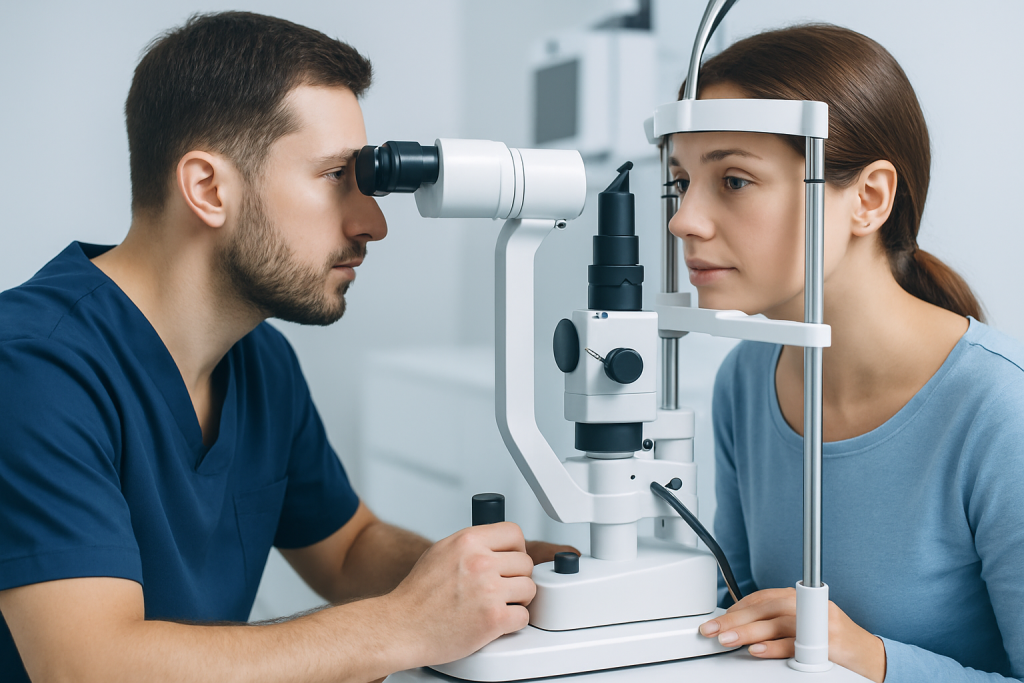
Each eye is moved by six extraocular muscles. These muscles work in coordinated pairs under the control of nerves and the brain. When their actions are not balanced, the two eyes may point in different directions. This can cause a visible eye turn, eye strain, headaches, reduced depth perception, or double vision. Children may suppress the image from one eye rather than report double vision, which can contribute to amblyopia, sometimes called a “lazy eye.”
In adults, a new eye misalignment commonly causes double vision because the brain receives two images that do not match. The symptoms may be constant or may occur only when looking in a particular direction, when tired, or after prolonged reading. The pattern of symptoms gives useful clues about the affected muscle, nerve, or visual task.
Not every eye alignment difference requires an operation. Small, stable deviations may be managed with glasses or prisms, while a temporary deviation may improve when its cause resolves. Persistent or bothersome misalignment may be treated with strabismus surgery after a specialist has assessed the individual’s eye movements, vision, and overall health.
Causes and Candidacy for Treatment

Eye misalignment may begin in infancy or childhood, or develop later in life. Common causes include refractive errors, childhood strabismus, reduced vision in one eye, previous eye surgery, head injury, thyroid eye disease, diabetes-related nerve palsy, stroke, myasthenia gravis, and disorders affecting the muscles or nerves. Sometimes no single cause is identified.
People may be candidates for treatment when the misalignment causes double vision, difficulty with daily activities, abnormal head posture, eye fatigue, loss of binocular vision, or concern about the appearance of the eyes. Children may need early assessment to protect visual development. Adults can also benefit from treatment, even if the eye turn has been present for many years.
Candidacy for surgery is based on more than the size of the eye turn. The ophthalmologist considers whether the deviation is stable, which muscles are involved, whether glasses or prisms improve symptoms, whether there is restricted movement from scar tissue or thyroid disease, and whether an underlying neurological or medical condition needs attention first. In some cases, additional review by neurology, endocrinology, pediatrics, or other specialists is appropriate.
For example, thyroid-related swelling and restriction around the eyes may need medical control before alignment surgery is considered. A person with fluctuating drooping eyelids and double vision may need assessment for a neuromuscular condition rather than immediate surgery. A tailored plan is safer and more likely to address the true cause.
How Weak Eye Muscles Treatment Works
Non-surgical treatment may be enough for some people. Corrective glasses can improve alignment when focusing effort contributes to the eye turn. Prism lenses shift the image entering the eye and can reduce double vision in selected patients. Temporary prisms are sometimes used while a new eye movement problem is being monitored or while clinicians determine whether it is changing.
Eye exercises, often called orthoptic or vision therapy exercises, are useful mainly for specific disorders such as convergence insufficiency, where the eyes have difficulty turning inward for close work. These exercises are not a universal way to strengthen all eye muscles, and they should be prescribed or supervised by an eye care professional. Treatment of an underlying disease, such as thyroid eye disease or myasthenia gravis, can also improve eye movement symptoms.
Eye muscle surgery works by changing the balance of pull on the eyeball. A surgeon may weaken a muscle by moving its attachment farther back on the eye, known as recession, or strengthen its effect by shortening or repositioning it, known as resection or plication. The operation may involve one or more muscles in one or both eyes. The aim is better alignment in the usual positions of gaze, reduced double vision where possible, improved comfort, and better binocular function when achievable.
In certain cases, botulinum toxin injection can temporarily reduce the action of a selected muscle. It may be considered for particular types of strabismus or for people in whom surgery is not the preferred first approach. Its role and expected duration vary, so it should be discussed with a specialist.
Eye Muscle Surgery: Step by Step, Benefits and Risks
Before surgery, the ophthalmologist measures eye alignment at different distances and directions of gaze, checks vision in each eye, and reviews medical history and medicines. Additional imaging, blood tests, or specialist assessments may be needed if the cause is unclear or if there are signs of an orbital, nerve, or systemic condition. Adults may have local anesthesia with sedation or general anesthesia; children usually have general anesthesia.
During the procedure, the surgeon makes a small opening in the thin tissue covering the white part of the eye, called the conjunctiva. The planned muscle is carefully exposed and moved, shortened, or adjusted to alter its action. The eye itself is not removed, and surgery is performed on the outside of the eyeball. Some adults may be offered adjustable sutures, allowing a later fine adjustment when awake if clinically suitable.
Potential benefits include straighter eye alignment, less double vision, improved head posture, greater comfort with visual tasks, and a more natural eye appearance. Outcomes depend on the cause of the condition, the ability of both eyes to see, the duration of misalignment, and the complexity of the eye movement problem. More than one procedure may occasionally be needed to obtain or maintain the desired alignment.
Risks are uncommon but include temporary redness, irritation, infection, bleeding, scarring, persistent or recurrent misalignment, a new or changed double-vision pattern, and a need for further treatment. Serious complications, including significant vision loss, are rare. The surgeon explains individual risks, expected benefits, and alternatives before a decision is made.
Recovery Timeline and Self-Care
Most people return home on the day of eye muscle surgery. The eye may feel scratchy, watery, red, or mildly painful for several days. Mild swelling and a bloodshot appearance are common, and redness can take several weeks to settle. The care team may prescribe eye drops or ointment and will explain how to use them safely.
Many adults return to light daily activities within several days to one week, depending on comfort and the nature of their work. Children may need a few quieter days before returning to school or usual routines. Swimming, eye rubbing, and activities that could expose the eye to contamination or injury may need to be avoided for a period advised by the surgeon.
Vision can seem blurred temporarily because of tears, ointment, or surface irritation. Alignment and double vision may fluctuate during early healing. Follow-up appointments allow the ophthalmologist to check healing, assess alignment, and determine whether glasses, prisms, patching, or other support is needed. Patients should follow their individual post-operative instructions rather than relying on a standard timeline.
Acibadem International’s multidisciplinary specialists and JCI-accredited hospitals assess and treat eye alignment conditions for international patients, coordinating care when an underlying neurological, endocrine, or pediatric issue is suspected.
When to Seek Medical Care
A planned ophthalmology appointment is appropriate for a persistent eye turn, repeated double vision, problems focusing at near distance, eye strain, an abnormal head tilt, or concerns about a child’s eye alignment. Early assessment in children is particularly important because the visual system is still developing. Adults should also arrange review for a new or worsening alignment problem, even if it seems mild.
Urgent medical care is needed for sudden double vision, especially when it occurs with a severe headache, weakness or numbness of the face or body, difficulty speaking, confusion, loss of balance, a new drooping eyelid, unequal pupils, severe eye pain, fever, or reduced vision. These symptoms can have causes beyond the eye muscles and should not be managed with exercises or waiting at home.
After surgery, patients should contact their surgical team promptly for increasing pain, rapidly worsening redness or swelling, pus-like discharge, fever, a sudden decline in vision, marked nausea or vomiting, or symptoms that are not improving as expected. Regular follow-up remains important even when recovery appears uncomplicated.
Frequently asked questions
How long does it take to strengthen eye muscles?
The timeline depends on the diagnosis. For a condition that responds to prescribed convergence exercises, improvement may develop over weeks to months with regular practice. However, many eye alignment problems are not caused by simple muscle weakness, so exercises may not help and a different treatment may be needed.
Can eye muscle weakness be cured?
Some causes improve when the underlying condition is treated or resolves, while others are managed rather than permanently cured. Glasses, prisms, exercises for selected conditions, injections, and surgery can often improve alignment or double vision. The outlook depends on whether the problem involves the muscles, nerves, brain, eye socket, or visual development.
Can weakened eye muscles be strengthened?
Exercises may improve coordination for specific problems, particularly convergence insufficiency. They do not reliably strengthen eye muscles for all forms of strabismus, nerve palsy, thyroid eye disease, or mechanical restriction. An ophthalmologist can identify whether exercises are appropriate or whether another treatment is likely to help more.
How long does it take to recover from eye muscle surgery?
Discomfort and surface irritation often improve over several days, and many people return to light activities within about one week. Redness can remain visible for several weeks, while eye alignment may continue settling over the following weeks or longer. The surgeon’s instructions and follow-up assessments should guide the individual recovery plan.
Is eye muscle surgery painful?
The operation is performed with anesthesia, so pain should not be felt during surgery. Afterward, many people describe scratchiness, soreness, or a feeling like something is in the eye rather than severe pain. Prescribed or recommended pain relief and eye medications can help, and worsening pain should be reported to the care team.
Can adults have eye muscle surgery?
Yes. Adults can have eye muscle surgery for longstanding or newly developed strabismus when it is appropriate for their diagnosis. Surgery may reduce double vision, improve comfort or head posture, and improve eye alignment, although the expected outcome should be discussed individually with an ophthalmologist.
References
- American Academy of Ophthalmology
- American Association for Pediatric Ophthalmology and Strabismus
- National Eye Institute
- Mayo Clinic
This article is for general information only and is not a substitute for professional medical advice. Please consult a qualified doctor about your individual situation.
Explore treatments in Turkey — costs, top hospitals & a free quote
JCI-accredited · board-certified surgeons · reply within 24h
Add us as a Preferred Source to see more of our trusted health content across Google Search, AI Overviews and Discover.