West Syndrome Treatment: How It Works, Results and What to Expect

West syndrome is an epilepsy syndrome of infancy marked by epileptic spasms and a characteristic abnormal EEG pattern. Prompt assessment by a pediatric neurologist is important, as spasms can be subtle and may occur in clusters.
Key Takeaways
- West syndrome is an epilepsy syndrome of infancy marked by epileptic spasms and a characteristic abnormal EEG pattern.
- Prompt assessment by a pediatric neurologist is important, as spasms can be subtle and may occur in clusters.
- First-line treatment commonly includes hormonal therapy or vigabatrin, with the choice guided by the suspected cause and the child’s health.
- Treatment success is assessed by both visible spasm control and follow-up EEG results.
- Some children need additional therapies, developmental support and long-term epilepsy follow-up.
- Parents and caregivers should seek urgent medical evaluation for suspected infantile spasms rather than waiting to see whether episodes stop.
West syndrome treatment is urgent because early control of infantile spasms may support a child’s development and reduce ongoing seizure-related risk. Care is individualized and may include hormone-based medicines, anti-seizure medicines, dietary therapy or surgery when a focal brain cause is identified.
Overview: how West syndrome treatment works
West syndrome treatment focuses on stopping infantile spasms as rapidly as possible, improving the abnormal electrical activity seen on electroencephalography (EEG), and identifying any underlying brain or genetic condition. West syndrome is also called infantile epileptic spasms syndrome. It typically involves brief, repeated movements such as sudden bending forward, stiffening, or extension of the arms, often occurring in clusters around waking or falling asleep.
Management is usually coordinated by a pediatric neurologist or pediatric epilepsy team. Treatment may begin soon after the diagnosis is strongly suspected, while investigations continue, because delayed control can affect development in some children. The most appropriate plan depends on the child’s age, spasm pattern, EEG findings, medical history and likely cause.
Families should know that treatment response varies. Some infants have rapid spasm control, while others require a sequence of therapies. Even when spasms stop, ongoing developmental assessment and seizure follow-up remain important.
What triggers West syndrome?
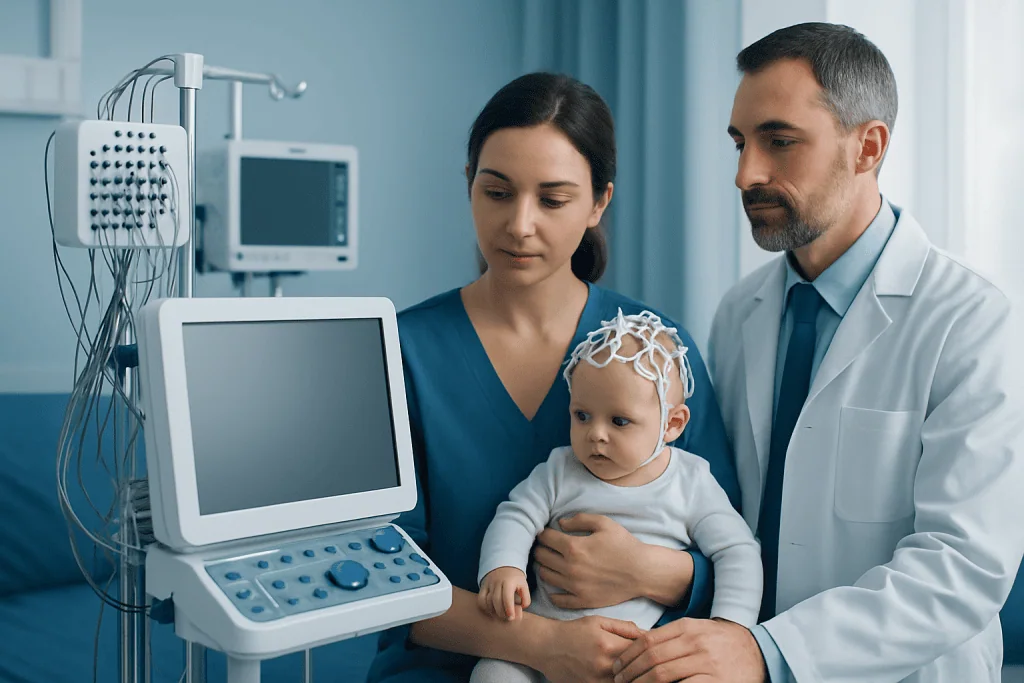
West syndrome is not caused by anything a parent did or did not do. It can develop when there is an underlying difference, injury or disorder affecting the developing brain. In some children, a clear cause is found; in others, testing does not identify a definite cause at first.
Potential causes include structural differences in the brain, previous brain injury, stroke, infection affecting the brain, genetic conditions, metabolic disorders and neurocutaneous conditions such as tuberous sclerosis complex. The timing and nature of the underlying condition can influence both treatment selection and long-term outlook.
Because the causes are diverse, the evaluation often includes an EEG, brain MRI, developmental assessment and selected genetic or metabolic tests. Identifying a cause can help the clinical team choose therapy and discuss follow-up needs more accurately.
What is the typical age of onset for West syndrome?

West syndrome most often begins during the first year of life, commonly between about 3 and 12 months of age. It can occur earlier or later in infancy, but new spasms in a baby should always be assessed promptly regardless of the child’s exact age.
Spasms may be mistaken for reflux, startle reflexes, colic or normal movements. They are often brief and may involve a sudden head drop, body crunch, arm fling or stiffening. A defining feature is that episodes frequently come in a cluster, with several events separated by a few seconds.
Caregivers who observe suspicious movements can safely record a short video if doing so does not delay care. This video may help the clinician recognize the event, but an EEG is needed to evaluate for epileptic activity and support a diagnosis.
Who is a candidate for treatment and how is the diagnosis confirmed?
Any infant with possible epileptic spasms is a candidate for urgent specialist assessment. A clinician will ask about the movements, developmental progress, sleep, feeding, pregnancy and birth history, family history and previous illnesses. The physical and neurological examination may identify clues to an underlying condition.
An EEG, ideally including sleep when possible, is central to diagnosis and treatment monitoring. Many infants with West syndrome have a markedly disorganized EEG pattern called hypsarrhythmia, although EEG appearances can vary. Brain MRI is commonly used to look for structural causes, while genetic and metabolic tests may be considered according to the clinical picture.
Not all unusual infant movements are seizures, and caregivers should not try to diagnose the condition at home. However, a baby with repeated clusters of sudden movements, developmental regression, reduced interaction or loss of previously gained skills should be evaluated without delay.
West syndrome treatment: step by step
After evaluation, the epilepsy team discusses an initial treatment plan with the family. Hormonal therapies, such as adrenocorticotropic hormone (ACTH) or an oral corticosteroid, are frequently used first-line options. Vigabatrin is another important first-line medicine and is particularly considered when spasms occur in association with tuberous sclerosis complex. The choice requires individualized discussion of expected benefit, monitoring and possible side effects.
Medication treatment is usually started with close supervision and a planned follow-up schedule. The child may need blood pressure checks, laboratory tests, infection monitoring or eye monitoring, depending on the medicine prescribed. Families should give medication exactly as instructed and should not stop or change it suddenly unless advised by the treating team.
If spasms continue, recur, or a focal brain abnormality is found, the team may consider other anti-seizure medicines, a ketogenic diet supervised by specialists, or epilepsy surgery in selected cases. Surgery is not appropriate for every child, but it can be an important option when seizures clearly arise from a removable or treatable area of the brain.
- Initial review: confirm suspected spasms and arrange urgent EEG and cause-focused testing.
- First-line therapy: begin an evidence-based medicine chosen for the individual child.
- Early reassessment: review clinical spasms and repeat EEG within the timeframe set by the epilepsy team.
- Next steps: adjust treatment and consider dietary therapy or surgical evaluation if control is incomplete.
- Long-term care: monitor development, feeding, sleep, vision, hearing and future seizure risk.
Benefits, risks and recovery timeline
The main benefit of effective treatment is the possibility of stopping spasms and improving the EEG abnormality. Early treatment may also give the child the best available opportunity for developmental progress. However, response cannot be guaranteed, and some children later develop other seizure types or need ongoing epilepsy care.
Each treatment has potential risks. Hormonal therapies can affect blood pressure, blood sugar, appetite, mood, stomach irritation and infection risk. Vigabatrin can affect vision and requires appropriate monitoring. Other anti-seizure medicines, ketogenic dietary therapy and surgery have their own possible adverse effects, which should be reviewed carefully with the clinical team.
There is no single recovery timeline. Some families notice fewer spasms within days of treatment, but visible improvement alone is not enough to confirm complete control. A follow-up EEG is generally used to check whether abnormal electrical activity has improved. Developmental therapy, including physiotherapy, occupational therapy, speech and feeding support, may begin alongside seizure treatment when needed.
Can babies grow out of infantile spasms?
Infantile spasms can stop with effective treatment, and some children do not continue to have spasms as they grow. However, this does not necessarily mean that all epilepsy-related or developmental concerns have resolved. Some children may later experience other seizure types, learning differences or developmental delays, while others make more progress than initially expected.
Outlook depends on several factors, including the underlying cause, how quickly spasms and EEG abnormalities are controlled, developmental status before the spasms began and whether seizures return. Regular follow-up allows the care team to monitor the child’s individual progress and respond to new needs early.
Early-intervention services can be valuable whether or not a child appears delayed at the time of diagnosis. Support may include physical, occupational, speech-language, feeding and developmental therapies tailored to the child and family.
How long does West syndrome last?
The period of active infantile spasms may be brief in some children and prolonged in others. With successful treatment, spasms may stop within a relatively short time, but West syndrome should be viewed as a condition requiring continued follow-up rather than a problem that is automatically over once the visible movements end.
Some children have persistent or recurring spasms despite initial treatment. Others transition to different forms of epilepsy as they grow, and some do not have further seizures. Follow-up EEGs, developmental reviews and medication planning help clinicians understand the child’s evolving needs.
Parents should continue to report any new unusual movements, staring episodes, sudden falls, changes in sleep or feeding, or developmental concerns. Ongoing communication with the child’s neurologist is an important part of long-term care.
When to seek medical care
Medical care should be sought urgently if a baby has repeated clusters of sudden bending, stiffening, head drops or arm movements, especially after waking or before sleep. Prompt assessment is also important if a child loses skills, becomes less responsive or interactive, or has episodes that seem different from their usual behavior.
Emergency services should be contacted if a seizure lasts longer than five minutes, seizures occur continuously without the child recovering between them, the child has trouble breathing, turns blue or grey, is injured, or is difficult to wake. Caregivers should follow any emergency seizure plan provided by the child’s medical team.
West syndrome care often benefits from input from pediatric neurology, epilepsy specialists, neuroradiology, genetics, dietitians, rehabilitation professionals and developmental therapists. Acibadem International’s multidisciplinary specialists and JCI-accredited hospitals support diagnosis and treatment planning for international pediatric patients.
Frequently asked questions
Is West syndrome treatment urgent?
Yes. Suspected infantile spasms require urgent medical assessment because prompt diagnosis and treatment may improve the chance of controlling spasms and abnormal EEG activity. Parents should contact a pediatrician, pediatric neurologist or emergency service promptly if they see repeated clusters of suspicious movements.
What is usually the first treatment for West syndrome?
Common first-line treatments include hormonal therapy, such as ACTH or an oral corticosteroid, and vigabatrin. The best choice depends on the child’s likely underlying cause, medical history, EEG findings and the clinician’s assessment.
Will treatment stop spasms immediately?
Some children respond quickly, while others need more time or a different treatment approach. Doctors assess both the observed spasms and the EEG, because seizures may sometimes continue electrically even when movements are less obvious.
Can West syndrome come back after treatment?
Yes, spasms can recur in some children after an initial response. Children may also develop other seizure types later, which is why continued neurology follow-up and developmental monitoring are important.
Does every child with West syndrome need surgery?
No. Most children begin with medicine-based treatment, and surgery is considered only for selected children, such as those with a focal structural brain cause and ongoing seizures despite appropriate therapy. A specialized epilepsy team evaluates whether surgery may be helpful.
What should parents do during a possible spasm episode?
Keep the baby safe on a flat surface, observe breathing and note the time and pattern of events. If safe, record a video for the clinician, but do not delay urgent medical assessment, especially when movements occur in clusters or the child seems unwell afterward.
References
- International League Against Epilepsy
- National Institute of Neurological Disorders and Stroke
- Epilepsy Foundation
- American Academy of Neurology
- National Health Service
This article is for general information only and is not a substitute for professional medical advice. Please consult a qualified doctor about your individual situation.
Explore treatments in Turkey — costs, top hospitals & a free quote
JCI-accredited · board-certified surgeons · reply within 24h
Add us as a Preferred Source to see more of our trusted health content across Google Search, AI Overviews and Discover.
Check your numbers in seconds
BMI, calories, due date, blood pressure and 30+ more clinical calculators — free, instant, doctor-reviewed ranges.