What Big Vein Slants Across Front Forehead? A Doctor-Reviewed Answer
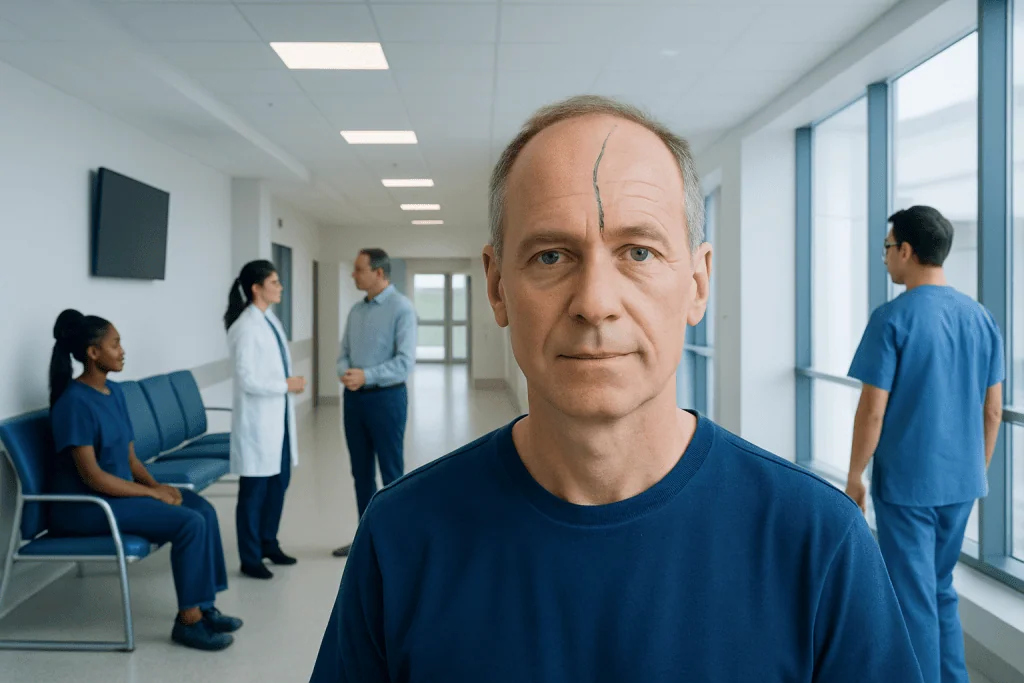
A visible slanting forehead vein is commonly a normal superficial vein rather than a disease. It may look more prominent with aging, thin skin, exercise, heat, stress, dehydration, or genetics.
Key Takeaways
- A visible slanting forehead vein is commonly a normal superficial vein rather than a disease.
- It may look more prominent with aging, thin skin, exercise, heat, stress, dehydration, or genetics.
- Medical review is important if the area becomes painful, swollen, red, tender, suddenly enlarged, or appears with severe headache or vision symptoms.
- Doctors usually diagnose the cause with a physical exam and, when needed, vascular ultrasound or imaging.
- Treatment depends on the cause and is often unnecessary unless there is an underlying condition or a cosmetic concern.
A big vein slanting across the front of the forehead is often a normal superficial forehead vein that has become more noticeable. In most people it is harmless, but sudden change, pain, swelling, skin redness, headache, or a new pulsating lump should be checked by a doctor.
Overview: what the slanting forehead vein usually is
When someone asks, “what big vein slants across front forehead,” the answer is usually simple: it is often a normal superficial forehead vein, commonly part of the frontal or supratrochlear venous network. These veins carry blood from the skin and soft tissues of the forehead back toward deeper facial veins. In many people, they become easier to see over time and are not a sign of illness.
The vein may appear as a blue, green, or skin-toned raised line running diagonally or vertically across the forehead, especially near the hairline or above the eyebrow. It can stand out more during exercise, bending forward, hot weather, emotional stress, or after alcohol intake, when blood vessels naturally widen. Some people simply have skin and facial anatomy that makes normal veins more visible.
Although this finding is usually harmless, not every forehead vessel should be ignored. A sudden change in size, a painful lump, a vessel that seems to pulse, or a new prominent vein linked with headache, scalp tenderness, fever, or vision changes may point to a different problem. That is why it helps to look at the whole picture rather than the vein alone.
Why forehead veins become visible

Forehead veins are close to the surface of the skin. If the skin becomes thinner with age, loses some collagen, or has less cushioning fat underneath, a vein that was always present can begin to show more clearly. This is one of the most common reasons adults notice a slanting vein that seemed to “appear” later in life.
Visibility also changes from day to day. Heat, physical activity, heavy lifting, coughing, straining, and stress can temporarily enlarge superficial veins because blood flow and pressure in the vessels increase. Dehydration may also make the surrounding tissues less plump, which can make veins look more defined.
Genetics matter as well. Some people naturally have more prominent facial veins, lighter skin, or less subcutaneous tissue, so the vein is simply easier to see. Weight loss can have a similar effect. In these situations, the vein is usually soft, not tender, and stable over time.
Less commonly, a visible forehead vessel may reflect another issue, such as a varicose vein, vascular malformation, inflamed artery, or enlarged vessel related to trauma. The pattern, feel, and associated symptoms help doctors decide whether the vessel appears normal or needs further evaluation.
When it may be more than a normal vein

A visible vein is more likely to need medical attention if it has changed quickly or comes with other symptoms. Red flags include pain, tenderness, warmth, redness of the overlying skin, swelling around the temple or forehead, or a firm cord-like vessel. These findings can suggest inflammation, clotting in a superficial vein, local infection, or another vascular problem.
A vessel that pulses strongly may not be a vein at all. Sometimes people mistake a prominent artery for a vein, especially near the temple. A new tender, enlarged temporal vessel with scalp pain, jaw pain while chewing, fatigue, or visual symptoms needs urgent medical assessment because an inflamed artery can threaten eyesight. Doctors may also consider temporal arteritis when symptoms fit.
Rarely, a prominent forehead vessel may appear after injury or surgery and could reflect a vascular abnormality such as an arteriovenous connection. A soft, compressible vein is usually less concerning than a pulsating lump, a painful swelling, or an area that bleeds easily. Skin lesions, discoloration, or a mass beneath the vessel also deserve review.
Forehead veins can also stand out in people who have headaches or sinus pressure simply because facial muscles tense and blood vessels dilate. Most of the time this does not mean the vein caused the headache. Still, headaches with neurological symptoms, fever, fainting, or a sudden “worst headache” pattern should never be dismissed.
Symptoms doctors pay attention to
Doctors usually start by asking whether the vessel has been present for years or is truly new. A normal prominent vein tends to be stable, soft, and more visible under certain conditions like exercise or warmth. A concerning vessel is more likely to be painful, hard, rapidly enlarging, or associated with visible skin changes.
Important associated symptoms include:
- pain or tenderness over the vessel
- redness, warmth, or swelling
- a pulsating sensation or visible throbbing
- headache, scalp tenderness, or temple pain
- blurred vision, double vision, or vision loss
- recent facial injury or cosmetic procedure
- fever or general unwellness
Some people mainly worry about appearance rather than symptoms. Cosmetic concern alone is still a valid reason to seek advice, especially if the vessel is affecting confidence or if there is uncertainty about what it is. A careful examination can often provide reassurance and guide whether treatment is needed.
If facial veins appear together with other unusual vascular changes elsewhere, doctors may also ask about circulation problems, clotting history, connective tissue disorders, and medications. This broader history helps rule out uncommon causes and keeps the evaluation focused and safe.
How a doctor diagnoses a prominent forehead vessel
In many cases, diagnosis begins and ends with a clinical examination. A doctor looks at the vessel’s course, color, size, and whether it collapses with gentle pressure. They also assess whether it feels soft like a vein or has the stronger pulsation of an artery. The surrounding skin, scalp, temples, and eyes are examined for signs that point to inflammation or another condition.
The history is just as important as the exam. Doctors ask when the vessel was first noticed, whether it changes with exercise or heat, and whether there are symptoms such as pain, headache, jaw discomfort, visual changes, or recent trauma. This helps separate common normal anatomy from a process that needs urgent workup.
If the finding is unclear, imaging may be helpful. A vascular ultrasound can show whether the structure is a vein or artery, whether blood flow is normal, and whether there is clotting or an abnormal connection between vessels. Sometimes CT or MR angiographic imaging is used if deeper vascular anatomy needs review.
When doctors suspect an inflammatory vascular disorder, blood tests may be added. For example, if symptoms raise concern for temporal arteritis, tests for inflammation and urgent specialist review may be needed. Depending on the findings, the person may be referred to vascular specialists, dermatologists, neurologists, or ophthalmologists.
Treatment options and whether treatment is necessary
If the slanting forehead vein is simply a normal superficial vein, treatment is usually not required. Reassurance is often the main outcome of the visit. Avoiding overheating, staying well hydrated, and reducing repeated straining may make the vein less noticeable in some people, but they will not remove a normal vein completely.
Treatment is based on the cause. If a doctor finds inflammation, clotting, infection, or an arterial problem, management focuses on that condition rather than the appearance of the vessel. For example, an inflamed superficial vein may need monitoring and symptom relief, while an arterial condition needs prompt specialist care.
For people who are bothered by the appearance, doctors may discuss cosmetic approaches after confirming the vessel is benign and suitable for treatment. Depending on the anatomy, options may include procedures performed by vascular or dermatologic specialists. In selected cases, evaluation by teams experienced in varicose veins treatment or vascular surgery may help determine the safest approach for a prominent superficial facial vein.
If the vessel is related to another vascular condition, treatment may be more specific. In uncommon cases involving abnormal vessel connections or aneurysm-like changes, specialist assessment is essential before any procedure is considered. The goal is always to treat the underlying cause safely rather than just changing appearance.
Self-care and when to seek medical care
For a forehead vein that is long-standing, painless, and unchanged, self-care is mostly about observation and reassurance. It may help to notice whether the vein becomes more prominent after exercise, heat exposure, bending, or stress. Sun protection and general skin care may make facial vessels less visually obvious over time, though they do not remove them.
Medical review is sensible if the vein is new, noticeably larger, painful, or associated with swelling or skin redness. A prompt appointment is also appropriate if there has been recent injury, facial surgery, or an injectable cosmetic treatment near the area. These details can change the list of possible causes.
Urgent care is needed if a forehead vessel appears together with severe headache, fainting, weakness, confusion, fever, vision changes, scalp tenderness, or jaw pain when chewing. These symptoms do not always mean a serious vascular disorder, but they should be checked without delay. People who already have known vascular disease may be advised to seek assessment sooner if a new facial vessel appears.
Near the end of the care pathway, some people choose specialist review for both diagnosis and cosmetic guidance. Acibadem International’s multidisciplinary specialists and JCI-accredited hospitals diagnose and treat vascular conditions for international patients, including cases that may need interventional radiology or further vascular assessment.
Frequently asked questions
Is a big vein across the forehead normal?
Often, yes. A visible forehead vein is commonly a normal superficial vein that becomes easier to see because of thin skin, aging, exercise, heat, or genetics. If it is painless and has not changed much, it is usually not harmful.
Why does my forehead vein show more when I exercise or get hot?
Exercise and heat make blood vessels widen and increase blood flow, so superficial veins can stand out more. This temporary change is common and usually settles once the body cools down and heart rate returns to normal.
How can I tell if it is a vein or an artery?
A vein is usually soft, compressible, and may look blue or green. An artery may feel more pulsatile or visibly throb. It is not always possible to tell the difference at home, so a doctor may examine it or use ultrasound if there is any doubt.
Can stress make a forehead vein more visible?
Yes. Stress can raise blood pressure temporarily, tighten facial muscles, and make superficial vessels look more obvious. This is usually short-lived and not dangerous by itself.
Should I worry if the vein suddenly appeared?
A truly new or suddenly enlarged forehead vessel deserves medical review, especially if it is painful, red, swollen, pulsating, or linked with headache or vision symptoms. Sudden change does not always mean something serious, but it is a good reason to be evaluated.
Can a prominent forehead vein be removed for cosmetic reasons?
Sometimes, but only after a doctor confirms it is a benign superficial vessel and not an artery or another vascular problem. The best method depends on the vessel’s anatomy, location, and the person’s overall health.
References
- American Academy of Dermatology
- Cleveland Clinic
- Mayo Clinic
- National Health Service
- Society for Vascular Surgery
This article is for general information only and is not a substitute for professional medical advice. Please consult a qualified doctor about your individual situation.
Explore treatments in Turkey — costs, top hospitals & a free quote
JCI-accredited · board-certified surgeons · reply within 24h
Add us as a Preferred Source to see more of our trusted health content across Google Search, AI Overviews and Discover.