What Causes Cancer? Risk Factors, Myths, and What You Can Do

Cancer is caused by DNA changes that affect how cells grow, divide, and repair themselves. Most cancers do not have a single cause; they usually develop from a mix of risk factors over time.
Key Takeaways
- Cancer is caused by DNA changes that affect how cells grow, divide, and repair themselves.
- Most cancers do not have a single cause; they usually develop from a mix of risk factors over time.
- Not every risk factor is controllable, but avoiding tobacco, limiting alcohol, staying active, and getting recommended vaccines can help lower risk.
- Common myths, such as cancer being contagious or always inherited, are not true.
- Screening and medical checkups can help find some cancers earlier, when treatment may be more effective.
Cancer starts when changes in a cell’s DNA disrupt normal growth and repair, allowing abnormal cells to multiply. These changes can be linked to age, inherited traits, lifestyle, environmental exposures, infections, and sometimes random events that cannot be fully prevented.
Overview: How Cancer Begins
To understand what causes cancer, it helps to know how healthy cells normally behave. In the body, cells grow, divide, and die in a controlled way. This process is guided by DNA, the genetic instruction manual inside each cell. Cancer begins when changes in DNA disrupt these instructions and allow abnormal cells to grow out of control.
These DNA changes may affect genes that tell cells when to divide, when to repair damage, or when to stop growing. Over time, damaged cells can multiply and form a mass called a tumor, although not all cancers form tumors. Some cancers, such as many blood cancers, involve abnormal cells circulating in the blood or bone marrow instead.
Cancer is not one single disease with one single cause. There are many different types, and each may develop through a different combination of factors. For many people, cancer arises from a mix of age, genetics, everyday exposures, lifestyle, infections, and chance events within cells.
It is also important to know that having a risk factor does not mean a person will definitely develop cancer. In the same way, some people who develop cancer may not have any obvious risk factors. This uncertainty can be frustrating, but it reflects the complex biology of how cancer starts.
What Causes Cancer at the Cellular Level?
The direct cause of cancer is damage or change to a cell’s DNA. These changes are often called mutations. Some mutations happen because of external exposures, such as tobacco smoke or ultraviolet radiation from the sun. Others may occur during normal cell division, when DNA is copied billions of times over a lifetime.
Usually, the body has systems to repair DNA mistakes or remove damaged cells. Cancer can develop when these protective systems fail or when enough mutations build up to override them. This is why cancer typically develops over many years rather than appearing suddenly.
Genes involved in cancer are often grouped into three broad categories: genes that promote cell growth, genes that slow or stop cell growth, and genes that repair DNA damage. When the balance among these systems is lost, cells may ignore normal controls and continue multiplying.
Not every mutation leads to cancer. Many DNA changes are harmless or are corrected by the body. Cancer usually forms only after a number of important changes accumulate in the same cell line over time.
Common Cancer Risk Factors

Many factors can increase the chance of developing cancer. Some are related to personal habits, while others cannot be changed. Age is one of the strongest risk factors because DNA damage can build up over time. Family history can also matter, especially when certain inherited gene changes run in families.
Lifestyle factors are among the most well-established contributors to cancer risk. Tobacco use is a major cause of several cancers, not only lung cancer. Alcohol can also raise the risk of certain cancers, especially when combined with smoking. Carrying excess body weight, eating an unbalanced diet, and getting too little physical activity may also increase risk for some cancer types.
Environmental and workplace exposures can contribute as well. These include ultraviolet radiation from the sun, ionizing radiation, air pollution, and certain chemicals. Some infections are also linked to cancer, including human papillomavirus, hepatitis B, hepatitis C, and Helicobacter pylori.
Important risk factors include:
- Tobacco use, including smoking and other tobacco products
- Older age
- Inherited genetic changes and family history
- Alcohol use
- Excess body weight and physical inactivity
- Too much sun exposure or indoor tanning
- Certain infections linked to cancer
- Occupational or environmental exposures
Inherited, Environmental, and Random Factors
A common question is whether cancer is mainly inherited. In most cases, it is not. Most cancers are not passed directly from parent to child. However, some people inherit gene changes that increase their risk. These inherited syndromes do not guarantee cancer, but they can make it more likely and may affect when screening should begin.
Environmental factors are also important. The word “environmental” does not only mean pollution; it includes anything a person is exposed to from the outside, such as sunlight, radiation, tobacco smoke, and some viruses. These factors can damage DNA directly or create long-term inflammation that makes cancer more likely.
Chance also plays a role. Sometimes DNA copying errors happen randomly when cells divide, even in people with healthy habits and no strong family history. This does not mean prevention is unimportant. It simply means that cancer risk can sometimes never be reduced to zero.
In real life, cancer often results from interaction among these influences. A person may have an inherited tendency, encounter certain exposures, and experience age-related or random DNA changes over time. That combination is one reason cancer varies so much from person to person.
Cancer Myths and Misunderstandings
Misunderstandings about cancer are common and can cause unnecessary fear or guilt. One myth is that cancer always has a single clear cause. In fact, cancer usually develops through many steps and may involve several interacting risk factors. Another myth is that cancer is always inherited. While inherited genes can matter, most cancers are not caused by a known inherited mutation.
Some people worry that cancer is contagious. Cancer itself does not spread from person to person through everyday contact. However, a few infections that increase cancer risk, such as HPV or hepatitis viruses, can be transmitted. This is one reason vaccines and infection prevention are important.
Another common myth is that an injury causes cancer. A bump, bruise, or fall does not usually create cancer. Sometimes an injury draws attention to an area, leading to tests that reveal a cancer that was already present. It can feel as though the injury caused it, but this is usually not the case.
It is also inaccurate to assume that a healthy lifestyle guarantees protection or that a cancer diagnosis means someone did something wrong. Healthy choices can lower risk, but they cannot eliminate it completely. People who develop cancer deserve support, careful diagnosis, and evidence-based treatment rather than blame.
What You Can Do to Lower Cancer Risk
Although not all cancers can be prevented, there are practical steps that can help reduce risk. Avoiding tobacco is one of the most important. For people who smoke, quitting can lower the risk of several cancers over time. Protecting the skin from too much ultraviolet radiation by seeking shade, using protective clothing, and avoiding tanning beds is also helpful.
General health habits matter as well. Staying physically active, maintaining a healthy weight, limiting alcohol, and choosing a balanced eating pattern rich in plant foods can support overall health and may reduce the risk of certain cancers. Vaccination against HPV and hepatitis B can help prevent some infection-related cancers.
Screening is another key part of prevention and early detection. Depending on age, sex, family history, and personal risk factors, a doctor may recommend screening tests for cancers such as breast, cervical, colorectal, or prostate cancer. Screening does not prevent every cancer, but it can sometimes find changes before cancer develops or detect cancer earlier.
Helpful risk-reduction steps include:
- Do not smoke, and avoid secondhand smoke when possible
- Protect skin from excessive sun exposure
- Be physically active most days of the week
- Maintain a healthy weight
- Limit alcohol
- Follow recommended vaccines and preventive care
- Attend age-appropriate cancer screening appointments
How Doctors Assess Cancer Risk and Diagnose Cancer
Doctors assess cancer risk by looking at the whole picture. This may include age, personal medical history, family history, lifestyle, work exposures, and symptoms. In some cases, genetic counseling or genetic testing may be recommended, especially when several relatives have had related cancers or when cancer occurred at an unusually young age.
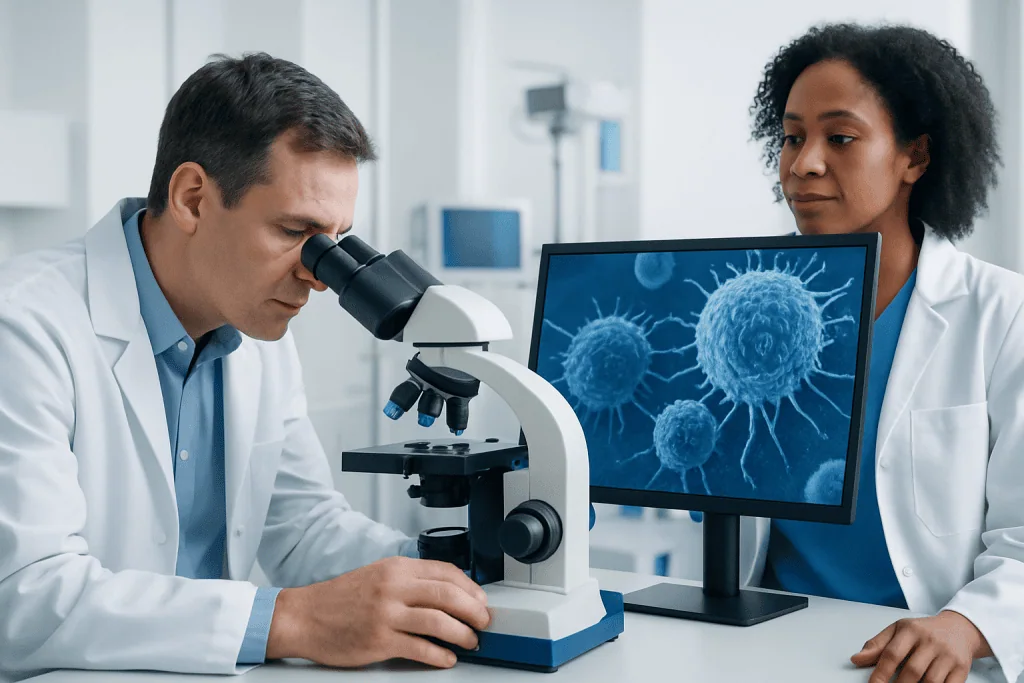
If cancer is suspected, diagnosis usually begins with a medical history, physical examination, and targeted tests. These may include blood tests, imaging studies, endoscopy, or tissue sampling. A biopsy, which involves examining cells or tissue under a microscope, is often the key step for confirming many cancers.
Because cancer is not one disease, diagnosis and treatment plans vary widely. Some people may need advanced imaging or pathology review to define the type and stage of cancer. Others may need evaluation by several specialists, depending on where the cancer began and whether it has spread.
Diagnostic and treatment planning may involve specialists in medical oncology, radiation oncology, and pathology services to identify the exact cancer type and guide next steps. Clear diagnosis helps the care team recommend the most appropriate treatment for the individual patient.
When to See a Doctor
Many symptoms are caused by conditions other than cancer, but persistent changes in the body should not be ignored. A person should consider medical advice if they notice unexplained weight loss, unusual bleeding, a new lump, a lasting change in bowel or bladder habits, ongoing fatigue, a persistent cough, difficulty swallowing, or a sore that does not heal. These symptoms do not automatically mean cancer, but they deserve proper evaluation.
It is also wise to speak with a doctor about personal risk, even without symptoms, if there is a strong family history of cancer or concern about inherited risk. A clinician can advise whether earlier screening, genetic counseling, or preventive strategies may be appropriate.
People who have already been told they have precancerous changes or a condition linked to higher cancer risk should keep regular follow-up appointments. Early attention can make a meaningful difference in identifying abnormal changes before they progress.
For international patients seeking evaluation, Acibadem International’s multidisciplinary specialists in JCI-accredited hospitals diagnose and treat many types of cancer with coordinated care. The most important step is timely assessment by a qualified healthcare professional when symptoms persist or risk is unclear.
Frequently asked questions
What causes cancer in most people?
Cancer is usually caused by a combination of DNA changes that build up over time rather than one single event. These changes may be influenced by age, lifestyle, environmental exposures, infections, inherited genes, and random errors during cell division.
Is cancer always inherited from parents?
No, most cancers are not inherited. Some families do carry gene changes that increase cancer risk, but most cancers develop from changes that happen during a person’s lifetime.
Can a healthy person still get cancer?
Yes. Healthy habits can lower risk, but they cannot remove risk completely because age, genetics, and random DNA changes also play a role. A cancer diagnosis does not necessarily mean a person made poor health choices.
Does stress cause cancer?
Stress itself is not considered a direct cause of cancer. However, long-term stress may affect sleep, eating, activity, and other behaviors that influence overall health, so managing stress is still valuable.
Can cancer be prevented?
Not all cancers can be prevented, but some risks can be reduced. Avoiding tobacco, limiting alcohol, protecting the skin from the sun, staying active, maintaining a healthy weight, and following vaccine and screening recommendations can all help.
Is cancer contagious?
Cancer itself is not contagious and does not spread through touching, sharing food, or being near someone with cancer. Some infections linked to cancer, such as HPV or hepatitis viruses, can spread between people, which is why prevention matters.
References
- World Health Organization
- National Cancer Institute
- American Cancer Society
- Centers for Disease Control and Prevention
- International Agency for Research on Cancer
This article is for general information only and is not a substitute for professional medical advice. Please consult a qualified doctor about your individual situation.
Oncology care in Turkey — second opinion and treatment plan
JCI-accredited · board-certified surgeons · reply within 24h
Add us as a Preferred Source to see more of our trusted health content across Google Search, AI Overviews and Discover.