What Causes Hiatal hernia? Risk Factors Explained

A hiatal hernia occurs when part of the stomach moves upward through the diaphragm opening into the chest. Ageing, inherited anatomy and repeated increases in abdominal pressure can contribute to hiatal hernia development.
Key Takeaways
- A hiatal hernia occurs when part of the stomach moves upward through the diaphragm opening into the chest.
- Ageing, inherited anatomy and repeated increases in abdominal pressure can contribute to hiatal hernia development.
- Excess body weight, pregnancy, chronic coughing, constipation and heavy lifting may raise risk in some people.
- Many hiatal hernias do not cause symptoms; symptoms are often related to gastroesophageal reflux.
- Urgent assessment is important for severe chest or abdominal pain, vomiting, trouble swallowing or signs of gastrointestinal bleeding.
Hiatal hernia causes usually involve a combination of natural weakening or widening of the diaphragm opening and pressure within the abdomen. It may cause no symptoms, but some people develop reflux-related discomfort that can often be managed with lifestyle measures, medicines or, in selected cases, surgery.
Overview: What Causes a Hiatal Hernia?
Hiatal hernia causes are usually linked to a weakness, widening or stretching of the natural opening in the diaphragm called the hiatus. This opening allows the esophagus, the tube that carries food from the mouth to the stomach, to pass into the abdomen. When the opening becomes wider or the supporting tissues weaken, part of the stomach can move upward through it into the chest.
A hiatal hernia is common, particularly with increasing age, and many people do not know they have one because it causes no symptoms. When symptoms occur, they are often related to acid reflux, also called gastroesophageal reflux disease (GERD), rather than the hernia itself.
There are different types of hiatal hernia. A sliding hiatal hernia, the most common type, occurs when the junction between the esophagus and stomach moves above the diaphragm. A paraesophageal hernia is less common and occurs when part of the stomach passes beside the esophagus; larger paraesophageal hernias may require closer assessment because they can occasionally cause complications.
How the Diaphragm and Stomach Are Affected
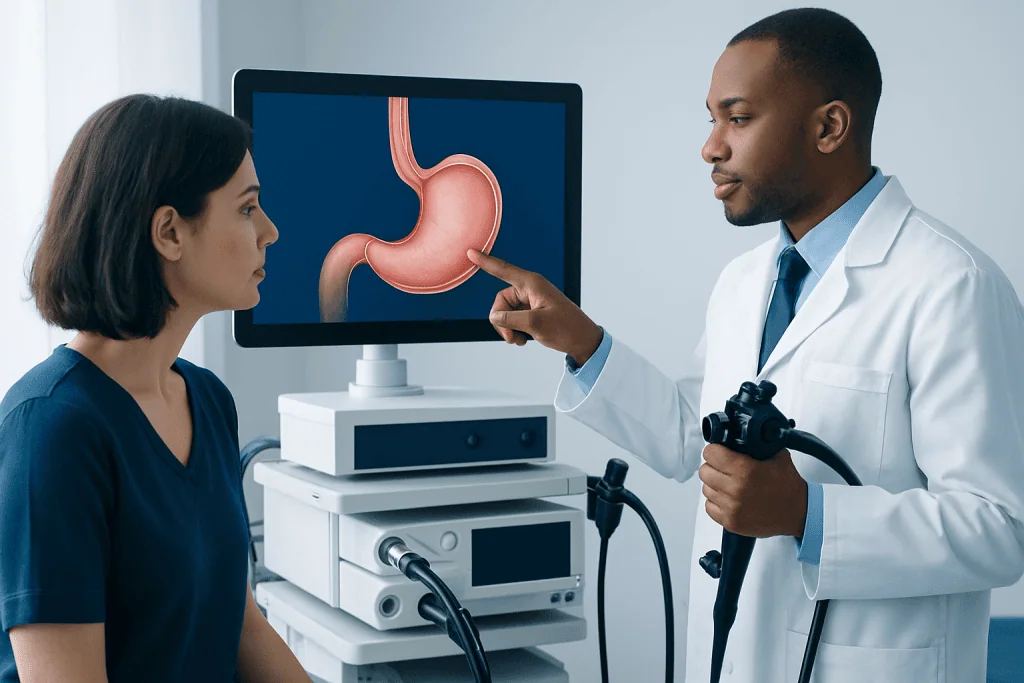
The diaphragm is a broad muscle that separates the chest from the abdomen and has an important role in breathing. The esophageal hiatus is a small opening in this muscle. Normally, the lower part of the esophagus and the upper stomach remain below the diaphragm, supported by surrounding muscles and connective tissues.
With a hiatal hernia, this support system becomes less effective or the hiatus enlarges. Pressure from below the diaphragm may then push the stomach upward. This movement can affect the natural barrier that helps prevent stomach contents from flowing back into the esophagus, making reflux more likely in some individuals.
A hiatal hernia does not always explain symptoms such as heartburn, chest discomfort or swallowing difficulty on its own. A clinician considers the person’s symptoms, medical history and test results to determine whether the hernia, reflux or another digestive condition is responsible. For a broader overview of diagnosis and management, see hiatal hernia information.
Risk Factors for Hiatal Hernia
Hiatal hernias can develop for more than one reason. Some people may be born with a larger hiatus or connective tissues that are more likely to stretch. Others develop a hernia gradually over time as the tissues around the diaphragm change with age.
Factors that repeatedly increase pressure inside the abdomen may contribute to the development or progression of a hiatal hernia. These include excess body weight, pregnancy, frequent heavy lifting, persistent coughing, repeated vomiting and straining during bowel movements. Constipation may therefore be relevant when it leads to regular straining.
Risk may also be higher in people who smoke, partly because smoking can contribute to chronic cough and may affect tissue health. Previous injury or surgery involving the chest or upper abdomen can occasionally play a role. Having one or more risk factors does not mean that a person will develop a hiatal hernia, and many people with a hernia have no clear single cause.
- Increasing age and age-related tissue changes
- Inherited anatomy or connective-tissue tendency
- Overweight or obesity
- Pregnancy
- Chronic coughing or repeated vomiting
- Constipation and frequent straining
- Regular activities involving heavy lifting or forceful exertion
Symptoms and Possible Complications
Many small hiatal hernias cause no symptoms and are found incidentally during tests performed for another reason. When symptoms are present, they may include heartburn, regurgitation of sour-tasting fluid or food, bloating, belching, upper abdominal discomfort, nausea or a feeling of fullness after meals.
Some people experience difficulty swallowing, a sensation of food sticking, chronic throat clearing, hoarseness or cough. Because chest discomfort can have several causes, including heart conditions, it should not be assumed to be caused by reflux or a hiatal hernia without appropriate medical assessment.
Large paraesophageal hernias may cause pressure, shortness of breath after eating, early fullness or pain. Rarely, part of the stomach can become trapped or its blood supply can be affected. This is uncommon but requires urgent medical evaluation. Ongoing reflux can also irritate the esophagus and may lead to inflammation or narrowing in some people if not properly managed.
Diagnosis and Assessment
A healthcare professional usually begins by discussing symptoms, their timing, dietary triggers, medicines and relevant health conditions. They may also assess for warning signs such as unintentional weight loss, anemia, bleeding, persistent vomiting or progressive swallowing difficulty.
A hiatal hernia may be identified during an upper gastrointestinal endoscopy, where a flexible camera is used to examine the esophagus and stomach. A barium swallow X-ray can show how the esophagus and stomach move during swallowing and may help define the hernia’s size and type.
Additional tests may be recommended when reflux symptoms are persistent or when surgery is being considered. These can include esophageal pH monitoring to measure acid exposure and esophageal manometry to assess muscle function and swallowing coordination. Test selection is individualized and helps guide the safest, most suitable plan.
Treatment Options and When Surgery May Help
Treatment is based on symptoms, hernia type, size and whether complications are present. For many people, care focuses on reducing reflux symptoms through meal and lifestyle adjustments and, when appropriate, acid-reducing medicines prescribed or recommended by a clinician. Treatment of associated constipation, chronic cough or excess weight may also reduce pressure-related symptoms.
Surgery is not needed for every hiatal hernia. It may be considered for a large paraesophageal hernia, complications, persistent troublesome reflux despite appropriate treatment, or when a person wishes to avoid long-term medication after careful clinical assessment. The decision takes into account symptoms, test findings, general health and the person’s goals.
Hiatal hernia repair is commonly performed using minimally invasive techniques. During the procedure, the surgeon returns the stomach to the abdomen, narrows the enlarged diaphragm opening with stitches and may reinforce the anti-reflux barrier by wrapping part of the stomach around the lower esophagus. Details vary depending on the anatomy and individual needs. Patients considering an operation can learn more about hiatal hernia surgery.
Potential benefits of surgery include relief of reflux or pressure symptoms and prevention of problems caused by a large paraesophageal hernia. Possible risks include bleeding, infection, injury to nearby structures, recurrence, difficulty swallowing, gas and bloating, or the need for further treatment. A surgical team explains expected benefits and risks in the context of each patient’s situation.
Recovery, Prevention and Self-Care
After minimally invasive hiatal hernia repair, many patients begin walking soon after surgery and leave hospital within a few days, although timing varies. Eating usually resumes gradually, often starting with liquids and soft foods before progressing according to the surgical team’s instructions. Temporary swallowing discomfort, early fullness and bloating can occur during recovery.
Return to normal daily activities is gradual. Heavy lifting and strenuous activity are typically restricted for a period to protect the repair, while follow-up appointments help the team assess healing and symptom control. Recovery recommendations should always come from the treating surgeon because they depend on the procedure and the individual’s health.
Although a hiatal hernia cannot always be prevented, practical measures may reduce reflux symptoms and abdominal pressure. These include maintaining a weight that is appropriate for the individual, avoiding tobacco, treating chronic cough or constipation, eating smaller meals, avoiding lying down soon after eating and identifying foods that personally trigger symptoms. Elevating the head of the bed may help some people with nighttime reflux.
Acibadem International’s multidisciplinary specialists at JCI-accredited hospitals evaluate and treat hiatal hernia for international patients, including medical and surgical options when clinically appropriate.
When to Seek Medical Care
Medical advice is appropriate for frequent heartburn, regurgitation, persistent upper abdominal discomfort, swallowing problems or symptoms that interfere with eating, sleep or daily activities. A clinician can help distinguish reflux or hiatal hernia symptoms from other digestive, lung or heart-related conditions and recommend suitable evaluation.
Urgent medical care is needed for severe or sudden chest or upper abdominal pain, repeated vomiting, inability to swallow or keep fluids down, black stools, vomiting blood, fainting, or new shortness of breath. These symptoms can have causes other than a hiatal hernia, but they should be assessed promptly.
People with unexplained weight loss, anemia, progressive swallowing difficulty or symptoms beginning later in life should arrange a timely medical review. Early assessment supports accurate diagnosis and helps ensure that treatment is directed toward the underlying cause.
Frequently asked questions
Can stress cause a hiatal hernia?
Stress is not considered a direct cause of a hiatal hernia. However, stress may worsen digestive symptoms such as heartburn or affect eating, sleep and bowel habits, which can make symptoms feel more noticeable. Persistent symptoms should be discussed with a healthcare professional.
Can heavy lifting cause a hiatal hernia?
Heavy lifting can temporarily increase pressure inside the abdomen and may contribute to a hiatal hernia in someone with a susceptible diaphragm opening or weakened supporting tissues. It is rarely the only explanation. Using safe lifting techniques and addressing persistent symptoms are sensible steps.
Does losing weight help a hiatal hernia?
Weight loss does not necessarily remove a hiatal hernia, but it may reduce abdominal pressure and improve reflux symptoms in people with excess weight. Weight changes should be gradual and appropriate for the individual’s health needs. A clinician or dietitian can provide tailored guidance.
Can a hiatal hernia heal without surgery?
A hiatal hernia usually does not close on its own, but many people do not need surgery. Symptoms can often be controlled with lifestyle measures and medicines, especially when the hernia is small. Surgery may be considered for selected patients with severe symptoms, complications or a large paraesophageal hernia.
What foods should someone with a hiatal hernia avoid?
There is no single diet that suits everyone. Foods commonly associated with reflux symptoms include high-fat meals, spicy foods, chocolate, mint, caffeine, alcohol and acidic foods, but triggers vary. Keeping note of symptoms after meals can help identify personal triggers.
Is a hiatal hernia dangerous?
Most hiatal hernias are not dangerous and may cause no symptoms. Large paraesophageal hernias can occasionally lead to more significant problems, and severe pain, persistent vomiting or inability to swallow requires urgent assessment. Regular review is helpful when symptoms are ongoing or changing.
References
- National Institute of Diabetes and Digestive and Kidney Diseases
- American College of Gastroenterology
- Society of American Gastrointestinal and Endoscopic Surgeons
- Mayo Clinic
- NHS
This article is for general information only and is not a substitute for professional medical advice. Please consult a qualified doctor about your individual situation.
Hiatal Hernia in Turkey — costs, top hospitals & a free quote
JCI-accredited · board-certified surgeons · reply within 24h
Add us as a Preferred Source to see more of our trusted health content across Google Search, AI Overviews and Discover.

General Surgery
Open, laparoscopic and robotic surgery for a broad range of abdominal and soft-tissue conditions.
119 specialists in this unit