What Does a Neurophysiologist Look For in Seizure, Fainting, and Blackout Symptoms?

A neurophysiologist studies brain and nerve function to investigate unexplained episodes. The details before, during, and after an event are often as important as the test results.
Key Takeaways
- A neurophysiologist studies brain and nerve function to investigate unexplained episodes.
- The details before, during, and after an event are often as important as the test results.
- EEG and related monitoring can help identify seizure activity, but not every seizure appears on a routine test.
- Fainting, blackouts, migraine, sleep disorders, and heart rhythm problems can sometimes mimic seizures.
- Urgent medical assessment is important after a first seizure, injury, prolonged episode, or repeated blackouts.
When a person has seizures, fainting spells, or unexplained blackouts, a neurophysiologist helps determine whether the brain’s electrical activity is involved. Careful history-taking, neurological testing, and brain-wave studies can help distinguish epilepsy from fainting, sleep-related events, or other causes.
Overview: Why Seizures, Fainting, and Blackouts Need Careful Assessment
A seizure, fainting spell, or blackout can look similar from the outside, but the causes may be very different. Some episodes are related to abnormal electrical activity in the brain, while others happen because of a brief drop in blood flow to the brain, changes in blood pressure, sleep disorders, medication effects, or metabolic problems. A neurophysiologist focuses on how the brain and nervous system are functioning and helps clarify whether an event is likely to be neurological.
In practice, a neurophysiologist looks for patterns rather than relying on a single symptom. They ask what happened before the event, how the person behaved during it, how long it lasted, and how recovery unfolded. Witness descriptions are especially helpful because many people do not remember the event itself.
The goal is not only to decide whether a seizure occurred, but also to identify the type of event and guide the next steps. This may include testing such as an electroencephalogram, or EEG, along with review by neurology, cardiology, or other specialists if needed. Careful evaluation can reduce uncertainty and support safer treatment decisions.
What a Neurophysiologist Looks For During the History
The medical history is one of the most important parts of the assessment. A neurophysiologist asks about triggers, warning signs, the sequence of movements or behaviors, and how the person felt afterward. Small details can strongly suggest one cause over another. For example, an event that follows prolonged standing, heat, pain, or dehydration may point toward fainting, while a sudden episode with loss of awareness and a period of confusion afterward may raise concern for a seizure.
They also ask about symptoms before the event. Some people experience an aura, such as a strange smell, rising sensation in the stomach, fear, visual changes, or déjà vu. These can suggest a focal seizure. In contrast, lightheadedness, blurred vision, sweating, nausea, and ringing in the ears are more commonly reported before fainting.
The recovery phase matters too. People who faint often improve quickly once lying flat, although they may still feel weak or nauseated. After a seizure, there may be confusion, sleepiness, headache, muscle soreness, or trouble speaking for minutes to hours. The neurophysiologist also reviews medications, alcohol or drug use, recent illness, sleep deprivation, family history, and any past head injury or neurological condition.
- What the person was doing just before the episode
- Whether there was any warning or trigger
- If there was stiffening, jerking, staring, or collapse
- How long the event lasted
- Whether there was confusion, sleepiness, or memory loss afterward
- Any injuries, tongue biting, or loss of bladder control
Symptoms and Signs That May Suggest a Seizure

Seizures do not always look dramatic. Some involve full-body stiffening and jerking, but others may appear as brief staring, lip-smacking, repetitive hand movements, sudden pauses in speech, unusual sensations, or short periods of confusion. A neurophysiologist considers whether the symptoms fit a focal seizure, a generalized seizure, or another neurological event.
Features that may support a seizure diagnosis include sudden loss of awareness, rhythmic jerking, head or eye deviation, one-sided movements, tongue biting, and a period of post-event confusion or deep sleep. Events arising from sleep can also be important. If a person wakes with unexplained injuries, muscle soreness, or bed disruption, nighttime seizures may be considered.
Still, no single sign proves a seizure. Jerking can happen during fainting because the brain briefly receives less blood flow, and some non-epileptic episodes can also involve shaking or unresponsiveness. That is why the neurophysiologist combines symptoms with examination findings and neurophysiological testing when appropriate, especially if epilepsy is a concern.
How Fainting and Other Conditions Can Mimic Seizures
Many blackouts are not caused by epilepsy. Fainting, also called syncope, is a common example. It often occurs when blood pressure drops suddenly or the heart rhythm changes, reducing blood flow to the brain for a short time. A person may become pale, sweaty, and lightheaded before collapsing, and they usually recover relatively quickly once circulation improves.
Other conditions can also resemble seizures. These include sleep disorders, panic attacks, migraine, transient metabolic disturbances such as low blood sugar, and psychogenic nonepileptic seizures. In children and older adults, events can be especially difficult to interpret because symptoms may be subtle or atypical.
Because of this overlap, a neurophysiologist looks for clues that point away from epilepsy as well as clues that support it. If symptoms suggest a broader neurological problem, the person may need assessment for related conditions such as syncope or sleep disorders in coordination with the appropriate specialty. A heart evaluation may also be advised if palpitations, exertional collapse, or a family history of sudden cardiac problems is present.
Tests a Neurophysiologist May Use
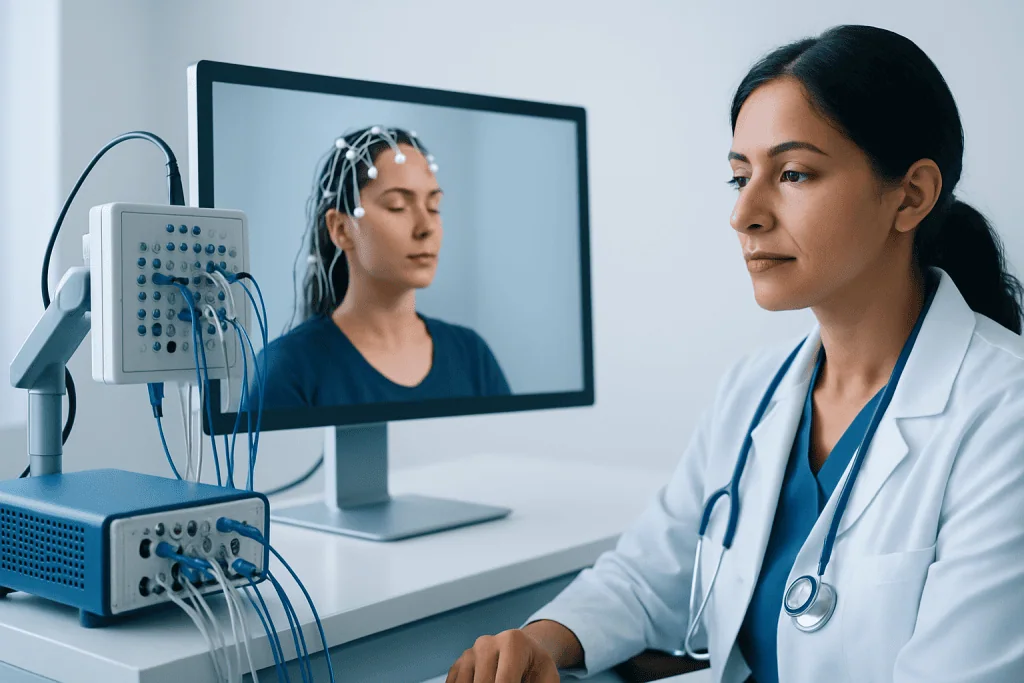
The main test associated with neurophysiology is the EEG, which records the brain’s electrical activity through sensors placed on the scalp. A routine EEG can sometimes detect patterns associated with seizures or epilepsy, but a normal result does not completely rule them out. Some people only show abnormalities during sleep, after sleep deprivation, or during a longer monitored recording.
If episodes are infrequent or unclear, the neurophysiologist may recommend prolonged or video EEG monitoring. This allows symptoms, behavior, and brain-wave changes to be recorded together, which can be very helpful in distinguishing epileptic seizures from fainting or non-epileptic events. In some cases, EEG testing is combined with activation techniques such as deep breathing, flashing lights, or sleep recording when clinically appropriate.
Neurophysiology is only one part of the diagnostic process. Brain imaging may be advised to look for structural causes, especially after a first seizure or when focal symptoms are present. Depending on the situation, the care team may also request blood tests, heart rhythm assessment, tilt-table testing, or a neurological consultation. For some people, further evaluation with neurology consultation or brain MRI helps complete the picture.
How the Results Guide Treatment and Next Steps
Treatment depends on the cause of the episodes. If the findings suggest epilepsy, the next step may involve education about seizure safety and discussion of anti-seizure medication. The treatment plan is individualized according to seizure type, age, medical history, test findings, and lifestyle. Not everyone with a single episode will need long-term medication right away.
If the episodes are more consistent with fainting, treatment focuses on the underlying reason. This may include hydration, identifying triggers, reviewing medications, or arranging a heart evaluation. If events are related to sleep problems, migraine, metabolic issues, or functional neurological symptoms, management is directed accordingly.
Safety advice is an important part of care while the diagnosis is being clarified. A person may be advised to avoid driving, swimming alone, climbing heights, bathing unsupervised, or operating heavy machinery until a doctor provides guidance. Near the end of the diagnostic process, some patients also seek coordinated care through centers such as Acibadem International, where multidisciplinary specialists in JCI-accredited hospitals evaluate and treat neurological symptoms for international patients.
Self-Care, Event Tracking, and How to Prepare for an Appointment
Although self-care cannot replace medical evaluation, practical steps can make diagnosis easier and improve safety. Keeping a symptom diary is often very useful. The person or a witness can note the date, time, activity, sleep, stress, food intake, missed medications, and details of the episode. A smartphone video recorded safely by a bystander may also help the doctor understand what happened.
Good sleep, regular meals, hydration, and avoidance of excessive alcohol or recreational drugs are sensible measures while waiting for assessment. Anyone already prescribed medication for seizures or another chronic condition should take it exactly as directed and should not stop treatment suddenly unless advised by a clinician.
It helps to bring witness accounts, a medication list, and any previous test results to the appointment. Questions can include whether the episode was likely neurological, whether more monitoring is needed, and what temporary activity restrictions are safest. If the episodes are recurrent or unexplained, further assessment with video EEG monitoring may be considered.
When to Seek Urgent Medical Care
Some episodes need prompt or emergency evaluation. Immediate medical help is important if a seizure lasts several minutes, if repeated seizures occur without full recovery between them, or if the person has trouble breathing afterward. Urgent assessment is also needed after a first seizure, a significant injury, or an event in water.
Fainting and blackouts also deserve urgent attention when they happen during exercise, are accompanied by chest pain or palpitations, occur in pregnancy, or are followed by prolonged confusion. Sudden weakness, difficulty speaking, severe headache, or one-sided numbness should also be treated as urgent because they may signal another neurological emergency.
Even when the episode seems brief and recovery is complete, medical review is worthwhile if blackouts are recurrent or unexplained. Early assessment can help identify the cause, reduce the risk of injury, and provide reassurance through a clear plan for investigation and follow-up.
Frequently asked questions
What is the difference between a seizure and fainting?
A seizure is caused by abnormal electrical activity in the brain, while fainting usually happens because the brain briefly receives less blood flow. The symptoms can overlap, so doctors look closely at triggers, body movements, and recovery afterward.
Can a person shake during fainting?
Yes. Brief jerking or stiffening can occur during fainting because the brain is temporarily not getting enough blood flow. This is one reason why a blackout should be assessed carefully rather than diagnosed based on shaking alone.
Will an EEG always show if someone has epilepsy?
No. A routine EEG can be normal even in someone who has seizures. If suspicion remains high, a doctor may recommend repeat EEG, sleep EEG, or longer video EEG monitoring.
What should a witness note during an episode?
Useful details include what happened before the event, how the person moved, whether their eyes were open, how long it lasted, and how they behaved afterward. If safe and appropriate, a short video can also be helpful for the medical team.
Should someone drive after a blackout or possible seizure?
They should seek medical advice before driving again. Driving restrictions vary depending on the cause of the episode, local regulations, and whether further episodes are likely.
When does a blackout require emergency care?
Emergency care is important if the episode is prolonged, happens repeatedly, causes injury, occurs in water, or is linked with breathing difficulty, chest pain, or severe confusion afterward. A first seizure or unexplained collapse also deserves prompt medical assessment.
References
- World Health Organization
- International League Against Epilepsy
- National Institute of Neurological Disorders and Stroke
- American Academy of Neurology
- National Health Service
This article is for general information only and is not a substitute for professional medical advice. Please consult a qualified doctor about your individual situation.
Explore treatments in Turkey — costs, top hospitals & a free quote
JCI-accredited · board-certified surgeons · reply within 24h
Add us as a Preferred Source to see more of our trusted health content across Google Search, AI Overviews and Discover.
Check your numbers in seconds
BMI, calories, due date, blood pressure and 30+ more clinical calculators — free, instant, doctor-reviewed ranges.