What Does Measles Look Like? A Doctor-Reviewed Answer

Measles usually starts with fever, cough, runny nose, and red, watery eyes before the rash appears. The measles rash often begins at the hairline or behind the ears, then spreads to the face, trunk, arms, and legs.
Key Takeaways
- Measles usually starts with fever, cough, runny nose, and red, watery eyes before the rash appears.
- The measles rash often begins at the hairline or behind the ears, then spreads to the face, trunk, arms, and legs.
- Small white spots inside the mouth, called Koplik spots, can appear before or around the start of the rash.
- A doctor diagnoses measles based on symptoms, exposure history, and confirmatory laboratory testing.
- Anyone with suspected measles should call a healthcare professional promptly and avoid exposing others.
- Vaccination is the most effective way to prevent measles.
What does measles look like? Measles often begins like a bad cold with fever, cough, runny nose, and red eyes, followed by a red, blotchy rash that starts on the face and spreads down the body. While many rashes have harmless causes, measles needs prompt medical attention because it is highly contagious and can lead to complications, especially in young children, pregnant people, and those with weakened immune systems.
Overview: what measles typically looks like
For many people, a rash in a child or adult turns out to be caused by a common viral illness, irritation, or another non-serious condition. Still, when people ask what does measles look like, the answer matters because measles has a fairly recognizable pattern and should be medically reviewed quickly to reduce the risk of spread and complications.
Measles often begins before the rash. A person usually develops a high fever, cough, runny nose, and red, watery eyes. After this early phase, a red or reddish-brown blotchy rash appears, often starting on the face, around the hairline, or behind the ears, then spreading downward to the neck, chest, back, arms, and legs.
The spots may begin as flat areas and then become slightly raised as more spots appear. In some people, the patches can merge together, especially on the face and upper body. The rash itself is not the only clue; the combination of fever, cold-like symptoms, and the pattern of spread is what makes measles more likely.
Because other illnesses can look similar, a rash alone cannot confirm measles. A doctor will usually consider the timing of symptoms, recent exposure, vaccination history, and laboratory testing to make the diagnosis.
How the rash starts and changes over time
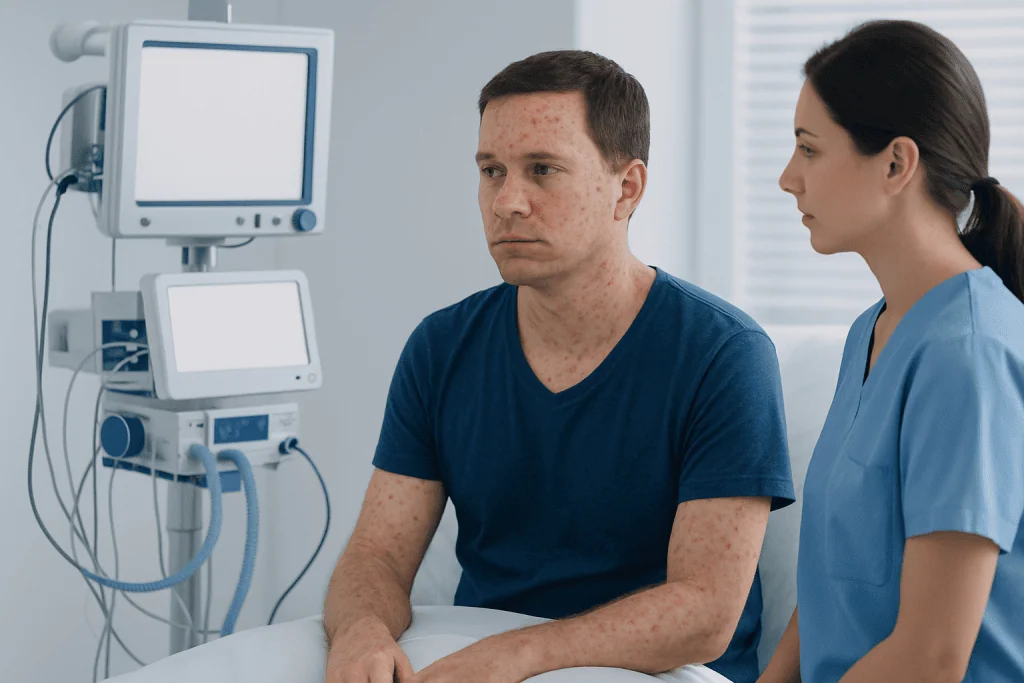
The measles rash usually appears about 3 to 5 days after the first symptoms begin. It often starts near the hairline, on the forehead, or behind the ears, then moves down over the face and neck. Over the next day or two, it spreads to the trunk and then to the arms and legs.
At first, the rash may look like small red spots on lighter skin or darker red, purple-toned, or brownish areas on darker skin. As it spreads, the spots can join together into larger blotchy patches. The face often looks more heavily affected than the legs early on, which can help distinguish it from some other rashes.
Measles can look somewhat different from person to person. On deeper skin tones, the rash may be less obviously bright red and may appear more subtle, so the overall pattern and associated symptoms become especially important. Fever often remains high when the rash first appears, and some people feel more unwell at this stage rather than better.
After several days, the rash gradually fades in the same general order it appeared, from face downward. As it clears, the skin may look brownish or slightly discolored for a short time, and there may be fine peeling in some cases.
Other signs that often appear with measles
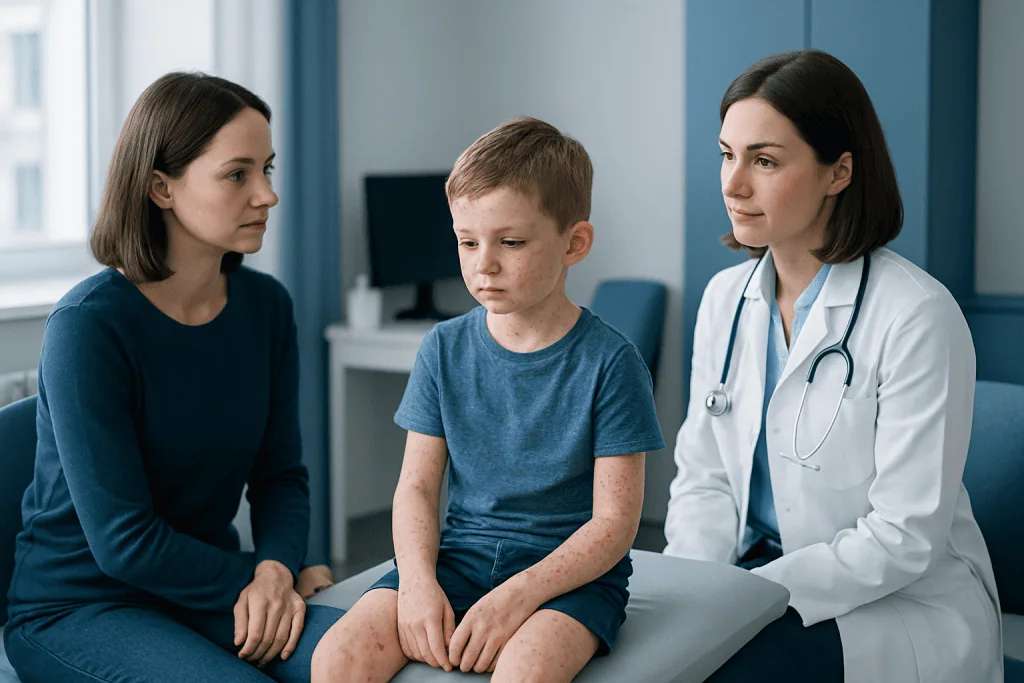
One of the most useful clues is that measles usually does not begin with a rash alone. The classic early symptoms are fever, cough, runny nose, and red, irritated eyes. Doctors sometimes call this combination a “three C” pattern: cough, coryza (runny nose), and conjunctivitis.
Another important sign is Koplik spots. These are tiny white or bluish-white spots with a red background inside the mouth, often on the inner lining of the cheeks opposite the molars. They can appear before the skin rash or around the time it starts and may help a doctor recognize measles early.
People with measles often feel quite ill. They may have tiredness, poor appetite, light sensitivity, sore throat, or body aches. Young children may become irritable or drink less than usual, which can increase the risk of dehydration if fever is high.
- High fever, sometimes rising before or with the rash
- Persistent cough
- Runny nose
- Red, watery, or light-sensitive eyes
- Koplik spots inside the mouth
- Fatigue and reduced appetite
What can look similar to measles
Many conditions can cause a widespread rash and fever, so it is understandable to be unsure. Viral illnesses such as rubella, roseola, parvovirus infection, and some enteroviruses may cause rashes that spread across the body. Drug reactions and some bacterial illnesses can also resemble measles at first glance.
Doctors distinguish measles by looking at the full picture: the strong fever, cough, runny nose, red eyes, mouth spots, and the way the rash starts on the face and moves downward. Exposure history also matters. If a person has recently traveled, been around someone with a rash illness, or is not fully vaccinated, measles becomes more important to rule out.
Because measles can be confused with other infectious illnesses, doctors may also consider related viral conditions such as rubella during evaluation. In some cases, additional tests are needed to separate these illnesses safely and accurately, especially during outbreaks or after international travel.
Trying to identify a rash from photos alone can be misleading. The best approach is to contact a healthcare professional, describe the symptoms and exposure concerns, and follow instructions on how to be assessed without exposing other people.
How doctors diagnose measles
A doctor usually starts with a careful history and physical examination. They ask when the fever began, when the rash appeared, whether the rash started on the face, and whether there are symptoms such as cough, runny nose, or red eyes. Vaccination status, recent travel, and contact with anyone known or suspected to have measles are also important.
If measles is suspected, laboratory confirmation is typically recommended. This may involve blood tests and a swab from the nose or throat, depending on local public health guidance and the timing of illness. These tests help confirm the diagnosis and distinguish measles from other causes of fever and rash.
Because measles spreads very easily through the air, clinics and hospitals usually take infection-control precautions right away. A person with possible measles may be asked to call before arriving, wear a mask if appropriate, and avoid sitting in crowded waiting areas. This protects infants, pregnant people, and others who may be vulnerable.
If symptoms are severe or complications are suspected, doctors may order additional tests to check hydration, oxygen levels, or lung involvement. In settings where complications such as pneumonia are a concern, supportive assessment can be as important as confirming the viral diagnosis itself.
Treatment and supportive care
There is no specific cure that makes measles disappear immediately, so treatment focuses on supportive care and monitoring for complications. Rest, fluids, and medicines recommended by a doctor to reduce fever or discomfort are commonly used. Many people recover with careful home care, but medical supervision is important because measles can worsen or lead to problems such as ear infections, diarrhea, or pneumonia.
Children and adults with measles should be watched for signs of dehydration, breathing problems, confusion, or worsening fever. Some people may need hospital care if they are unable to drink enough, have low oxygen levels, or develop complications. People at higher risk include infants, pregnant people, and those with weakened immune systems.
In certain situations, doctors may recommend treatments related to complications or supportive management in a hospital setting. If breathing is affected, evaluation through services linked to pulmonology care may be needed. If dehydration or systemic illness becomes significant, internal medicine evaluation can help coordinate care.
Near the end of the diagnostic and treatment pathway, some international patients may seek care at centers such as Acibadem International, where multidisciplinary specialists at JCI-accredited hospitals evaluate and treat infectious illnesses and their complications in a coordinated setting.
Prevention and protecting others
The most effective way to prevent measles is vaccination. Measles-containing vaccines provide strong protection and are an important part of routine childhood immunization. Adults who are unsure of their vaccination status should discuss this with a qualified healthcare professional, especially before travel or during local outbreaks.
If a person may have measles, limiting exposure to others is essential. They should stay home except for medical care, avoid school, work, and public places, and call ahead before visiting a clinic. Good ventilation, masking when advised, and avoiding contact with infants, pregnant people, and immunocompromised individuals can reduce spread.
Household contacts and close contacts may need medical advice about post-exposure management depending on age, health status, pregnancy, immune system conditions, and vaccine history. Public health teams may also become involved to identify contacts and limit transmission.
For families reviewing related vaccine-preventable illnesses, information on mumps and other contagious childhood infections can also be helpful in understanding why timely immunization and isolation guidance matter.
When to seek medical care
Anyone who thinks they or their child may have measles should contact a healthcare professional promptly, even if symptoms seem manageable. Early advice helps with diagnosis, safe isolation, and monitoring. It is best to call ahead before going in person so the clinic or hospital can reduce exposure to others.
Urgent medical care is especially important if there is trouble breathing, severe dehydration, unusual sleepiness, confusion, seizures, chest pain, a child who is difficult to wake, or a fever that seems to be worsening rather than improving. Medical review is also important for infants, pregnant people, and people with weakened immune systems because they have a higher risk of complications.
If symptoms overlap with other serious infections or if a person becomes significantly unwell, broader specialist assessment may be needed, including infectious diseases care. Prompt evaluation does not always mean the illness is severe, but it helps make sure the right precautions and support are in place.
In short, many rashes are harmless, but a measles-like rash with fever, cough, red eyes, and spread from the face downward deserves timely medical attention. A doctor can confirm the cause, guide home care or treatment, and help protect others from infection.
Frequently asked questions
What does measles look like at first?
At first, measles often looks more like a bad cold or flu than a rash illness. Fever, cough, runny nose, and red watery eyes usually begin before the rash appears, and small white Koplik spots may show up inside the mouth.
Where does a measles rash usually start?
A measles rash typically starts on the face, especially near the hairline or behind the ears. It then spreads downward to the neck, chest, back, arms, and legs over the next one to two days.
Is the measles rash itchy?
The measles rash is not usually described as intensely itchy, although some people may notice mild irritation. The overall illness, especially fever and cold-like symptoms, is often more noticeable than itching.
How can someone tell measles apart from another rash?
The pattern is often the biggest clue: high fever, cough, runny nose, red eyes, and then a rash that starts on the face and spreads downward. Even so, many illnesses can look similar, so a doctor usually needs to confirm measles with an examination and often laboratory testing.
How long does the measles rash last?
The rash usually lasts several days and then fades in the same general order it appeared, from head to toe. Some temporary skin discoloration or fine peeling can remain briefly as the rash clears.
Should someone go straight to a clinic if they think they have measles?
It is usually best to call ahead first rather than walking into a clinic or emergency department without warning. This helps the healthcare team arrange safe evaluation and reduce the chance of spreading infection to other patients.
References
- World Health Organization
- Centers for Disease Control and Prevention
- American Academy of Pediatrics
- Mayo Clinic
- National Health Service
This article is for general information only and is not a substitute for professional medical advice. Please consult a qualified doctor about your individual situation.
Measles in Turkey — costs, top hospitals & a free quote
JCI-accredited · board-certified surgeons · reply within 24h
Add us as a Preferred Source to see more of our trusted health content across Google Search, AI Overviews and Discover.