What Does Neurophysiological Mean in a Medical Report?

“Neurophysiological” relates to the function of the nervous system and muscles. It often appears in reports from tests such as EEG, EMG, nerve conduction studies, and evoked potentials.
Key Takeaways
- “Neurophysiological” relates to the function of the nervous system and muscles.
- It often appears in reports from tests such as EEG, EMG, nerve conduction studies, and evoked potentials.
- A neurophysiological finding does not automatically mean a serious disease is present.
- Results must be interpreted together with symptoms, examination findings, and imaging when needed.
- If a report is unclear, a neurologist or neurophysiologist can explain what the wording means for that individual patient.
In a medical report, “neurophysiological” usually refers to tests that measure how the nervous system works, rather than how it looks on a scan. The term may describe the function of the brain, spinal cord, nerves, or muscles and often appears in reports for EEG, EMG, nerve conduction studies, sleep studies, or evoked potential tests.
Overview: what “neurophysiological” means
The word “neurophysiological” combines “neuro,” meaning the nervous system, and “physiological,” meaning how the body functions. In a medical report, it usually describes the working activity of the brain, spinal cord, peripheral nerves, neuromuscular junction, or muscles. In simple terms, it is about function rather than structure.
This is different from imaging tests such as MRI or CT, which mainly show anatomy. A neurophysiological test looks at signals: how fast they travel, how strong they are, whether they follow a normal pattern, and whether communication between nerves and muscles is working properly. For that reason, neurophysiology can help detect problems that may not be obvious on a scan alone.
A report may use phrases such as “neurophysiological findings,” “neurophysiological evidence,” or “normal neurophysiological study.” These statements are usually summarizing whether the electrical activity recorded during testing supports a normal or abnormal pattern of nervous system function.
Where the term appears in medical reports
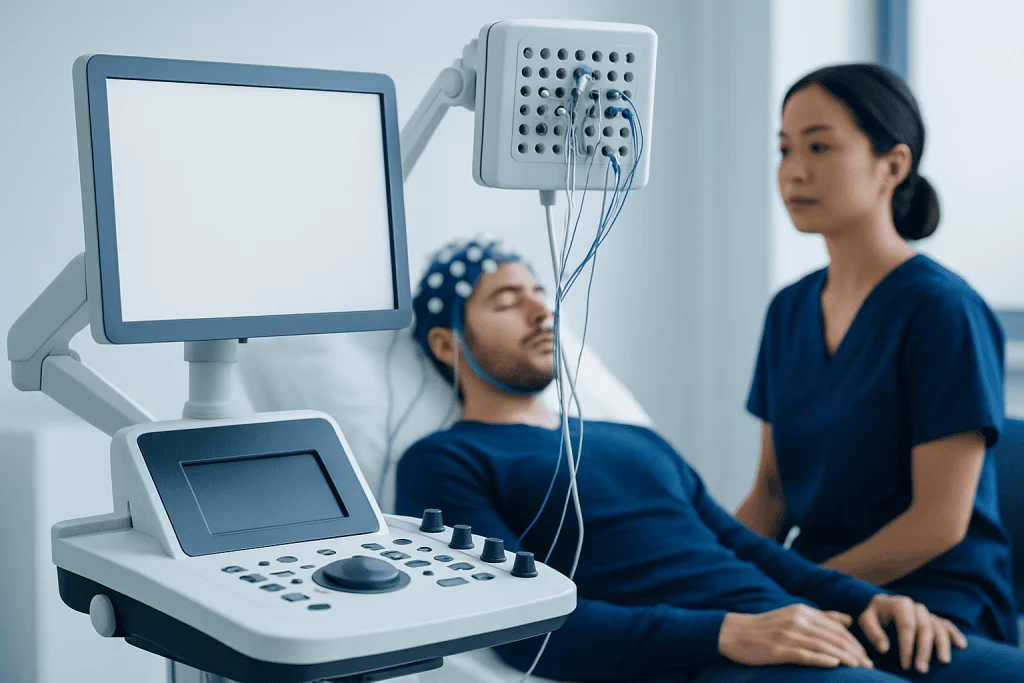
“Neurophysiological” most often appears in reports from tests performed by neurology or clinical neurophysiology teams. Common examples include electroencephalography, electromyography, nerve conduction studies, evoked potentials, intraoperative monitoring, and some sleep-related tests. Each test examines a different part of the nervous system.
An EEG records electrical activity from the brain and may be used when evaluating seizures, episodes of loss of awareness, or some sleep disorders. An EMG and nerve conduction study assess how nerves and muscles are working and may help investigate numbness, tingling, weakness, or pain. Evoked potential tests measure how the brain responds to sensory signals such as visual, auditory, or touch-related input.
In practice, a report might say there is “no neurophysiological evidence of peripheral neuropathy,” “mild neurophysiological abnormalities suggesting nerve compression,” or “normal neurophysiological responses.” These phrases are technical, but they are meant to describe whether the recorded signals fit with normal function or with a specific pattern of dysfunction.
- EEG: brain electrical activity
- EMG: muscle electrical activity
- Nerve conduction study: speed and strength of nerve signals
- Evoked potentials: brain responses to sensory stimulation
- Sleep neurophysiology tests: brain, breathing, and movement patterns during sleep
What a neurophysiological finding may suggest

A neurophysiological finding can be normal, borderline, or abnormal. A normal result means the measured electrical patterns were within expected limits for that test. An abnormal result means that signal timing, strength, pattern, or coordination differed from what is usually expected, but it does not always identify the exact cause by itself.
Depending on the test, abnormalities may suggest irritation, compression, inflammation, injury, or degeneration affecting the nervous system. For example, a nerve conduction study may show evidence consistent with carpal tunnel syndrome or a broader peripheral nerve disorder. An EEG may show changes that support a tendency toward seizures, although not every EEG abnormality confirms epilepsy on its own.
These findings must always be interpreted in context. Age, symptoms, medical history, medications, and the reason for testing can all affect what the result means. Sometimes a report points toward a clear diagnosis, while in other cases it simply narrows the list of possible explanations and guides the next step in care.
Common reasons doctors order neurophysiological tests
Doctors request neurophysiological testing when symptoms suggest that the nervous system may not be functioning normally. These tests can be helpful for numbness, burning pain, muscle weakness, tremor, balance problems, blackouts, unusual movements, suspected seizures, facial nerve symptoms, or unexplained changes in sensation.
They are also used to investigate specific conditions or to monitor progress over time. For example, a clinician may order EMG testing or a nerve conduction study when checking for nerve compression, muscle disease, or neuropathy. An EEG may be recommended when a person has episodes concerning for seizures, fainting, or altered awareness.
In some cases, test results support the assessment of conditions such as epilepsy, nerve entrapment, radiculopathy, or peripheral neuropathy. However, neurophysiology is only one part of the diagnostic process. Clinical examination and, when needed, blood tests or imaging remain important.
How to read the wording in a report
Medical reports often contain technical language that can sound more worrying than it really is. Words such as “evidence of,” “consistent with,” “suggestive of,” or “cannot exclude” have different meanings. “Consistent with” means the pattern fits a possibility, while “cannot exclude” means the test did not fully rule something out.
Reports may also describe whether a problem appears mild, moderate, or severe, and whether it seems acute or chronic. For example, “mild neurophysiological evidence of median nerve compression at the wrist” may point toward carpal tunnel syndrome, while “chronic neurogenic changes” often means there has been a longer-standing effect on nerve supply to a muscle.
It is also common to see a final “impression” or “conclusion” section. This is usually the most useful part for patients because it summarizes the main result in a few lines. Even so, a report should not be interpreted in isolation. The clinician who ordered the test is best placed to explain how the wording matches the person’s symptoms and whether any treatment is needed.
Diagnosis and next steps after an abnormal result
An abnormal neurophysiological report does not automatically mean there is a serious or permanent problem. It simply means the test found a pattern outside the expected range. Some abnormalities are temporary, some are mild, and some need follow-up to understand their cause more clearly.
After reviewing the report, the doctor may recommend further evaluation. This could include a neurological examination, blood tests, imaging such as MRI, repeat testing, or referral to a specialist. In other situations, the report may already provide enough information to begin treatment, rehabilitation, or observation.
The next step depends on the type of problem identified. A person with a suspected seizure tendency may need ongoing neurological review, while someone with a compressed nerve may benefit from posture changes, splinting, physiotherapy, medication review, or occasionally surgery. The goal is to connect the test result with the person’s symptoms so that care is both accurate and appropriate.
Treatment, self-care, and when to seek medical advice
There is no single treatment for a “neurophysiological” finding because the term describes a test result, not a disease by itself. Treatment depends on the underlying condition. Options may include medicines, physiotherapy, sleep management, treatment of vitamin deficiencies or metabolic causes, seizure care, pain management, or procedures to relieve nerve compression when appropriate.
Self-care may also play a role. Good blood sugar control, ergonomic changes, adequate sleep, limiting alcohol, staying physically active within medical guidance, and following treatment plans for chronic conditions can help support nerve and muscle health. Patients should avoid self-diagnosing from a report alone, especially if symptoms are progressing.
Medical advice should be sought promptly if there is new or worsening weakness, repeated blackouts, seizures, sudden confusion, trouble speaking, severe balance problems, or loss of bladder or bowel control. A routine follow-up is reasonable for less urgent questions, such as understanding report wording or discussing mild symptoms. For international patients, Acibadem International’s multidisciplinary specialists and JCI-accredited hospitals diagnose and treat neurological and neurophysiological conditions with coordinated care.
Frequently asked questions
Does neurophysiological mean there is a nerve problem?
Not necessarily. The term simply refers to the function of the nervous system being assessed or described in a report. A neurophysiological result may be normal, or it may suggest a problem affecting the brain, nerves, or muscles depending on the test.
Is a neurophysiological abnormality serious?
It can range from mild and temporary to more significant, depending on the cause. The wording alone does not show how serious it is, so the result needs to be interpreted with symptoms, examination findings, and sometimes imaging or blood tests.
What tests are considered neurophysiological?
Common examples include EEG, EMG, nerve conduction studies, evoked potentials, and some sleep-related brain activity tests. These tests measure electrical signals and responses in the brain, nerves, and muscles.
Can a neurophysiological report diagnose a condition by itself?
Sometimes it can strongly support a diagnosis, but usually it is one part of the overall assessment. Doctors combine the report with medical history, physical examination, and other investigations before confirming a diagnosis.
What does a normal neurophysiological report mean?
A normal report means the recorded electrical patterns were within expected limits for that test. It is generally reassuring, although some symptoms may still need further assessment if they continue or if another cause is suspected.
Should patients worry if they see technical words in the report?
Technical terms are common and do not always mean something dangerous. Report language is written for clinicians, so it is best to ask the doctor or neurophysiology specialist to explain what the findings mean in practical terms.
References
- World Health Organization
- National Institute of Neurological Disorders and Stroke
- American Clinical Neurophysiology Society
- National Institute for Health and Care Excellence
- MedlinePlus
This article is for general information only and is not a substitute for professional medical advice. Please consult a qualified doctor about your individual situation.
Joint and spine care in Turkey — expert assessment & treatment
JCI-accredited · board-certified surgeons · reply within 24h
Add us as a Preferred Source to see more of our trusted health content across Google Search, AI Overviews and Discover.