What If Prostate Biopsy Is Positive: Procedure, Recovery and Results

A positive biopsy confirms prostate cancer in the sampled tissue, but it does not by itself show the full extent of disease. The pathology report commonly includes the Gleason score or Grade Group, number of positive samples and amount of cancer in each sample.
Key Takeaways
- A positive biopsy confirms prostate cancer in the sampled tissue, but it does not by itself show the full extent of disease.
- The pathology report commonly includes the Gleason score or Grade Group, number of positive samples and amount of cancer in each sample.
- Many prostate cancers grow slowly, and some can be safely monitored with active surveillance rather than treated immediately.
- Recovery after a biopsy is usually brief; light bleeding in urine, stool or semen can occur temporarily.
- Fever, worsening pain, inability to urinate or heavy bleeding after biopsy requires urgent medical advice.
A positive prostate biopsy means that cancer cells were identified in one or more tissue samples. The next step is usually to understand the cancer’s grade, extent and likely behavior, then discuss whether active surveillance, treatment or further assessment is most appropriate.
Overview: what a positive prostate biopsy means
What if prostate biopsy is positive? A positive result means a pathologist has found prostate cancer cells in the tissue samples taken during the biopsy. It is an important diagnosis, but it is not an emergency in most cases: the next steps focus on learning how likely the cancer is to grow or spread and choosing care that matches the person’s health, preferences and cancer risk.
The biopsy result is only one part of the picture. The urology and oncology team considers the prostate-specific antigen (PSA) level, digital rectal examination findings, magnetic resonance imaging (MRI), biopsy Grade Group, the number of samples containing cancer and, when needed, imaging tests that look beyond the prostate. This information helps distinguish cancer that may be monitored from cancer that is more likely to benefit from treatment.
Hearing that a biopsy is positive can be difficult, but prostate cancer has a wide range of behavior. Some cancers are slow growing and may never cause symptoms, while others need timely treatment. A clear conversation with a urologist helps place the result in context and supports informed decision-making.
How prostate biopsy works and who may need one
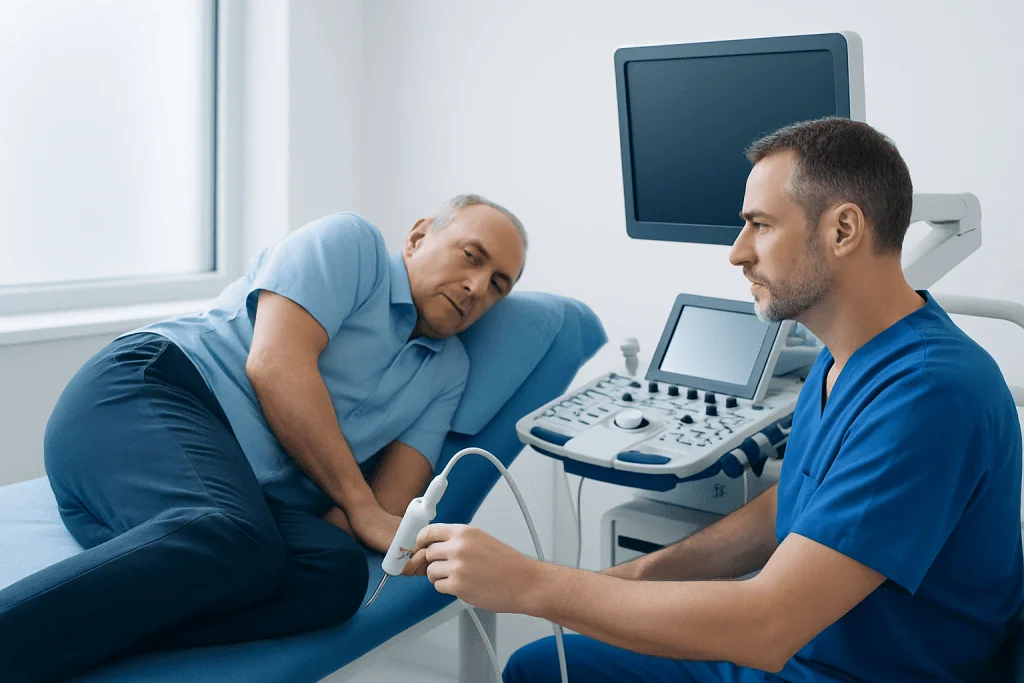
A prostate biopsy removes small cylinders of tissue, called cores, from different areas of the prostate. A pathologist examines the cells under a microscope to determine whether cancer is present. Biopsy is generally recommended when PSA testing, a rectal examination, prostate MRI or a combination of these findings suggests a meaningful possibility of cancer.
Most biopsies are performed with ultrasound guidance, either through the rectum (transrectal) or through the skin between the scrotum and anus (transperineal). MRI-targeted biopsy may be used when MRI has identified a suspicious area. In this approach, targeted samples are often taken alongside systematic samples from other parts of the gland.
Not everyone with an elevated PSA needs an immediate biopsy. PSA can rise for non-cancer reasons, including benign prostate enlargement, inflammation, infection or recent urinary procedures. A clinician may repeat PSA testing, review PSA trends, use MRI or consider other risk-assessment tools before recommending biopsy.
- Potential benefit: biopsy can confirm or rule out cancer and provide information for planning care.
- Important limitation: a biopsy samples part of the prostate, so results are interpreted together with MRI, PSA and clinical findings.
- Preparation: the care team reviews medicines, allergies and infection risk, especially blood-thinning medicines.
The biopsy procedure: step by step

Before the procedure, the clinical team explains the approach, obtains consent and reviews instructions about food, medicines and any prescribed antibiotics. Local anesthetic is often used to numb the area; some people receive sedation or anesthesia depending on the biopsy method, health needs and local practice.
For a transrectal biopsy, an ultrasound probe is gently placed in the rectum to guide the needle. For a transperineal biopsy, samples are taken through the skin of the perineum, usually with ultrasound guidance. The clinician takes several small samples, including targeted samples if an MRI lesion is present. The sampling itself is generally brief, although the overall appointment may be longer because of preparation and recovery.
Afterward, the samples are labeled and sent to a pathology laboratory. The person is monitored briefly and can usually go home the same day, provided there are no immediate concerns. It is sensible to arrange transport home if sedation or anesthesia was used.
Biopsy is generally safe, but no procedure is entirely risk-free. Possible effects include temporary blood in urine, stool or semen, soreness, urinary discomfort, temporary difficulty passing urine and infection. Transperineal approaches may reduce the risk of serious infection compared with transrectal approaches, although the most suitable method depends on the individual situation and available expertise.
What is the next step after a positive prostate biopsy?
After a positive prostate biopsy, the next step is a results appointment with a urologist, and sometimes a radiation oncologist or medical oncologist. The team reviews the pathology report and combines it with PSA results, examination findings and imaging to assign a risk category. This process is sometimes called staging and risk stratification.
The pathology report usually states the Gleason score and corresponding Grade Group. These describe how abnormal the cancer cells look and help estimate how the cancer may behave. The report also may identify which cores contain cancer, how much of each core is involved and whether certain higher-risk microscopic features are present.
Depending on the risk assessment, further tests may include prostate MRI, bone imaging, computed tomography (CT), positron emission tomography (PET) imaging or blood tests. Not every person needs additional scans. They are more commonly considered when PSA, Grade Group or other findings suggest a greater chance that cancer extends beyond the prostate.
Management may include active surveillance for selected low-risk cancers, surgery to remove the prostate, radiation therapy, hormone therapy or combinations of treatments for higher-risk or more advanced disease. For an overview of the diagnosis and care pathway, see prostate cancer. Decisions should be made after discussing likely benefits, possible side effects and the person’s priorities for urinary, sexual and overall quality of life.
Understanding results and common questions
What percentage of prostate biopsies come back positive? The percentage varies substantially between clinics and patient groups because doctors recommend biopsy based on different levels of PSA, MRI findings, age, family history and prior biopsy results. A higher PSA or a suspicious MRI finding can increase the chance of cancer being found. Rather than relying on a single percentage, an individual’s clinician can explain the likelihood based on their specific risk factors.
Do biopsy results take longer if it’s cancer? Not usually. Results often take several days to about two weeks, depending on the pathology laboratory and whether additional tissue stains or specialist review are needed. Cancer does not automatically make the report take longer; both benign and cancer-containing samples may require careful processing and review.
How long does it take for the prostate to heal after a biopsy? Most people feel able to return to routine, non-strenuous activities within one or two days, although soreness or urinary irritation can last a few days. Small amounts of blood in urine or stool usually settle within days, while blood in semen can persist for several weeks and gradually clear. The internal needle tracks heal over time, and a clinician should be contacted if symptoms worsen rather than improve.
Can a positive biopsy be wrong? Pathology review is designed to identify cancer accurately, and a positive biopsy is generally considered definitive evidence of cancer in the sampled tissue. When findings are unusual, unclear or likely to significantly influence treatment choices, a second review by an experienced genitourinary pathologist may be appropriate. A second opinion can also help a person feel confident about the diagnosis and plan.
Recovery, self-care and possible complications
Following biopsy, rest on the day of the procedure and follow the specific discharge instructions provided by the clinical team. Hydration may help maintain comfortable urination unless a clinician has advised fluid restriction. Heavy lifting, vigorous exercise and sexual activity are often postponed briefly, particularly if there is ongoing bleeding or discomfort.
Minor bleeding is common. Urine may look pink or red, a small amount of blood may be seen from the rectum after a transrectal biopsy, and semen may appear rust-colored or brown-red for a longer period. These changes can be unsettling but are commonly temporary. The team may give individualized advice about pain relief and when to restart medicines that affect bleeding.
Prompt assessment is important if fever, chills, increasing pelvic or urinary pain, feeling generally unwell, inability to pass urine, large clots, heavy bleeding or persistent worsening bleeding develops. Infection after biopsy is uncommon but can become serious, particularly after transrectal biopsy, so it should not be managed at home without medical advice.
Emotional recovery matters as well. Waiting for pathology results and processing a cancer diagnosis can cause worry. Bringing a trusted relative or friend to appointments, writing down questions in advance and asking for clear explanations of each result can make the next steps more manageable.
Treatment planning and longer-term outlook
There is no single best treatment for every positive biopsy. For low-risk, localized cancer, active surveillance may involve regular PSA tests, examinations, MRI and repeat biopsy or targeted testing over time. Its purpose is to avoid or delay treatment side effects while still identifying signs that the cancer is changing.
For cancer that is more likely to grow, treatment may involve surgery, external-beam radiation therapy, brachytherapy in selected cases, hormone therapy or other systemic treatments when disease is advanced. The choice depends on cancer stage and grade, age, general health, life expectancy, urinary and sexual function, and personal values. Prostate cancer treatment should be discussed in a multidisciplinary setting whenever possible.
Questions worth asking include: What is my Grade Group and clinical stage? Is active surveillance suitable? What additional tests do I need? What are the expected benefits and side effects of each option? How will treatment affect continence, erections, bowel function and fertility? Taking time to understand these questions is appropriate for most newly diagnosed localized prostate cancers.
Acibadem International’s multidisciplinary specialists and JCI-accredited hospitals support international patients with prostate cancer assessment and treatment planning. Follow-up remains important after surveillance or treatment, usually including PSA monitoring at intervals recommended by the treating team.
When to seek medical care
Medical advice should be sought urgently after a prostate biopsy if there is fever, chills, confusion, severe or worsening pain, inability to urinate, heavy rectal bleeding, large blood clots in urine or a feeling of being very unwell. These symptoms may indicate infection, urinary retention or bleeding that requires prompt treatment.
A person should also contact the urology team if mild symptoms are not improving as expected, if there is concern about restarting regular medicines, or if biopsy results have not been communicated within the expected timeframe. It is reasonable to ask when and how results will be delivered before leaving the biopsy appointment.
After a positive result, a timely follow-up appointment is important even when the cancer appears low risk. Most people have time to consider their options carefully, but the treating clinician can explain whether any findings require faster assessment or treatment.
Frequently asked questions
Does a positive prostate biopsy always mean treatment is needed right away?
No. Some low-risk prostate cancers can be managed with active surveillance rather than immediate treatment. This involves planned monitoring so that treatment can be offered if there are signs the cancer is becoming more active.
What information should a positive prostate biopsy report include?
Reports commonly describe the Grade Group or Gleason score, the number of samples containing cancer and the amount of cancer in each positive sample. The clinician interprets these details alongside PSA levels, MRI findings and examination results.
Can a biopsy show how far prostate cancer has spread?
A biopsy confirms cancer in the prostate tissue that was sampled, but it cannot always determine whether cancer has spread outside the prostate. MRI and, for selected higher-risk cases, other imaging tests may help assess the local extent and possible spread.
Is blood in semen normal after a prostate biopsy?
Yes, blood in semen is common after a prostate biopsy and may last several weeks. It often changes from red to brown or rust colored as it clears. A clinician should be contacted if bleeding is heavy, worsening or accompanied by fever or significant pain.
Can prostate cancer be found even if PSA is not very high?
Yes. PSA is a useful marker but is not a perfect test, and some prostate cancers occur with PSA values that are not markedly elevated. Doctors use PSA together with examination findings, MRI, family history and other clinical information.
Should someone get a second opinion after a positive prostate biopsy?
A second opinion can be helpful, especially before choosing surgery, radiation or another major treatment. It may include review of pathology slides and imaging, as well as discussion with another urologist or radiation oncologist. This can help clarify risk and available options.
References
- National Cancer Institute
- American Urological Association
- European Association of Urology
- National Health Service
- American Cancer Society
This article is for general information only and is not a substitute for professional medical advice. Please consult a qualified doctor about your individual situation.
Oncology care in Turkey — second opinion and treatment plan
JCI-accredited · board-certified surgeons · reply within 24h
Add us as a Preferred Source to see more of our trusted health content across Google Search, AI Overviews and Discover.