What Is Cancer? How Cancer Starts and Spreads
Cancer begins when changes in a cell’s DNA disrupt normal growth and repair controls. Not all tumors are cancerous; benign tumors do not invade nearby tissues or spread to distant organs.
Key Takeaways
- Cancer begins when changes in a cell’s DNA disrupt normal growth and repair controls.
- Not all tumors are cancerous; benign tumors do not invade nearby tissues or spread to distant organs.
- Cancer may spread through the blood or lymphatic system, a process called metastasis.
- Early diagnosis often improves treatment options and outcomes.
- Treatment depends on the cancer type, stage, location, and the person’s overall health.
- Healthy lifestyle habits and recommended screening tests can lower cancer risk.
Cancer is a group of diseases in which abnormal cells grow in an uncontrolled way. Understanding how cancer starts, grows, and spreads can help people recognize the importance of prevention, screening, and timely medical care.
Overview: What Is Cancer?
Cancer is not a single disease. It is a broad term for many conditions that begin when some of the body’s cells start to grow abnormally and do not stop when they should. Healthy cells usually grow, divide, and die in an orderly way. Cancer cells behave differently. They can keep multiplying, avoid normal cell death, and interfere with how nearby tissues and organs work.
The body is made of trillions of cells, each with instructions stored in DNA. These instructions tell cells when to grow, rest, repair damage, or die. Cancer develops when certain gene changes, sometimes called mutations, disrupt these instructions. Over time, these altered cells may form a mass called a tumor, although not all cancers form solid tumors. For example, blood cancers such as leukemia affect blood-forming tissues rather than forming a single lump.
Not every tumor is cancer. Benign tumors are non-cancerous. They may grow but usually do not invade nearby tissues or spread to other parts of the body. Malignant tumors are cancerous. They can grow into surrounding tissues and, in some cases, travel to distant organs. This ability to spread is one of the main features that makes cancer serious and requires specialist care.
How Cancer Starts
Cancer often starts with damage or changes in the genes inside a single cell. Some gene changes are inherited, meaning a person is born with them. Others are acquired during life due to aging, environmental exposures, infections, tobacco use, radiation, or random errors that happen when cells divide. Usually, one change alone is not enough to cause cancer. It often takes a series of changes over time.
Normally, the body has several ways to prevent damaged cells from becoming dangerous. Cells can repair DNA mistakes, stop dividing, or self-destruct if the damage is too severe. The immune system can also recognize and destroy some abnormal cells. Cancer develops when these protective systems fail or are bypassed. As a result, abnormal cells survive when they should not and continue to multiply.
Different cancers begin in different cell types. Carcinomas start in the skin or the lining of organs. Sarcomas begin in connective tissues such as bone, muscle, or fat. Leukemias affect blood and bone marrow, while lymphomas arise in the lymphatic system. This is why cancer is usually named based on where it begins, even if it later spreads elsewhere.
How Cancer Grows and Spreads
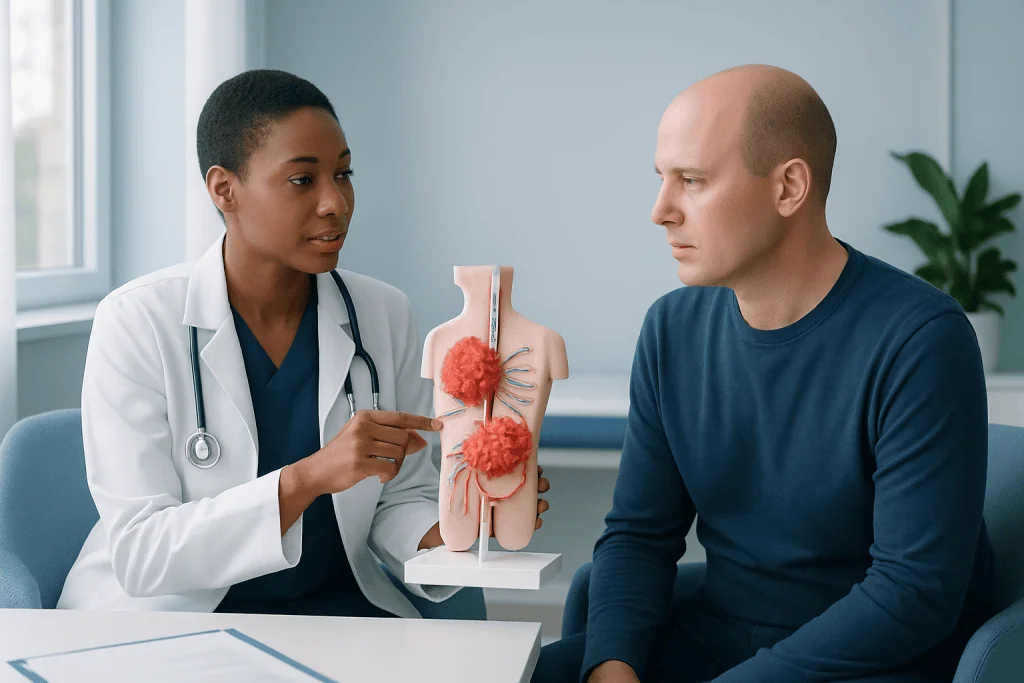
As cancer cells multiply, they can form a tumor and gradually affect nearby structures. Some cancers grow slowly, while others grow more quickly. Growth rate depends on the type of cancer, its genetic features, and the body’s response. A tumor may press on nerves, blood vessels, or organs, which can lead to symptoms such as pain, bleeding, or changes in organ function.
Cancer can invade nearby tissue by breaking through the normal boundaries that separate one tissue from another. This local invasion is one reason cancer may be harder to treat if it is found later. The longer a malignant tumor grows, the greater the chance that some cells may enter the bloodstream or lymphatic system.
When cancer cells travel to another part of the body and begin growing there, this is called metastasis. A cancer that starts in the breast and spreads to the liver is still called breast cancer, not liver cancer, because it is made of breast cancer cells. Common places for metastasis include the liver, lungs, bones, and brain, but the pattern depends on the cancer type. Understanding whether a cancer is localized or metastatic is an important part of planning treatment.
Doctors describe how far a cancer has spread using staging. In general, lower stages mean the cancer is more limited, while higher stages suggest more extensive disease. Staging helps guide treatment choices and gives a clearer picture of what care may be needed.
Symptoms and Warning Signs
Cancer symptoms vary widely depending on where the cancer starts, how large it is, and whether it has spread. Some people have no symptoms at first, which is one reason screening can be valuable. Others may notice general warning signs such as unexplained weight loss, unusual fatigue, persistent pain, fever without a clear cause, or loss of appetite.
Symptoms can also be more specific to a particular part of the body. A lump, a sore that does not heal, changes in a mole, unusual bleeding, a persistent cough, changes in bowel habits, difficulty swallowing, or ongoing bloating may need medical attention. These symptoms do not always mean cancer, but they should not be ignored, especially if they last or worsen.
Blood cancers may cause different symptoms, including frequent infections, bruising, pale skin, swollen lymph nodes, or bone pain. Some cancers affect hormone production and can lead to changes in energy, mood, or metabolism. Because cancer can appear in many forms, persistent or unexplained symptoms are best assessed by a qualified doctor.
- A new lump or swelling
- Unexplained bleeding or discharge
- A cough or hoarseness that does not improve
- Changes in the skin, including moles
- Persistent digestive or bowel changes
- Ongoing pain, fatigue, or weight loss
Causes and Risk Factors
There is rarely one single cause of cancer. Most cancers develop because of a combination of genetic, environmental, and lifestyle factors. Age is one of the strongest risk factors because DNA damage can build up over time. Family history can also matter, especially when close relatives have had the same or related cancers, or when cancer occurs at a younger age than usual.
Tobacco use is one of the most important avoidable causes of cancer. It is linked not only to lung cancer but also to cancers of the mouth, throat, bladder, pancreas, kidney, and more. Other risk factors include heavy alcohol use, obesity, physical inactivity, long-term sun exposure, some workplace chemicals, air pollution, and ionizing radiation. Certain infections, such as human papillomavirus, hepatitis B, hepatitis C, and Helicobacter pylori, can also increase risk for specific cancers.
Having a risk factor does not mean a person will definitely develop cancer, and some people with cancer have no clear risk factors. In the same way, people who live very healthily can still develop cancer. Risk factors simply change the chance of developing the disease. This is why regular checkups, awareness of family history, and age-appropriate screening remain important even for people who feel well.
How Cancer Is Diagnosed
Diagnosis often begins with a medical history and physical examination. A doctor may ask about symptoms, family history, lifestyle factors, and previous health conditions. If cancer is suspected, the next steps may include blood tests, imaging, endoscopy, or other diagnostic procedures depending on the area of concern.
Imaging tests help doctors look inside the body and understand the size and location of a possible tumor. These may include X-rays, ultrasound, CT scans, MRI scans, or PET scans. Imaging can suggest cancer, but it usually cannot confirm the exact diagnosis on its own. For many cancers, a biopsy is needed. During a biopsy, a small tissue sample is taken and examined under a microscope to determine whether cancer is present and what type it is.
After cancer is confirmed, additional tests may help determine the stage and specific biological features of the tumor. These details are important because two cancers that start in the same organ may behave differently and respond to different treatments. Modern cancer care often combines pathology, imaging, and molecular testing to create a personalized treatment plan.
When care is coordinated by a multidisciplinary team, patients can benefit from input from oncology, surgery, radiology, pathology, and other specialties. In suitable cases, treatment may include medical oncology, radiation therapy, or surgical oncology as part of a comprehensive approach.
Treatment Options
Cancer treatment depends on the type of cancer, its stage, where it is located, and the person’s overall health and preferences. The main goals may be to cure the cancer, control its growth, prevent recurrence, or relieve symptoms and improve quality of life. Many people receive more than one type of treatment, either at the same time or in sequence.
Surgery aims to remove the tumor and sometimes nearby tissue or lymph nodes. It may be used when the cancer is localized or as part of a broader treatment plan. Radiation therapy uses high-energy beams to destroy cancer cells in a targeted area. Drug treatments include chemotherapy, targeted therapy, hormone therapy, and immunotherapy. These treatments work in different ways, such as attacking fast-growing cells, blocking specific cancer signals, or helping the immune system recognize cancer more effectively.
Supportive care is an important part of cancer treatment at every stage. This can include pain control, nutrition support, psychological care, rehabilitation, and management of treatment side effects. Follow-up care is also essential after treatment, because doctors monitor for recurrence, late effects, and general recovery.
For international patients who need advanced evaluation and coordinated care, Acibadem International’s multidisciplinary specialists and JCI-accredited hospitals diagnose and treat many types of cancer, including conditions such as breast cancer and lung cancer.
Prevention, Screening, and When to See a Doctor
Not all cancers can be prevented, but many risk-reducing steps are well supported by evidence. Avoiding tobacco, limiting alcohol, protecting the skin from excessive sun, maintaining a healthy weight, staying physically active, and eating a balanced diet can all support overall health and lower the risk of some cancers. Vaccination against infections such as HPV and hepatitis B can also reduce the risk of certain cancer types.
Screening looks for cancer before symptoms appear. Examples include mammography for breast cancer, cervical screening, colon cancer screening, and low-dose CT scanning for some people at high risk of lung cancer. Screening recommendations depend on age, sex, personal history, and family history, so it is helpful for individuals to discuss an appropriate plan with their doctor.
A person should seek medical advice if they notice a persistent lump, unusual bleeding, a lasting cough, unexplained weight loss, a changing mole, or any symptom that does not go away. In many cases, these symptoms turn out to have non-cancerous causes, but it is safest to have them checked. Prompt assessment can provide reassurance or allow earlier treatment if needed.
People with a strong family history of cancer, known inherited cancer syndromes, or previous cancer treatment may need closer surveillance. A healthcare professional can advise on risk assessment, genetic counseling, and a suitable follow-up schedule.
Frequently asked questions
Is cancer one disease or many diseases?
Cancer is a group of many diseases rather than a single condition. Different cancers start in different tissues, behave differently, and may need different treatments.
How does cancer spread in the body?
Cancer can spread when malignant cells break away from the original tumor and travel through the blood or lymphatic system. If they settle in another organ and continue to grow, this is called metastasis.
Do all tumors mean cancer?
No. Some tumors are benign, which means they are not cancerous and usually do not spread to other parts of the body. Malignant tumors are cancerous and can invade nearby tissue or metastasize.
Can cancer develop without symptoms?
Yes. Some cancers cause no symptoms in their early stages, which is why screening can be important for certain age groups and risk profiles. Symptoms may only appear as the tumor grows or affects nearby organs.
What is the difference between stage and grade in cancer?
Stage describes how much cancer is in the body and whether it has spread. Grade refers to how abnormal the cancer cells look under a microscope and can give clues about how quickly the cancer may grow.
Can cancer be prevented?
Not all cancers can be prevented, but risk can often be reduced. Avoiding tobacco, limiting alcohol, protecting the skin, staying active, maintaining a healthy weight, and attending recommended screening tests can all help.
References
- World Health Organization
- National Cancer Institute
- American Cancer Society
- Centers for Disease Control and Prevention
- European Society for Medical Oncology
This article is for general information only and is not a substitute for professional medical advice. Please consult a qualified doctor about your individual situation.
Oncology care in Turkey — second opinion and treatment plan
JCI-accredited · board-certified surgeons · reply within 24h
Add us as a Preferred Source to see more of our trusted health content across Google Search, AI Overviews and Discover.