

What Is Computer Simulation Technology in Medicine?

Computer simulation creates virtual models of the body, organs, diseases, or medical procedures. It can support diagnosis, surgical planning, treatment selection, and clinician training.
Key Takeaways
- Computer simulation creates virtual models of the body, organs, diseases, or medical procedures.
- It can support diagnosis, surgical planning, treatment selection, and clinician training.
- Many simulations are patient-specific and built from imaging such as CT, MRI, or ultrasound.
- Simulation improves preparation and precision, but it does not replace clinical judgment or real-world testing.
- Its use is growing in surgery, cardiology, oncology, orthopedics, and rehabilitation.
Computer simulation technology in medicine uses advanced software and digital models to help clinicians understand the body, plan treatment, and practice procedures in a safer virtual environment. It supports more personalized, precise, and efficient care across many medical specialties.
Overview
Computer simulation technology in medicine refers to the use of software, data, and digital models to recreate parts of the human body, diseases, or medical procedures in a virtual environment. These simulations may represent organs, blood flow, bones and joints, tumors, or even how a device will behave inside the body. The goal is to help clinicians make more informed decisions and improve patient care.
In practical terms, simulation allows doctors to test different scenarios before treatment begins. For example, a surgeon may study a 3D model of a patient’s anatomy before an operation, or a cardiologist may assess how blood moves through the heart and vessels. This kind of planning can help the medical team understand challenges in advance and choose the safest, most effective approach.
Simulation is also widely used in medical education. Doctors, nurses, and other healthcare professionals can practice procedures, communication skills, and emergency responses without putting patients at risk. Some simulations are computer-based, while others combine software with lifelike manikins, virtual reality, or robotic systems.
How computer simulation works
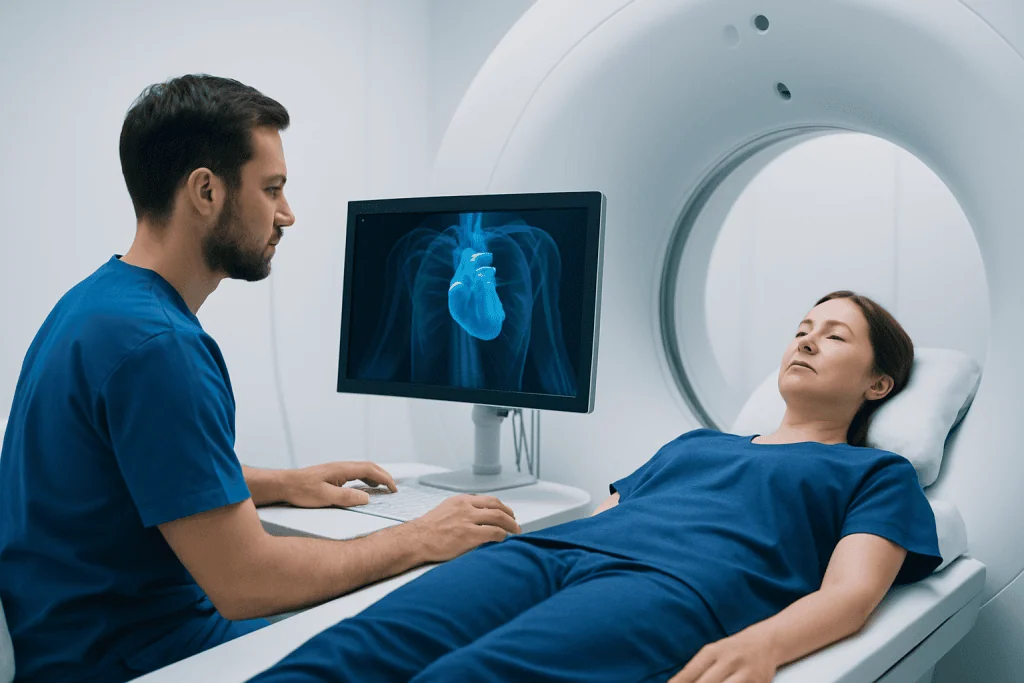
Medical simulation usually begins with data. This data may come from CT scans, MRI scans, ultrasound, laboratory results, motion analysis, or electronic health records. Specialized software processes the information and builds a digital model that represents a structure, function, or clinical situation. In some cases, the model is general. In others, it is personalized to match one patient’s anatomy.
Different types of simulation serve different purposes. Anatomical simulations show the shape and location of tissues and organs. Functional simulations estimate how something behaves over time, such as blood flow, breathing, joint movement, or radiation dose distribution. Procedural simulations allow clinicians to rehearse steps before a real intervention.
Artificial intelligence and advanced computing have made simulation more detailed and faster than in the past. However, these tools still depend on the quality of the underlying data and the experience of the clinicians interpreting the results. A simulation can support decisions, but it should be understood as one part of the full clinical picture.
- 3D anatomical modeling from imaging
- Procedure rehearsal and surgical route planning
- Simulation of blood flow, airflow, or biomechanics
- Virtual training for emergency and routine care
- Prediction of treatment response in selected cases
Where it is used in medicine
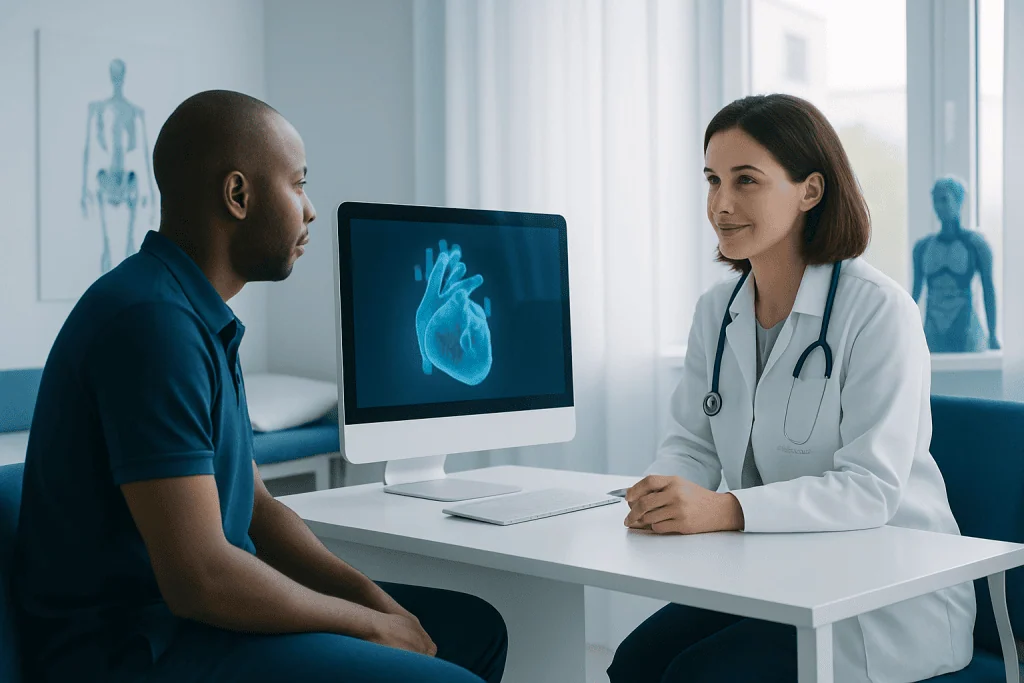
Computer simulation technology in medicine is used across many specialties. In surgery, it can help the team plan incision sites, approaches, implant placement, or reconstruction strategies. In orthopedics, it may model joint alignment and movement before procedures such as knee replacement or other joint surgeries. In neurosurgery and ENT surgery, it can help map delicate anatomy where precision is especially important.
In cardiology and heart surgery, simulation may be used to assess heart structure, valve behavior, circulation, or the best path for minimally invasive procedures. In oncology, digital planning tools can support radiation oncology by helping teams estimate dose delivery to tumors while protecting nearby healthy tissues. This is also relevant in complex cancer care, including some cases of lung cancer and other solid tumors.
Simulation is also valuable in rehabilitation and chronic disease management. It can be used to study gait, balance, and limb movement, helping tailor physical therapy programs. In addition, medical schools and hospitals use simulation centers to train healthcare teams in routine skills, rare emergencies, and team communication, improving readiness in real clinical settings.
Benefits for patients and healthcare teams
One of the main benefits of simulation is better preparation. When clinicians can explore anatomy or test a treatment strategy in advance, they may be able to work more efficiently and with greater confidence. This can be particularly helpful in complex or unusual cases where a standard approach may not fit the patient’s needs.
Simulation also supports personalized care. Because many models are built from an individual’s scans or clinical data, they can reflect real anatomical differences rather than a general textbook picture. This may help doctors select the right size of implant, identify the safest route for treatment, or anticipate technical challenges before a procedure begins.
For healthcare teams, simulation improves training and coordination. Teams can practice together, refine workflows, and identify potential problems in a low-risk setting. For patients, this may translate into clearer treatment planning, more informed discussions, and care that is better tailored to the situation. Still, benefits vary by condition, technology, and the expertise of the treating team.
Limitations and important considerations
Although computer simulation is a powerful tool, it has limits. A simulation is only as good as the information used to create it. If imaging quality is poor or important clinical details are missing, the model may not fully reflect real anatomy or disease behavior. Human biology is also complex, and not every factor can be perfectly predicted by software.
Another important point is that simulation does not replace direct medical assessment. Doctors still need to evaluate symptoms, perform examinations, review test results, and consider the patient’s overall health. In many cases, simulation is used alongside imaging, pathology, lab studies, and multidisciplinary discussion rather than instead of them.
Access can also vary. Some advanced simulation tools require specialized equipment, software, and trained staff, which may not be available in every hospital. Cost, workflow integration, and data privacy are additional considerations. Patients may wish to ask whether simulation is likely to change planning or outcomes in their specific case, rather than assuming it is necessary for every condition.
How simulation supports diagnosis and treatment planning
In diagnosis, simulation can help clinicians better visualize structures that are difficult to interpret on standard images alone. A 3D reconstruction may clarify the relationship between a tumor and nearby vessels, or show how a narrowed airway affects breathing. In some specialties, dynamic simulations are used to understand function as well as structure, which can be useful in complex cases.
For treatment planning, simulation can be especially helpful before surgery or interventional procedures. A team may compare different options, estimate risks, or rehearse technically challenging steps. This is commonly done in fields such as robotic surgery, cardiovascular interventions, reconstructive surgery, and advanced cancer treatment planning.
In selected situations, simulations may also be used to explain treatment options to patients. A visual model can make anatomy and procedures easier to understand, helping patients ask informed questions and take part in shared decision-making. At centers such as Acibadem International, multidisciplinary specialists in JCI-accredited hospitals may use advanced digital planning tools when diagnosing and treating international patients.
What patients should know and when to ask about it
Patients do not need to understand the technical details of simulation to benefit from it. What matters most is whether the technology is appropriate for the condition and whether it will help answer a specific clinical question. Simulation is more commonly used in complex surgery, structural heart procedures, cancer treatment planning, and some rehabilitation or training settings than in routine minor care.
It may be reasonable to ask a doctor whether a digital model or simulation could help in a planned procedure, especially if the anatomy is unusual or the treatment is highly specialized. Good questions include how the model will be used, whether it is based on personal imaging, and whether it may change the treatment plan. Patients can also ask about alternative methods and the experience of the team using the technology.
Computer simulation technology in medicine is best viewed as a support tool that can improve understanding, planning, and communication. It does not guarantee a particular result, but in the right setting it can add valuable insight. Anyone considering treatment should speak with a qualified doctor who can explain whether simulation is relevant in that individual case.
Frequently asked questions
What is computer simulation technology in medicine in simple terms?
It is the use of computer programs to create virtual models of the body, diseases, or medical procedures. These models help doctors study anatomy, plan treatment, and practice techniques before caring for a patient.
Is medical simulation the same as virtual reality?
Not exactly. Virtual reality can be one type of medical simulation, especially for training or procedural rehearsal. However, simulation also includes 3D imaging models, blood flow analysis, biomechanics, and treatment planning software that may not use VR at all.
How does simulation help before surgery?
Before surgery, simulation can help surgeons review a patient’s anatomy in detail and plan the safest route or technique. It may also allow them to anticipate challenges, choose equipment more carefully, and coordinate the procedure with the wider medical team.
Can computer simulation improve accuracy in treatment?
In many settings, it can improve planning precision and help guide decisions. Still, it does not replace clinical judgment, direct examination, or standard testing, and its usefulness depends on the quality of the data and the experience of the healthcare team.
Is simulation used only for complex cases?
It is most often used when a case is complex, highly personalized, or technically demanding. However, simulation is also used routinely in medical education and team training, including preparation for emergencies and common procedures.
Do patients need special tests for computer simulation?
Sometimes the simulation uses scans that a patient already needs, such as CT or MRI. In other cases, additional imaging or measurements may be required, but this depends on the condition and the purpose of the simulation.
References
- World Health Organization
- U.S. Food and Drug Administration
- National Institutes of Health
- Association of American Medical Colleges
- Radiological Society of North America
This article is for general information only and is not a substitute for professional medical advice. Please consult a qualified doctor about your individual situation.
Joint and spine care in Turkey — expert assessment & treatment
JCI-accredited · board-certified surgeons · reply within 24h
Add us as a Preferred Source to see more of our trusted health content across Google Search, AI Overviews and Discover.

More from the Health Library



Related Specialists

Dr. Ufuk Bülent Dilek
Anesthesiology
Assoc. Prof. Dr. Burcu Bulum Akbulut
Pediatric Nephrology
Asst. Prof. Dr. Mehmet Karaarslan
Internal Medicine
Dr. Yunus Öztürk
Emergency Service