

What Is Face Shingles? A Doctor-Reviewed Answer

Face shingles is a reactivation of the chickenpox virus in facial nerves. It usually causes a painful, one-sided rash with blisters and sensitivity of the skin.
Key Takeaways
- Face shingles is a reactivation of the chickenpox virus in facial nerves.
- It usually causes a painful, one-sided rash with blisters and sensitivity of the skin.
- Urgent assessment is important if the rash involves the eye area, ear, or causes facial weakness.
- Doctors diagnose it mainly by symptoms and skin findings, sometimes with a lab test.
- Early antiviral treatment can shorten illness and lower the risk of complications.
- Vaccination helps reduce the risk of shingles and its long-term nerve pain.
Face shingles is shingles that affects the skin and nerves of the face after the chickenpox virus becomes active again. It is often treatable and may stay limited to the skin, but prompt medical review is important if the rash is near the eye, ear, or forehead, or if there is severe pain, weakness, or vision change.
Overview: what is face shingles?
What is face shingles? Face shingles is a form of shingles that appears on the face when the varicella-zoster virus, the same virus that causes chickenpox, becomes active again in a facial nerve. It often causes a painful, tingling, or burning rash on one side of the face, usually with small fluid-filled blisters.
In many people, the condition improves with medical treatment and time, especially when it is recognized early. The main reason doctors pay close attention to face shingles is that the nerves of the face are close to the eye, ear, and important facial muscles, so some cases need prompt care to help protect vision, hearing, and nerve function.
Unlike a simple skin irritation, shingles usually follows the path of a nerve and does not cross the midline of the face. A person may feel pain, itching, or unusual skin sensitivity before the rash appears, which can make the early stage easy to confuse with dental pain, sinus discomfort, or a skin reaction.
How face shingles usually starts
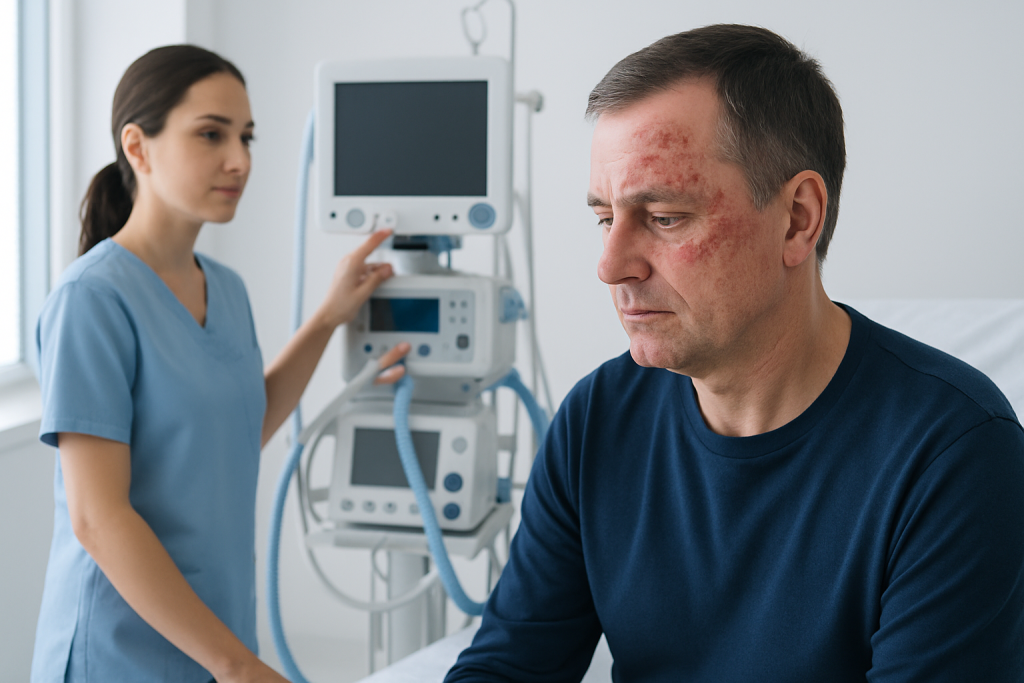
Face shingles often begins with warning symptoms before the rash is visible. A person may notice burning, tingling, itching, stabbing pain, or tenderness in one area of the forehead, cheek, scalp, jaw, or around the eye. Some people also feel tired, unwell, or have a mild fever.
Within a few days, a rash usually appears in the same area. It starts as red patches and quickly develops into clusters of small blisters. These blisters can break, crust over, and heal over the next two to four weeks. The skin may remain very sensitive even after the visible rash starts to improve.
The pattern matters. Face shingles is usually one-sided and stays within the area served by an affected nerve. If the forehead, tip of the nose, eyelid, or eye surface is involved, doctors become especially cautious because this may suggest shingles affecting the eye area, which needs urgent assessment. In some people, shingles can also involve the ear and may be associated with hearing symptoms or facial weakness.
- Burning, tingling, or shooting facial pain
- One-sided rash with blisters
- Skin sensitivity to touch
- Headache or fatigue
- Eye redness, light sensitivity, or blurred vision in some cases
- Ear pain, dizziness, or facial droop in some cases
Why it happens and who is at higher risk

After a person has chickenpox, the virus does not fully leave the body. Instead, it remains inactive in nerve tissue and may reactivate years later as shingles. Face shingles happens when reactivation affects one of the nerves that supplies the face.
Doctors do not always know exactly why the virus reactivates in one person and not another. However, risk rises as people get older because immune defenses naturally change with age. It is also more common in people whose immune system is weakened by illness, some medicines, or medical treatment.
Stress, recent illness, and major physical strain are sometimes reported around the time shingles appears, but they are not the sole cause. A person does not need to remember having chickenpox for shingles to occur, because the original infection may have happened in childhood. People with shingles can spread the virus to someone who has never had chickenpox or the vaccine, causing chickenpox rather than shingles.
- Older age
- Weakened immune system
- Cancer treatment or immune-suppressing medicines
- Past chickenpox infection
- Periods of illness or physical stress
Red flags and when to seek medical care
Many rashes are not serious, but a shingles rash on the face should not be ignored. Medical review is important as soon as possible because antiviral treatment works best when started early, ideally within the first few days of the rash. A doctor can also check whether the eye, ear, or deeper nerves are involved.
Urgent medical care is especially important if there is rash or pain near the eye, forehead, eyelid, or tip of the nose; vision changes; eye redness; severe headache; confusion; facial weakness; ear pain with dizziness; or trouble hearing. These symptoms do not always mean a complication has developed, but they need prompt evaluation.
People who are pregnant, immunocompromised, very elderly, or have widespread rash should also contact a doctor quickly. If facial pain is severe or the diagnosis is unclear, a clinician may also consider other conditions such as trigeminal neuralgia or skin infections that can mimic shingles in the early stage.
How doctors diagnose face shingles
Doctors usually diagnose face shingles from the history and the appearance of the rash. The combination of one-sided facial pain, tingling, and grouped blisters in a nerve pattern is often enough to make the diagnosis. The doctor will ask when symptoms started, whether there was previous chickenpox, and whether there are any eye, ear, or neurologic symptoms.
The examination focuses on the skin, the involved nerve area, and any signs of complications. If the rash is near the eye, an eye specialist may examine the cornea and other eye structures. If the ear is involved, the doctor may look for signs of a condition sometimes called Ramsay Hunt syndrome, where shingles affects the facial nerve near the ear.
Sometimes a swab from a blister is sent for laboratory testing to confirm varicella-zoster virus, especially if the rash is unusual, the person is immunocompromised, or another diagnosis is possible. Doctors may also use imaging or specialist evaluation when symptoms suggest a different problem or a complication affecting the brain, nerves, or eye. In selected cases, MRI can help investigate neurologic symptoms that are not typical for uncomplicated shingles.
Treatment options and recovery
Treatment usually includes antiviral medicine to reduce viral activity. This is most helpful when started early and may shorten the illness, reduce the severity of the rash, and lower the chance of ongoing nerve pain. Pain relief is also an important part of care and may include medicines recommended by a doctor, cool compresses, and gentle skin care.
If the eye is involved, treatment may need to be coordinated with an ophthalmologist. This can include closer monitoring and specific therapies to protect the surface and internal structures of the eye. When ear symptoms, balance problems, or facial weakness are present, an ear, nose, and throat or neurology evaluation may be needed. Depending on symptoms, some patients may also need neurology evaluation or specialist eye care as part of treatment planning.
The rash usually crusts and heals over a few weeks, but pain can last longer in some people. This lingering pain is called postherpetic neuralgia. Not everyone develops it, and risk tends to be higher in older adults and in more severe cases. Follow-up helps doctors adjust pain management and check that healing is progressing as expected.
During recovery, the skin should be kept clean and dry, scratching should be avoided, and contact with people who are pregnant, newborn, or immunocompromised should be limited until blisters have crusted over. Near the end of care, some international patients may choose centers such as Acibadem International, where multidisciplinary specialists in JCI-accredited hospitals diagnose and treat shingles-related eye, nerve, and skin complications.
Prevention and self-care after diagnosis
The most effective way to lower the risk of shingles is vaccination, especially for older adults and others who meet local public health recommendations. A doctor can explain who should receive the shingles vaccine and when it is appropriate. Vaccination does not treat active shingles, but it can reduce future risk and may lower the risk of complications.
Self-care during an active episode supports comfort and healing. Rest, good hydration, and loose clothing or soft dressings over irritated skin may help. Cool, clean compresses can soothe the rash, but creams or home remedies should only be used if a doctor advises them, particularly on the face or near the eye.
People should avoid sharing towels or touching the blisters, then touching others, because the fluid can spread varicella-zoster virus. If pain lingers after the rash heals, further assessment is worthwhile. Persistent facial pain does not always mean active infection is still present, and a doctor can help decide whether symptoms fit postherpetic neuralgia or another pain condition. In complex cases, referral for pain management may be helpful.
Frequently asked questions
Is face shingles dangerous?
Face shingles is often manageable and many people recover well, especially with early treatment. It becomes more concerning when it affects the eye, ear, or facial nerves, which is why prompt medical review is recommended.
Can face shingles affect the eye?
Yes. Shingles on the forehead, eyelid, nose, or around the eye can involve the eye itself and may affect vision if not treated promptly. Eye pain, redness, light sensitivity, or blurred vision should be assessed urgently.
How long does face shingles last?
The rash usually forms blisters, then crusts and heals over about two to four weeks. Pain and skin sensitivity may improve more slowly, and some people have nerve pain that lasts longer.
Is face shingles contagious?
A person with shingles can spread varicella-zoster virus from the blister fluid to someone who has never had chickenpox or the vaccine. That person would develop chickenpox, not shingles. Once the blisters have crusted over, the risk of spread is much lower.
What does face shingles feel like at first?
It often starts with tingling, burning, itching, or sharp pain on one side of the face before a rash appears. The skin may become very sensitive, and some people also feel tired or mildly unwell.
Will face shingles go away on its own?
The rash may eventually heal, but medical assessment is still important because early antiviral treatment can improve recovery and reduce complications. This is especially true if symptoms involve the eye, ear, or severe facial pain.
References
- Centers for Disease Control and Prevention
- National Institute of Neurological Disorders and Stroke
- American Academy of Ophthalmology
- National Health Service
- Mayo Clinic
This article is for general information only and is not a substitute for professional medical advice. Please consult a qualified doctor about your individual situation.
Shingles in Turkey — costs, top hospitals & a free quote
JCI-accredited · board-certified surgeons · reply within 24h
Add us as a Preferred Source to see more of our trusted health content across Google Search, AI Overviews and Discover.

More from the Health Library



Related Specialists

Assoc. Prof. Dr. Cüneyt Narin
Cardiovascular Surgery
Prof. Dr. Cem Demirel
Gynecology & Obstetrics
Dt. Sibel Ertekin
Oral & Dental Health
Assoc. Prof. Dr. Semra Akkaya Turhan
Ophthalmology