What Is Neurophysiology? Tests, Specialists, and What Happens at Your Appointment

Neurophysiology focuses on how the nervous system and muscles work, rather than only how they look on scans. Common neurophysiology tests include EEG, EMG, nerve conduction studies, evoked potentials, and sleep-related assessments.
Key Takeaways
- Neurophysiology focuses on how the nervous system and muscles work, rather than only how they look on scans.
- Common neurophysiology tests include EEG, EMG, nerve conduction studies, evoked potentials, and sleep-related assessments.
- A neurophysiologist helps diagnose conditions affecting the brain, nerves, spinal cord, muscles, and sleep-wake system.
- Many neurophysiology tests are noninvasive or minimally invasive and are performed in outpatient settings.
- Preparing well and describing symptoms clearly can make a neurophysiology appointment more useful.
Neurophysiology is the medical field that studies how the brain, spinal cord, nerves, and muscles function. It uses specialized tests to help doctors understand symptoms such as tingling, weakness, seizures, sleep disturbances, dizziness, or changes in sensation.
Overview: What Neurophysiology Means
Neurophysiology is a medical specialty that examines how the nervous system functions in real time. This includes the brain, spinal cord, peripheral nerves, muscles, and the electrical signals that allow them to communicate. While imaging tests such as MRI or CT can show structure, neurophysiology helps doctors understand function—how well nerves transmit signals, how muscles respond, or whether brain activity appears typical.
Clinical neurophysiology is often used when a person has symptoms that are difficult to explain by physical examination alone. These symptoms may include numbness, tingling, weakness, muscle twitching, balance problems, blackouts, seizures, sleep disturbances, or unexplained pain. Neurophysiology tests can support diagnosis, guide treatment planning, and sometimes monitor how a condition changes over time.
Specialists in this field usually work closely with neurologists, neurosurgeons, rehabilitation physicians, pediatric specialists, sleep medicine doctors, and other healthcare professionals. Because many nervous system conditions can overlap, neurophysiology often forms one part of a broader evaluation rather than a diagnosis on its own.
What Conditions Can Neurophysiology Help Evaluate?
Neurophysiology can help investigate a wide range of symptoms and conditions. In the brain, it may be used to assess seizure disorders, episodes of loss of awareness, some sleep-related problems, and certain types of headache or altered consciousness. In the peripheral nervous system, it is commonly used for symptoms such as numbness, tingling, burning pain, hand weakness, foot drop, or muscle cramps.
It can also be useful in evaluating disorders that affect the connection between nerves and muscles, as well as conditions involving muscle disease itself. For example, neurophysiology may support the assessment of carpal tunnel syndrome, peripheral neuropathy, nerve injury, radiculopathy from spine problems, and neuromuscular disorders. When clinically appropriate, a doctor may also consider evaluation for broader neurological conditions such as Parkinson's disease or epilepsy as part of a more complete care pathway.
In hospital settings, neurophysiology can sometimes be used during surgery or in intensive care to monitor nervous system function. In outpatient care, however, its most familiar role is helping identify the cause of everyday symptoms that affect movement, sensation, sleep, or awareness.
Common Neurophysiology Tests
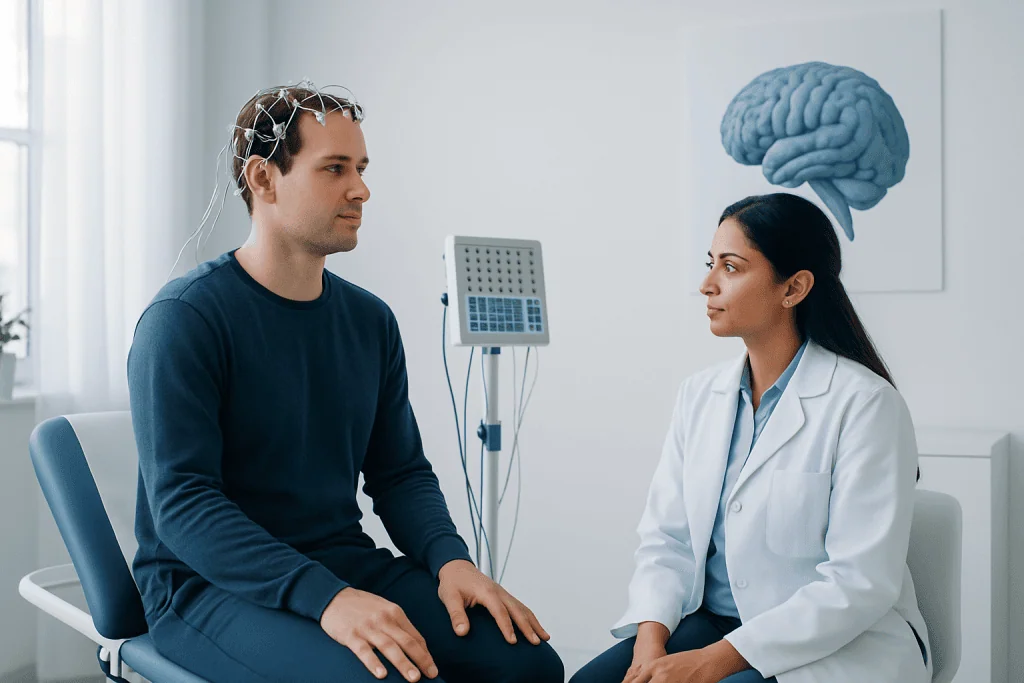
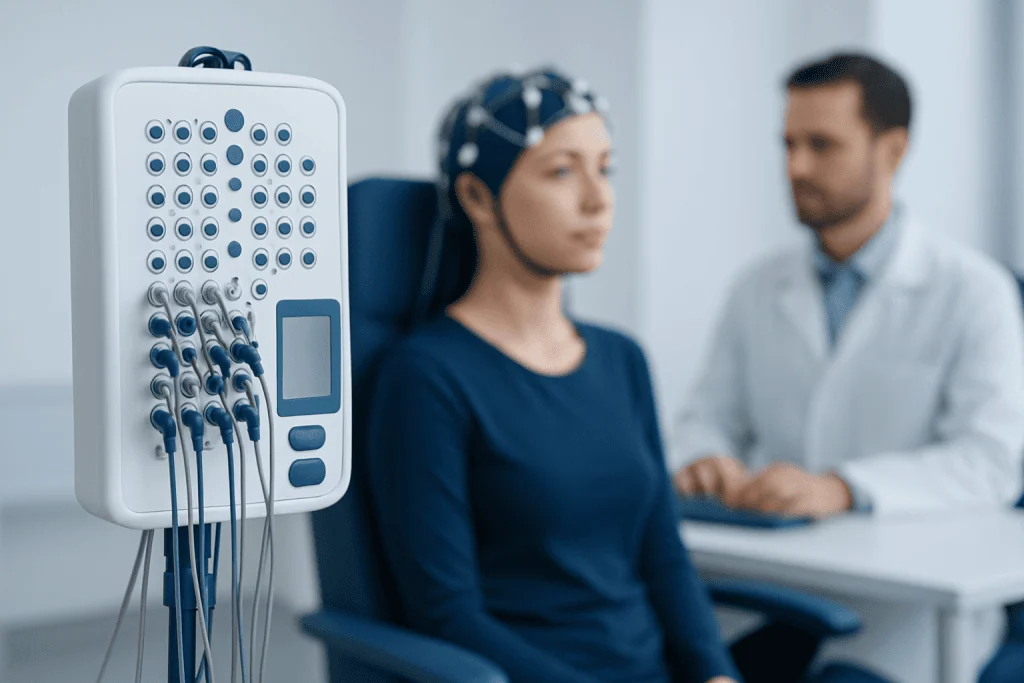
Several different tests fall under neurophysiology, and the right one depends on the person’s symptoms. An electroencephalogram, or EEG, records electrical activity in the brain through small sensors placed on the scalp. It is often used when seizures, staring spells, blackouts, or unusual episodes are being investigated. In some cases, longer recordings or sleep-deprived studies may be recommended to increase the chance of capturing helpful information.
Electromyography, or EMG, and nerve conduction studies assess how well nerves and muscles are working. Nerve conduction studies use small electrical impulses to measure how fast and effectively signals travel along a nerve. EMG involves a very fine needle placed in selected muscles to evaluate their electrical activity at rest and during movement. These tests are commonly used for numbness, weakness, nerve compression, nerve injury, or suspected muscle disorders. A doctor may request EMG testing when symptoms suggest a nerve or muscle problem.
Evoked potential tests measure how the brain responds to sensory stimulation such as visual, sound, or touch signals. These tests can sometimes help identify interruption along specific nerve pathways. Depending on symptoms, a specialist may recommend EEG evaluation or evoked potential tests as part of the diagnostic process.
Sleep-related neurophysiology tests may be used if there is concern about abnormal movements during sleep, unexplained daytime sleepiness, pauses in breathing, or nighttime episodes. In these cases, a person may be referred for a sleep study or more specialized neurological sleep assessment.
Who Performs These Tests and What Does a Neurophysiologist Do?
A neurophysiologist is a doctor with specialist training in recording, interpreting, and applying tests of nervous system function. In many hospitals, the specialist may be a neurologist with additional expertise in clinical neurophysiology. They review symptoms, choose the most suitable tests, interpret the results in context, and communicate findings to the referring doctor or care team.
Neurophysiology tests are often carried out by trained technologists, physiologists, nurses, or technicians working under specialist supervision. The test itself may be performed by technical staff, but the interpretation is usually completed by the physician responsible for the study. This team-based approach helps ensure both technical accuracy and clinical relevance.
The role of the neurophysiologist is not simply to confirm a diagnosis. They also help determine whether symptoms come from the brain, spinal cord, nerve roots, peripheral nerves, muscles, or the neuromuscular junction. This can be especially important when symptoms overlap or when initial scans and blood tests have not fully explained what a person is experiencing.
What Happens at a Neurophysiology Appointment?
A neurophysiology appointment usually begins with questions about symptoms, medical history, medications, and how the problem affects daily life. The doctor or testing team may ask when symptoms started, whether they come and go, what seems to trigger them, and whether there is any family history of neurological or muscle conditions. A brief examination may also be performed, especially if the person is seeing the specialist for the first time.
The test itself depends on the reason for referral. For EEG, small electrodes are placed on the scalp using adhesive or paste; the recording is painless, and the person may be asked to relax, breathe deeply, or respond to flashing lights. For nerve conduction studies, small electrical pulses are delivered to the skin, which can feel unusual or briefly uncomfortable but are usually well tolerated. For EMG, a thin needle is inserted into specific muscles to record activity; this may cause temporary discomfort, but it is generally short-lived.
Appointments can vary from under 30 minutes to several hours, depending on the number and type of tests. In some situations, test results are discussed on the same day, while in others they are reviewed later together with the full clinical picture. Patients are usually able to go home the same day unless testing is part of inpatient care.
For the best experience, it helps to arrive with a list of symptoms, current medications, and any previous scan or test reports. Wearing comfortable clothing can be useful, especially for limb testing. Some tests have specific preparation instructions, so it is important to follow the guidance given in advance.
How to Prepare and What Results May Show
Preparation depends on the test. For EEG, patients may be asked to come with clean, dry hair and avoid heavy hair products so electrodes stick properly. For EMG and nerve conduction studies, it is often recommended to avoid body lotions or oils on the day of the test, because they can affect electrode contact. If a person takes blood thinners, has a pacemaker, has implanted medical devices, or has a bleeding disorder, they should inform the medical team before testing.
Test results can show whether electrical activity is normal, slowed, blocked, irritated, or otherwise altered. For example, nerve conduction studies may indicate a compressed or damaged nerve, while EMG may suggest a nerve-related or muscle-related cause of weakness. EEG may show patterns associated with seizures or other brain activity changes, although a normal EEG does not always rule out a neurological condition.
Neurophysiology results are interpreted together with symptoms, examination findings, blood tests, and imaging when needed. A single test rarely tells the whole story. For that reason, patients should not be concerned if further tests or follow-up appointments are recommended; this is often part of making the most accurate diagnosis possible.
Benefits, Limitations, and Safety
One of the main benefits of neurophysiology is that it provides functional information that other tests may not capture. It can help locate where a problem is occurring along the nervous system, estimate how severe it is, and support treatment decisions. In some cases, it also helps avoid unnecessary procedures by showing that symptoms are coming from a different source than first suspected.
Most neurophysiology tests are safe and are performed on an outpatient basis. EEG is noninvasive and painless. Nerve conduction studies can cause brief discomfort from electrical stimulation, and EMG may lead to temporary soreness or mild bruising in tested muscles. Serious complications are uncommon when tests are performed by trained professionals.
Like all medical tests, neurophysiology has limits. Results can be normal in the early stages of some conditions or may need to be interpreted carefully if symptoms are intermittent. Test findings also need to be matched to the individual person, because similar results can sometimes be seen in different disorders. This is why specialist interpretation and follow-up are so important.
When to Seek Medical Advice
A doctor may refer someone for neurophysiology if they have persistent or unexplained symptoms such as numbness, tingling, weakness, muscle wasting, tremor, episodes of loss of awareness, seizures, falls, sleep attacks, or abnormal movements during sleep. Prompt assessment can be especially important if symptoms are progressing, affecting walking or hand use, or interfering with work, driving, or everyday activities.
Urgent medical attention is needed for sudden weakness, new facial drooping, difficulty speaking, sudden confusion, a first seizure, severe head injury, or abrupt loss of consciousness. These symptoms may need emergency evaluation rather than a routine outpatient neurophysiology appointment.
For planned care, patients may be reassured that neurophysiology is a well-established part of neurological diagnosis. In appropriate cases, multidisciplinary specialists at Acibadem International and its JCI-accredited hospitals evaluate and treat neurological conditions for international patients, with neurophysiology used alongside imaging, laboratory testing, and clinical assessment when needed.
Frequently asked questions
Is neurophysiology the same as neurology?
No. Neurology is the broader medical specialty that diagnoses and treats disorders of the nervous system, while neurophysiology focuses on testing how the nervous system functions. Neurophysiology is often part of neurological assessment rather than a separate replacement for it.
Are neurophysiology tests painful?
Many neurophysiology tests are painless or only mildly uncomfortable. EEG is usually painless, while nerve conduction studies can cause brief electrical sensations and EMG may cause short-lived discomfort from the fine needle. Most people tolerate these tests well.
How long does a neurophysiology appointment take?
The length depends on the type of test being done. Some appointments take less than 30 minutes, while others may take an hour or more, especially if multiple tests are performed. The care team usually explains the expected timing in advance.
Do I need to do anything before an EEG or EMG?
Preparation varies by test. People having an EEG are often asked to wash their hair and avoid hair products, while those having EMG or nerve conduction studies may be told not to apply lotions or oils to the skin. It is also important to mention medications, implanted devices, or bleeding risks before testing.
Can neurophysiology diagnose nerve damage?
Neurophysiology can often help identify whether a nerve is compressed, irritated, or damaged, and it may show where the problem is located. However, results are interpreted together with symptoms, examination findings, and sometimes imaging. A specialist uses all of this information to make the most accurate diagnosis.
What if my neurophysiology test is normal but I still have symptoms?
A normal test does not always mean there is no problem. Some conditions are intermittent, very early, or not easily detected by a single study. If symptoms continue, the doctor may recommend repeat testing, additional investigations, or follow-up with another specialist.
References
- World Health Organization
- National Institute of Neurological Disorders and Stroke
- American Association of Neuromuscular & Electrodiagnostic Medicine
- International Federation of Clinical Neurophysiology
- NHS
This article is for general information only and is not a substitute for professional medical advice. Please consult a qualified doctor about your individual situation.
Neurophysiology in Turkey — costs, top hospitals & a free quote
JCI-accredited · board-certified surgeons · reply within 24h
Add us as a Preferred Source to see more of our trusted health content across Google Search, AI Overviews and Discover.