What Is NIST and Why Does It Matter for Healthcare Cybersecurity?

NIST stands for the National Institute of Standards and Technology, a U.S. agency that develops widely used cybersecurity guidance. Healthcare organizations use NIST frameworks to identify risks, protect systems, detect threats, respond to incidents, and recover safely.
Key Takeaways
- NIST stands for the National Institute of Standards and Technology, a U.S. agency that develops widely used cybersecurity guidance.
- Healthcare organizations use NIST frameworks to identify risks, protect systems, detect threats, respond to incidents, and recover safely.
- NIST guidance matters in healthcare because cyberattacks can affect both patient privacy and continuity of care.
- The NIST Cybersecurity Framework is flexible and can be adapted by hospitals, clinics, laboratories, and digital health providers.
- NIST does not replace legal requirements, but it can help organizations organize compliance and strengthen security practices.
- Good cybersecurity in healthcare depends on technology, staff training, risk assessment, and ongoing improvement.
NIST helps healthcare organizations build a structured approach to cybersecurity. Its standards and frameworks support safer handling of patient data, stronger system protection, and more reliable clinical operations.
Overview: what NIST means in healthcare
NIST stands for the National Institute of Standards and Technology. It is a U.S. government agency that develops practical standards, frameworks, and guidance used across many industries, including healthcare. In cybersecurity, NIST is best known for helping organizations manage digital risk in a structured, understandable way.
For hospitals, clinics, laboratories, insurers, and telehealth providers, cybersecurity is not only an information technology concern. It is also a patient safety issue. Healthcare organizations store sensitive personal and medical information, and many depend on connected devices, electronic health records, imaging systems, and online services to deliver care.
NIST matters because it offers a common language for understanding and reducing cyber risk. Rather than focusing on one product or one type of attack, it helps organizations build a broad security program. This can support safer data handling, better preparation for incidents such as ransomware, and stronger protection for essential clinical services.
Why healthcare is a major cybersecurity target
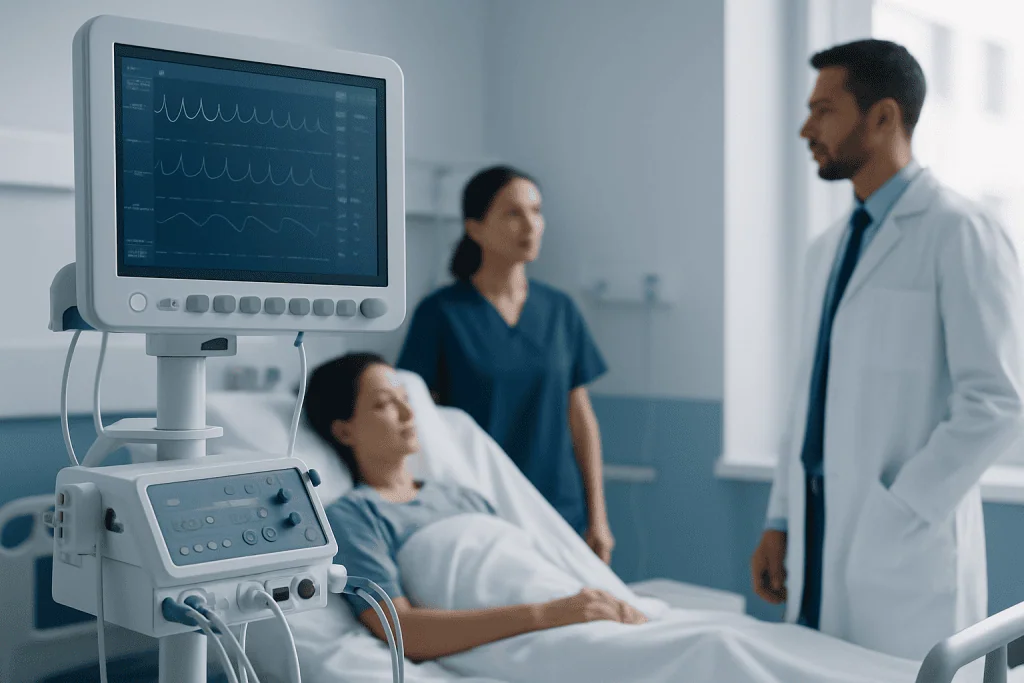
Healthcare is a frequent target for cybercriminals because medical data is highly sensitive and healthcare operations are time-critical. Attackers may try to steal personal information, disrupt systems, or demand payment after locking access to files or devices. Even a short interruption can create major operational stress in a clinical environment.
Healthcare systems are often complex. A single organization may use electronic health records, appointment platforms, mobile apps, cloud services, laboratory systems, imaging tools, bedside monitors, and network-connected medical devices. When many systems need to work together, cybersecurity becomes more challenging.
In addition, healthcare organizations often need to balance security with rapid access to information for patient care. Staff may move across departments, use shared equipment, or rely on urgent communication. NIST guidance is helpful because it supports security without losing sight of clinical workflows and real-world care delivery.
The goal is not simply to avoid data loss. Strong cybersecurity can also help preserve trust, maintain service continuity, and reduce the risk that digital disruptions interfere with diagnosis, treatment, or follow-up care.
The NIST Cybersecurity Framework at a glance

The most widely recognized NIST tool in healthcare is the NIST Cybersecurity Framework, often called the CSF. It provides a practical way to organize cybersecurity work into major functions. In its well-known structure, these include identifying risks, protecting systems, detecting suspicious activity, responding to incidents, and recovering after disruption. Newer NIST materials also emphasize governance, which highlights leadership oversight and accountability.
This framework is useful because it is flexible. A large academic hospital and a small outpatient clinic will have different resources and risks, but both can use the same framework to guide decision-making. It helps organizations ask clear questions: What assets need protection? Which threats are most important? How quickly can the organization detect a problem? What is the recovery plan if systems go down?
NIST also encourages the use of profiles and maturity planning. In simple terms, organizations can compare their current cybersecurity practices with where they want to be. This helps leaders prioritize improvements such as stronger access controls, better backups, security awareness training, or stricter vendor management.
Because the framework is risk-based, it supports practical choices rather than one-size-fits-all rules. This is especially valuable in healthcare, where digital systems differ widely between providers and specialties.
Key NIST standards and guidance used in healthcare
Although the Cybersecurity Framework is the best-known starting point, NIST offers many other resources that healthcare teams may use. One important publication is the NIST Risk Management Framework, which helps organizations assess, implement, monitor, and improve security controls over time. Another widely used resource is NIST Special Publication 800-53, which describes a large catalog of security and privacy controls.
NIST Special Publication 800-61 focuses on computer security incident handling. This is particularly relevant for healthcare organizations preparing for ransomware, phishing, unauthorized access, or service outages. It supports the development of a response plan so teams know what to do before, during, and after an incident.
NIST also provides guidance related to identity management, password practices, multifactor authentication, encryption, cloud security, and supply chain risk. These topics are highly relevant in healthcare, where third-party software, connected equipment, and remote access are common parts of daily operations.
Importantly, NIST is not a law in itself for most healthcare organizations. Instead, it is a respected source of best practice. Many institutions use NIST to strengthen security programs and align technical work with broader privacy, governance, and regulatory expectations.
How NIST improves patient data security and continuity of care
When healthcare organizations use NIST guidance well, the benefits can extend beyond the IT department. A stronger cybersecurity program can help protect electronic health records, test results, billing information, insurance details, and communication systems used in patient care. This lowers the risk of unauthorized access and supports confidentiality.
NIST-based security practices also help protect availability, which means systems remain usable when clinicians need them. In healthcare, this can be just as important as privacy. If a cyberattack prevents staff from viewing records, scheduling procedures, or receiving laboratory data, patient care may be delayed. Reliable backups, network segmentation, access management, and tested recovery plans are all part of improving resilience.
Another important benefit is better coordination between leadership, clinicians, operations, legal teams, and technical staff. NIST gives these groups a shared structure for discussing risk. That can make it easier to prioritize improvements that protect both information and care delivery.
For patients, these efforts may be mostly invisible. However, they support a safer digital environment in which healthcare organizations can deliver services with greater consistency and confidence.
Practical examples of NIST use in hospitals and clinics
A hospital may use the NIST framework to identify its most critical digital assets, such as electronic health records, intensive care monitoring systems, pharmacy systems, and imaging networks. After identifying these assets, the organization can assess vulnerabilities and decide which protections deserve urgent attention.
For example, a clinic might adopt multifactor authentication for remote access, limit user privileges based on job role, and improve staff training to reduce phishing risk. A laboratory may use NIST guidance to review device connections, track software updates, and tighten controls around data transfers. A health system may also use NIST methods to evaluate outside vendors that store or process patient information.
NIST is also useful during incident response planning. Teams can define how to isolate affected systems, communicate with staff, preserve evidence, notify required parties, and restore services safely. Running drills based on these plans can help reduce confusion during a real event.
Many organizations integrate NIST into broader quality and safety planning. This reflects the reality that healthcare cybersecurity is not only about protecting files on a server. It is about supporting dependable access to the systems that modern care relies on every day.
Limits of NIST and the need for ongoing improvement
NIST is highly valuable, but it is not a complete solution by itself. A framework cannot prevent every cyberattack, and simply saying an organization follows NIST does not guarantee strong security. Real protection depends on how thoroughly guidance is implemented, reviewed, updated, and supported by leadership.
Healthcare cybersecurity also changes over time. New threats emerge, software evolves, connected devices increase, and care models such as telemedicine continue to expand. This means security programs need regular risk assessments, system updates, staff education, and testing of backup and recovery processes.
Another limitation is that cybersecurity must fit local laws, operational realities, and available resources. NIST can help organize best practice, but each institution still needs policies tailored to its own services, technologies, and patient populations. Privacy requirements, procurement decisions, and clinical priorities all influence how security measures are applied.
In practice, the strongest approach combines NIST guidance with active governance, workforce awareness, expert technical support, and a culture of continuous improvement.
What patients and healthcare leaders should know
Patients do not need to memorize cybersecurity frameworks, but it is reasonable to expect healthcare providers to take digital protection seriously. Questions about secure patient portals, identity verification, privacy practices, and how health information is shared can all be part of informed care. Trust grows when organizations communicate clearly about data protection and service continuity.
For healthcare leaders, NIST offers a practical foundation for building a cybersecurity strategy that supports both compliance and care delivery. It can help organizations prioritize investments, understand risk, and prepare for incidents in a disciplined way. Leadership involvement is essential, because cybersecurity decisions affect staffing, procurement, training, emergency planning, and patient experience.
For organizations serving international patients, strong cybersecurity is especially important because care may involve cross-border communication, digital records exchange, and coordinated follow-up. Acibadem International’s multidisciplinary specialists and JCI-accredited hospitals diagnose and treat patients across a wide range of services while supporting careful digital health practices for international care pathways.
Overall, NIST matters in healthcare because it turns cybersecurity into a structured, continuous process. That process helps protect patient information, strengthen resilience, and support safer, more dependable healthcare services.
Frequently asked questions
What does NIST stand for?
NIST stands for the National Institute of Standards and Technology. It is a U.S. agency that develops standards and guidance used to improve quality, safety, and cybersecurity across many sectors, including healthcare.
Is NIST required for all healthcare organizations?
NIST guidance is not automatically a legal requirement for every healthcare provider. However, it is widely respected and often used to build strong security programs, support compliance efforts, and organize cyber risk management.
Why is NIST important in healthcare specifically?
Healthcare depends on digital systems to store records, coordinate teams, and support treatment. NIST helps organizations protect patient data, reduce operational disruption, and prepare for incidents that could affect care delivery.
What is the NIST Cybersecurity Framework?
The NIST Cybersecurity Framework is a structured model for managing cyber risk. It helps organizations identify what needs protection, put safeguards in place, detect threats, respond to incidents, and recover effectively.
Does using NIST mean a hospital cannot be hacked?
No framework can guarantee complete protection. NIST provides a strong foundation, but security still depends on regular updates, staff training, leadership support, technical controls, and ongoing monitoring.
How does NIST help patients?
Patients may not see NIST directly, but its use can support stronger privacy protection and more reliable healthcare systems. This can help reduce the risk of data exposure and service interruptions during important moments of care.
References
- National Institute of Standards and Technology
- U.S. Department of Health and Human Services
- Cybersecurity and Infrastructure Security Agency
- World Health Organization
This article is for general information only and is not a substitute for professional medical advice. Please consult a qualified doctor about your individual situation.
Explore treatments in Turkey — costs, top hospitals & a free quote
JCI-accredited · board-certified surgeons · reply within 24h
Add us as a Preferred Source to see more of our trusted health content across Google Search, AI Overviews and Discover.