What Is the Maximum Weight for Knee Replacement: Procedure, Recovery and Results

There is no universal weight cutoff for knee replacement surgery; decisions are individualized. A higher BMI can increase the risk of wound problems, infection, blood clots and implant complications.
Key Takeaways
- There is no universal weight cutoff for knee replacement surgery; decisions are individualized.
- A higher BMI can increase the risk of wound problems, infection, blood clots and implant complications.
- Many people weighing 300 lb or more can be considered for surgery after a careful medical assessment.
- Knee replacement pain is managed with modern anesthesia, medication, ice, movement and rehabilitation.
- Recovery requires commitment to physiotherapy, safe activity progression and follow-up care.
There is no single maximum weight for knee replacement. Orthopedic teams assess the person’s body mass index (BMI), overall health, knee damage, surgical risks and ability to participate in rehabilitation before recommending surgery.
Overview: Is There a Maximum Weight for Knee Replacement?
There is no universal maximum weight for knee replacement. Instead, surgeons consider body mass index (BMI), the severity of knee arthritis, medical conditions, skin and soft-tissue health, mobility, and whether the person can safely complete rehabilitation. Some hospitals or surgeons use BMI thresholds as part of their safety policies, but these limits vary and are not the same as an absolute medical rule.
Total knee replacement, also called total knee arthroplasty, replaces damaged joint surfaces with metal and plastic components. It is most often considered when severe knee arthritis causes persistent pain, stiffness and loss of function despite non-surgical care. The goal is to relieve pain and improve daily movement, not to achieve a particular body weight.
Higher body weight places greater load on the knee and may raise the chance of complications around surgery. However, weight is only one part of a broader risk assessment. A shared decision with an orthopedic surgeon can help determine whether surgery is appropriate now, whether risk-reduction steps are advisable first, or whether another treatment plan is better suited to the individual.
How Knee Replacement Works and Who May Be a Candidate

In knee arthritis, the smooth cartilage that cushions the joint gradually wears away. Bone surfaces may then rub together, causing pain, swelling, stiffness and changes in alignment. The most common cause is osteoarthritis, although inflammatory arthritis, previous injury and some other joint conditions can also lead to severe knee damage.
During a total knee replacement, the surgeon removes damaged bone and cartilage from the end of the thigh bone and top of the shin bone. The surfaces are reshaped and covered with components designed to allow smooth movement. The kneecap may also be resurfaced when appropriate. The procedure is tailored to the knee anatomy and pattern of joint damage.
A person may be a candidate when knee pain substantially affects sleep, walking, work or essential daily activities, and options such as exercise therapy, weight management, pain medicines, injections or mobility aids have not provided adequate relief. Assessment also includes X-rays, physical examination, medication review, blood pressure and blood sugar management, smoking status, heart and lung health, and support available during recovery.
People with symptoms caused by osteoarthritis can discuss comprehensive evaluation and treatment for osteoarthritis with a qualified clinician. Surgery is generally considered after understanding both the potential benefits and the demands of recovery.
What Weight Is Too Heavy for Knee Replacement?
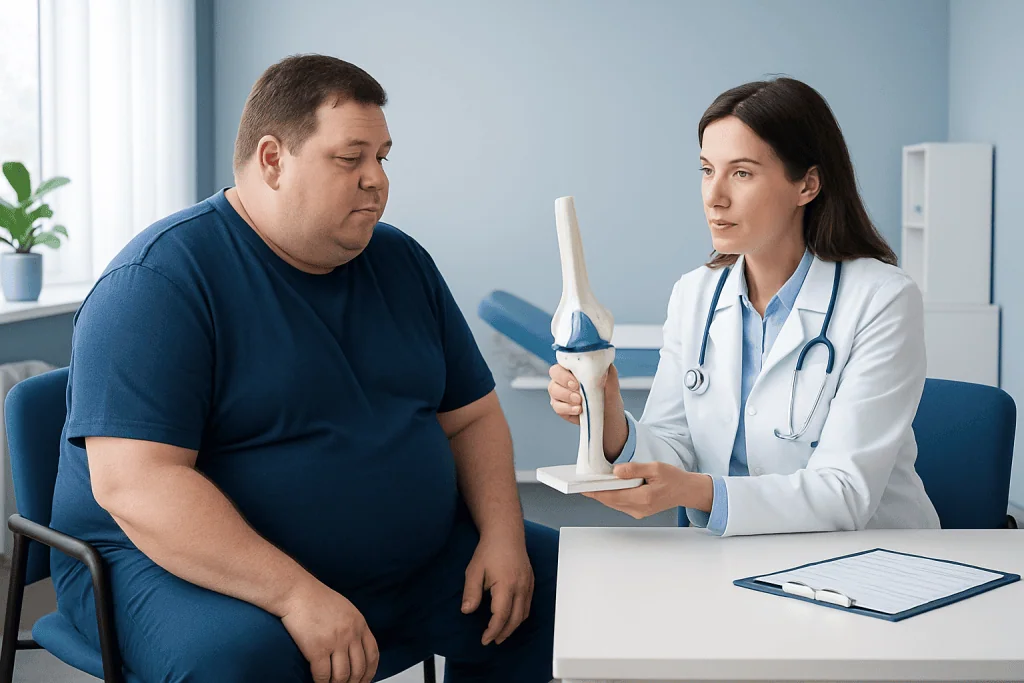
No number on a scale automatically makes a person “too heavy” for knee replacement. Weight alone does not show body composition, height, fitness, diabetes control, nutritional status, skin condition or other factors that influence surgical safety. For this reason, BMI is often used alongside a full clinical assessment, although it also has limitations and should not be viewed in isolation.
Many surgical teams consider a BMI of 40 kg/m² or above to be associated with a higher risk of complications. These can include wound-healing problems, infection, blood clots, anesthesia-related issues, early implant loosening and need for further surgery. Some centers may ask patients above a certain BMI to work toward weight reduction before elective surgery, while others make decisions individually based on the total risk profile.
When weight reduction is recommended, it is not a judgment about the person or an indication that care is unavailable. Even modest, sustainable changes may improve mobility and help reduce operative risk. Support may include dietitian guidance, supervised low-impact exercise, diabetes care, smoking cessation and, for some people, assessment by a weight-management specialist.
Delaying surgery solely for weight loss may not be appropriate in every situation, especially when pain and disability are severe. The orthopedic team should explain the reasons for any recommendation, discuss alternatives, and create a realistic plan that protects both knee function and overall health.
Can a 300 lb Person Get a Knee Replacement?
Yes, a person who weighs 300 lb can potentially have knee replacement surgery. Whether it is advisable depends primarily on height and BMI, as well as medical history and current health. For example, two people who weigh the same can have very different BMI values and different anesthesia or wound-healing risks because of their height, body composition and health conditions.
The preoperative evaluation commonly checks for conditions that can affect outcomes, including diabetes, sleep apnea, high blood pressure, heart disease, circulation problems, previous blood clots and active skin infections. Surgeons also consider whether knee pain is truly coming from the joint and whether the patient can participate in walking and physiotherapy after surgery.
If risk is considered high, the team may recommend steps before scheduling surgery. These may include improving blood sugar control, treating anemia, reviewing medications, addressing sleep apnea, stopping nicotine use, strengthening leg muscles and pursuing medically supervised weight management. These actions can support safer surgery and smoother recovery regardless of body weight.
For people who need specialized surgical assessment, knee replacement treatment includes planning that considers joint damage, general health and rehabilitation needs. An orthopedic surgeon can explain how individual risk factors affect the decision.
Step by Step: The Knee Replacement Procedure
Before surgery, the care team reviews imaging, medical history and medications. Patients may be asked to stop or adjust certain medicines under medical supervision, arrange help at home, and prepare for using a walker or crutches. Anesthesia may be general, spinal or a combination, depending on the person’s health and the anesthesiologist’s recommendation.
In the operating room, the surgeon makes an incision over the front of the knee, carefully moves tissues aside and removes the damaged joint surfaces. Trial components help the surgeon check alignment, stability and movement before the final implants are secured. The wound is closed and covered with a dressing. The exact technique and implant choice vary according to anatomy, arthritis pattern and surgeon experience.
After surgery, early movement is usually encouraged to reduce stiffness and support circulation. Pain control commonly uses several approaches together, such as regional anesthesia, non-opioid medicines when suitable, limited opioid medication if needed, ice and elevation. Many patients begin standing and taking assisted steps on the day of surgery or the following day.
Hospital stay varies by health status, recovery progress and local care pathways. Some people go home the same day or after one night, while others need a longer stay or a period of inpatient rehabilitation. Safe discharge depends on pain control, mobility, wound care understanding and access to appropriate support.
Recovery Timeline, Pain and Expected Results
Recovery is gradual. During the first days and weeks, swelling, bruising, stiffness and interrupted sleep are common. Physiotherapy focuses on safe walking, knee straightening, bending and rebuilding leg strength. Most people gradually move from a walker to a cane and then to independent walking, although the timing varies widely.
By about 6 to 12 weeks, many patients are more comfortable with daily activities and can make meaningful progress in walking and range of motion. Improvement can continue for many months as swelling settles and muscles strengthen. Full recovery is individual and may take up to a year, particularly for people with significant stiffness before surgery, other health conditions or more complex rehabilitation needs.
How painful is a knee replacement on a scale of 1 to 10? Pain cannot be predicted reliably with one number because pain tolerance, surgical technique, pre-existing pain, anxiety and rehabilitation all differ between individuals. In the early days, pain may be moderate to severe for some patients, but it should be actively managed and gradually improve. A care team can adjust the plan if pain is preventing sleep, walking or physiotherapy.
Most people experience substantial reduction in arthritis pain and improved ability to perform everyday activities after successful recovery. A replaced knee may not feel exactly like a natural knee, and kneeling, deep squatting or high-impact activities can remain difficult. Regular follow-up helps monitor function and identify any concerns early.
Benefits, Risks and the Hardest Knee Surgery to Recover From
Potential benefits of knee replacement include less joint pain, improved stability, better sleep and greater independence with walking and daily tasks. These benefits are most likely when the pain source is correctly identified, expectations are realistic and the patient follows rehabilitation guidance. Building strength before surgery, when possible, can also support recovery.
All major surgery has risks. Knee replacement risks include infection, blood clots, bleeding, nerve or blood-vessel injury, stiffness, persistent pain, implant wear or loosening, and the need for revision surgery. Higher body weight can increase some of these risks, but prevention measures such as early movement, blood-clot prevention medication when indicated, careful wound care and optimization of health conditions are routinely used.
What’s the hardest knee surgery to recover from? There is no single procedure that is hardest for everyone. Revision knee replacement, performed to replace or repair a previous knee implant, is often more complex and may involve more bone loss, scar tissue, infection management or ligament reconstruction than a first-time replacement. Recovery after multiple-ligament reconstruction, fracture surgery or surgery complicated by infection can also be demanding.
Recovery difficulty depends not only on the operation but also on pain before surgery, muscle strength, age, medical conditions, emotional wellbeing and access to rehabilitation. Patients should ask their surgeon what recovery may look like in their specific case rather than comparing procedures alone.
When to Seek Medical Care
Medical assessment is appropriate when knee pain persists for several weeks, limits walking or sleep, causes repeated swelling, or prevents normal work and household activities. A clinician can evaluate whether symptoms are related to arthritis, a meniscus injury, inflammatory disease, referred pain from the hip or back, or another cause.
Urgent medical care is important for a knee that becomes suddenly very swollen, red, hot or severely painful, especially when fever or feeling unwell is present. Prompt assessment is also needed after an injury if a person cannot bear weight, the knee looks deformed, or there is numbness, a cold foot or loss of circulation.
After knee replacement, patients should contact their surgical team promptly for increasing rather than improving pain, wound drainage, spreading redness, fever, new calf swelling, chest pain or shortness of breath. These symptoms do not always indicate a serious complication, but they require timely professional advice.
Acibadem International’s multidisciplinary specialists and JCI-accredited hospitals assess and treat knee conditions for international patients, including evaluation, surgery and rehabilitation planning. A qualified orthopedic team can help patients understand whether surgery, risk optimization or continued non-surgical care is the most appropriate next step.
Frequently asked questions
Is there an official maximum weight for knee replacement?
No official universal maximum weight applies to every patient or hospital. Eligibility is based on a personalized assessment of BMI, medical conditions, knee damage, anesthesia safety and the ability to recover with rehabilitation. Some surgical programs use BMI thresholds as part of their local safety policies.
Why can obesity affect knee replacement surgery?
A higher BMI may increase stress on the surgical wound and implant and can be linked with higher risks of infection, wound problems, blood clots and medical complications. It can also make surgery and rehabilitation more technically demanding. Individual risk varies, so BMI should be considered together with overall health.
Can weight loss help before knee replacement?
For some people, gradual weight loss can reduce knee load and help improve blood pressure, blood sugar control and surgical safety. It may also make rehabilitation more manageable. Weight loss should be approached safely with professional support, particularly when severe knee pain limits activity.
How long does it take to walk normally after knee replacement?
Many people begin assisted walking shortly after surgery, then progress from a walker to a cane as strength and balance improve. Comfortable, more natural walking often develops over several weeks to months. Recovery speed depends on preoperative mobility, pain control, physiotherapy and other health factors.
Is knee replacement pain worse than arthritis pain?
The early recovery period can be painful, particularly during movement and physiotherapy, but pain-management plans are designed to make this manageable. Surgical pain generally improves as tissues heal, while severe arthritis pain is often persistent and progressive. Patients should tell their care team if pain is not adequately controlled.
What happens if someone is not ready for knee replacement?
A clinician may recommend non-surgical options such as targeted exercise, physical therapy, weight management, walking aids, pain-relief strategies or injections when appropriate. They may also suggest treating conditions such as uncontrolled diabetes, anemia or nicotine use before reconsidering surgery. The plan should be individualized and reviewed if symptoms worsen.
References
- American Academy of Orthopaedic Surgeons
- National Institute of Arthritis and Musculoskeletal and Skin Diseases
- National Institute for Health and Care Excellence
- Centers for Disease Control and Prevention
This article is for general information only and is not a substitute for professional medical advice. Please consult a qualified doctor about your individual situation.
Medical weight-loss options in Turkey — costs & eligibility
JCI-accredited · board-certified surgeons · reply within 24h
Add us as a Preferred Source to see more of our trusted health content across Google Search, AI Overviews and Discover.
Check your numbers in seconds
BMI, calories, due date, blood pressure and 30+ more clinical calculators — free, instant, doctor-reviewed ranges.