What’s iud? A Doctor-Reviewed Answer

An IUD is a small device placed in the uterus to prevent pregnancy. There are two main types: hormonal IUDs and copper IUDs.
Key Takeaways
- An IUD is a small device placed in the uterus to prevent pregnancy.
- There are two main types: hormonal IUDs and copper IUDs.
- IUDs are long-acting and reversible, but they do not protect against sexually transmitted infections.
- Some cramping or irregular bleeding can happen after insertion, especially in the first months.
- A doctor can help decide whether an IUD is a good option based on medical history and reproductive goals.
What’s IUD? An IUD, or intrauterine device, is a small contraceptive device placed inside the uterus to prevent pregnancy. It is a long-acting, reversible form of birth control that comes in hormonal and copper types, with different benefits, side effects, and durations of use.
Overview: what’s IUD and how does it work?
An IUD, or intrauterine device, is a small device that a clinician places inside the uterus to prevent pregnancy. For people asking “what’s IUD,” the simplest answer is that it is a long-acting, reversible birth control method that works continuously after insertion and can be removed if pregnancy is desired later.
There are two main types of IUD. Hormonal IUDs release a small amount of progestin into the uterus, which thickens cervical mucus, makes it harder for sperm to move, and may thin the uterine lining. Copper IUDs do not contain hormones; instead, the copper affects sperm movement and function, helping prevent fertilization.
IUDs are considered among the most effective contraceptive methods available because they do not depend on daily use. Once in place, they can work for several years, depending on the product. Although highly effective at preventing pregnancy, an IUD does not protect against sexually transmitted infections, so condoms may still be recommended in some situations.
Types of IUD and who may choose them
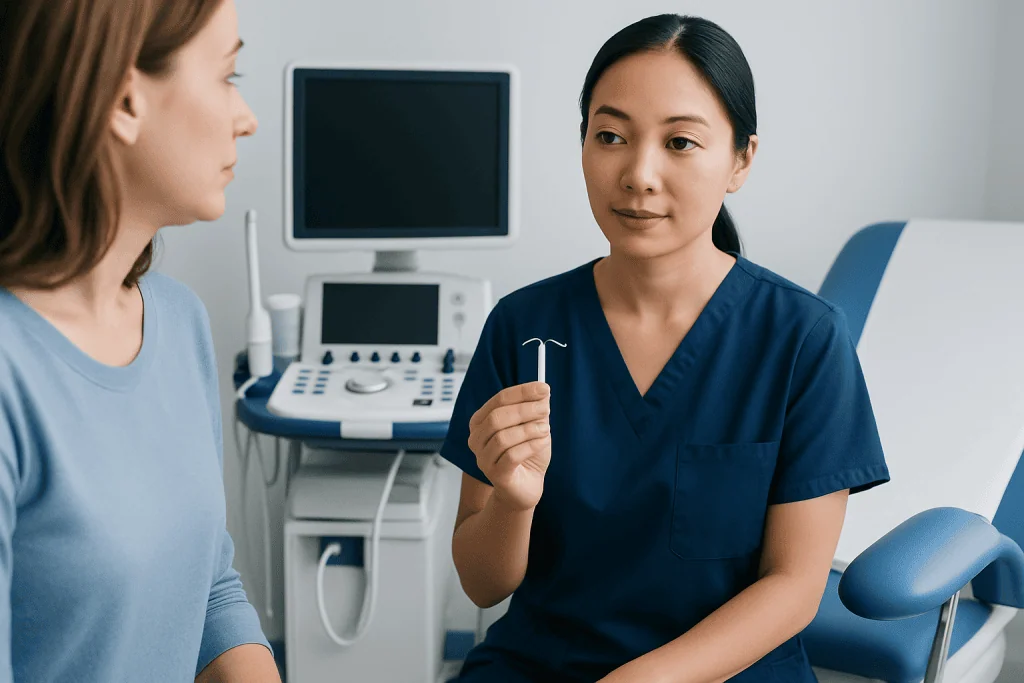
Hormonal and copper IUDs differ in how they work, how long they last, and how they may affect menstrual bleeding. A hormonal IUD may be preferred by people who want lighter periods or less menstrual cramping over time. Some users may even stop having periods, which can be normal with certain hormonal IUDs.
A copper IUD may be a good choice for people who prefer a hormone-free option. However, it can sometimes make periods heavier, longer, or more crampy, especially during the first months after placement. For some, this improves with time; for others, it may remain a reason to choose a different method.
Choosing an IUD is not only about convenience. It also depends on age, menstrual pattern, plans for future pregnancy, personal preference, and medical history. A gynecologist can review whether an IUD fits individual needs and can also discuss other contraceptive options if an IUD is not the best match.
When contraception planning is part of a broader reproductive health discussion, evaluation by fertility specialists or a gynecology team may help clarify long-term family planning goals, especially for people balancing pregnancy timing with medical conditions or prior reproductive concerns.
What to expect before, during, and after insertion
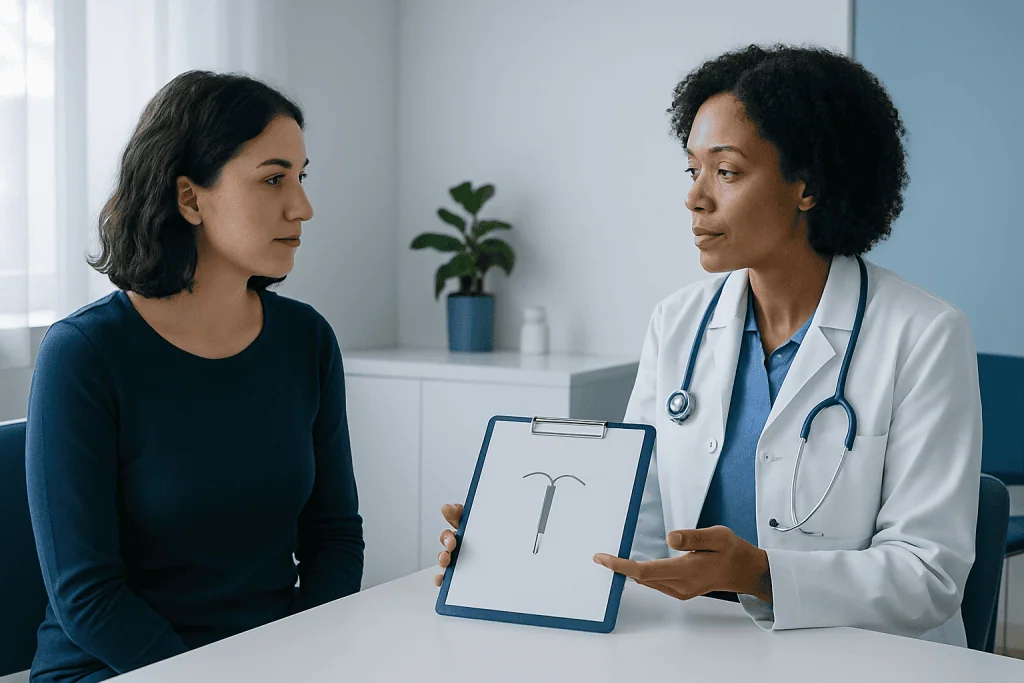
IUD insertion is a medical procedure usually done in a clinic or office setting. Before placement, the clinician typically reviews medical history, asks about current symptoms, and may perform a pelvic exam. In some cases, pregnancy testing or screening for infection may be recommended before insertion.
During the procedure, the IUD is passed through the cervix into the uterus using a slim applicator. Many people feel brief cramping, pressure, or dizziness during or right after placement. The experience varies widely; some describe mild discomfort, while others find it more intense but short-lived.
After insertion, mild cramping and light bleeding or spotting are common for a few days. Hormonal IUD users may have irregular bleeding for the first few months, while copper IUD users may notice heavier periods and stronger cramps at first. A clinician may suggest checking for the IUD strings and may schedule a follow-up if needed.
An IUD can usually be removed at any time by a qualified clinician. Removal is generally quick, and fertility often returns soon after. If pregnancy is desired or side effects become troublesome, discussing timely removal with a doctor is important.
Benefits, limitations, and possible side effects
One of the main benefits of an IUD is that it provides long-term contraception without requiring daily attention. It is reversible, discreet, and suitable for many people, including those who have not had children. For some, a hormonal IUD also helps reduce heavy bleeding and menstrual pain.
Like all medical options, IUDs also have limitations. They do not protect against sexually transmitted infections, and some people experience side effects that affect comfort or satisfaction. Hormonal IUDs may cause irregular spotting, acne, breast tenderness, or headaches in some users. Copper IUDs may be linked to heavier periods or stronger cramping, especially early on.
Serious complications are uncommon but can occur. These may include expulsion, when the IUD partly or completely comes out, perforation, when the device passes through the uterine wall during insertion, or infection around the time of placement. Although rare, pregnancy can still happen with an IUD, and if it does, it needs prompt medical evaluation.
If symptoms such as severe pelvic pain or abnormal bleeding are also being investigated for other gynecologic causes, a doctor may consider related conditions such as ovarian cysts or other reproductive health issues before deciding whether the IUD itself is responsible.
Who may not be a good candidate for an IUD
Many people can safely use an IUD, but it is not the right choice for everyone. A clinician will usually ask about unexplained vaginal bleeding, recent pelvic infection, certain uterine abnormalities, suspected pregnancy, and a history of certain cancers or liver disease, especially when considering a hormonal IUD.
The shape or size of the uterus can sometimes affect whether an IUD can be placed correctly. Active pelvic infection should be treated before insertion. If a person has heavy painful periods, a copper IUD may not be the best option, while someone who prefers to avoid hormones may not want a hormonal IUD.
People with complex gynecologic histories may need additional assessment before deciding on an IUD. For example, symptoms such as irregular bleeding, pelvic fullness, or repeated cramping may lead a doctor to evaluate for conditions like uterine fibroids, which can affect bleeding patterns and sometimes influence device placement.
Diagnosis, follow-up, and when an IUD needs medical review
An IUD itself does not usually require extensive testing once it is placed, but concerns should be evaluated rather than ignored. A doctor may use a pelvic exam to check the strings and may recommend ultrasound if the strings cannot be felt, if symptoms suggest the device has moved, or if there is uncertainty about its position.
Follow-up needs vary. Some people do well without any specific visit after insertion unless symptoms arise, while others are asked to return after a short period to confirm that the IUD is in place and that side effects are manageable. Ongoing routine gynecologic care remains important even when an IUD is working well.
Medical review is especially important if there is sudden severe pain, fever, unusual discharge, fainting, a missed period with pregnancy symptoms, or very heavy bleeding. These symptoms do not always mean a serious problem, but they should be assessed promptly to rule out infection, expulsion, or pregnancy.
If imaging or specialist assessment is needed, clinicians may combine gynecologic evaluation with tests such as ultrasound to confirm IUD position and look for other causes of pain or bleeding.
Self-care, sexual health, and pregnancy planning
After insertion, simple self-care can help ease temporary discomfort. Rest, hydration, and over-the-counter pain relief recommended by a clinician may help with short-term cramping. Keeping track of bleeding changes during the first months can also make follow-up conversations more useful.
Because IUDs do not prevent sexually transmitted infections, barrier protection may still be important depending on a person’s situation. Screening for sexually transmitted infections, regular preventive care, and open discussion with a healthcare professional support safer sexual health while using any contraceptive method.
Pregnancy planning after IUD use is usually straightforward. Once the device is removed, many people can try to conceive right away if they wish. Those with questions about fertility, prior reproductive problems, or the best time to try for pregnancy may benefit from specialist guidance.
Near the end of the care journey, some patients may prefer assessment in a center with gynecology, imaging, and reproductive medicine working together. Acibadem International’s multidisciplinary specialists in JCI-accredited hospitals diagnose and treat women’s health conditions for international patients when more comprehensive evaluation is needed.
When to seek medical care
Most people do well with an IUD, but certain symptoms should prompt medical advice. A person should contact a healthcare professional if they cannot feel the IUD strings, if the strings suddenly feel much longer or shorter, or if they think the device may have slipped out.
Prompt care is also important for severe or worsening pelvic pain, fever, chills, unusual vaginal discharge, pain during sex, or very heavy bleeding. These symptoms can have different causes, including infection or a displaced IUD, and should be assessed by a qualified clinician.
Anyone who has a positive pregnancy test while using an IUD should seek medical care without delay. Emergency care may be needed for fainting, sharp one-sided pelvic pain, or other concerning symptoms, because these can require urgent evaluation.
Frequently asked questions
What’s IUD in simple terms?
An IUD is a small device placed inside the uterus to prevent pregnancy. It is a long-acting form of birth control that can stay in place for years and can be removed by a doctor when no longer needed.
Is an IUD safe?
For many people, an IUD is a safe and effective contraceptive option. As with any medical device, there are possible risks and side effects, so a doctor should review personal medical history before insertion.
Does getting an IUD hurt?
Some people feel cramping, pressure, or discomfort during insertion, while others have only mild symptoms. Brief cramping and spotting afterward are common, and symptoms often improve within a short time.
Can someone get pregnant with an IUD?
Pregnancy with an IUD is uncommon, but it can happen. If pregnancy symptoms occur or a test is positive, prompt medical evaluation is important.
Do IUDs stop periods?
Hormonal IUDs can make periods lighter and, in some people, periods may stop over time. Copper IUDs do not usually stop periods and may make bleeding heavier at first.
Does an IUD protect against sexually transmitted infections?
No, an IUD does not protect against sexually transmitted infections. Condoms and regular sexual health screening may still be important depending on individual risk.
References
- World Health Organization
- American College of Obstetricians and Gynecologists
- Centers for Disease Control and Prevention
- National Health Service
- Office on Women's Health
This article is for general information only and is not a substitute for professional medical advice. Please consult a qualified doctor about your individual situation.
Explore treatments in Turkey — costs, top hospitals & a free quote
JCI-accredited · board-certified surgeons · reply within 24h
Add us as a Preferred Source to see more of our trusted health content across Google Search, AI Overviews and Discover.