When Do Babies Start Crawling? Causes, Explanations, and Next Steps

Most babies begin crawling between 6 and 10 months, but normal development varies. Some babies use other ways to move, such as rolling, scooting, or bottom-shuffling, and may never crawl traditionally.
Key Takeaways
- Most babies begin crawling between 6 and 10 months, but normal development varies.
- Some babies use other ways to move, such as rolling, scooting, or bottom-shuffling, and may never crawl traditionally.
- Delayed crawling alone is not always a problem, especially if other milestones are progressing well.
- Red flags include one-sided weakness, very stiff or very floppy muscle tone, loss of skills, or delays in sitting and standing.
- Doctors assess crawling concerns by reviewing milestones, examining muscle tone and reflexes, and checking for underlying medical or developmental causes.
Most babies start crawling sometime between 6 and 10 months, and many healthy babies reach this milestone a little earlier, a little later, or skip crawling altogether. In most cases this is harmless, but clear asymmetry, loss of skills, unusual stiffness or floppiness, or broader developmental delays should be reviewed by a doctor.
Overview: when crawling usually starts
When parents ask, when do babies start crawling, the short answer is that most babies begin to crawl between about 6 and 10 months of age. Some start a little sooner, some later, and some never crawl in the classic hands-and-knees way at all. A baby may roll to get around, scoot on the bottom, pivot in circles, or pull to stand before ever crawling forward.
In many cases, variation in crawling is completely normal. Development does not happen on one fixed schedule, and movement milestones often appear in a different order from one child to another. What matters most is the overall pattern of growth, strength, coordination, curiosity, and progress over time.
At the same time, crawling can offer useful clues about motor development. If a baby is not attempting any kind of movement by the later part of the first year, seems unusually stiff or floppy, strongly favors one side, or is also behind in other milestones such as sitting, a medical review is a sensible next step. Early evaluation is not a cause for alarm; it is a way to understand whether reassurance, monitoring, or extra support is needed.
What crawling can look like
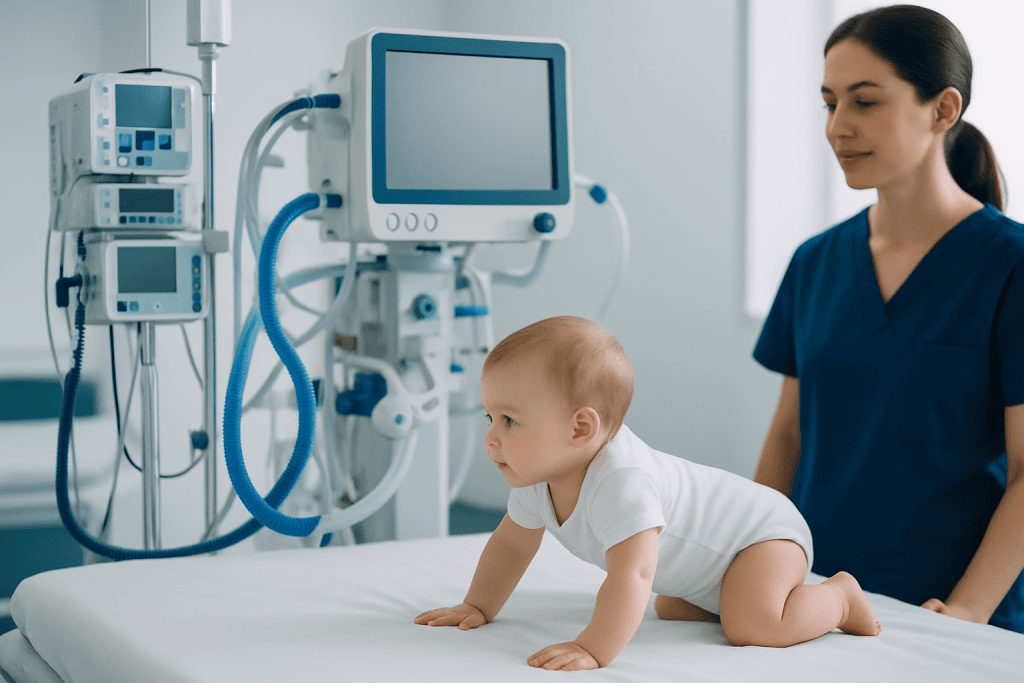
Crawling is not one single skill. Before moving on hands and knees, babies often build the parts of crawling step by step. They may spend time on their tummy, push up on their arms, rock back and forth on hands and knees, pivot while lying on the belly, or move backward before learning to go forward.
Many healthy babies use alternative styles of movement. These can include:
- Army crawling on the belly
- Bottom-shuffling or scooting while seated
- Rolling across the floor
- Bear crawling with straighter legs
- Pulling to stand and cruising along furniture before classic crawling
Because there is such a wide range of normal, parents do not need to focus only on whether a baby is crawling in the “expected” way. It is often more helpful to notice whether the baby is gradually becoming stronger, more balanced, and more able to explore the environment.
A baby who skips crawling but sits well, pulls to stand, bears weight on the legs, uses both sides of the body, and continues to learn new skills may still be developing normally. Pediatricians look at the full developmental picture rather than one milestone in isolation.
Why some babies crawl later than others

Several everyday factors can influence when crawling begins. Temperament plays a role; some babies are cautious observers, while others are eager movers. Opportunity matters too. Babies who get regular, supervised floor time while awake often have more chances to practice pushing up, rolling, and shifting weight.
Body proportions and muscle strength can also make a difference. A larger baby or one with a relatively heavier head may take longer to coordinate the movements needed for crawling. Time spent in seats, swings, or carriers is sometimes part of the picture if it reduces time on the floor, though these devices do not by themselves cause a developmental disorder.
Premature birth is another common reason a milestone may appear later. Babies born early are often expected to follow their corrected age rather than their birth date for the first months of development. For example, a baby born two months early may reach motor milestones about two months later than a full-term baby and still be progressing appropriately.
Less commonly, delayed crawling can be linked with an underlying issue affecting muscle tone, strength, joints, vision, coordination, or the nervous system. If a baby has broader delays, feeding difficulties, poor head control, marked asymmetry, or persistent stiffness or floppiness, a doctor may consider whether a condition such as cerebral palsy or another neurological or musculoskeletal problem needs evaluation.
Signs that deserve medical review
Most differences in crawling age are harmless, but certain signs are more important than the exact month a baby starts moving. A baby should be seen by a healthcare professional if there is no attempt to move around by the later part of the first year and especially if sitting, rolling, or bearing weight are also delayed.
Parents should also seek advice if the baby uses one side of the body much more than the other, drags one arm or leg, keeps one hand tightly fisted most of the time, or always moves in an uneven way. These patterns can suggest asymmetry in strength, coordination, or tone that deserves closer attention.
Other red flags include unusual stiffness, very floppy muscles, poor head control, loss of previously learned skills, persistent toe-pointing, limited interest in moving, or difficulty interacting with the environment. If these signs appear, prompt review is helpful because early support can improve outcomes.
Developmental concerns may overlap with other areas such as communication, feeding, or problem-solving. If a parent is worried that movement delays are part of a broader developmental picture, a pediatrician may discuss further assessment for conditions that affect learning and behavior, including autism, when clinically appropriate.
How doctors evaluate delayed crawling
When a baby is not crawling as expected, the first step is usually a detailed history. The doctor asks about pregnancy and birth, prematurity, medical problems, family history, and when other milestones were reached. Parents may be asked whether the baby rolls, sits independently, reaches equally with both hands, bears weight through the legs, or shows any regression.
The physical examination focuses on posture, muscle tone, reflexes, joint movement, strength, balance, and symmetry. The doctor may observe the baby on the floor, during sitting, and while trying to reach or pivot. Vision and hearing are also relevant, because babies need to notice and respond to their surroundings in order to move toward people and objects.
If the overall exam is reassuring, the doctor may recommend monitoring and more practice opportunities at home. If there are warning signs, the child may be referred for developmental assessment, pediatric neurology review, or physical therapy and rehabilitation to support motor skills. In selected cases, imaging or other tests are used to look for specific underlying causes, but many babies do not need extensive testing.
Evaluation is not about labeling a child too early. It is about identifying babies who may benefit from simple guidance, early therapy, or targeted care. If muscle or brain-related causes are suspected, specialists may consider whether support through services such as pediatric rehabilitation could help build strength, coordination, and function.
Ways to support crawling and motor development at home
Parents can help by offering safe, supervised floor time every day while the baby is awake. Tummy time remains one of the best ways to build neck, shoulder, arm, and trunk strength. Short sessions repeated often are usually more manageable than expecting a baby to tolerate long periods at once.
Placing toys just out of reach can encourage reaching, pivoting, and shifting weight. Babies often respond well when a caregiver gets down on the floor, talks, smiles, and turns movement into play. Open space on a firm surface usually supports practice better than prolonged time in seats or devices that limit free movement.
It can also help to let the baby explore different positions, such as side-lying, supported sitting, and hands-and-knees play. If the baby seems frustrated, parents can gently support the hips or chest but should avoid forcing a movement pattern. Progress comes from repetition and confidence, not pressure.
If concerns persist, a pediatrician or therapist can suggest individualized exercises and positioning strategies. Families may also benefit from evaluation if motor development is affected by another condition requiring neurology input or a broader developmental plan.
When to seek medical care
Parents should contact a doctor if a baby is not showing attempts to move around by around 10 to 12 months, especially if the child is also not sitting steadily, not rolling, or not bearing weight through the legs. Review is also recommended sooner if there is clear asymmetry, unusual stiffness or floppiness, poor head control, or any loss of previously learned skills.
Urgent assessment is warranted if the baby seems acutely unwell, has seizures, suffers a significant head injury, or suddenly stops using an arm or leg. These situations are not typical developmental variation and should be assessed promptly.
In many families, the outcome of a medical visit is reassurance and a plan for observation. If support is needed, early intervention can be practical and constructive. Near the end of the care pathway, some families may choose centers such as Acibadem International, where multidisciplinary specialists in JCI-accredited hospitals evaluate and treat developmental and neurological concerns in international patients.
Frequently asked questions
When do babies start crawling most often?
Most babies start crawling between 6 and 10 months of age. There is normal variation on both sides of that range, and some babies use other ways of moving instead of classic crawling.
Is it normal for a baby to skip crawling?
Yes. Some healthy babies go from sitting to pulling up, cruising, and walking without traditional crawling. If the child is otherwise progressing well and using both sides of the body normally, skipping crawling is not always a problem.
Should parents worry if a baby is not crawling at 9 months?
Not necessarily. Some babies begin later, especially if they were born prematurely or are developing other motor skills in a different order. Concern is higher if the baby is also delayed in sitting, rolling, or bearing weight, or shows stiffness, floppiness, or asymmetry.
What are the red flags with delayed crawling?
Red flags include using one side much more than the other, dragging a limb, poor head control, very stiff or very floppy muscles, or losing a skill the baby previously had. A baby who is not trying to move at all by the later part of the first year should also be assessed.
How do doctors check a baby with delayed crawling?
Doctors review the baby’s overall development, birth history, and family history, then perform a physical and neurological examination. They look at muscle tone, symmetry, strength, reflexes, posture, and how the baby moves on the floor. Additional tests are only needed in some cases.
Can tummy time help a baby learn to crawl?
Yes. Supervised tummy time helps build the neck, shoulder, arm, and trunk strength needed for rolling, pushing up, and crawling. Regular floor play and opportunities to reach for toys can also encourage motor development.
References
- American Academy of Pediatrics
- Centers for Disease Control and Prevention
- National Institute of Child Health and Human Development
- World Health Organization
This article is for general information only and is not a substitute for professional medical advice. Please consult a qualified doctor about your individual situation.
Joint and spine care in Turkey — expert assessment & treatment
JCI-accredited · board-certified surgeons · reply within 24h
Add us as a Preferred Source to see more of our trusted health content across Google Search, AI Overviews and Discover.