When Should a Child Go to a Children’s Hospital Instead of a Local Clinic?

Local clinics are often suitable for mild illnesses, routine infections, minor rashes, and small injuries. A children’s hospital is usually the safer choice for breathing problems, dehydration, seizures, severe pain, major injury, or a very ill-looking child.
Key Takeaways
- Local clinics are often suitable for mild illnesses, routine infections, minor rashes, and small injuries.
- A children’s hospital is usually the safer choice for breathing problems, dehydration, seizures, severe pain, major injury, or a very ill-looking child.
- Babies younger than 3 months with fever generally need urgent medical assessment in a hospital setting.
- Children with complex medical conditions may benefit from a children’s hospital sooner because pediatric specialists and equipment are available.
- If a child is difficult to wake, has blue lips, severe trouble breathing, or signs of a serious allergic reaction, emergency care is needed immediately.
A local clinic can manage many common childhood illnesses and minor injuries, but some situations need the resources of a children’s hospital. Knowing the difference can help families seek the right level of care quickly and confidently.
Overview: Choosing the Right Place for Care
Parents and caregivers often have to decide whether a child can be seen at a local clinic or whether a children’s hospital would be more appropriate. In many cases, common illnesses such as mild colds, ear pain, sore throat, uncomplicated fever, or minor skin rashes can be assessed in a clinic by a qualified doctor. Local clinics are also commonly suitable for routine follow-up, vaccinations, and non-urgent concerns.
A children’s hospital is different because it is designed around the medical needs of infants, children, and teenagers. It usually has pediatric emergency services, child-sized equipment, pediatric imaging, and specialists trained to recognize serious illness in young patients. This can be especially important when symptoms are severe, unusual, rapidly worsening, or difficult to explain.
The decision is not always about one place being better than another. It is about matching the child’s symptoms, age, medical history, and urgency to the level of care needed. When families know the signs that need hospital-based care, they can act sooner and reduce delays in treatment.
When a Local Clinic Is Often Appropriate
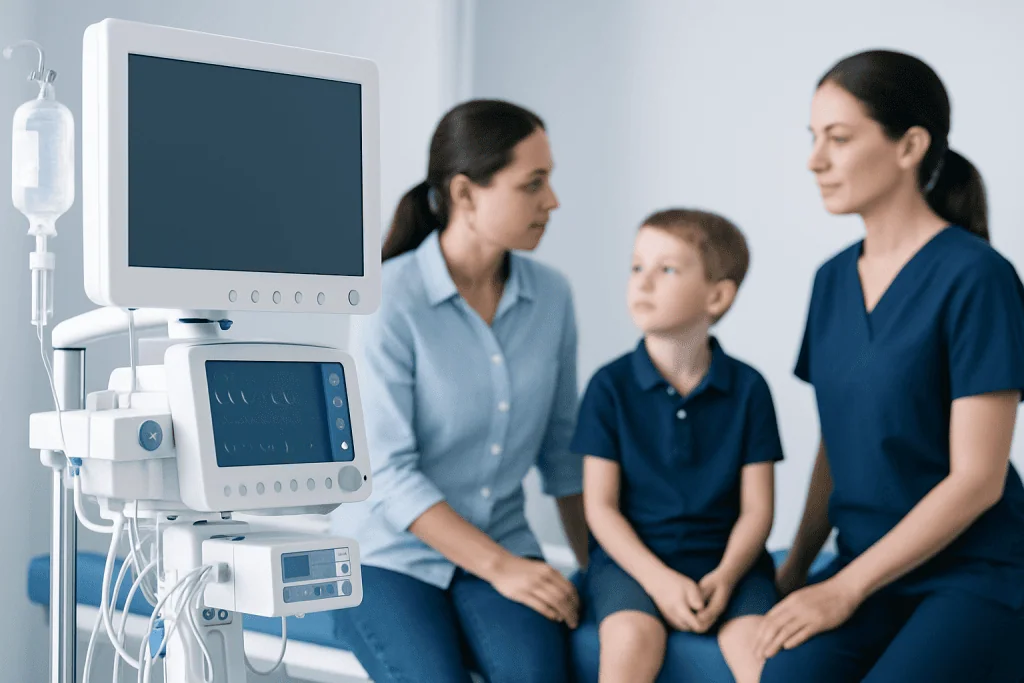
A local clinic is often a good starting point when a child is alert, drinking reasonably well, breathing comfortably, and still interactive even though they are unwell. Children with mild fever, cough, runny nose, mild vomiting without dehydration, constipation, diaper rash, pink eye, or ear discomfort can often be safely evaluated in this setting. Minor cuts, simple insect bites, and small bruises may also be managed locally.
Clinics are also appropriate for issues that need attention but are not emergencies, such as ongoing tummy pain without severe distress, mild eczema flares, suspected food intolerance, or follow-up after a recent illness. A primary care clinician can examine the child, recommend treatment, and decide whether referral is needed.
Parents may consider a local clinic if the child:
- Is awake, responsive, and consolable
- Has no significant breathing difficulty
- Is passing urine and taking some fluids
- Has symptoms that are mild or slowly improving
- Does not have severe pain, repeated vomiting, or signs of serious injury
Even when a clinic is appropriate, caregivers should trust their instincts. If a child appears much sicker than expected, especially if they are unusually floppy, confused, or hard to wake, a higher level of care is usually warranted.
Signs a Child Should Go to a Children’s Hospital

A children’s hospital is generally the right choice when a child has symptoms that may need rapid testing, close monitoring, emergency treatment, or specialist input. Breathing problems are one of the most important warning signs. Fast breathing, struggling to breathe, grunting, wheezing with distress, ribs pulling in, or blue or pale lips require urgent medical attention.
Hospital care is also important for signs of dehydration, especially in babies and young children. Warning signs include very dry mouth, crying without tears, urinating much less than usual, sunken eyes, unusual sleepiness, and inability to keep fluids down. Repeated vomiting or diarrhea can worsen quickly in children.
Other reasons to choose a children’s hospital include:
- Fever in a baby younger than 3 months
- A seizure, fainting episode, or sudden confusion
- Severe or worsening abdominal pain
- A significant head injury or any loss of consciousness
- Suspected broken bones, deep cuts, or serious burns
- Severe allergic reactions with swelling, hives, vomiting, or breathing symptoms
- A widespread rash with fever or a rash that does not fade when pressed
- Poisoning, medication overdose, or possible ingestion of a harmful substance
Children with chronic or complex conditions may need hospital evaluation sooner than other children. For example, a child with heart disease, a weakened immune system, cancer treatment, diabetes, or significant neurological needs may become seriously ill faster and benefit from pediatric specialist assessment early.
Special Situations: Newborns, Infants, and Medically Complex Children
Age matters when deciding where to go. Newborns and young infants can become unwell quickly, and signs of serious infection can be subtle. A baby under 3 months with fever should generally be assessed urgently in a hospital setting, even if the baby does not appear very sick. Poor feeding, unusual sleepiness, difficulty waking, weak cry, trouble breathing, and fewer wet diapers are also important warning signs in this age group.
Premature babies and infants with a history of breathing problems, congenital conditions, or recent hospital admission may need a lower threshold for hospital care. In these children, symptoms that appear mild at first can sometimes progress more quickly than in older, healthy children.
Children with long-term medical conditions may also need a children’s hospital rather than a local clinic when new symptoms arise. Their care may depend on pediatric subspecialists, advanced imaging, intravenous treatment, or close observation. A hospital can also coordinate care across teams if more than one problem is involved.
When families are unsure, calling the child’s regular doctor or a trusted pediatric service can help guide the next step. However, if the child looks seriously unwell, it is safer not to wait for routine advice.
What a Children’s Hospital Can Offer
A children’s hospital is equipped for pediatric emergencies and complex care in ways that many local clinics are not. This may include pediatric emergency doctors, surgeons, anesthesiologists, intensive care services, laboratory testing, imaging, and child-specific medication support. The environment is also designed for children, with staff experienced in examining children of different ages and developmental stages.
For injuries, hospitals can quickly assess whether a child needs stitches, imaging, fracture management, or surgery. In children with breathing trouble, hospital teams can provide oxygen, inhaled medications, and close monitoring. If severe dehydration is present, intravenous fluids may be needed. If neurological symptoms occur, urgent evaluation may involve advanced pediatric services such as pediatric neurology assessment or imaging and observation.
Hospitals are also important when symptoms could relate to conditions that need specialist follow-up, such as severe infection, appendicitis, complicated asthma, or significant trauma. If a child has persistent or unexplained symptoms, the team may consider referral to pediatric specialties including general pediatrics or pediatric cardiology when heart-related symptoms such as chest pain with fainting, bluish color, or unexplained shortness of breath are present.
Near the end of the care pathway, some families may need support from a center with multiple pediatric specialties in one place. Acibadem International’s multidisciplinary specialists and JCI-accredited hospitals diagnose and treat a wide range of childhood conditions for international patients.
How Parents Can Decide in the Moment
In stressful moments, a simple step-by-step approach can help. First, look at breathing, alertness, hydration, and pain. A child who is breathing normally, making eye contact, drinking some fluids, and responding in their usual way is more likely to be suitable for local evaluation. A child who is struggling to breathe, very drowsy, not drinking, or in severe pain usually needs hospital care.
Second, consider the child’s age and medical history. The younger the child, the lower the threshold should be for seeking urgent help. Babies, especially newborns, can deteriorate quickly. Likewise, children with asthma, diabetes, seizure disorders, immune problems, or recent surgery may need more urgent and specialized assessment than healthy children with the same symptoms.
Third, look at how quickly symptoms are changing. Rapidly worsening fever, increasing work of breathing, repeated vomiting, a spreading rash, neck stiffness, dehydration, or pain that prevents walking or sleeping should prompt urgent evaluation. If transport will take time, it is often safer to choose the facility with the highest appropriate level of pediatric care.
If there is doubt between going to a clinic and going to a hospital, caution is reasonable. It is better to seek urgent care and find that the problem is manageable than to delay care for a child who needs treatment.
When to Call Emergency Services Immediately
Some situations should not wait for a clinic appointment or private transport to a hospital. Emergency services should be contacted right away if a child is unconscious, difficult to wake, having severe breathing trouble, turning blue, having a prolonged seizure, or showing signs of a severe allergic reaction. Significant bleeding, a major accident, or suspected poisoning also needs immediate emergency help.
Families should also act urgently if a child has a stiff neck with fever, severe head injury, sudden weakness, a new inability to speak or walk properly, or extreme lethargy. These signs may point to serious conditions that need rapid stabilization and testing.
Parents do not need to be certain about the diagnosis before seeking emergency care. The priority is recognizing that the child may be seriously ill. Emergency teams are trained to assess urgency and begin treatment quickly.
After emergency treatment, the child may be monitored, admitted, or referred for specialty care depending on the findings. Conditions affecting breathing, the nervous system, or other organs may be evaluated further if needed, such as with pediatric respiratory care in appropriate settings.
Preparing for a Visit and Supporting Recovery
Whether a child is seen at a clinic or a children’s hospital, it helps to bring key information. Parents should know the child’s age, weight if possible, allergies, medicines, vaccination status, medical conditions, and recent symptoms such as fever duration, vomiting episodes, fluid intake, urine output, and any exposures to illness or injury. Photos or videos of a rash, breathing pattern, or unusual episode can sometimes help clinicians if symptoms have changed by the time of assessment.
After the visit, careful monitoring at home remains important. Caregivers should follow the medical advice given, encourage fluids when appropriate, use medicines only as directed, and watch for worsening symptoms. If the child becomes more sleepy, develops breathing problems, stops drinking, has worsening pain, or simply seems much more unwell, re-evaluation is advisable.
For children with recurring urgent symptoms, families may benefit from discussing a care plan with their regular doctor. This can be useful for asthma, recurrent seizures, severe allergies, and chronic conditions where it may be harder to judge when hospital care is needed. Clear guidance ahead of time can make future decisions less stressful.
Frequently asked questions
Should a child with a fever always go to a children’s hospital?
Not always. Many fevers in older infants and children can be assessed in a local clinic if the child is otherwise alert, breathing comfortably, and drinking some fluids. However, a baby younger than 3 months with fever should usually be evaluated urgently in a hospital setting.
Can a local clinic treat minor injuries in children?
Yes, many local clinics can manage small cuts, bruises, mild sprains, and other minor injuries. A children’s hospital is more appropriate if there is severe pain, heavy bleeding, a suspected fracture, a head injury, or concern that the child may need imaging, sedation, or surgery.
What breathing symptoms mean a child should go to the hospital?
A child should be seen urgently if breathing is fast, labored, noisy, or causing the ribs to pull in with each breath. Blue lips, pauses in breathing, grunting, or difficulty speaking or feeding because of breathlessness are emergency warning signs.
Is vomiting a reason to skip the clinic and go straight to hospital?
It depends on severity. Mild vomiting can sometimes be managed in a clinic, especially if the child is still able to drink and urinate. Hospital care is more appropriate when vomiting is persistent, the child cannot keep fluids down, or there are signs of dehydration, severe pain, or unusual drowsiness.
Why are children’s hospitals different from general medical facilities?
Children’s hospitals are built around pediatric care. They typically have child-sized equipment, pediatric emergency teams, and specialists trained to diagnose and treat babies, children, and teenagers, including those with complex conditions.
What if parents are unsure where to go?
If symptoms are mild and the child seems stable, contacting the child’s doctor or a local clinic can help guide the next step. If the child looks seriously unwell, is very young, or symptoms are worsening quickly, it is safer to choose urgent hospital evaluation.
References
- American Academy of Pediatrics
- Centers for Disease Control and Prevention
- National Health Service
- World Health Organization
This article is for general information only and is not a substitute for professional medical advice. Please consult a qualified doctor about your individual situation.
Explore treatments in Turkey — costs, top hospitals & a free quote
JCI-accredited · board-certified surgeons · reply within 24h
Add us as a Preferred Source to see more of our trusted health content across Google Search, AI Overviews and Discover.