Where did stds come from: Symptoms, Causes, and Treatment — Complete Patient Guide

STDs are caused by a range of infections, not by a single germ or origin. Many STDs can spread without obvious symptoms, so testing matters.
Key Takeaways
- STDs are caused by a range of infections, not by a single germ or origin.
- Many STDs can spread without obvious symptoms, so testing matters.
- Early diagnosis helps prevent complications and transmission to partners.
- Treatment depends on the cause: bacterial infections may be cured, while viral infections are usually managed.
- Safer sex practices, vaccination, and regular screening lower risk.
STDs did not begin in one place or at one moment. They developed over time as different bacteria, viruses, and parasites adapted to infect humans and spread through sexual contact, blood, or close skin-to-skin exposure.
Overview: Where did STDs come from?
The short answer is that sexually transmitted diseases, often called STDs or sexually transmitted infections (STIs), came from different infectious organisms that entered and adapted to human populations over long periods of history. Some were caused by bacteria, some by viruses, and some by parasites. As humans formed close communities, traveled, and had intimate contact, these infections found ways to spread from person to person.
There is no single origin for all STDs. For example, syphilis, gonorrhea, chlamydia, herpes, human papillomavirus (HPV), hepatitis B, HIV, and trichomoniasis each have their own biological history. Some infections likely evolved alongside humans for centuries, while others crossed from animals into humans at some point in the distant past and later spread through sexual or blood contact.
Today, what matters most for patients is not only where STDs came from historically, but how they behave now. These infections are common worldwide, and many are treatable or manageable. Because some can be silent for long periods, people may have an infection without knowing it, which is why awareness, testing, and timely care are important.
How STDs spread and why they persist
STDs spread when infectious organisms move from one person to another during vaginal, anal, or oral sex, through genital skin-to-skin contact, or, in some cases, through blood exposure or from mother to baby during pregnancy or birth. The exact route depends on the infection. HPV and herpes often spread through skin contact, while chlamydia and gonorrhea are usually transmitted through sexual fluids.
These infections persist in human populations for practical biological reasons. Some cause mild symptoms at first, so infected people may not realize they need testing or treatment. Others can remain dormant or chronic in the body, as happens with herpes, HIV, and hepatitis B. This allows infections to continue circulating even when people feel well.
Social and health-system factors also play a role. Limited access to sexual health education, stigma, inconsistent condom use, and missed screening opportunities can all make transmission more likely. Understanding this helps answer the question of where did STDs come from in a broader way: they continue not because of one event in history, but because infections and human behavior interact over time.
Common symptoms of STDs

STD symptoms vary widely depending on the infection, and many people have no symptoms at all. When symptoms do appear, they may include burning with urination, unusual vaginal or penile discharge, genital itching, pelvic pain, testicular discomfort, sores or blisters around the mouth or genitals, and bleeding between periods. Some infections can also cause a rash, swollen lymph nodes, fever, or pain during sex.
Because symptoms overlap, it is not usually possible to tell which infection is present based on appearance alone. A genital sore could be caused by herpes or syphilis, and discharge may be linked to chlamydia, gonorrhea, or another infection. This is one reason laboratory testing is so important.
Patients should also know that untreated STDs can sometimes lead to complications beyond the genitals. Certain infections may affect fertility, pregnancy, the liver, the immune system, or the nervous system. Related conditions such as HIV/AIDS and hepatitis B may need longer-term medical follow-up even when a person feels generally well.
- Unusual discharge from the vagina, penis, or rectum
- Burning or pain during urination
- Genital sores, blisters, warts, or rash
- Pelvic pain or lower abdominal pain
- Pain during sex
- Bleeding between periods
- Fever, fatigue, or swollen glands in some cases
Causes and risk factors
The direct cause of an STD is infection with a bacterium, virus, or parasite. Bacterial STDs include chlamydia, gonorrhea, and syphilis. Viral STDs include HIV, HPV, genital herpes, and hepatitis B. Trichomoniasis is caused by a parasite. Each type behaves differently, which is why diagnosis and treatment plans are not the same for every patient.
Risk factors do not mean someone will definitely get an STD, but they can increase the chance of exposure. These include having a new sexual partner, having multiple partners, having sex without barrier protection, having a partner with an untreated infection, sharing needles, or having a past history of an STD. Age can also matter, since some STDs are diagnosed more often in younger sexually active groups.
Not all risk is visible. Someone can carry an infection and feel completely healthy. In addition, having one STD can make it easier to acquire another because inflammation or sores may weaken natural protective barriers. This is why clinicians may recommend testing for several infections at the same visit rather than checking for only one.
How STDs are diagnosed
Diagnosis begins with a medical history and a focused examination, but testing is usually needed to confirm the cause. A doctor may ask about symptoms, recent sexual contact, prior infections, contraception and condom use, pregnancy status, and any known exposures. These questions are routine and help guide the right tests.
Depending on the situation, testing may include urine tests, blood tests, vaginal or cervical swabs, urethral swabs, rectal swabs, or throat swabs. Sores may be sampled directly if present. The best test depends on the suspected infection and on where exposure may have occurred.
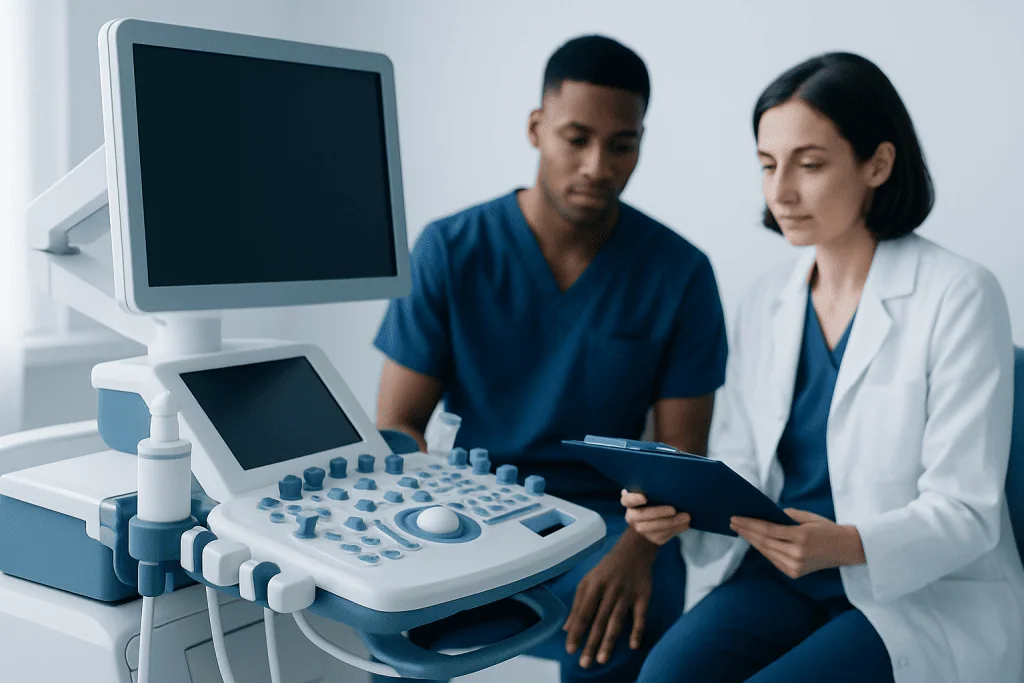
Some infections are also identified through screening even when there are no symptoms. This is especially important for sexually active people with new or multiple partners, pregnant patients, and anyone whose partner has been diagnosed with an infection. In selected cases, imaging or specialist evaluation may be needed if complications are suspected, and doctors may coordinate diagnostic imaging or other investigations when symptoms point beyond a straightforward infection.
Treatment options and partner care
Treatment depends on the specific infection. Bacterial infections such as chlamydia, gonorrhea, and syphilis are commonly treated with antibiotics. Parasitic infections such as trichomoniasis are treated with antiparasitic medication. Viral infections, including herpes, HIV, and hepatitis B, are usually managed rather than cured, with treatment aimed at reducing symptoms, lowering complications, and decreasing the risk of transmission.
It is important for patients to complete treatment exactly as prescribed and to avoid sexual contact until a clinician says it is safe to resume. Stopping early or not following instructions may leave the infection partly treated or allow reinfection. Follow-up testing may be recommended for some infections to make sure treatment has worked or to check for new exposure.
Partner care is a key part of treatment. Current or recent sexual partners may also need testing and treatment, even if they have no symptoms. This helps prevent the infection from passing back and forth. If a patient is found to have a condition such as genital herpes, counseling about future outbreaks and transmission reduction is often part of care. In more complex cases, clinicians may involve specialists in infectious diseases for diagnosis, treatment planning, and long-term follow-up.
Prevention, self-care, and protecting future health
STD prevention is not based on one step alone. The most effective approach combines education, regular screening when appropriate, vaccination, and safer sex practices. Using condoms or other barrier methods correctly and consistently lowers the risk of many infections, though it does not fully prevent those spread through skin contact, such as HPV or herpes.
Vaccination can help protect against some infections, especially HPV and hepatitis B. Routine screening may also be recommended based on age, sexual practices, pregnancy, and personal risk factors. People who have had one STD should be especially mindful of follow-up, because prior infection can increase the chance of future infection.
Self-care after diagnosis includes taking medicines exactly as directed, avoiding sex until treatment is complete or until advised by a doctor, informing partners, and returning for repeat testing if recommended. For patients who need broader support, multidisciplinary services may also include preventive health check-ups. Near the end of the care pathway, some international patients may choose centers such as Acibadem International, where multidisciplinary specialists in JCI-accredited hospitals diagnose and treat sexually transmitted infections as part of coordinated care.
When to seek medical care
Medical care should be sought promptly if a person has genital sores, painful urination, unusual discharge, pelvic pain, testicular pain, a new rash after sexual contact, or if a partner has been diagnosed with an STD. Even mild symptoms are worth checking because early treatment can reduce complications and help protect partners.
People should also seek care after unprotected sex if they are concerned about exposure, and pregnant patients should contact a clinician promptly because some infections can affect pregnancy or a newborn. Emergency care may be needed for severe pelvic or abdominal pain, high fever, confusion, or other signs of serious illness.
For anyone worried about where did STDs come from in their own situation, the most useful next step is usually not tracing a distant historical origin but arranging accurate testing and confidential medical advice. A qualified doctor can explain likely causes, recommend appropriate screening, and discuss treatment and prevention in a respectful, nonjudgmental way.
Frequently asked questions
Did all STDs come from the same source?
No. STDs are caused by different bacteria, viruses, and parasites, each with its own biological origin and history. They did not all begin at one time or in one place.
Can someone have an STD without symptoms?
Yes. Many STDs can be present without causing noticeable symptoms, especially in the early stages. That is why screening and testing after possible exposure are often recommended.
Are STDs always curable?
Not always. Some bacterial and parasitic STDs can usually be cured with the right treatment, while viral infections such as herpes, HIV, and hepatitis B are generally managed rather than cured. Early medical care can still make a major difference.
How soon after exposure should a person get tested?
The timing depends on the infection and the test being used. Some tests may not become accurate immediately after exposure, so a doctor may recommend testing now and repeating it later if needed.
Can condoms fully prevent STDs?
Condoms significantly reduce the risk of many STDs when used correctly and consistently. However, they do not fully eliminate risk, especially for infections that spread through skin-to-skin contact such as herpes or HPV.
Should sexual partners be tested too?
In many cases, yes. Partners may carry the infection without symptoms and can pass it back if they are not evaluated and treated when needed. Partner testing is an important part of preventing reinfection.
References
- World Health Organization
- Centers for Disease Control and Prevention
- National Institutes of Health
- American Sexual Health Association
This article is for general information only and is not a substitute for professional medical advice. Please consult a qualified doctor about your individual situation.
Explore treatments in Turkey — costs, top hospitals & a free quote
JCI-accredited · board-certified surgeons · reply within 24h
Add us as a Preferred Source to see more of our trusted health content across Google Search, AI Overviews and Discover.

More from the Health Library


Related Specialists

Assoc. Prof. Dr. Hatice Gamze Demirdağ
Dermatology
Prof. Dr. Hüsnü Görgen
Gynecology & Obstetrics
Dt. Nehir Erdal
Oral & Dental Health
Prof. Dr. Serkan Şener
Emergency Service