White Noise Machine Infants: An Evidence-Based Guide for Patients

White noise may help some infants settle and sleep, but it should be used carefully and not too loudly. A sound machine should be placed away from the crib and never directly next to a baby’s head.
Key Takeaways
- White noise may help some infants settle and sleep, but it should be used carefully and not too loudly.
- A sound machine should be placed away from the crib and never directly next to a baby’s head.
- White noise does not replace safe sleep guidance, feeding assessment, or medical evaluation when symptoms are concerning.
- Consistent bedtime routines, a dark room, and safe sleep positioning remain the foundation of infant sleep care.
- Parents should seek medical advice if an infant has persistent crying, feeding difficulty, breathing concerns, or poor growth.
White noise machine infants use is generally considered acceptable when the sound is kept low, the device is placed at a safe distance, and it is used as one part of healthy sleep routines. Parents and caregivers should focus on safe sleep practices first, while using sound machines thoughtfully rather than relying on them as a cure for crying, poor sleep, or feeding problems.
Overview: Can infants use a white noise machine?
White noise machine infants use can be appropriate for many families when it is done safely. White noise is a steady, neutral sound that can mask sudden noises in the environment and may help some babies settle more easily. For some infants, it can support naps and nighttime sleep by creating a more predictable sound background.
At the same time, white noise is not essential for healthy infant sleep, and it should not be treated as a solution for every sleep problem. Babies wake for many normal reasons, including hunger, the need for comfort, or developmental changes. A sound machine may be helpful, but it works best as one small part of a broader sleep routine.
Parents often ask whether white noise is safe for hearing and development. The key issue is not simply whether a sound machine is used, but how it is used. Volume, placement, and duration matter. A machine that is too loud or too close to the baby may expose delicate ears to more sound than is advisable.
This guide explains what white noise is, how it may help, how to use it more safely, and when sleep or crying patterns should prompt medical advice. It also highlights that persistent sleep problems may sometimes relate to conditions such as sleep apnea or other medical issues that deserve professional assessment.
How white noise may affect infant sleep
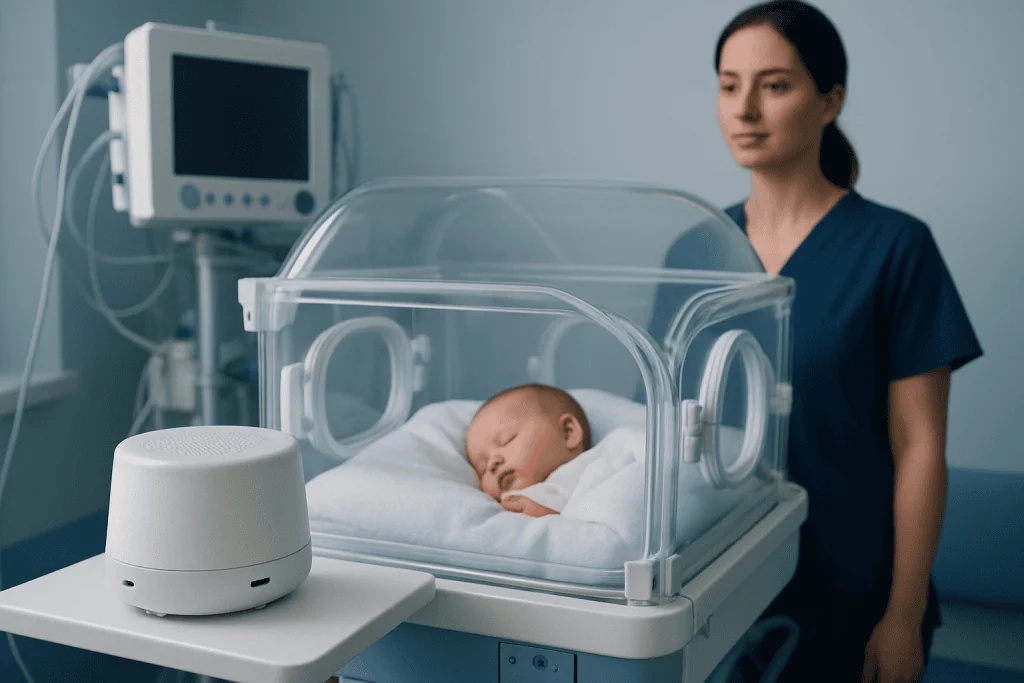
Infants are born into a world that is much less muffled than the womb. Some experts believe that a continuous, soft sound can feel soothing because it reduces abrupt changes in the environment. In practical terms, white noise may help mask household sounds such as doors closing, traffic, siblings playing, or conversation during nap time.
For some babies, this can shorten the time it takes to fall asleep and reduce waking from sudden noise. It may be especially useful in homes where maintaining complete quiet is unrealistic. Parents may notice that the baby settles more quickly during rocking, feeding, or bedtime when a gentle sound is present in the background.
However, not every infant responds the same way. Some babies sleep well without any sound machine at all, while others may not seem to benefit. Sleep patterns in infancy are naturally variable, and frequent waking can still be normal, especially in the first months of life.
White noise should also be distinguished from a bedtime dependency. If a baby can only sleep when one exact sound is available at one exact volume, families may feel stressed during travel or power interruptions. A balanced approach is to use sound as a supportive tool while also building other calming routines such as dim lights, feeding when appropriate, gentle cuddling, and a consistent sleep environment.
Safety considerations: volume, distance, and sleep environment
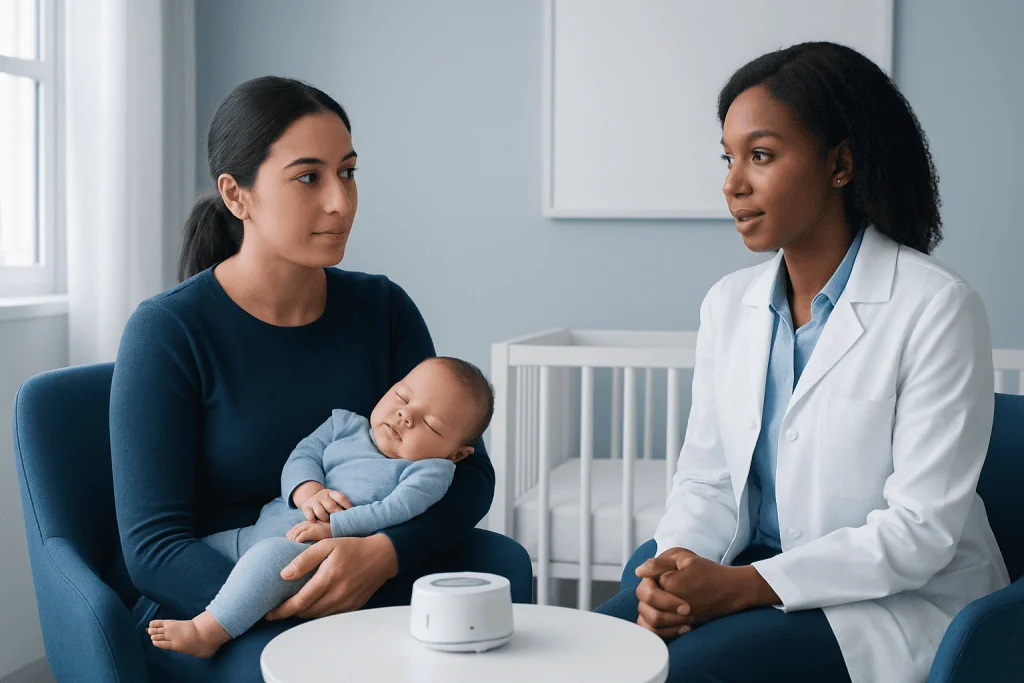
The main safety concern with white noise machines is excessive sound exposure. Infant hearing is sensitive, and prolonged loud sound may not be ideal. A safer approach is to keep the volume low, use the quietest setting that still seems helpful, and avoid placing the machine close to the crib, bassinet, or baby’s head.
As a practical rule, the sound machine should be positioned well away from the sleep space, not inside the crib and not attached near the infant’s ear level. Parents should be able to speak in a normal voice over the sound in the room. If the machine seems loud to an adult standing near the baby’s sleep area, it is likely too loud for regular use.
Safe sleep recommendations remain more important than any sound device. Babies should sleep on a firm, flat surface on their back, without pillows, loose blankets, crib bumpers, or soft toys. White noise should never be used to justify unsafe sleep arrangements or to leave a baby in a seat, swing, or adult bed for routine sleep.
Families should also remember that white noise can mask other sounds in the room. If it is too loud, caregivers may be slower to notice coughing, labored breathing, unusual vomiting, or distress. For babies with ongoing sleep-related breathing concerns, clinicians may sometimes recommend evaluation with a sleep study when symptoms suggest an underlying disorder rather than a simple settling issue.
When white noise may help and when it may not
White noise may be most helpful when an otherwise healthy infant is overstimulated by everyday background noise or has difficulty settling during transitions between sleep cycles. It can also support a consistent bedtime signal, helping the baby learn that dim lights, feeding, and a certain sound pattern all mean sleep is approaching.
It may be less helpful when the real issue is hunger, reflux symptoms, nasal congestion, fever, discomfort, or an irregular daytime routine. In those cases, using sound alone may temporarily quiet the environment without addressing the baby’s actual need. This is one reason parents should avoid assuming that all crying is a sleep problem.
White noise is also not a treatment for chronic sleep disruption caused by illness or developmental concerns. If a baby snores regularly, pauses breathing, has noisy breathing, sweats heavily during sleep, struggles to feed, or seems very sleepy during the day, a healthcare professional should assess the child. Depending on the cause, management may involve pediatric, ENT, or sleep specialists.
In some infants, nasal blockage or enlarged upper-airway tissues may contribute to restless sleep. If a doctor suspects structural airway issues, further assessment may sometimes include pediatric ENT evaluation or other age-appropriate investigations. The aim is always to identify the reason for poor sleep rather than to cover symptoms with environmental sound alone.
How to use a white noise machine more safely
Families who choose to use white noise can reduce risk by following a few simple steps. The device should be placed across the room or at a clear distance from the crib, set to a low volume, and checked regularly. Caregivers can step into the baby’s sleep space and listen from where the infant rests to make sure the sound is soft and not intrusive.
It is usually best to choose a steady, uncomplicated sound rather than frequent changes in music, songs, or stimulating noises. The purpose is to provide a calm background, not to entertain the infant. Some babies respond well to gentle static-like sound, rainfall, or soft fan-like noise, as long as the volume remains modest.
A timer may be useful for some families, but there is no single rule that fits every infant. Some parents use white noise only while the baby is falling asleep, while others leave it on at a low volume during naps or nighttime sleep. The safest approach is to avoid prolonged loud use and to review the routine over time, especially as the child grows.
Good sleep hygiene still matters. Helpful habits include a predictable bedtime, age-appropriate naps, feeding assessment, and avoiding overstimulation before sleep. If a family is struggling with persistent sleep difficulties, a clinician may recommend support through sleep medicine evaluation when appropriate, particularly if symptoms are severe, prolonged, or linked to breathing issues.
- Keep the volume low and comfortable.
- Place the machine away from the crib or bassinet.
- Do not put any device inside the sleep space.
- Use white noise as support, not as a substitute for checking hunger, illness, or discomfort.
- Review the setup regularly as the infant’s sleep needs change.
Alternatives and complementary sleep strategies
Many infants sleep well without a sound machine, especially when the overall routine is calm and consistent. Parents can often improve sleep by watching wake windows, responding to feeding cues, reducing bright light in the evening, and using a soothing pre-sleep routine. These basics are often more important than any single sleep product.
Swaddling may be used in some young infants when done correctly and only before signs of rolling begin, but families should follow current pediatric guidance. Once a baby shows attempts to roll, swaddling is no longer considered appropriate. Safe sleep clothing, room temperature comfort, and regular burping after feeds may also support better rest.
Babies with frequent spit-up, persistent arching, coughing, congestion, or discomfort during or after feeds may need medical review rather than additional sound masking. In some situations, poor sleep may be linked to digestive or airway problems. A doctor may explore whether symptoms are related to reflux, infection, allergy, or another condition.
When infant sleep is highly disturbed and parents are exhausted, it is reasonable to ask for help early. Pediatricians can assess growth, feeding, breathing, and developmental patterns, and can guide families on whether specialist care is needed. At the appropriate stage, sleep concerns in older children may also overlap with issues such as sleep disorders that require more structured evaluation.
When to seek medical care
Most infant sleep variation is not dangerous, but certain symptoms should not be attributed to normal fussiness or solved with a white noise machine alone. Medical advice is important if a baby has difficulty breathing, pauses in breathing, bluish color changes, repeated choking, poor feeding, fever, persistent vomiting, or unusual lethargy. These signs need prompt assessment.
Parents should also contact a healthcare professional if the baby snores regularly, has noisy breathing most nights, struggles to gain weight, sweats heavily during sleep, or seems persistently uncomfortable. Frequent nighttime waking can be normal in infancy, but when it is accompanied by these features, an underlying medical issue becomes more likely.
Care should also be sought if crying is prolonged, difficult to console, or associated with fewer wet diapers, diarrhea, rash, signs of pain, or changes in alertness. Sleep tools should never delay assessment when caregivers feel something is not right. Parental instinct is valuable and deserves attention.
Near the end of the care pathway, some families may benefit from multidisciplinary input. Acibadem International’s multidisciplinary specialists and JCI-accredited hospitals diagnose and treat sleep-related and pediatric conditions for international patients when further evaluation is needed.
Frequently asked questions
Is white noise safe for newborns?
White noise can be used for newborns when it is kept at a low volume and placed well away from the baby’s sleep area. It should support, not replace, safe sleep practices and routine checks for feeding, temperature comfort, and illness.
How loud should a white noise machine be for infants?
The sound should be soft enough that it does not dominate the room. A practical approach is to keep it low enough that an adult can still speak normally near the crib without raising their voice.
Should a white noise machine run all night?
Some families use it during the whole sleep period, while others use it only at the start of sleep. If it is used overnight, it should remain at a low volume and be reviewed regularly to make sure it is still needed and set safely.
Can white noise harm a baby’s hearing?
A machine used too loudly or too close to the baby may increase concern about sound exposure. The risk is reduced by keeping the device far from the crib and choosing the lowest effective volume.
Does white noise help all babies sleep better?
No. Some infants seem to settle more easily with steady background sound, while others show little difference. Sleep quality also depends on feeding, age, routine, health, and normal developmental changes.
When should parents stop using white noise for a baby?
There is no single age when all families must stop. If the baby sleeps well without it, or if parents want to avoid dependence on one sleep cue, they can gradually lower the volume or shorten use over time.
This article is for general information only and is not a substitute for professional medical advice. Please consult a qualified doctor about your individual situation.
Explore treatments in Turkey — costs, top hospitals & a free quote
JCI-accredited · board-certified surgeons · reply within 24h
Add us as a Preferred Source to see more of our trusted health content across Google Search, AI Overviews and Discover.

More from the Health Library

Airsupra Inhaler Cost: An Evidence-Based Guide for Patients

Doxazosin: An Evidence-Based Guide for Patients

Cephalexin for sinus infection: Symptoms, Causes, and Treatment — Complete Patient Guide

Advantages Cold Showers — Explained by Medical Evidence, Not Myths

Respite Care: A Complete Medical Overview