Why Do My Breasts Hurt Before My Period? A Doctor-Reviewed Answer

Breast soreness before a period is commonly linked to normal monthly hormone fluctuations. This pattern is called cyclical breast pain and often affects both breasts.
Key Takeaways
- Breast soreness before a period is commonly linked to normal monthly hormone fluctuations.
- This pattern is called cyclical breast pain and often affects both breasts.
- Pain that is new, one-sided, persistent, or associated with a lump or discharge needs medical review.
- A doctor may assess symptoms with an exam and, if needed, imaging such as ultrasound or mammography.
- Supportive bras, symptom tracking, and simple lifestyle measures may help reduce discomfort.
Breast pain before a period is usually caused by normal hormonal changes that make breast tissue swell and feel tender. In most cases it is harmless and improves once menstruation starts, but certain changes should still be checked by a doctor.
Overview: why breast pain often happens before a period
For many people, the answer to “why do my boobs hurt before my period” is simple: monthly hormone changes. In the second half of the menstrual cycle, levels of estrogen and progesterone shift, and this can cause breast tissue to hold more fluid, feel fuller, and become more sensitive to touch. The discomfort is often mild to moderate and usually settles when the period starts or shortly after.
This type of pain is known as cyclical breast pain, or cyclical mastalgia. It tends to follow a predictable pattern from month to month and is often felt in both breasts, especially in the outer upper areas. Some describe it as heaviness, fullness, aching, burning, or tenderness rather than a sharp pain.
Most premenstrual breast pain is not a sign of a serious condition. Still, breast symptoms should not be ignored if they change in character. Pain that is clearly different from the usual monthly pattern, or pain that comes with other concerning signs, should be assessed by a qualified doctor.
What cyclical breast pain feels like
Cyclical breast pain usually appears in the days leading up to a period and then improves afterward. Many people notice that the breasts feel swollen, lumpy, or unusually sensitive, especially when walking, exercising, sleeping on the chest, or wearing a tight bra. The discomfort may affect both sides, although one side can feel worse than the other.
Because breast tissue naturally changes during the menstrual cycle, the breasts may also feel denser or more nodular before menstruation. This can be unsettling, but in many cases it reflects hormone-related changes rather than disease. Tracking symptoms over two to three cycles can help show whether the pattern is linked to menstruation.
Common features of cyclical breast pain include:
- Tenderness or heaviness before the period
- Symptoms in both breasts
- Pain that is worse in the upper outer breast area
- Swelling or a sense of fullness
- Improvement when the period begins or ends
Why hormones make breasts sore before menstruation

The main reason breasts hurt before a period is the changing balance of estrogen and progesterone after ovulation. These hormones prepare the body for a possible pregnancy, and they also affect breast glands, ducts, and supporting tissue. As a result, the breasts may temporarily enlarge and become more sensitive.
Fluid retention can add to this discomfort. When the tissue holds more fluid, it stretches slightly and may press on surrounding structures, leading to aching or tenderness. This is one reason the sensation can feel like fullness or tightness rather than a distinct localized pain.
Not everyone experiences these changes in the same way. Some people are more sensitive to normal hormonal shifts, and symptoms may become more noticeable in the years before menopause, when hormone patterns can become less predictable. Breast pain can also overlap with other benign breast conditions such as breast cysts or noncyclical tenderness that is unrelated to the menstrual cycle.
Other factors may make premenstrual breast pain feel stronger, including stress, poor bra support, high-impact exercise, and certain medications. In some cases, pain felt in the breast area may actually come from the chest wall, muscles, or ribs rather than the breast tissue itself.
When breast pain before a period may need medical review
Although breast tenderness before menstruation is often harmless, some symptoms should prompt an appointment with a doctor. A useful rule is to seek review if the pain is not behaving like a typical monthly pattern, or if there are additional breast changes that need evaluation.
Medical advice is especially important if there is a new lump, a persistent area of thickening, skin dimpling, redness that does not improve, nipple inversion that is new, or discharge from one nipple, especially if it is bloody. Pain that affects only one small area and continues throughout the month, rather than improving after the period, also deserves attention.
It is sensible to seek medical care if:
- The pain is new, severe, or getting worse
- It is present in one breast or one specific spot only
- It does not improve after the period
- A lump or new area of firmness is felt
- There is nipple discharge, especially bloody discharge
- There are skin changes such as dimpling, puckering, or persistent redness
- Fever or signs of infection occur
Most of these symptoms still turn out to have benign explanations, but they should be checked properly. If a doctor is concerned about an underlying issue, they may recommend assessment in a dedicated breast center for coordinated evaluation.
How a doctor finds the cause
Doctors usually begin by asking about the timing of the pain, whether it changes with the menstrual cycle, whether one or both breasts are involved, and whether there are any associated symptoms. A symptom diary can be very helpful here, especially if it shows a repeating premenstrual pattern. The doctor will also ask about pregnancy, breastfeeding, medications, family history, and prior breast problems.
A clinical breast exam is typically the next step. During the exam, the doctor checks for tender areas, lumps, skin changes, and signs that the pain may be coming from the chest wall rather than the breast itself. If the findings fit a classic cyclical pattern and there are no red flags, reassurance and follow-up may be all that is needed.
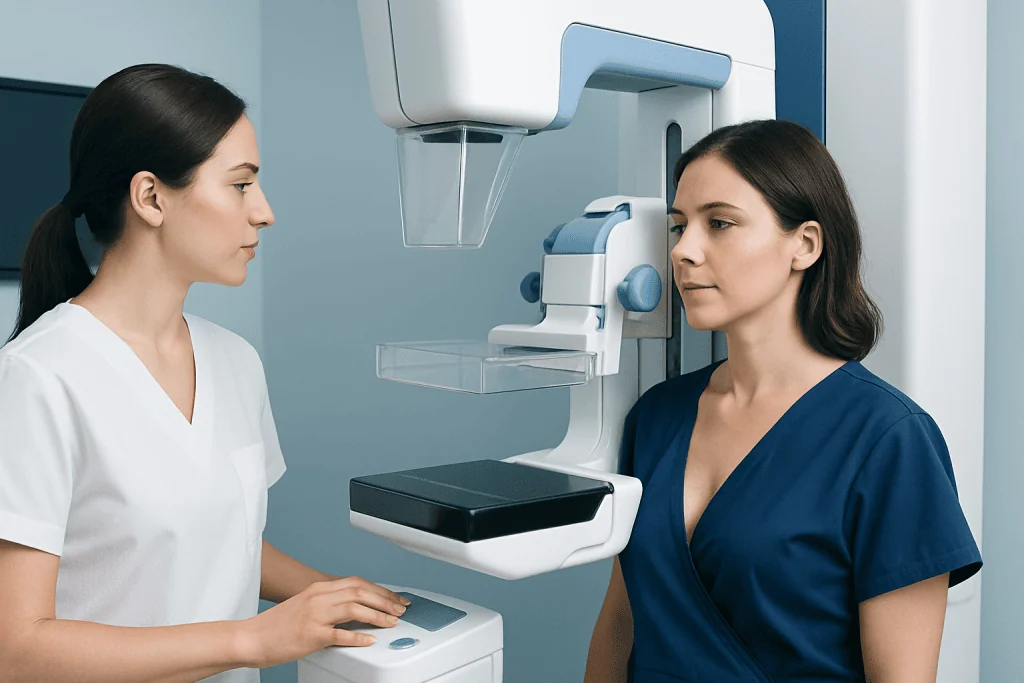
If symptoms are new, focal, persistent, or associated with a lump, imaging may be recommended. This may include breast ultrasound and, depending on age and clinical findings, mammography. In some cases, further assessment may be needed if imaging shows a cyst, dense tissue, or another change that needs clarification. When an abnormal area requires tissue sampling, a doctor may discuss tests used in the evaluation of breast cancer, while also explaining that pain alone is not usually the main sign of cancer.
Treatment and self-care for period-related breast pain
Treatment depends on how troublesome the pain is and whether a specific cause is found. For common cyclical breast pain, many people improve with supportive measures rather than intensive treatment. A well-fitted supportive bra, especially around the premenstrual days, can reduce movement-related discomfort and make daily activities easier.
Simple self-care may also help. Some people find relief by applying a warm or cool compress, reducing activities that increase breast movement, and keeping track of symptoms to understand their cycle better. General healthy habits such as regular exercise, stress management, and consistent sleep may also support overall symptom control, although they do not eliminate hormonal changes entirely.
If pain is more bothersome, a doctor may recommend short-term pain relief options that are appropriate for the individual. Medication choices should always be guided by a clinician, especially for those with stomach, kidney, bleeding, or other medical concerns. If another cause is identified, such as a cyst or infection, treatment will be directed at that condition.
People should avoid repeatedly pressing or checking the breasts many times a day, as this can make tenderness feel worse. It is usually more useful to perform breast self-awareness rather than constant self-examination: noticing what is normal for the body and reporting meaningful changes to a doctor.
A practical approach to prevention and symptom tracking
Because cyclical breast pain is related to natural hormone fluctuations, it cannot always be prevented completely. However, tracking symptoms can make them less stressful. Recording when the pain starts, how severe it feels, whether one or both breasts are affected, and when it improves can help confirm a menstrual pattern and guide medical review if needed.
It may also help to note any factors that seem to make discomfort worse, such as high-impact exercise, poor bra support, or stress. If the breasts routinely become sore before menstruation, planning ahead with a supportive bra and simple comfort measures can make those days easier to manage.
If breast pain is interfering with work, exercise, sleep, or emotional wellbeing, it is reasonable to discuss it with a doctor even if it seems cycle-related. Care is not only about ruling out serious causes; it is also about improving quality of life. Near the end of the diagnostic process, patients who need further evaluation or treatment may also be supported by Acibadem International, where multidisciplinary specialists in JCI-accredited hospitals care for international patients.
Frequently asked questions
Is it normal for breasts to hurt before a period?
Yes. Breast tenderness before a period is very common and is often caused by normal hormonal changes during the menstrual cycle. It usually improves when the period begins or soon after.
How can someone tell if breast pain is hormonal?
Hormonal breast pain usually follows a repeating monthly pattern. It often affects both breasts, causes heaviness or tenderness, and is worse in the days before menstruation.
Does breast pain before a period mean pregnancy?
Not necessarily. Premenstrual breast soreness and early pregnancy breast tenderness can feel similar because both are hormone-related. If a period is late or pregnancy is possible, a pregnancy test can help clarify the cause.
Can breast pain before a period be a sign of breast cancer?
Breast pain by itself is usually not the main sign of breast cancer. However, any new lump, persistent one-sided pain, skin change, or nipple discharge should be assessed by a doctor.
What helps relieve sore breasts before menstruation?
Many people feel better with a supportive bra, warm or cool compresses, and avoiding activities that increase discomfort. If pain is troublesome, a doctor can advise on safe pain relief options and whether further evaluation is needed.
When should someone see a doctor for breast pain?
A doctor should be consulted if the pain is new, severe, focal, persistent, or not linked to the menstrual cycle. Medical review is also important if there is a lump, nipple discharge, fever, or skin changes.
References
- American College of Obstetricians and Gynecologists
- American Cancer Society
- National Health Service
- Mayo Clinic
- Breast Cancer Now
This article is for general information only and is not a substitute for professional medical advice. Please consult a qualified doctor about your individual situation.
Explore treatments in Turkey — costs, top hospitals & a free quote
JCI-accredited · board-certified surgeons · reply within 24h
Add us as a Preferred Source to see more of our trusted health content across Google Search, AI Overviews and Discover.
Check your numbers in seconds
BMI, calories, due date, blood pressure and 30+ more clinical calculators — free, instant, doctor-reviewed ranges.