Why is my period late: A Complete Medical Guide for Patients

A period is not always “late” for the same reason; cycle length can vary naturally from month to month. Pregnancy is a common cause of a missed period, but stress, illness, travel, weight change, and hormone conditions can also affect timing.
Key Takeaways
- A period is not always “late” for the same reason; cycle length can vary naturally from month to month.
- Pregnancy is a common cause of a missed period, but stress, illness, travel, weight change, and hormone conditions can also affect timing.
- A home pregnancy test may be useful if there has been vaginal sex and the period is overdue.
- Ongoing irregular cycles, severe pain, very heavy bleeding, or symptoms such as milky nipple discharge, acne, or excess hair growth should be medically assessed.
- Treatment depends on the cause and may involve reassurance, lifestyle changes, hormone evaluation, or care for underlying conditions.
A late period is often caused by pregnancy, stress, normal cycle variation, hormonal changes, weight shifts, intense exercise, or certain medical conditions. The best next step depends on age, sexual activity, symptoms, and how different the cycle is from the person’s usual pattern.
Overview: Why a Period May Be Late
A late period usually means that bleeding has not started when it is expected based on a person’s usual menstrual pattern. For many people, the menstrual cycle does not arrive on exactly the same day every month. A difference of a few days can be normal, especially during the teen years, after childbirth, while breastfeeding, and in the years leading up to menopause.
When someone asks, “why is my period late,” the answer often depends on context. Pregnancy is one possibility, but it is far from the only one. Stress, sleep disruption, travel, weight changes, intensive exercise, thyroid problems, polycystic ovary syndrome, some medicines, and short-term illness can all affect ovulation and shift the timing of a period.
A “late” period is generally more meaningful when the cycle is usually regular and then changes suddenly, or when a period is missed entirely. Looking at the whole picture—cycle history, sexual activity, recent life changes, and accompanying symptoms—can help clarify whether the delay is likely temporary or whether medical evaluation is appropriate.
What Counts as a Late or Missed Period?
Menstrual cycles are measured from the first day of one period to the first day of the next. In adults, many cycles fall somewhere between about 21 and 35 days, although some healthy people are naturally a little shorter or longer. In adolescents, cycles can be more irregular for the first few years after periods begin.
A period may be called late when it has not started by the expected date for that individual’s usual cycle. A missed period often means an entire cycle has passed without bleeding. For example, if someone usually has a period every 28 days and day 35 arrives with no bleeding, that may feel late—even though some variation can still be normal.
It can help to track periods in a calendar or app for several months. Tracking can reveal whether the cycles are truly irregular, whether ovulation symptoms change, and whether bleeding patterns are getting lighter, heavier, shorter, or longer over time.
- Late period: bleeding starts later than expected.
- Missed period: no period occurs during a cycle when one was expected.
- Irregular periods: cycles vary widely in timing, flow, or duration.
Common Causes of a Late Period

Pregnancy is one of the most common reasons for a missed period in people who are sexually active with a male partner. If there has been vaginal sex and the period is overdue, a home pregnancy test is often a reasonable first step. Early pregnancy may also cause breast tenderness, nausea, fatigue, more frequent urination, or light spotting, though some people have no early symptoms at all.
Hormonal shifts are another major reason. Conditions such as polycystic ovary syndrome (PCOS) can make ovulation infrequent, leading to delayed or skipped periods. Thyroid disorders, high prolactin levels, and the natural transition toward menopause can also disrupt the hormonal signals that regulate the menstrual cycle.
Daily life can influence cycle timing more than many people expect. Emotional stress, poor sleep, major travel, shift work, illness, rapid weight loss, weight gain, restrictive eating, or intense exercise may delay ovulation. Certain medications, including some forms of hormonal contraception, emergency contraception, and some psychiatric medications, can also change bleeding patterns.
Sometimes a late period is linked to reproductive or general medical conditions. These may include hypothalamic amenorrhea, chronic illnesses, unmanaged diabetes, and, less commonly, problems affecting the ovaries or uterus. If periods repeatedly stop or become very irregular, a gynecologic assessment is appropriate.
Clues That Can Help Identify the Cause
Associated symptoms can offer useful hints, although they cannot confirm a diagnosis on their own. Nausea, breast changes, and fatigue may point toward pregnancy. Acne, unwanted facial or body hair, weight gain, and long gaps between periods may suggest a hormone-related condition such as PCOS. Hot flashes or night sweats may suggest perimenopause in the right age group.
Pain and bleeding patterns also matter. Mild cramping can occur before a delayed period arrives, but severe pelvic pain, very heavy bleeding, fainting, or one-sided pain should not be ignored. These symptoms need prompt medical review because they may signal a problem requiring urgent care.
It is also helpful to consider recent changes in health and routine. Questions a clinician may ask include whether there has been stress, significant exercise, dietary change, illness, new medication use, recent childbirth, breastfeeding, or symptoms of thyroid imbalance such as feeling unusually cold, heat intolerance, constipation, or palpitations.
For people who have repeated cycle changes, a broader women’s health evaluation may be recommended. Depending on the history, doctors may also assess related concerns such as ovarian cysts or refer for fertility-focused assessment if pregnancy is desired and cycles are very unpredictable.
How Doctors Evaluate a Late Period
Evaluation begins with a medical history and physical examination. The doctor will usually ask about the date of the last period, cycle regularity, sexual activity, contraception, pregnancy possibility, stress, weight change, exercise habits, medications, and symptoms such as pelvic pain, nipple discharge, headaches, acne, or excess hair growth.
Pregnancy testing is often the first step when relevant. Depending on the situation, blood tests may be used to check thyroid function, prolactin, blood sugar, and reproductive hormones. These tests can help identify causes such as thyroid disease, PCOS, or other endocrine conditions.
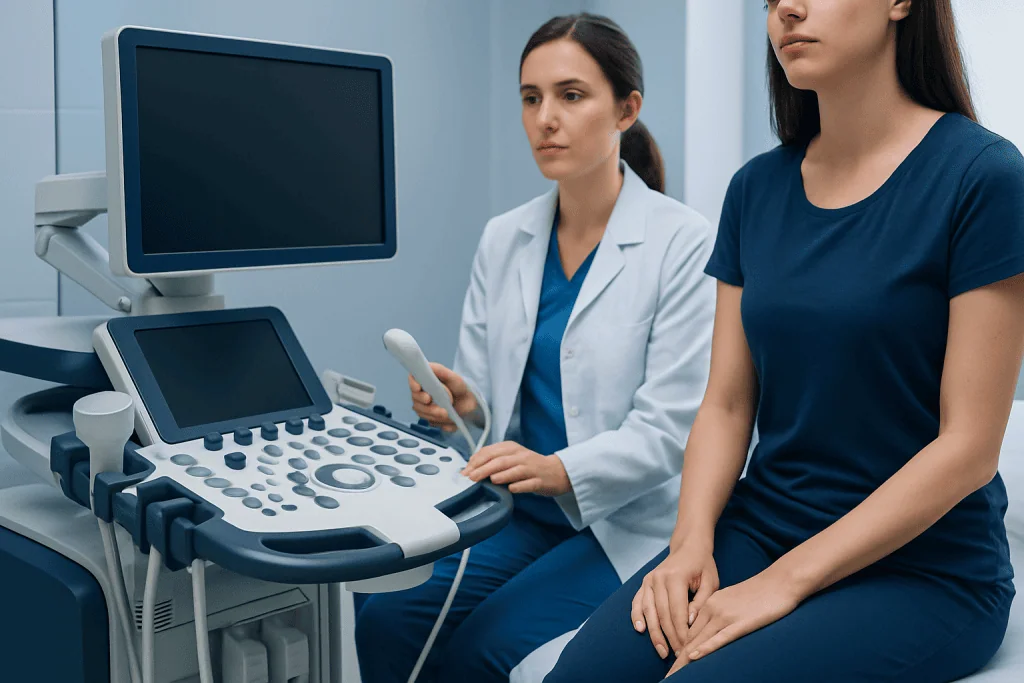
Pelvic ultrasound may be recommended if the history suggests structural or ovarian causes, or if periods are persistently irregular. In some situations, clinicians may suggest a gynecology check-up to review menstrual patterns, discuss contraception, and investigate symptoms in a structured way.
The goal is not only to explain a single late period, but also to understand whether the pattern is part of a short-term variation or a sign of an underlying condition. When diagnosis is uncertain, follow-up over time can be just as important as one set of test results.
Treatment Options and What to Do Next
Treatment depends entirely on the cause. If the delay reflects normal cycle variation, no treatment may be needed beyond monitoring. If pregnancy is confirmed, the next steps may include routine obstetric care and early prenatal guidance. If stress, low energy intake, or excessive exercise is affecting ovulation, restoring balance in daily habits may help cycles return.
When an underlying condition is found, treatment focuses on that condition. PCOS management may involve lifestyle measures, cycle regulation, or fertility planning depending on symptoms and personal goals. Thyroid disease, high prolactin, and other hormone disorders may improve once properly treated. If contraception is contributing to irregular bleeding, a clinician can review alternatives.
For people trying to conceive and having very unpredictable cycles, ovulation assessment and fertility evaluation may be helpful. In selected cases, doctors may discuss options such as fertility treatment or other ovulation-support approaches, depending on the diagnosis and the couple’s circumstances.
If a late period comes with heavy bleeding or pelvic symptoms, care may include ultrasound, hormone management, or treatment of specific gynecologic causes. International patients seeking coordinated evaluation may wish to know that Acibadem International’s multidisciplinary specialists in JCI-accredited hospitals diagnose and treat menstrual and reproductive health conditions, including access to obstetrics and gynecology care when needed.
Prevention, Self-Care, and Cycle Tracking
Not every late period can be prevented, but healthy routines support regular ovulation for many people. Consistent sleep, balanced nutrition, steady physical activity, and stress management can all help stabilize cycles. Avoiding rapid weight changes and seeking support for disordered eating are especially important because inadequate energy intake can stop periods altogether.
Cycle tracking is one of the simplest and most useful self-care tools. Recording period dates, flow, cramps, premenstrual symptoms, and possible ovulation signs can help identify patterns. Tracking also makes medical appointments more productive because it gives the clinician a clearer picture of what has changed.
People using hormonal contraception should remember that some methods can make periods lighter, irregular, or absent. This can be expected with certain pills, injections, implants, and intrauterine systems. A doctor or pharmacist can explain what bleeding changes are typical for a specific method.
Self-care is helpful, but it should not replace medical advice when warning signs are present. Ongoing missed periods, especially when not explained by pregnancy, breastfeeding, or menopause, should be discussed with a qualified clinician.
When to Seek Medical Care
Medical care is advisable if a period is repeatedly late, if three or more periods are missed, or if cycles suddenly become very different from the usual pattern. A person should also seek review if they think they might be pregnant, especially if there is pain, bleeding, or uncertainty about next steps.
Urgent assessment is important for severe lower abdominal pain, fainting, shoulder pain, heavy bleeding, fever, or dizziness. These symptoms may indicate a condition that needs prompt medical attention and should not be monitored at home without guidance.
It is also wise to make an appointment if late periods come with acne, excess hair growth, nipple discharge, headaches, visual changes, hot flashes at a younger age, or unexplained weight change. These clues can point to hormonal causes that deserve evaluation.
Anyone who is trying to get pregnant and has irregular or absent periods should discuss this with a doctor sooner rather than later. Earlier assessment can help identify ovulation problems and guide appropriate care.
Frequently asked questions
How many days late can a period be before it is concerning?
A few days of variation can be normal, especially if cycles are not perfectly regular. It becomes more concerning when a period is much later than usual, completely missed, or when delays happen repeatedly. The need for evaluation depends on the person’s normal pattern, pregnancy possibility, age, and symptoms.
Can stress really make a period late?
Yes. Stress can affect the brain signals that help control ovulation, which can delay a period or sometimes cause it to be skipped. This effect may be more likely during major life events, poor sleep, illness, or emotional strain.
Should a pregnancy test be taken right away if a period is late?
If there has been vaginal sex and pregnancy is possible, a home pregnancy test is often a sensible first step. Testing is usually more reliable after the expected period date has passed. If the test is negative but the period still does not come, repeating the test later or speaking with a doctor may be appropriate.
Can birth control make periods late or stop them?
Yes. Many hormonal contraceptives can change bleeding patterns, especially in the first months of use. Some methods make periods lighter, less frequent, or absent, which can be expected rather than harmful, but any unexpected change should still be discussed if there is concern.
Is it normal to have irregular periods as a teenager or near menopause?
Irregular cycles are common in the first few years after periods begin because ovulation may not happen consistently. Cycles may also become less predictable in the years leading up to menopause. Even so, very heavy bleeding, severe pain, or prolonged absence of periods should still be assessed.
What conditions besides pregnancy can cause missed periods?
Common causes include stress, weight loss or gain, intense exercise, PCOS, thyroid disease, high prolactin levels, some medications, breastfeeding, and perimenopause. Less commonly, chronic illness or problems affecting the ovaries or hormone-regulating parts of the brain may be involved. A doctor can help narrow down the cause based on symptoms and testing.
References
- American College of Obstetricians and Gynecologists
- Office on Women's Health
- National Institute of Child Health and Human Development
- National Health Service
- World Health Organization
This article is for general information only and is not a substitute for professional medical advice. Please consult a qualified doctor about your individual situation.
Explore treatments in Turkey — costs, top hospitals & a free quote
JCI-accredited · board-certified surgeons · reply within 24h
Add us as a Preferred Source to see more of our trusted health content across Google Search, AI Overviews and Discover.
Check your numbers in seconds
BMI, calories, due date, blood pressure and 30+ more clinical calculators — free, instant, doctor-reviewed ranges.

More from the Health Library



Related Specialists

Dr. Ayşenur Şam Sarı
Dermatology
Dr. Haluk Caneroğlu
Neurology
Prof. Dr. Ayşe Sarioğlu
Pediatric Cardiology
İlayda Kurtuluş
Physical Medicine & Rehabilitation