Woods Lamp: What Patients Need to Know
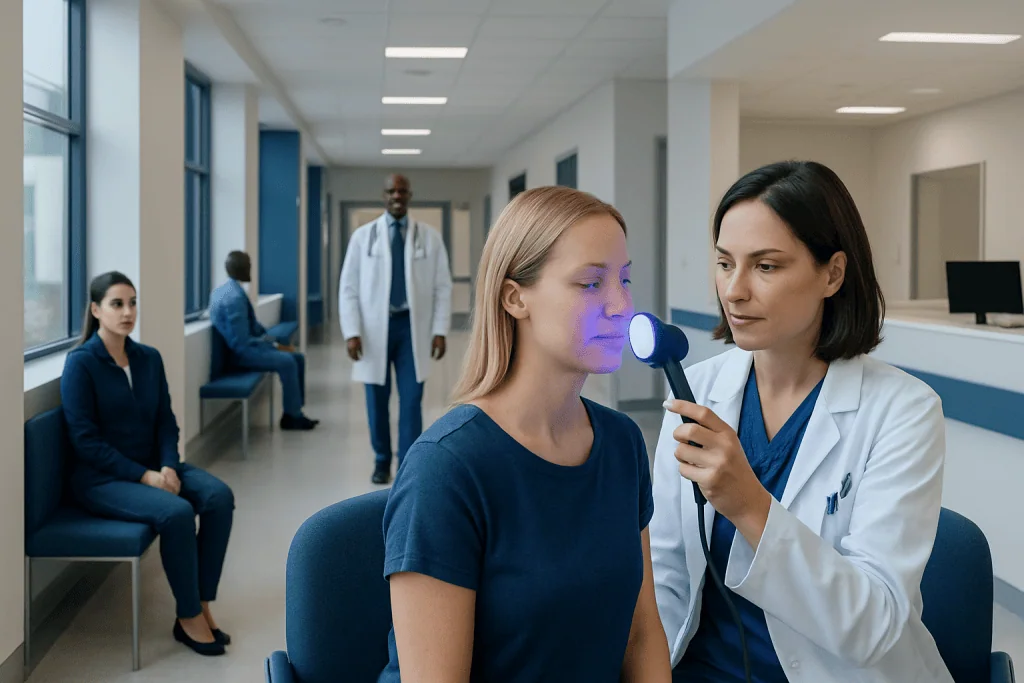
A woods lamp helps clinicians examine skin, scalp, and nails using ultraviolet light in a darkened room. It can support the diagnosis of some pigment disorders, fungal infections, and bacterial skin conditions.
Key Takeaways
- A woods lamp helps clinicians examine skin, scalp, and nails using ultraviolet light in a darkened room.
- It can support the diagnosis of some pigment disorders, fungal infections, and bacterial skin conditions.
- The test is painless, quick, and noninvasive, but it does not confirm every diagnosis on its own.
- Results can be affected by skin products, recent washing, medications, and lighting conditions.
- Persistent rashes, color changes, itching, hair loss, or unclear skin patches should be assessed by a qualified doctor.
A woods lamp is a handheld ultraviolet light used during a skin examination to highlight certain pigment changes, infections, and scalp or nail findings that may be hard to see in ordinary light. It is a quick, noninvasive test that helps guide diagnosis, but it usually needs to be interpreted together with the medical history, physical exam, and sometimes other tests.
What is a woods lamp?
A woods lamp is a small device that emits ultraviolet light, usually in the UVA range, to help a clinician examine the skin, scalp, hair, or nails. In a darkened room, this light can make some changes more visible than they are under regular room lighting. The test is commonly used in dermatology and general clinical practice as part of a broader skin assessment.
For patients, the woods lamp exam is usually simple and painless. The clinician holds the lamp close to the area being examined and looks for differences in color, brightness, or fluorescence. These findings may suggest changes in skin pigment, the presence of certain microorganisms, or subtle inflammation.
It is important to know that a woods lamp is a screening and examination tool, not a final diagnosis by itself. Many skin conditions do not glow under the light, and some normal or harmless substances on the skin can affect what is seen. For that reason, doctors use woods lamp findings together with symptoms, medical history, and other tests when needed.
How a woods lamp helps during a skin exam
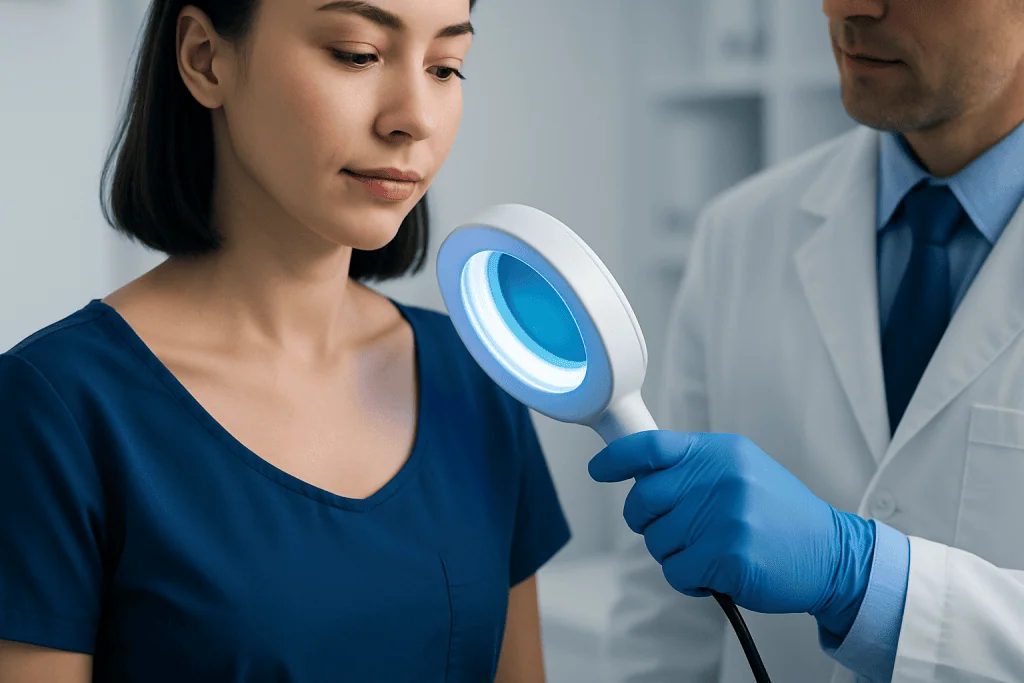
The main value of a woods lamp is that it can reveal patterns that are difficult to detect in ordinary light. Some pigment changes become more sharply defined, which can help a doctor understand whether a patch is due to reduced pigment, increased pigment, or another skin process. This may be useful when evaluating conditions such as vitiligo or certain post-inflammatory color changes.
A woods lamp can also support the assessment of some infections. Certain fungal organisms and some bacteria may produce characteristic fluorescence under ultraviolet light, although this is not true for every infection. If an abnormal glow is seen, the doctor may decide to confirm the finding with a skin scraping, culture, or other laboratory tests.
In scalp and hair concerns, a woods lamp may help distinguish different causes of scaling or patchy hair loss. It can also be used to examine nails or identify residue from topical products. In many cases, the lamp is one step in a larger dermatology evaluation that may include dermatology assessment and, if needed, additional testing.
What conditions can a woods lamp suggest?
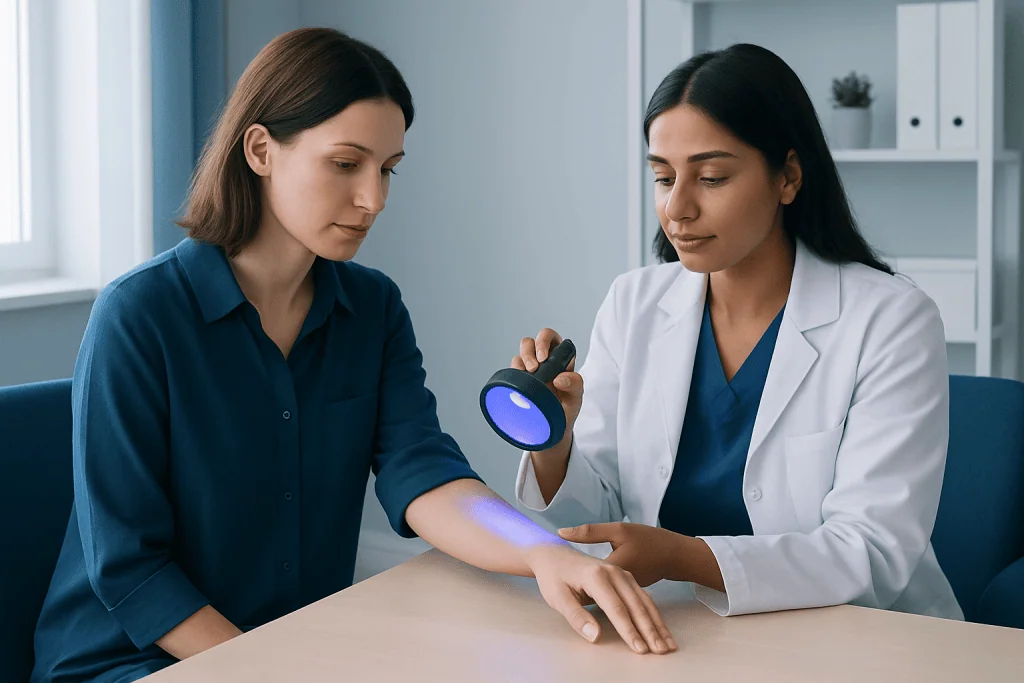
A woods lamp may be used when a clinician is considering a range of skin, hair, or nail conditions. It can help outline depigmented patches more clearly in vitiligo, show accentuation of some pigment disorders, and support the evaluation of certain superficial infections. The exact appearance varies by condition, skin tone, and the device being used.
Examples of conditions where a woods lamp may be helpful include:
- Depigmenting conditions such as vitiligo
- Some fungal infections of the skin or scalp, including selected cases of ringworm
- Certain bacterial infections, such as erythrasma
- Pigment changes after inflammation, irritation, or injury
- Some scalp and hair disorders
- Occasionally, evaluation of oily skin, porphyrin-related fluorescence, or product residue
Even so, many common skin concerns do not produce a specific woods lamp pattern. For example, eczema, psoriasis, acne, and dermatitis are often diagnosed mainly by clinical examination rather than by fluorescence alone. If a rash is persistent or unclear, a doctor may combine the woods lamp exam with other tools, including skin biopsy when appropriate.
What to expect during the test
A woods lamp examination is usually done in an outpatient clinic or dermatology office. The room is darkened so the ultraviolet light can be seen more clearly. The doctor may ask the patient to remove makeup, sunscreen, deodorant, creams, or other products from the area if possible, because these can change the appearance of the skin under the lamp.
The lamp is then held close to the skin, scalp, or nails for a short time. The patient does not usually feel pain, heat, or stinging. The examination often takes only a few minutes, depending on how many areas need to be checked. Protective measures may be used according to the device and clinical setting, especially when examining near the eyes.
After the exam, the clinician explains what was observed and whether further evaluation is needed. A normal or unclear woods lamp result does not automatically rule out disease. If symptoms continue, more detailed evaluation may include microscopy, culture, blood tests, or imaging when the clinical picture suggests another underlying issue.
How doctors interpret woods lamp results
Doctors look for patterns such as accentuated borders, color contrast, or fluorescence. In some pigment disorders, affected areas may appear brighter or more sharply demarcated under the lamp. In some infections, there may be a distinct glow in a particular shade, although these patterns are not perfectly specific and can overlap.
Interpretation depends on the whole clinical context. Skin tone matters, because pigment contrast can appear different from one patient to another. The recent use of soaps, lotions, lint, detergents, and even fluorescent fibers from clothing can also affect the findings. A clinician with skin expertise is best placed to decide whether the result is meaningful.
When the result raises suspicion of a fungal infection, the doctor may recommend direct microscopy or culture. If a pigment disorder is suspected, the woods lamp may help map the involved area and guide treatment planning. In more complex cases, patients may be referred for specialist dermatology care or for procedures such as allergy testing if contact triggers are part of the differential diagnosis.
Limits of the test and why follow-up may be needed
Although useful, a woods lamp has clear limits. Not every fungus fluoresces, and not every bacterial or pigment condition creates a reliable pattern. A negative woods lamp result does not exclude infection or another skin disorder. This is one reason clinicians avoid relying on the lamp alone.
False positives can happen when the skin has residue from cosmetics, perfumes, soaps, ointments, or laundry products. Recent bathing, shaving, tanning, or treatment of the skin may also influence the result. In some cases, a condition may look different depending on how active it is at the time of the examination.
Because of these limitations, follow-up is common when the diagnosis remains uncertain. A doctor may advise monitoring the area, taking photographs over time, repeating the exam, or ordering confirmatory testing. Care is tailored to the likely cause rather than to the woods lamp result by itself.
Care after the exam and general skin self-care
There is usually no recovery time after a woods lamp exam. Patients can typically return to normal activities right away unless another procedure is performed the same day. If a clinician has asked for creams or cosmetic products to be removed before the test, gentle cleansing and moisturization afterward are usually enough.
Ongoing self-care depends on the reason the test was done. For unexplained rashes or pigment changes, it is helpful to avoid harsh scrubbing, fragranced products, and new over-the-counter treatments until a clear diagnosis is made. Taking note of when the change started, whether it itches or spreads, and whether any family members have similar symptoms can help at follow-up visits.
Protecting the skin from irritation and excess sun exposure is also sensible, especially for areas with color change. Patients should use medications only as advised by a qualified clinician, because steroid creams, antifungals, bleaching agents, or home remedies may worsen some conditions if the diagnosis is incorrect.
When to seek medical care
Medical assessment is appropriate if a skin patch is spreading, painful, itchy, bleeding, infected-looking, or changing quickly in color or shape. Care should also be sought for persistent dandruff-like scaling, patchy hair loss, recurrent rashes, nail discoloration, or skin changes that do not improve with simple measures. Children, people with weakened immune systems, and those with chronic skin disease may need earlier evaluation.
Urgent medical advice is important if a rash is accompanied by fever, facial swelling, breathing difficulty, widespread blistering, or signs of severe infection. These symptoms can indicate a problem that needs prompt treatment rather than routine outpatient review.
If specialist evaluation is needed, Acibadem International’s multidisciplinary specialists and JCI-accredited hospitals diagnose and treat skin and pigment conditions for international patients. When a woods lamp exam suggests a defined disorder, follow-up may involve care for related conditions such as psoriasis or a focused plan for skin cancer assessment when a lesion looks suspicious under standard examination.
Frequently asked questions
What is a woods lamp used for?
A woods lamp is used to examine the skin, scalp, hair, and nails under ultraviolet light. It can help doctors detect some pigment changes, fungal infections, and bacterial skin conditions that may be less visible in normal light.
Is a woods lamp examination painful?
No. A woods lamp exam is usually painless, noninvasive, and very quick. Most patients simply sit or lie still while the clinician looks at the area in a darkened room.
Can a woods lamp diagnose vitiligo?
A woods lamp can support the diagnosis of vitiligo by making depigmented patches appear more clearly defined. However, the final diagnosis is still based on the doctor’s examination, medical history, and sometimes other tests.
Does every fungal infection glow under a woods lamp?
No. Some fungal infections do not fluoresce at all, so a normal woods lamp result does not rule them out. If infection is still suspected, the doctor may recommend a scraping, microscopy, or culture.
How should a patient prepare for a woods lamp test?
It is generally best to avoid applying makeup, creams, deodorants, sunscreen, or topical medicines to the area unless a doctor has said otherwise. These products can sometimes alter the appearance of the skin under ultraviolet light.
Are woods lamp results always accurate?
No single exam is perfect, and woods lamp findings must be interpreted carefully. Skin tone, room lighting, recent skin products, and the specific condition being assessed can all affect the result.
References
- American Academy of Dermatology
- British Association of Dermatologists
- DermNet
- Merck Manual Professional Edition
- Mayo Clinic
This article is for general information only and is not a substitute for professional medical advice. Please consult a qualified doctor about your individual situation.
Hair transplant in Turkey — costs, graft counts & a free assessment
JCI-accredited · board-certified surgeons · reply within 24h
Add us as a Preferred Source to see more of our trusted health content across Google Search, AI Overviews and Discover.

More from the Health Library

Baby Oil — Explained by Medical Evidence, Not Myths
Whole Wheat Bread Fat Loss: What Patients Need to Know
Lemon Balm: What Patients Need to Know
Diy Home Humidifier — Explained by Medical Evidence, Not Myths

Quinoa Plant: What Patients Need to Know