Zepbound Storage — Explained by Medical Evidence, Not Myths

Store Zepbound in a refrigerator at 36°F to 46°F (2°C to 8°C) whenever possible. Keep the medicine in its original carton to protect it from light.
Key Takeaways
- Store Zepbound in a refrigerator at 36°F to 46°F (2°C to 8°C) whenever possible.
- Keep the medicine in its original carton to protect it from light.
- Zepbound may be kept at temperatures up to 86°F (30°C) for no more than 21 days when necessary.
- Do not freeze Zepbound, use it if it has been frozen, or leave it in a hot car or direct sunlight.
- A pen or vial that has been kept at room temperature for 21 days should be discarded, even if it looks unchanged.
Zepbound should normally be kept in a refrigerator at 36°F to 46°F (2°C to 8°C), protected from light and stored in its original carton. When refrigeration is not available, a single-dose pen or vial may be kept at room temperature up to 86°F (30°C) for up to 21 days; it should not be frozen or exposed to excessive heat.
Zepbound Storage: The Evidence-Based Basics
Zepbound storage is straightforward: keep the medicine refrigerated at 36°F to 46°F (2°C to 8°C), in its original carton, until it is needed. The carton helps shield the medicine from light, while refrigeration helps maintain its intended stability. Zepbound is a prescription medicine containing tirzepatide and is supplied as a single-dose injection device or vial, depending on the prescribed presentation.
If refrigeration is temporarily unavailable, Zepbound can be kept at room temperature up to 86°F (30°C) for a maximum of 21 days. This allowance can be useful during travel, a power interruption, or short periods away from home. It is important to track the date it was first removed from refrigeration so that it can be discarded after 21 days if not used.
Zepbound should never be frozen. It should also be protected from heat, direct sunlight, and temperatures above 86°F (30°C). Storage instructions on the pharmacy label and the product’s current prescribing information should always take priority, as packaging and local instructions may vary.
Why Temperature and Light Matter
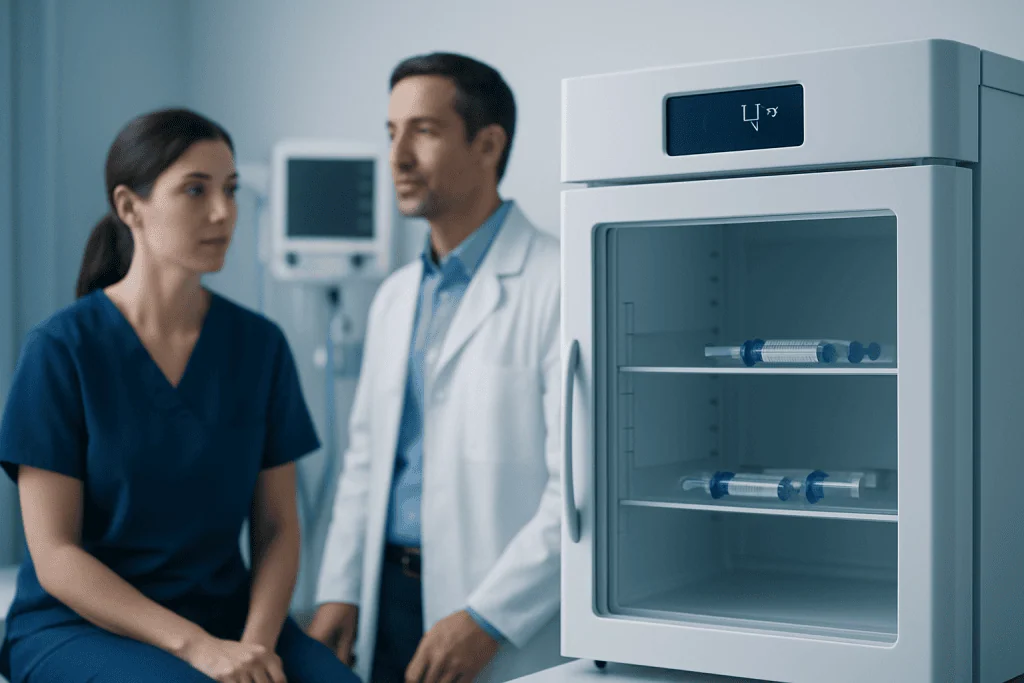
Like many injectable medicines, tirzepatide is a biologic-type medication whose stability can be affected by unsuitable storage conditions. Excessive heat, freezing, and prolonged light exposure may alter the medicine in ways that are not always visible. A pen or vial may appear normal even when it has been exposed to conditions outside its recommended range.
Freezing is particularly important to avoid. Do not use Zepbound if it has frozen, even if it later thaws. Likewise, the medicine should not be placed against the refrigerator’s cooling element, in a freezer compartment, or in any location where temperatures may fluctuate widely.
For best protection, store the carton in the main section of the refrigerator rather than in the door. Refrigerator doors are opened frequently and may have more variable temperatures. A refrigerator thermometer can be helpful when there is uncertainty about whether the appliance maintains an appropriate temperature.
Room-Temperature Storage and the 21-Day Limit

Zepbound may be stored unrefrigerated at temperatures not exceeding 86°F (30°C) for up to 21 days. This is a total time limit for room-temperature storage. Once the medicine has been left out of refrigeration, the date should be written on the carton or recorded in a phone reminder or calendar.
After 21 days at room temperature, the unused pen or vial should be discarded. It should not be returned to the refrigerator to restart or extend the 21-day period. Refrigerating it again does not reverse the time spent at room temperature.
Room temperature does not mean any location inside or outside the home. Cars, luggage compartments, window ledges, bathrooms, and areas near radiators or kitchen appliances can become much warmer than the surrounding room. During warm weather, an insulated bag may be useful for transport, but the medicine should not touch ice packs directly because this could freeze it.
- Use a cool, shaded location away from windows and heat sources.
- Keep the carton closed until the injection is needed.
- Do not leave Zepbound in checked luggage, where temperatures may be difficult to control.
- If uncertain how long the medicine was warm or whether it exceeded 86°F (30°C), ask a pharmacist before using it.
Travel, Power Outages, and Everyday Handling
When travelling, Zepbound should remain in its original carton and be carried in hand luggage whenever possible. Hand luggage is easier to monitor and avoids potential exposure to extreme temperatures in aircraft cargo areas or unattended vehicles. A small insulated medication travel case can help reduce temperature changes, especially during transfers or long journeys.
Cooling packs can be used carefully, but they should not be placed directly against the pen or vial. A barrier such as a cloth, and separation within the case, can reduce the risk of freezing. People travelling across time zones can generally continue to follow their prescribing clinician’s plan for weekly dosing; questions about changing an injection day should be directed to the prescriber or pharmacist.
During a power outage, keeping the refrigerator door closed can help preserve the internal temperature. If the medicine remains within the refrigerated range, it can continue to be stored there. If it reaches room temperature but stays at or below 86°F (30°C), begin counting the 21-day room-temperature period. If it has been exposed to higher temperatures, frozen, or exposed to uncertain conditions, seek advice from a pharmacist.
Before injecting, inspect the medicine through the device or vial as directed in the product instructions. It should be clear and colorless to slightly yellow, without visible particles. Do not use a product that looks cloudy, discolored, or contains particles, and do not try to judge safety by appearance alone after a temperature excursion.
Safe Storage at Home
A dedicated area in the main refrigerator compartment can make Zepbound storage easier to manage. The medicine should be kept out of reach of children and pets and away from food spills, raw foods, or areas where the carton could become wet or damaged. Keeping it inside the carton also reduces the chance of accidentally using the wrong medication.
Do not share Zepbound pens or needles with anyone, even if the needle is changed. Sharing injection devices can transmit blood-borne infections. Each pen or vial should be used only as prescribed, and needles should be placed immediately into an approved sharps container after use.
If a dose is not used as planned, storage rules still apply. A missed dose should not lead to doubling doses or using a product that may have been stored incorrectly. The prescribing team can explain how to manage a missed weekly injection safely.
Because Zepbound is used for chronic weight management in appropriate adults, safe medicine handling is one part of a wider care plan. Medical assessment may also identify related concerns such as obesity and metabolic health factors that benefit from individualized follow-up.
What to Do If Zepbound Was Stored Incorrectly
Do not use Zepbound if it has been frozen, if it has been exposed to heat above 86°F (30°C), or if it has remained at room temperature for more than 21 days. It should also not be used if there is no reliable way to determine whether these limits were exceeded. Contacting a pharmacist is often the quickest way to receive practical guidance about a specific storage event.
Examples of potentially unsuitable exposure include leaving the medicine in a parked car, placing it directly on an ice pack, keeping it in direct sun, or finding it in a refrigerator that has accidentally frozen food. If a refrigerator malfunction is suspected, the medicine should be moved to an appropriate location while advice is obtained.
Unused or unsuitable pens and vials should not be thrown loosely into household waste. Local rules for medicine disposal and sharps disposal differ. A pharmacist can advise on approved take-back options and how to dispose of used injection equipment safely.
When to Seek Medical Care
Storage concerns alone usually do not require emergency care, but a pharmacist or prescribing clinician should be contacted promptly if Zepbound may have frozen, overheated, or exceeded its room-temperature limit. They can advise whether a replacement is needed and help prevent an interruption in treatment.
Urgent medical assessment is appropriate for symptoms that may represent a serious medicine-related reaction, including severe or persistent abdominal pain, repeated vomiting with inability to keep fluids down, symptoms of a severe allergic reaction such as swelling of the face or throat, trouble breathing, or fainting. These symptoms should not be managed by simply adjusting or stopping medicine storage at home.
People using Zepbound should also seek medical advice for concerning side effects, major changes in health, pregnancy planning, or questions about other medicines. Weight-management care may include nutrition, physical activity, behavioral support, and, when appropriate, bariatric surgery assessment rather than medication alone.
Acibadem International’s multidisciplinary specialists and JCI-accredited hospitals support international patients who need evaluation and treatment planning for weight-related health concerns. A qualified clinician can provide advice tailored to the person’s medical history, prescribed product, and travel circumstances.
Frequently asked questions
Does Zepbound need to be refrigerated?
Yes. Zepbound should normally be stored in a refrigerator at 36°F to 46°F (2°C to 8°C). Keep it in its original carton to protect it from light and avoid placing it where it could freeze.
How long can Zepbound stay out of the refrigerator?
Zepbound can be kept at room temperature up to 86°F (30°C) for up to 21 days. After 21 days, it should be discarded if unused, even if it looks normal. Returning it to the refrigerator does not extend this time limit.
Can Zepbound be stored in the refrigerator door?
It is generally better to store Zepbound in the main part of the refrigerator rather than the door. The door may experience more frequent temperature changes when the refrigerator is opened. Keep the carton away from cooling vents or surfaces that could freeze the medicine.
What happens if Zepbound freezes?
Zepbound should not be used if it has been frozen, even if it has thawed afterward. Freezing can affect medicine stability in ways that may not be visible. A pharmacist or prescribing clinician can advise about obtaining a replacement.
Can Zepbound be taken on a plane?
Yes, it can usually be carried in hand luggage in its original carton. An insulated travel case can help protect it from heat, but avoid direct contact with ice packs. Carrying it with you makes it easier to monitor temperature and reduces the risk of loss or extreme temperature exposure.
Can I use Zepbound if it was left in a hot car?
It should not be used if it may have been exposed to temperatures above 86°F (30°C). Vehicles can heat rapidly, including on mild days, so the actual exposure may be difficult to estimate. Ask a pharmacist for guidance rather than relying on the medicine’s appearance.
This article is for general information only and is not a substitute for professional medical advice. Please consult a qualified doctor about your individual situation.
Explore treatments in Turkey — costs, top hospitals & a free quote
JCI-accredited · board-certified surgeons · reply within 24h
Add us as a Preferred Source to see more of our trusted health content across Google Search, AI Overviews and Discover.

More from the Health Library

Hypertelorism: An Evidence-Based Guide for Patients

Jute Leaves: What Patients Need to Know

Zinc Deficiency: An Evidence-Based Guide for Patients

Artificial Heart: What Patients Need to Know

Shilajit: An Evidence-Based Guide for Patients