

Acibadem Hospital Locations in Turkey: How to Choose the Right Campus

The right Acibadem campus in Turkey depends on four things: what your treatment actually involves, which specialist team fits your case, how you will travel there and back, and how long you will stay. Istanbul is often practical because of flight connections, but the network extends to other major Turkish cities, and campus allocation normally follows a review of your medical records rather than the map.
You are trying to work out which Acibadem hospital in Turkey is right for you, before you book a single flight. It is one of the first questions most international patients ask, and it rarely has a one-line answer.
The honest reason is that four different things decide it: what your treatment involves, which specialist team fits your case, how convenient the travel is, and what kind of support you need around your stay. Those four things do not always point to the same campus. A hospital that suits a two-day consultation perfectly can be an awkward base for a three-week treatment plan, and the city with the best flights is not automatically the city with the best fit for your condition.
This guide walks through how the decision actually works, what to weigh, and what to prepare, so you can plan with fewer surprises.
At a glance
- Best for: International patients comparing Acibadem hospital locations in Turkey before travelling
- Main decision factors: Treatment type, specialist team, city and airport access, expected length of stay
- How allocation works: A records review usually comes first; the campus follows the case, not the other way round
- Key cities: Istanbul plus several other major Turkish cities within the Acibadem network
- What to prepare: Recent medical records and imaging, passport details, travel dates, companion plans
How to think about hospital locations in Turkey
When people search for hospital locations in Turkey, most results are directories: long lists of names, cities and departments. Lists are a starting point, but they answer the wrong question. The useful question is not “which hospitals exist?” but “which campus matches my case, my travel route and my stay?” — and no directory can answer that for you.
Turkey has an extensive healthcare system made up of public hospitals, university hospitals and private groups, and the private sector is where most international patients are treated. Acibadem is one of those private groups, operating a network of hospitals and outpatient clinics across the country. Within a network like this, campuses are not interchangeable. They differ in the specialties they concentrate, the equipment they house, the teams based there, and simple things such as how far they sit from an airport.
That last point matters more than it sounds. International care is never only the treatment itself. It is also coordination, communication, scheduling, and the practical reality of getting yourself — often tired, sometimes in pain — between an airport, a hotel and a hospital, possibly several times. A campus choice that ignores those realities tends to make a manageable trip harder than it needed to be.
The rest of this guide takes each factor in turn: your clinical pathway first, then the city, then the daily logistics, then the length of your stay. If you work through them in that order, the shortlist usually narrows itself.
Start with your treatment needs, not just the map
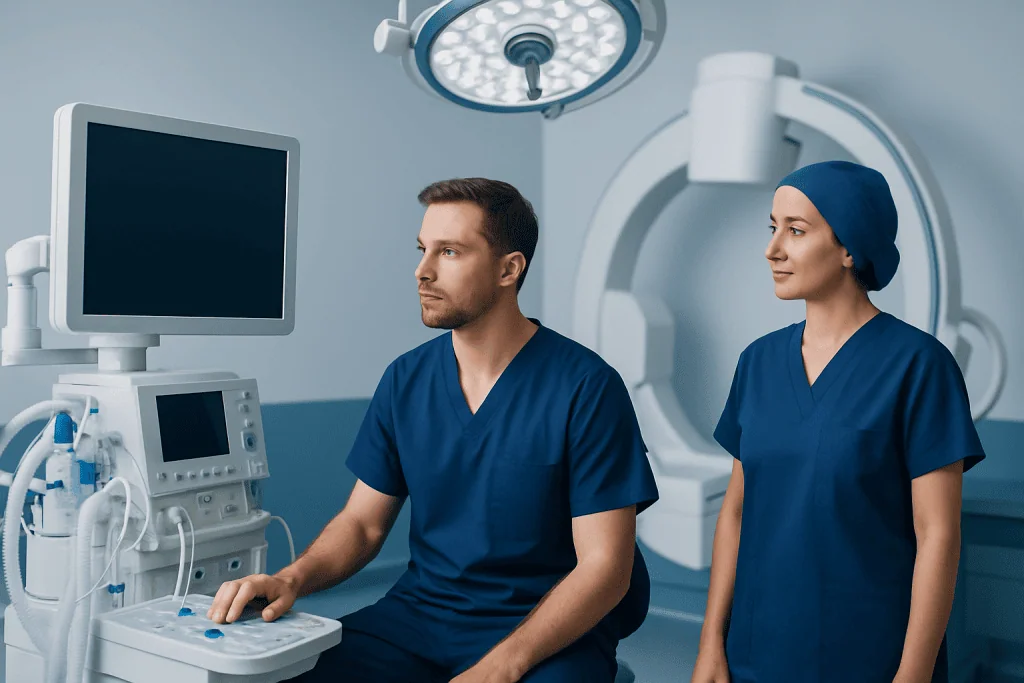
The fastest way to narrow your options is to be precise about what you are travelling for. A single outpatient consultation, a diagnostic workup, a planned operation with several nights in hospital, and a longer treatment course with repeated visits are four very different journeys, and each rewards a different kind of campus. It also helps to understand early on whether your care is likely to be inpatient or outpatient, because that single distinction changes almost every practical decision that follows.
If your care involves multiple specialties — oncology with imaging, pathology and surgical planning, for example — the priority is usually a campus where those teams work together and where tests, consultations and treatment planning can be grouped rather than scattered. For complex cancer care in particular, coordination across departments matters as much as any single facility, which is why choosing a hospital for cancer treatment deserves its own careful thought.
If your visit is short and focused, the calculation flips: speed, straightforward scheduling and easy access from your hotel or the airport matter more than breadth of departments.
In practice, you do not make this match alone. Campus allocation at Acibadem normally follows a review of your recent reports, imaging and medication list by the international patient team, so that the location is chosen around the case rather than the case squeezed into a location. That review is the reason it is usually unwise to book flights around a specific campus before your records have been looked at.
- Establish whether you need one specialty or several
- Consider how many appointments your plan is likely to involve
- Ask whether tests and consultations can be grouped into fewer days
- Find out whether an expected recovery period affects where you should stay
Why Istanbul is often the first choice for international patients

Most international patients look at Istanbul first, and for sensible reasons. It is a major air hub with direct flights from a large number of countries, it offers accommodation at every level, and several Acibadem campuses sit within the city. If you want flexible flight options and the convenience of a well-connected base, Istanbul usually makes practical sense.
Istanbul is also large enough that “Istanbul” is not one answer. The city has two airports on opposite sides, heavy traffic at predictable hours, and campuses in quite different districts. Choosing between them is its own decision, covered in detail in our guide to choosing the right Acibadem campus in Istanbul. The short version: match the campus to the airport you will actually use and to the district where you can realistically stay.
That said, not every patient should default to Istanbul. The Acibadem network includes campuses in several other major Turkish cities, and depending on the service you need, scheduling availability, or a preference for a quieter environment after treatment, another location can be the better fit. Availability of specific services genuinely varies by campus, which is another reason the records review comes before the city choice.
If you are leaning towards Istanbul, weigh the full picture: transfer time from your arrival airport, traffic at your likely appointment hours, how often you will need to reach the hospital, and whether your companion needs shops, restaurants or somewhere to work remotely nearby. For a short consultation, city convenience may decide it. For a longer journey, daily comfort counts for at least as much.
Common questions about hospitals in Turkey, answered plainly
A few questions come up again and again from patients researching Turkish hospitals for the first time. They deserve straight answers.
What are the top hospitals in Turkey?
There is no single official ranking, and lists published online usually reflect the commercial interests of whoever wrote them. Large private groups, university hospitals and specialist centres each lead in different areas. The more useful question is which hospital — and which specific campus and team — fits your condition, your timeline and your travel plans. A hospital that tops someone’s list for cardiac care may be a poor match for your orthopaedic case, and vice versa.
How many hospitals are there in Turkey?
Turkey has an extensive healthcare system spanning public hospitals run by the Ministry of Health, university teaching hospitals, and a large private sector. The exact count changes year to year as facilities open, merge and expand, so any fixed number goes out of date quickly. What matters for planning is not the national total but the handful of campuses relevant to your case.
Is there an American hospital in Turkey?
Yes — “American Hospital” is the name of a well-known private hospital in Istanbul, and the phrase appears often in searches. It is a separate institution and not part of the Acibadem network. If you have seen the name and wondered whether it refers to a category of hospital or a US-run system, it does not; it is simply one hospital’s name.
Can foreigners go to hospital in Turkey?
Yes. Foreign nationals can be treated in Turkish hospitals, and private hospitals in particular receive international patients routinely, with international patient departments set up for exactly this. You will normally need your passport for registration, and travel health insurance is strongly advisable for any trip. Your rights as a patient are protected in Turkey regardless of nationality — our guide to patient rights in Turkey for international patients explains what those protections cover.
Practical campus questions that make your trip easier
Once you have a shortlist, the practical details start to dominate. A campus can be clinically ideal, but if the daily journey from your hotel is long and stressful, the whole experience becomes harder than it needs to be — especially if you are in pain, have reduced mobility, or face early-morning appointment slots.
Walk through the journey mentally, from arrival to discharge. How far is the campus from the airport you will actually use? Will one hotel serve the whole trip, or do you need a different arrangement before and after treatment? If a family member is travelling with you, is the surrounding area workable for them too? The neighbourhood around a hospital shapes a surprising amount of your day, which is why it is worth reading about how to choose the right area to stay near the hospital before you commit to accommodation.
International patient support at Acibadem covers much of this ground before arrival — interpreter coordination, guidance on hospital arrival and registration, and practical help with travel and accommodation planning — which is a considerable advantage when you are organising everything from another country.
- Distance from your arrival airport and realistic transfer time
- Traffic patterns at your likely appointment hours
- Nearby hotel or serviced-apartment options at your budget level
- Ease of return visits for scans, dressings or reviews
- Companion comfort: food, pharmacies, somewhere to wait or work
One more practical note: large hospital campuses can be disorienting on a first visit, particularly in another language. Knowing what to expect at reception, registration and between departments removes a layer of stress, so ask your coordination contact to walk you through the arrival steps before your first appointment.
How your stay length changes the best campus choice
The right location for a two-day visit may be the wrong one for a two-week stay. The table below is a rough guide to how priorities shift.
| Factor | Short visit (consultation, check-up) | Longer stay (surgery, treatment course) |
|---|---|---|
| Airport access | Critical — often the deciding factor | Matters on two days only: arrival and departure |
| Hotel-to-hospital distance | Convenient but forgiving | Central — repeated transfers drain limited energy |
| Neighbourhood services | Minor | Important for you and essential for a companion |
| Grouped scheduling | Very important — the trip depends on it | Helpful, but there is more slack in the calendar |
| Follow-up access | Rarely relevant during the trip | Blood tests, imaging, wound checks and physiotherapy may all need repeat visits |
For a quick check-up or second opinion, a campus with straightforward access and efficient scheduling is usually enough; the surrounding area barely matters beyond transport and one decent hotel. For longer plans, your day-to-day environment moves to the centre of the decision. You want a campus you can reach repeatedly without exhaustion, and accommodation genuinely suited to recovering rather than sightseeing.
Before you travel, ask what follow-up your plan is likely to involve: blood tests, imaging, dressing changes, physiotherapy, specialist reviews. Knowing this in advance lets you choose a campus and a base that support a calm routine instead of forcing unnecessary journeys across a large city.
What support international patients should look for
Choosing a campus is not only about buildings and departments. For an international patient, the coordination around your care can shape the experience as much as the location itself. If you do not speak Turkish, you should know before you fly how interpretation is arranged and who your main point of contact will be.
Good support runs through the whole journey: records reviewed before arrival, appointments sequenced sensibly, arrival steps explained, discharge planned rather than improvised. When treatment involves several specialties, coordinated communication between them is where a well-run international department earns its keep. Acibadem’s international patient services are built around exactly these needs — hospital and campus selection, scheduling, and the practical logistics of the trip.
It is also reasonable to ask how your medical documents will be handled once shared: who sees them, on what basis, and what consent covers. Turkey has specific rules on this, explained in our guide to medical records privacy in Turkey.
- Interpreter availability in a language you are comfortable in
- A named contact person or coordination team
- Pre-arrival document review
- Help with appointment sequencing and grouping
- Discharge and follow-up guidance before you fly home
A simple way to make your final decision
If you are stuck between two or three hospital locations in Turkey, rank your priorities explicitly rather than circling. For most patients the sensible order is: medical fit first, then availability of the right doctor and team, then travel convenience, then stay comfort, then companion practicalities. Ranking prevents the common mistake of choosing on one attractive detail — a familiar city, a nice-looking district — while overlooking something that matters more.
Ask direct questions before confirming your plan, and expect direct answers. Which campus is best set up for your condition? How many visits are expected? Can imaging, consultations and treatment be coordinated efficiently in one place? What recovery or follow-up should the trip be planned around? Clear answers to those four questions usually make the best option obvious.
Above all, this is not a test you sit alone. Campus selection at Acibadem is a coordinated process, not a guess made from a map, and the practical differences between locations are explained rather than left for you to discover on arrival. When the campus fits both your medical pathway and your travel reality, the whole experience tends to feel calmer and far more manageable.
Step by step
- Define the purpose of your trip. Be specific: consultation, diagnostic workup, surgery, ongoing treatment, or second opinion. This one step shapes which campus is practical and what support you will need.
- Prepare your records for review. Gather recent reports, imaging, a medication list and a short medical summary in digital form. Campus allocation normally follows this review, so having the documents ready keeps everything else on schedule.
- Map your likely visit pattern. Ask how many appointments, tests and follow-ups the plan involves. A campus that suits one visit can be inconvenient across ten.
- Check travel and accommodation logistics. Look at airport access, realistic transfer times, and places to stay for you and any companion. Convenience matters most when energy is lowest.
- Confirm language and coordination support. Establish who will coordinate your schedule and how interpretation is arranged. Knowing your contact before you arrive removes a whole category of stress.
- Plan around recovery, not just treatment. Find out whether rest days, physiotherapy, wound care or further tests are expected afterwards. These details often decide which neighbourhood works best.
- Choose the campus that fits the whole journey. The right answer supports safe care, smooth logistics and a manageable stay — all three, not just one.
Your checklist
- Passport and travel dates ready
- Recent medical reports and imaging available in digital form
- List of current medications and allergies prepared
- Questions about the expected number of visits written down
- Preferred city or airport noted, with backup travel options
- Companion plans confirmed, if someone is travelling with you
- Accommodation preferences listed near the likely campus
- Interpreter or language support needs identified
- Travel health insurance checked before departure
Key takeaways
- The right Acibadem hospital in Turkey depends on your treatment plan, not only the city name.
- Istanbul is often the practical choice for flights and accommodation, but the network extends to other major Turkish cities and availability varies by campus.
- Airport access, traffic, accommodation and follow-up needs strongly shape the experience — more so the longer you stay.
- Interpreters, a named coordination contact and pre-arrival document review are part of the campus decision, not extras.
- Campus allocation normally follows a records review, which is why flights are best booked after the location is confirmed, not before.
Frequently asked questions
How do I choose between different Acibadem hospital locations in Turkey?
Start with your medical need, the expected number of visits and likely recovery requirements. Then compare the practical layer: airport access, hotel options and how easily you can return for follow-up appointments. Ranking medical fit above convenience, and convenience above everything else, resolves most close calls.
What are the top hospitals in Turkey?
There is no official ranking, and online lists usually reflect who wrote them. Large private groups, university hospitals and specialist centres each lead in different fields. The better question is which specific campus and team fit your condition, your timeline and your travel plans.
Can foreigners go to hospital in Turkey?
Yes. Foreign nationals can be treated in Turkish hospitals, and private hospitals receive international patients routinely through dedicated international patient departments. You will normally need your passport for registration, and travel health insurance is strongly advisable for any medical trip abroad.
Is there an American hospital in Turkey?
Yes — “American Hospital” is the name of a well-known private hospital in Istanbul. It is a separate institution and not part of the Acibadem network. The name refers to that one hospital, not to a category of US-run facilities in Turkey.
Are Acibadem hospitals in Istanbul the best option for international patients?
Istanbul is often a strong option because it is well connected for flights and offers accommodation at every level. But the best campus still depends on your specialty needs, scheduling and length of stay — and Istanbul itself contains several campuses in quite different districts, so the city name alone does not settle the question.
Do I need to decide on a campus before my medical documents are reviewed?
No, and it usually works better the other way round. Campus allocation normally follows a review of your records, so the location can be matched to your case and expected treatment pathway rather than chosen from a map first.
Should I stay near the hospital during my treatment in Turkey?
For repeated appointments or a stay involving recovery, usually yes. Staying close reduces travel stress, makes early appointments easier and helps a companion manage the daily routine. For a single short consultation, a well-connected hotel anywhere reasonable is often enough.
What if I need more than one specialty during my visit?
Ask which campus is best set up for multidisciplinary coordination in your particular combination of specialties. Grouping consultations, imaging and treatment planning in one place makes the visit more efficient and considerably less tiring.
Add us as a Preferred Source to see more of our trusted health content across Google Search, AI Overviews and Discover.

Update history
- PublishedJune 22, 2026
- Medical review approvedAugust 31, 2026
- Last content updateAugust 31, 2026
References2
More Patient Guides

Medical Chaperones in Turkey: When Patients Can Request One
Medical chaperones in Turkey can be requested for sensitive exams or when you want added reassurance during care in Istanbul.
8 min read
Medical Interpreter or Family Member: Who Should Help During Appointments in Turkey?
Medical interpreter or family member in Turkey? Use a trained interpreter for clinical communication and keep family involved for support and notes.
8 min read
How to Plan for Prayer, Modesty, and Cultural Needs During Care in Turkey
Prayer, modesty, and cultural care needs in Turkey can be planned in advance by sharing your preferences with your care team and…
8 min read
ICU After Surgery in Turkey: What Patients and Families Should Expect
ICU after surgery in Turkey involves close monitoring, family updates and a planned step-down to recovery when you are stable.
8 min read