

At Acibadem, How We Arrange Remote Follow-Up With Your Local Doctor

Remote follow-up is planned before you leave the hospital. Your treating team prepares a discharge summary, medication list and relevant reports, and the international patient services team helps you organise how these reach your local doctor. Planned online check-ins with your Acibadem team can then run alongside in-person care at home. Remote review supports continuity — it does not replace local examination or urgent care.
What happens once your flight home lands and you are back in your own healthcare system? It is one of the most common questions international patients ask before treatment in Turkey, and it deserves a plain answer rather than a reassuring slogan.
This guide explains how we arrange remote follow-up with your local doctor at Acibadem: what is prepared before discharge, which documents your doctor at home will actually use, how online check-ins work in practice, and where remote care honestly stops. If you understand the process before you travel, the handover back to your own healthcare system becomes far less stressful.
At a glance
- Best for: Patients returning home after treatment who want their local doctor kept properly informed
- Main goal: Clear, organised medical information moving between your Acibadem team and your doctor at home
- Typical tools: Discharge summary, medication list, imaging and laboratory reports, online consultations, email coordination
- Who is involved: Your treating team, international patient services, interpreters where needed, and your local doctor
- When it is arranged: Planned before discharge, then refined once you are home
- Honest limit: Remote follow-up supports planned review and coordination — it cannot replace in-person examination or urgent local care
What remote follow-up with your local doctor means
Remote follow-up with your local doctor means your care does not stop at the airport. After treatment in Turkey, most patients still need something at home: a medication review, a wound check, blood tests, imaging at set intervals, rehabilitation, or simply routine monitoring. Two teams share that work. Your Acibadem specialists know the treatment you received in detail. Your local doctor knows your wider health history and can examine you in person. Remote follow-up is the bridge between the two.
The term overlaps with what many clinics call a telehealth follow-up: a scheduled remote contact — usually a video consultation — where a clinician reviews your progress after treatment rather than assessing a new problem from scratch. In this setting, the review is with the team that treated you, while your local doctor handles anything that needs hands-on assessment.
How we arrange remote follow-up with your local doctor is deliberately front-loaded. The plan is usually made before you leave the hospital, not improvised after a problem appears. Your treating team prepares a discharge summary and the relevant reports; the international patient services team helps explain how the documents can be shared and used; interpreters can go through your instructions with you before you travel so nothing important is lost in translation.
One boundary is worth stating plainly. Remote follow-up is designed for planned reviews, results discussion and coordination. Anything urgent or rapidly changing needs in-person care where you are — a screen cannot examine you, and no online appointment should ever be a reason to wait. The wider picture of what happens after you land is covered in Remote Follow-Up After Returning Home from Turkey.
How Acibadem coordinates with your local doctor
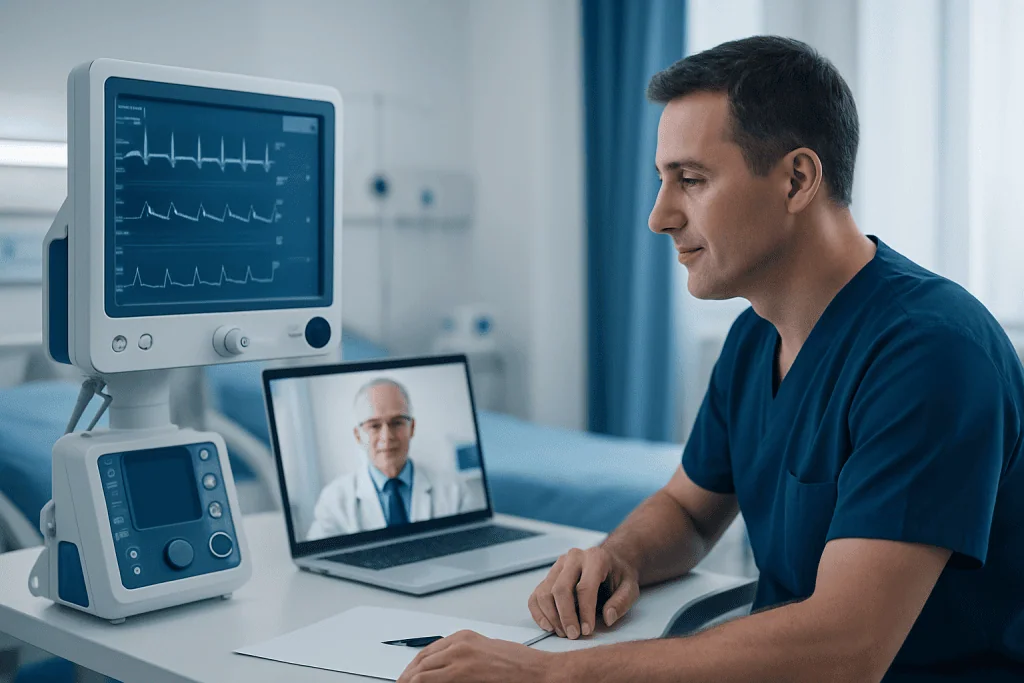
If you already have a family doctor, specialist or rehabilitation team at home, share their details before discharge — name, specialty and clinic contact information are enough. With your consent and within privacy processes, the relevant records can then be prepared in a form that suits your next appointment: either handed to you to pass on, or, where appropriate, coordinated through secure channels. You remain the owner of your records either way; nothing is sent anywhere without your agreement.
Ideally, this coordination starts before you even travel. If your local doctor knows a procedure is planned abroad, they can flag relevant history in advance — see Coordinating with Your Local Doctor Before Treatment in Turkey for how that works in the other direction.
Think about what your local doctor will actually need on the day they see you: your diagnosis, the treatment performed, medications started or stopped during your stay, activity limits, and the schedule for any tests or reviews. Depending on your treatment, they may also want imaging reports, pathology results, operative notes or rehabilitation recommendations. A doctor who receives this package before your first appointment can spend the visit making decisions rather than reconstructing your history.
Because Acibadem International’s teams work with international patients routinely, follow-up planning covers logistics as well as medicine. If questions are likely after discharge — about a report, a result, or the intent behind a recommendation — the team helps identify the most practical route: a scheduled online review, an updated written report, or a note of points for your local clinician to raise at your next check-in.
What information is usually shared
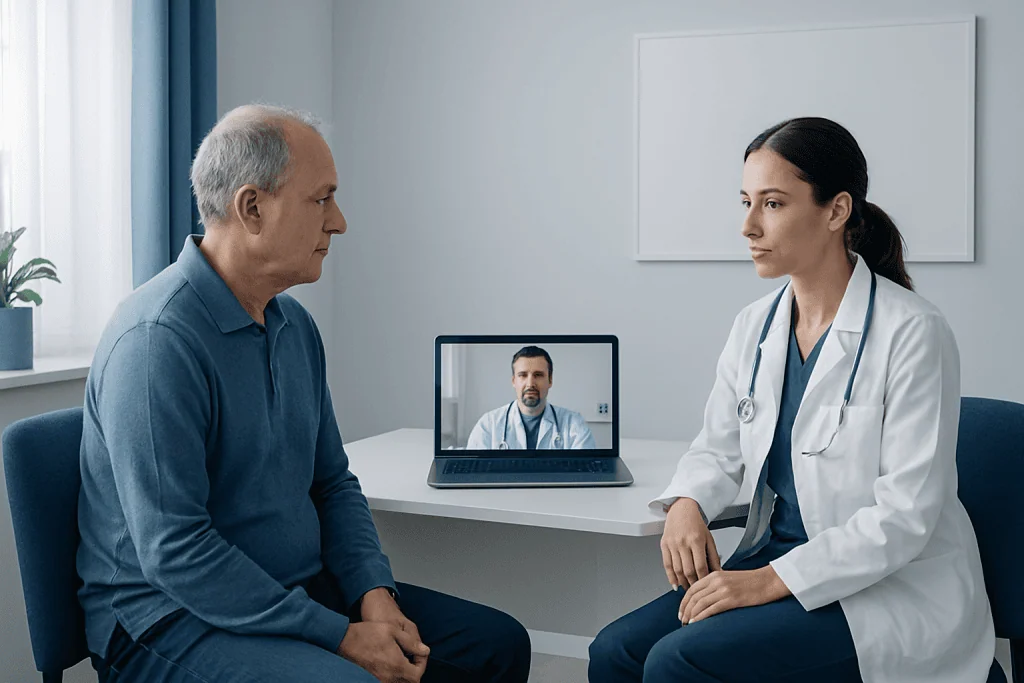
The most useful follow-up package is short where it can be and complete where it must be. Expect a discharge summary and a medication list as the core. Depending on your treatment, you may also receive laboratory results, imaging reports, pathology findings, implant or device documentation, and written guidance on follow-up timing.
| Document | What it tells your local doctor | Who usually needs it |
|---|---|---|
| Discharge summary | Diagnosis, treatment performed, course of your stay, next steps | Every doctor involved in your care |
| Medication list | What you are taking, doses, and changes made during your stay | General practitioner and pharmacist |
| Imaging and laboratory reports | Baseline results to compare against future tests at home | GP and any relevant local specialist |
| Pathology report (if applicable) | Tissue findings that shape ongoing treatment decisions | Local specialist |
| Implant or device documentation | Exact model and specifications for future procedures or scans | Local specialist; keep a copy permanently |
| Rehabilitation recommendations | Exercise limits, therapy goals and progression timeline | Physiotherapist or rehabilitation team |
Keep both digital and printed copies. If your local doctor works in a busy clinic, a one-page summary alongside the full reports is genuinely appreciated. Before you leave, ask for any abbreviations or shorthand to be explained — a discharge summary you understand is one you can advocate with. If you have several doctors at home, you can share different documents with each: the overall summary for your general practitioner, the imaging or pathology for a specialist. Practical detail on formats, translations and what local doctors most often ask for is in Sharing Turkish Medical Reports with Your Local Doctor.
How online check-ins work in practice
Many patients have at least one planned remote review after returning home. It gives your Acibadem team a structured chance to assess recovery progress, discuss any locally arranged test results, and answer questions — and it gives your local doctor context if they want to understand the reasoning behind the treatment you received in Istanbul or elsewhere in Turkey.
Preparation makes the difference between a useful review and a rushed one. Before the appointment, you may be asked to send recent reports, photographs where relevant, an updated medication list and your questions. Sending these ahead means the consultation is spent on decisions, not data collection. If you need interpretation, say so early so it can be arranged for the session itself. Choose a quiet, well-lit spot with stable internet, and test your camera and microphone the day before — the same preparation habits that help with an in-person visit apply online.
A common practical question: what if the doctor is late joining? Clinics run over, online as well as in person. A sensible habit is to stay in the virtual waiting room for a reasonable period, check your own connection has not dropped, and rejoin once if the platform allows it. If the appointment clearly cannot go ahead, note the time and rebook through your coordinator rather than abandoning the review — an unfinished follow-up helps nobody.
Be equally realistic about what a screen can and cannot do. Remote review works well for discussing symptoms and progress, going through written results and imaging reports, reviewing visible healing by photograph or video, and clarifying instructions. It cannot palpate, listen to your chest, take samples or perform tests. Conditions that rely mainly on history, visible findings and existing results lend themselves to virtual assessment; anything needing physical examination or new diagnostics needs an in-person visit or locally arranged tests. When local imaging or blood tests are recommended, Follow-Up Tests After Treatment in Turkey: When You May Need Imaging or Labs explains how that is usually organised, including how to time your next check-in around the results.
What a remote follow-up costs — how the answer is worked out
You will not find a single figure for this anywhere honest, because there is not one. Whether a remote review carries a charge, and how any charge is structured, depends on several variables: whether the review was included in your original treatment plan, the specialty involved, the length and complexity of the consultation, whether new reports need to be prepared or translated, and whether interpretation is required for the session.
What you can reasonably expect is transparency before commitment. The practical rule is simple: confirm in writing, before the appointment is booked, what the arrangement covers. Ask the same question about report translation and document preparation, since these are sometimes handled separately from the consultation itself. If your travel or health insurance may contribute, check its terms directly with the insurer — telehealth coverage varies widely between countries and policies, and no hospital can answer that question for your policy. Getting the terms clear in advance removes the most common source of friction in international follow-up: surprise.
What you can do before you leave Turkey
The best remote follow-up starts before discharge, which is why how we arrange remote follow-up with your local doctor is treated as part of discharge planning rather than an afterthought. Before you leave, establish three things: who your main contact will be after you return home, what kinds of questions suit a remote review, and which situations need in-person assessment locally. Confirm whether any tests are due at set dates and whether they can be done in your home country.
Go through your medication plan carefully with your treating team. Know the names of your medicines, why each was prescribed, how long each is intended to continue, and which points your local doctor should review at your first appointment. If you have allergies or take regular long-term medicines, check they appear accurately in your discharge papers — any adjustment to your medicines is a decision for your treating doctors, so the paperwork they rely on needs to be right.
The patient support team can help with the practical layer: obtaining copies of reports, understanding appointment timing, and planning how communication will run after travel. This matters most when you are managing follow-up across two healthcare systems and two languages at once. The full discharge-to-departure sequence, including fitness-to-fly considerations, is covered in After Treatment in Turkey: Discharge, Follow-Up, and Flying Home.
Common challenges and how to make the process smoother
The problems that actually derail international follow-up are mundane: missing documents, unclear medication instructions, language barriers, and slow booking of the first local appointment. Each has a boring, effective fix. Request records early rather than on discharge morning. Check your contact details are recorded correctly. Book your home-country review as soon as you know your return date, not after you land — in some health systems the first available appointment is weeks away.
A second challenge is assuming every issue can wait for a remote opinion. It cannot. Your discharge papers set out the situations that need prompt in-person assessment for your specific treatment; keep that page with your documents so you and your family have it to hand. Remote follow-up sits alongside local care, never in front of it.
Finally, keep the two roles distinct in your mind. Your Acibadem specialists understand the treatment you received; your local doctor understands your broader history and can examine you. Neither replaces the other. Occasionally they will phrase recommendations differently — if that happens, share each recommendation with the other side and ask both to explain their reasoning; most apparent differences dissolve once both teams are looking at the same information. When both teams hold good information, follow-up is quieter, quicker and considerably more reassuring.
Step by step
- Share your local doctor’s details before discharge. Name, specialty and clinic contact information let the team prepare records in a form that is practical for your next appointment, and open the door to direct coordination where appropriate.
- Collect your medical documents in one place. Discharge summary, medication list, imaging, laboratory and pathology reports, and any implant documentation. Keep digital copies on your phone and email, and printed copies in your travel folder.
- Confirm the follow-up plan in plain language. Before you travel, be sure you know when your next review is due, which tests are needed and where they can be done. If anything is unclear, ask for it to be explained simply — through an interpreter if that helps.
- Clarify the terms of any remote reviews in writing. Know what is covered, how the appointment is booked, which platform is used and whether interpretation will be arranged for the session.
- Book your local appointment soon after return. Especially where medication review, wound care or rehabilitation is expected. An early review keeps small questions from growing into big ones.
- Send updates before any online check-in. Recent results, symptom notes and your question list, sent in advance, let the consultation focus on decisions rather than information-gathering.
- Keep remote and local care in their lanes. Planned questions and coordination go to the remote review; anything urgent or fast-changing goes to in-person care where you are, with your discharge documents shared with the team treating you.
Your checklist
- Contact details for your local doctor or clinic, shared before discharge
- Discharge summary in a format you can easily hand over
- Up-to-date medication list with doses and timing
- Copies of imaging, laboratory and pathology reports where relevant
- Implant or device documentation, kept permanently if applicable
- The written guidance in your discharge papers on situations needing in-person care
- Date or timeframe for your next review, remote and local
- Written confirmation of what any remote review arrangement covers
- Questions prepared and sent ahead of your online check-in
- Digital backup of every document on your phone or email
Key takeaways
- Remote follow-up connects your treatment in Turkey with your ongoing care at home — it is planned before discharge, not improvised afterwards.
- Your local doctor needs a clear package: discharge summary, medication list, reports and the timing of next steps.
- Online check-ins work best when reports and questions are sent in advance and interpretation is arranged early.
- Cost and coverage for remote reviews vary by situation; confirm the arrangement in writing before booking rather than assuming.
- Remote review complements local care. It cannot examine you, and it never substitutes for in-person assessment when that is what a situation needs.
Frequently asked questions
What does “telehealth follow-up” mean?
A telehealth follow-up is a scheduled remote contact — usually a video consultation — where a clinician reviews your progress after treatment rather than assessing a new problem from scratch. For international patients, it typically means a planned online review with the team that treated you, running alongside in-person care from your local doctor.
What conditions can be assessed virtually?
Remote review suits situations that rely mainly on your history, visible findings and existing results: discussing symptoms and progress, going through written reports, reviewing visible healing by photo or video, and clarifying instructions. Anything requiring physical examination, samples or new diagnostic tests needs an in-person visit or locally arranged testing, with the results then discussed remotely.
How much does a remote follow-up appointment cost?
There is no single answer, because it depends on whether the review was part of your original treatment plan, the specialty, the consultation’s length, and whether report preparation, translation or interpretation is involved. The reliable approach is to confirm the arrangement in writing before the appointment is booked, and to check any insurance coverage directly with your insurer.
How long should I wait if the doctor is late to an online appointment?
Online clinics run over just as physical ones do. Stay in the virtual waiting room for a reasonable period, check your own connection has not dropped, and rejoin once if the platform allows. If the session clearly cannot go ahead, note the time and rebook through your coordinator so the review still happens.
Will Acibadem speak directly to my local doctor?
It depends on the situation, your consent and the communication route that suits both sides. In many cases you receive the key records to pass on yourself; where appropriate, follow-up communication can be guided through proper channels. Either way, nothing is shared without your agreement.
What if I do not have a local doctor yet?
You can still travel home with a complete set of records and register with a local doctor soon after return. Do it as early as possible, so someone can review your medicines, monitor recovery and arrange any recommended tests. Your discharge summary is written to bring a doctor who has never met you up to speed quickly.
Can all follow-up be done online?
No, and it would be dishonest to suggest otherwise. Reviewing results, discussing symptoms and clarifying instructions often work well remotely. Examination, wound care, new tests and anything urgent need in-person care. Most patients end up with a mix: local appointments for hands-on assessment, remote reviews for continuity with the treating team.
How soon should I arrange follow-up after I get home?
Follow the timing in your discharge instructions — it varies by treatment and by your own health. If no exact date was given, register with or book a local doctor promptly after return, so a plan exists before any question arises rather than after.
Add us as a Preferred Source to see more of our trusted health content across Google Search, AI Overviews and Discover.

Update history
- PublishedAugust 4, 2026
- Medical review approvedAugust 31, 2026
- Last content updateAugust 31, 2026
References1
- Telehealth — MedlinePlus, U.S. National Library of Medicine — medlineplus.gov
More Patient Guides
Choosing Between Inpatient and Day-Case Treatment in Turkey
Inpatient and day-case treatment in Turkey differ mainly in overnight monitoring, recovery needs and travel planning. Learn how to choose safely.
8 min read
At Acibadem, How We Manage Unexpected Changes to Your Treatment Plan
Unexpected changes to your treatment plan at Acibadem are managed through clear explanations, safety checks, and practical support in Turkey.
9 min read
Need More Than One Specialist in Turkey? How Multidisciplinary Care Is Coordinated
Multidisciplinary care in Turkey means your specialists coordinate tests, opinions and treatment plans so you can move through care with fewer delays.
9 min read
How to Compare Hospitals in Turkey for Complex Treatment
Compare hospitals in Turkey for complex treatment by checking accreditation, specialist teams, ICU support, coordination, and follow-up.
9 min read