

Contact Lenses, Glasses, Hearing Aids, and Dentures on Procedure Day

Bring all your devices, but expect some to come out before the procedure. Contact lenses are usually removed before anaesthesia or sedation, so bring glasses as a backup. Hearing aids often stay in until the last safe moment so you can communicate. Dentures may need removal before anaesthesia. Label every case with your name, and follow your own care team's timing instructions over any general advice.
Should you wear your contact lenses to the hospital? Where do your dentures go once you change into a gown? Will anyone tell you when to take your hearing aids out? These are the small questions that quietly worry people the night before a procedure, and they all have practical answers.
If you wear contact lenses, glasses, hearing aids, or dentures, a little planning makes procedure day simpler and safer. This guide explains what happens to contact lenses, glasses, hearing aids, and dentures on procedure day: what you should bring, what will likely be removed and when, how to label and store each item, and what changes if you are travelling to Turkey for treatment.
At a glance
- General rule: Bring every device you use, but expect some to be removed before the procedure itself
- Contact lenses: Usually removed before anaesthesia or sedation; glasses are the simpler choice for the day
- Glasses: Kept on for consent forms, wayfinding and conversations, then stored in a hard, labelled case
- Hearing aids: Often kept in until the last safe moment so you can hear questions and instructions
- Dentures: May need removal before anaesthesia; bring a proper denture container, never tissue
- The deciding voice: Your own doctor, anaesthesiologist and nursing team: their instructions override any general guide
Why these everyday items matter on procedure day
Contact lenses, glasses, hearing aids, and dentures feel like minor personal details until the morning of a procedure. Then they sit at the centre of almost everything you do. You need to read and sign consent forms. You need to hear questions about allergies and medications, and answer them accurately. You need to move between departments, recognise staff, and understand your discharge instructions before you leave. Each of those tasks depends on at least one of these devices.
At the same time, some devices are not safe to keep in during certain procedures. Anaesthesia, sedation, imaging, and airway management can each be a reason to remove an item. So the day involves a balance: keep your devices for as long as they help you communicate and function, then remove and store them properly at the point your clinical team decides.
The plan that works is simple. Bring what you use, carry a proper case for each item, and tell the nursing team early, at admission, not at the door of the procedure room, exactly what you wear or use. Hospital staff handle these requests every day, and interpreter support can be arranged so nothing gets lost in translation.
One caution before the detail: rules genuinely vary by procedure, anaesthesia type, and your medical situation. What is true for a short sedation procedure may not be true for a long operation under general anaesthesia. If anything in this guide differs from your written instructions, your care team’s instructions win. That is not a disclaimer for form’s sake; it is how procedure-day safety actually works.
Contact lenses: what to expect and what to bring
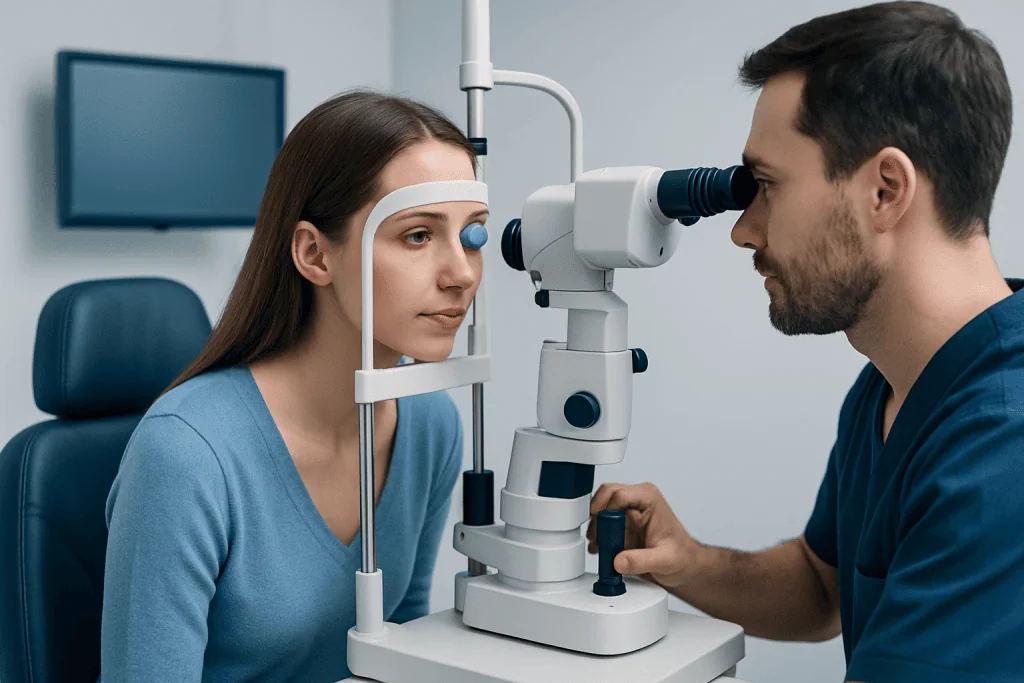
In most cases, contact lenses come out before a procedure, and almost always before general anaesthesia or deeper sedation. The reason is mechanical, not bureaucratic. While you are sedated or asleep, your blink rate drops and your eyes produce less protective tear film. A lens sitting on a dry, unblinking eye can cause irritation, can shift out of position, or can contribute to damage on the eye’s surface. Removing lenses beforehand takes that whole problem off the table.
This is why the practical advice is blunt: never arrive with only your lenses and no backup. Bring your glasses in a hard case even if you rarely wear them. If your prescription is strong and you genuinely cannot function without correction, that backup pair is what gets you through admission, the waiting period, and recovery. If you use daily disposables, a spare pair and your usual solution are worth packing, but only reinsert lenses after the procedure if your team says it is appropriate, since some procedures and some recovery situations make that unwise for a while.
For many people, the simplest answer is to skip the question entirely: wear glasses from the moment you leave your hotel or room. There is no lens to remove, nothing to store in solution, and no risk of being asked to take lenses out at an awkward moment without a case to hand. If you do arrive wearing lenses, say so at admission so removal can be planned calmly rather than rushed. If you wear specialist lenses, rigid gas-permeable, scleral, or medically fitted lenses of the kind discussed on our contact lenses page, mention that too, because handling and storage differ from soft disposables.
Glasses: keep them accessible, then store them safely

Glasses are usually the last visual aid to come off, and for good reason. You need them at check-in to confirm your details, during the consent discussion to read what you are signing, and while moving through the hospital to find your way and recognise your companion. Most teams encourage you to keep glasses on until you are actually moved into the procedure area, and to have them returned as early as possible in recovery, being able to see clearly when you wake up is genuinely reassuring.
Can you wear glasses during surgery itself? Generally no. They are removed before you enter the operating theatre or procedure suite because they get in the way of anaesthesia equipment, positioning, and the sterile field. The useful part of the answer is the timing: removal happens at the last practical moment, not at the front door, so you do not spend the whole morning unable to read.
Bring a sturdy, hard case labelled with your name, and ideally your date of birth or patient number written in the same format as your hospital registration. Do not drop glasses loosely into a handbag, a coat pocket, or onto the bed sheets, where they can be bent, scratched, or gathered up with the linen. If a companion is with you, agree in advance whether they will hold your glasses or whether the nursing team will store them with your other belongings. Either arrangement works; a last-minute handoff in a corridor does not.
If your uncorrected vision is very poor, tell staff at admission. They can give verbal guidance, walk with you between departments, and read documents aloud. If you need language support on top of visual assistance, interpreter arrangements exist for exactly this situation.
Hearing aids: communication comes first
Of all four devices, hearing aids usually stay in the longest, because the pre-procedure period is built on questions. Allergies, current medications, previous anaesthesia experiences, when you last ate: the answers matter, and you have to hear the questions to give them. In many situations you keep your hearing aids in through admission, the anaesthesia assessment, and final checks, removing them only when the clinical team asks. Exact timing depends on the procedure, the anaesthesia plan, and the equipment involved, some imaging and monitoring equipment is the deciding factor rather than the anaesthesia itself.
Preparation is mostly about power and storage. Bring a hard, labelled case. Pack spare batteries, or charge rechargeable aids fully before leaving your accommodation. One detail international patients often miss: if your hearing aids pair with your phone for streaming or adjustment, remember that your phone will likely be stored separately once you are in the clinical area. Do not rely on phone-based features for essential communication on the day.
Tell the nurse which ear hears better and how staff should speak to you. Small adjustments make a large difference:
- Bring a hard, labelled hearing aid case.
- Pack spare batteries, a charger, or a charging cable.
- Tell staff if you lip-read or prefer written instructions.
- Say which side hears better so staff position themselves accordingly.
- Involve your companion in confirming key details if that helps you.
None of this is unusual for the staff. Saying it plainly at admission means the whole team knows before anyone needs to ask you something important.
Dentures, partial plates, and dental appliances
Removable dentures and dental appliances often need to come out before anaesthesia or sedation. The concern is the airway: during anaesthesia, a loose appliance can shift, break, or obstruct, and the anaesthesia team needs a clear view and clear access. Fixed work, implants, bridges, crowns, stays in place, but the team still needs to know about it, along with any loose teeth, before the procedure. Mention all of it during your anaesthesia assessment.
Timing matters in the other direction too. Do not remove dentures early on your own initiative unless you have been told to. Many people need them to speak clearly, and admission is full of conversations you want to handle comfortably. The nursing team will tell you when removal is needed, often shortly before you move to the procedure area, and dentures are typically returned once you are safely through recovery.
Storage is where things go wrong, so be strict about it. Bring a clean, labelled denture container. Never wrap dentures in tissue or a paper towel; wrapped items look like rubbish and get thrown away, and this is one of the most common ways dentures are lost in hospitals anywhere in the world. If you use denture adhesive, tell the nurse, because it affects how and when the denture comes out.
Some patients feel awkward discussing dentures or being seen without them. The staff handle this daily and think nothing of it. If it matters to you, ask when they will be removed and when they can go back in, knowing the timeline usually removes most of the discomfort.
Hearing aids or glasses: which goes on first?
A small practical question with a definite answer: hearing aids first, then glasses. A behind-the-ear hearing aid needs to sit properly against the ear before the arm of the glasses rests alongside it. Put glasses on first and you end up repositioning both. When removing them, reverse the order, glasses off first, then hearing aids, so you do not knock an aid loose with the frame.
This matters most in recovery, when a nurse or your companion may be helping you and your hands may be less steady than usual. If someone else will assist you after the procedure, mention the order; it saves fiddling and protects both devices.
Protecting your belongings through a day of transitions
Procedure day involves more moves than most people expect: admission desk, waiting area, pre-procedure room, procedure suite, recovery, and sometimes an inpatient room. Every transition is a moment when a small item can be left behind if it is not stored deliberately. A simple system prevents nearly all of it, and the rules for contact lenses, glasses, hearing aids, and dentures on procedure day all end the same way: in a labelled case, with someone responsible for it.
Use a separate, clearly labelled case for each device, lenses, glasses, hearing aids, dentures. Write your name in the same format as your passport and hospital registration so items can be matched to you without guesswork. Adding your phone number or your companion’s number is sensible; putting medical details on the outside of a case is not.
Bring only what you need. Spare designer frames, multiple lens sets, and extra electronics are safer at your hotel. For the broader packing question, documents, clothing, chargers, what stays with staff and what stays with your companion, see our guide on what to bring for a day procedure in Turkey. And if someone is coming with you, agree their role in advance: holding belongings during the procedure is one of the most useful things a companion does, as covered in what your companion can do on procedure day.
One habit closes the loop: before you leave recovery, change rooms, or head back to your hotel, check all four items are with you. If anything is missing, say so immediately. Items are far easier to trace within the hour than the next day.
If you are travelling to Turkey for care
Travelling for treatment disrupts the routines these devices depend on. Pack your vision, hearing, and dental essentials in your carry-on bag, never in checked luggage. A delayed suitcase should not leave you unable to see, hear, or eat comfortably at a pre-procedure appointment.
Bring supplies for your full planned stay plus a buffer, in case your stay is extended for medical reasons: spare lenses, glasses, hearing aid batteries or chargers, a plug adapter for rechargeable devices, denture cleaning tablets, and adhesive if you use it. Contact lens solution counts as a liquid at airport security: the widely used “3-1-1” rule means containers of up to 100 ml (3.4 oz), fitting in one clear resealable bag, one bag per passenger. Larger bottles of medically necessary liquids may be permitted with declaration at screening, but rules vary by airport and airline, so buy travel sizes or check before you fly.
Use your pre-procedure consultation in Istanbul or wherever you are treated to ask exactly what should happen with your contact lenses, glasses, hearing aids, and dentures on procedure day, alongside your other instructions, such as when to stop eating, drinking, or smoking. Getting the timing confirmed in advance beats deciding on your own at the last minute.
Step by step
- Raise it during your pre-procedure call or visit. Tell your coordinator or nurse that you use contact lenses, glasses, hearing aids, dentures, or a dental appliance. Ask which items stay with you during admission and which must be removed before the procedure.
- Pack protective, labelled cases. A hard case for glasses, a hard case for hearing aids, a proper lens case if needed, and a clean denture container. Label each with your full name in the same format as your registration documents.
- Choose glasses over contacts where you can. For most procedures, arriving in glasses is simpler than arriving in lenses. If you are unsure whether lenses are acceptable for your specific procedure, ask before the day.
- Bring power and supplies. Hearing aid batteries or a charger, lens solution if approved, and your usual denture products. Travelling from abroad, add a plug adapter and enough supplies for extra days.
- State your communication needs at admission. If you have hearing loss, poor uncorrected vision, or rely on dentures for clear speech, say so plainly. Staff can speak face-to-face, write things down, arrange interpreter support, or involve your companion.
- Confirm who holds your belongings. Your companion or the nursing team, decided in advance, not in a corridor as you are wheeled to the procedure area.
- Check everything before you move on. Before discharge or a room transfer, confirm glasses, hearing aids, dentures, and lens supplies are with you. Report anything missing immediately so it can be traced while the trail is fresh.
Your checklist
- Glasses in a hard, labelled protective case
- Contact lens case and solution in travel-compliant sizes, if you may need them
- Backup glasses if you usually wear contact lenses
- Hearing aid case, spare batteries, charger, or charging cable
- Denture or appliance container labelled with your name, never tissue
- A note listing implants, crowns, bridges, loose teeth, or removable appliances
- Plug adapter if travelling internationally with rechargeable devices
- Companion or coordinator contact number written on or inside each case
- A short written note explaining your hearing, vision, or communication needs
- Your hospital’s instructions on when each item comes out
Key takeaways
- Contact lenses are usually removed before anaesthesia or sedation, bring glasses as your backup, or simply wear glasses from the start.
- Glasses stay on for forms and conversations and come off at the last practical moment; store them in a hard, labelled case.
- Hearing aids often stay in longest because communication comes first; bring spare batteries or a full charge.
- Dentures may need removal before anaesthesia and belong in a labelled container, never wrapped in tissue.
- Hearing aids go on before glasses; glasses come off before hearing aids.
- Travelling to Turkey, keep all vision, hearing, and dental essentials in your carry-on, with solution in security-compliant sizes.
- Your own care team’s instructions always override general guidance, including this guide.
Frequently asked questions
Can you go under anaesthesia with contacts in?
Generally no. During sedation or general anaesthesia your blink reflex is reduced and your eyes become drier, so a contact lens can cause irritation, shift out of position, or contribute to surface damage. Lenses are normally removed beforehand. Wearing glasses on procedure day, or bringing them as a backup, is the practical answer.
Can you wear glasses during surgery?
Not during the procedure itself, glasses interfere with anaesthesia equipment, positioning, and the sterile field. But you usually keep them on through check-in, consent, and pre-procedure checks, hand them over at the last practical moment, and get them back early in recovery. Bring a hard, labelled case for the storage period.
What goes on first, hearing aids or glasses?
Hearing aids first, then glasses, so the aid sits properly against the ear before the glasses arm rests alongside it. When removing them, reverse the order: glasses off first, then hearing aids. This is worth mentioning to anyone helping you in recovery, so a frame does not knock an aid loose.
What is the 3-1-1 rule for contacts?
It is an airport security rule for liquids, not a clinical one. Carry-on liquids, including contact lens solution, must be in containers of up to 100 ml (3.4 oz), packed in one clear resealable bag, one bag per passenger. Larger medically necessary liquids may be allowed with declaration at screening, but rules vary, so travel sizes are the safe choice.
Should I remove my dentures before arriving at the hospital?
Usually not, do not remove them early unless your care team has told you to. Dentures help you speak clearly through admission and the anaesthesia assessment, which is full of important conversations. The nursing or anaesthesia team will tell you when removal is needed, typically shortly before you move to the procedure area.
How should dentures and hearing aids be stored during the procedure?
In proper hard cases or a denture container labelled with your name. Never wrap anything in tissue and never leave devices loose on the bed, wrapped items get discarded and loose items get gathered with linen. Confirm at the time whether the nursing team or your companion is holding each item.
What should international patients pack for these items?
Glasses, spare lenses, solution in travel-compliant sizes, hearing aid batteries or a charger, denture supplies, and a plug adapter, all in your carry-on bag, never checked luggage. Bring enough for your planned stay plus a buffer in case your schedule changes, and label every case in the same name format as your hospital registration.
What if I forget a case or supplies on the day?
Say so to your nurse or coordinator as soon as you realise. Depending on what is available, the team may be able to arrange temporary safe storage. Do not improvise with tissue, pockets, or loose bags: that is how devices get damaged or lost, and admitting the gap is always the better option.
Add us as a Preferred Source to see more of our trusted health content across Google Search, AI Overviews and Discover.

Update history
- PublishedJune 16, 2026
- Medical review approvedSeptember 13, 2026
- Last content updateSeptember 12, 2026
References2
- The day of surgery for an adult – MedlinePlus medlineplus.gov
- Anesthesia – Cleveland Clinic my.clevelandclinic.org
More Patient Guides

How Long Does Anesthesia Last? Wear-Off Times by Type
Coming round from an operation, almost everyone asks the same two questions: when will my head feel normal, and how long is…

Flying to Turkey After a Recent Illness: When Is It Safe to Travel?
Flying to Turkey after a recent illness may be safe once you are medically stable and cleared to travel; plan airline support…

Braces, Retainers, and Dental Work Before Surgery in Turkey: What to Tell Your Team
Braces, retainers and dental work before surgery in Turkey should be shared with your care team early to plan safe anaesthesia and…

When to Stop Eating, Drinking, or Smoking Before a Procedure in Turkey
When to stop eating before a procedure in Turkey depends on your anesthesia plan; follow your care team’s exact fasting instructions for…