

Eating Before and After Treatment in Turkey: What Patients Should Ask

Ask three things early: exactly when you must stop eating and drinking before your procedure, which of your regular medicines and supplements need reviewing, and what you are expected to eat in the first 48 to 72 hours afterwards. The answers depend on your specific treatment and anaesthesia plan, so request written instructions from your own care team rather than relying on general advice.
You have booked the flights and the hotel, and then a question lands the night before departure: can you drink water on the morning of the procedure? Should you take your usual tablets? Food and drink affect anaesthesia, medicines and recovery, so eating before and after treatment in Turkey deserves specific questions, asked early, with the answers in writing.
This guide sets out what to clarify with your care team, what actually changes after different types of procedure, how Turkish meal times and food culture fit around recovery, and what to prepare before you travel. It is general information: your own team’s instructions always come first, because they know your procedure, your anaesthesia plan and your medical history.
At a glance
- When to ask: Before you finalise flights, and again once your treatment date and time are confirmed
- Core topics: Fasting cut-offs, hydration, medicines with food, allergies, special diets, first meals after treatment
- Who needs extra detail: Patients with diabetes, digestive conditions, food allergies, or a restricted or religious diet
- Why it matters: Eating or drinking outside the instructions can delay or postpone a procedure on the day
- Practical support: International patient coordinators can provide written instructions and interpreter support
Why eating before and after treatment in Turkey needs early questions
When you travel abroad for medical care, flights, transfers and appointment times take up most of your planning energy. Food instructions tend to be left until the last minute. That is the wrong way round. What you eat and drink before treatment can determine whether your procedure goes ahead as scheduled, and what you eat afterwards shapes how comfortable your first days of recovery are in a hotel room rather than at home.
There is no single rule for eating before and after treatment in Turkey, because the right advice depends on your exact procedure, the type of anaesthesia or sedation planned, the medicines you take and conditions such as diabetes, reflux, kidney disease or food allergies. A fasting rule that applies to one patient having general anaesthesia does not apply to another having a scan, and neither applies to a third having a minor procedure under local anaesthetic. If your treatment plan changes after you arrive, a different time slot, an added test, your eating instructions can change with it.
This is why the most useful habit is simple: ask for written, procedure-specific instructions, and recheck them the day before treatment. General internet advice, forum posts and what worked for a friend are not substitutes. If English is not your first language, ask for the instructions in a language you fully understand, most international patient departments can arrange this, and it matters when you are juggling tests, consultations and a companion’s schedule at the same time.
What to ask about eating and drinking before treatment
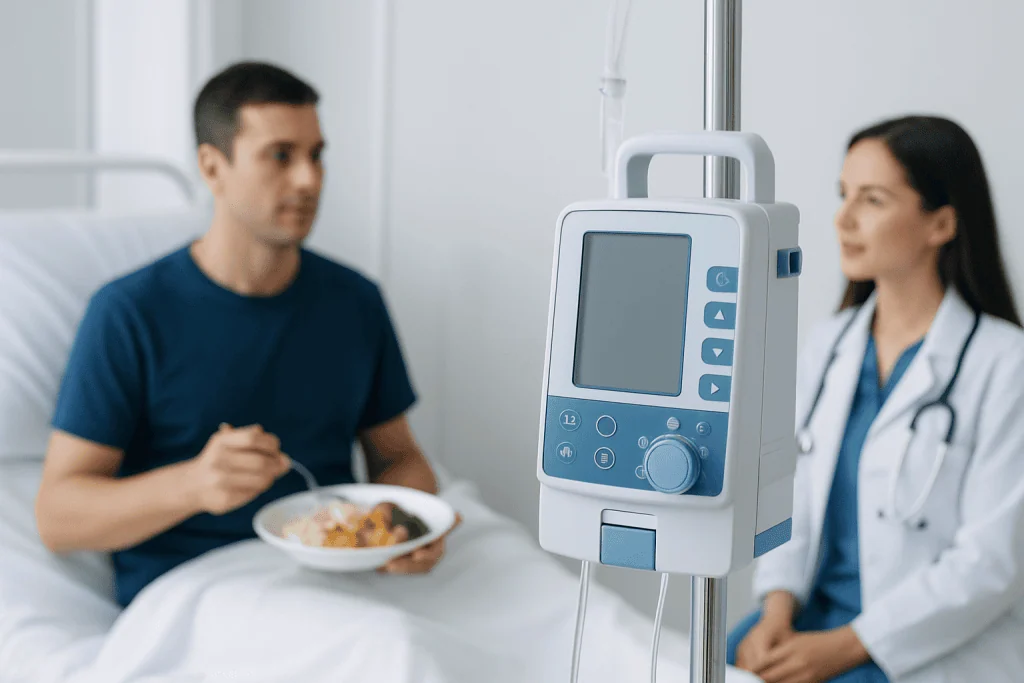
Start with the most direct question: exactly when must you stop eating, and exactly when must you stop drinking? These are usually two different times. Many patients hear the word “fasting” and assume it means nothing after midnight, but modern fasting instructions are set around your procedure time and the type of anaesthesia involved. Solid food, milky drinks, clear liquids, chewing gum and sweets are often treated differently from one another, so ask about each one rather than assuming.
Ask what counts as a clear liquid in your team’s instructions, and whether small sips of water are permitted with morning medication. If your procedure is early, ask what you can safely eat the evening before. If it is scheduled for the afternoon, ask whether a light early breakfast is allowed and where the cut-off sits. Precise answers protect you from both directions of error: eating too late, which can delay the procedure, and fasting far longer than necessary, which is uncomfortable and unhelpful. If you are having general anaesthesia, it is worth reading how the whole preparation process works: our guide to preparing for general anaesthesia in Turkey covers fasting in that wider context.
Then widen the question beyond meals. Ask whether you should avoid alcohol, protein shakes, herbal teas, vitamins or nutritional supplements in the days before treatment. Some products can interact with anaesthesia, affect bleeding or upset your stomach. If you use anything regularly, sports supplements, weight-loss products, herbal remedies, put it on your medication list and ask your care team to review the whole list. Do not decide on your own what is harmless enough to leave off.
- When do I stop solid food, and when do I stop drinking?
- What counts as a clear liquid in your instructions?
- Can I take my regular morning medicines, and with how much water?
- Should I stop any supplements or herbal products, and when?
- What should I do if I eat or drink something by mistake?
Special diets, allergies and medical conditions: tell your team early
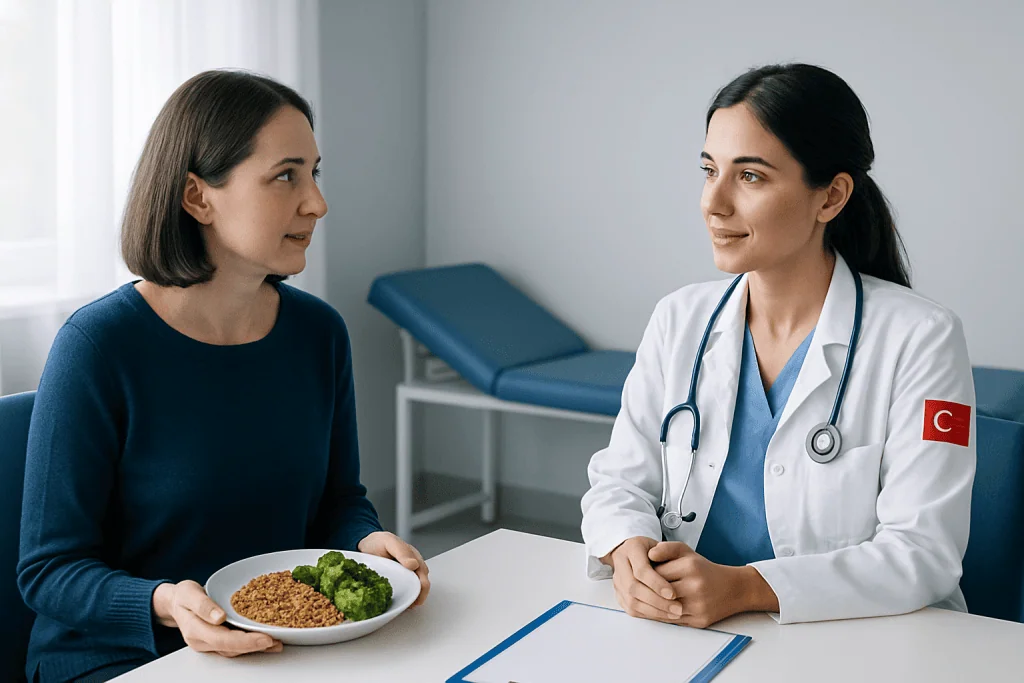
If you have diabetes, coeliac disease, lactose intolerance, significant reflux, inflammatory bowel disease, kidney disease or a history of nausea after anaesthesia, say so before you travel, not at the admission desk. These details shape your fasting plan, the timing of your first meal afterwards and what is appropriate for you during recovery. Diabetes in particular usually needs a coordinated plan for meals, medication timing and the procedure slot itself, and that plan belongs to your treating doctor, not to a general guide.
Food allergies and religious or lifestyle dietary needs also belong in the early conversation. If you need gluten-free, vegetarian, vegan, halal-compatible or texture-modified meals, ask what the hospital kitchen can provide during any inpatient stay and what you will need to arrange yourself at your hotel. Turkish hospital and hotel kitchens handle a wide range of requests, but they can only accommodate what they know about in advance. If you plan to bring snacks from home, ask whether they fit your recovery plan before you pack them.
Interpreters and international patient coordinators can help make sure details such as allergies, ingredient concerns and diabetes meal timing are communicated consistently across every appointment, so you are not repeating the same explanation to each new member of staff and hoping nothing gets lost.
What eating looks like after different kinds of treatment
After treatment, your appetite may not return straight away. Depending on the procedure, you may feel sleepy, nauseated, bloated or simply uninterested in a full meal. That is common, and it is one reason to ask in advance what you are expected to eat and drink in the first 24 to 72 hours. The answer varies a great deal by procedure type.
After dental work and dental implants
Dental treatment is one of the most common reasons international patients travel to Turkey, and eating questions come up constantly. After extractions, implants or extensive restorative work, teams typically advise a period of soft, lukewarm food and caution with anything hot, crunchy, sticky, spicy or acidic while the mouth settles. Exact guidance, how long, which side to chew on, when to reintroduce normal textures, depends on what was done and must come from your own dentist or surgeon. The useful questions to ask before you leave the clinic are: what textures are appropriate this week, what temperatures should I avoid, and when do these restrictions change?
After bariatric surgery
Weight-loss surgery such as sleeve gastrectomy comes with a structured, staged eating plan: typically a progression from clear liquids to full liquids, then puréed and soft foods, and eventually regular textures, with each stage moved through only on your surgical team’s instruction. The stages, portion sizes and timings are individual, and following them matters for comfort and healing. Ask for the full written plan before discharge, including what to do about hydration on the flight home and how the plan will be reviewed once you are backremote follow-up after treatment in Turkey usually covers this kind of staged progression.
After surgery under general anaesthesia
After a general anaesthetic, most teams reintroduce fluids first and then light food as you tolerate it. Nausea is a known after-effect for some patients, and rich or heavy meals soon after waking rarely help. Ask when you can drink, when you can eat, and what a sensible first meal looks like for your operation. Our guide to what to expect after general anaesthesia explains the first hours in more detail. If your procedure involves the stomach, bowel or swallowing, expect much more specific instructions about texture, temperature and portion size, and ask for them explicitly.
After minor and day procedures
For many day procedures under local anaesthetic, eating restrictions are minimal or none. Do not assume, though, sedation changes the picture, and some day procedures still carry fasting rules. If you are having a same-day procedure, the practical details are covered in our guide to day surgery in Turkey.
Turkish food, meal times and eating culture during recovery
Knowing how meals work locally makes recovery planning easier, especially if you are eating in restaurants or relying on a hotel kitchen. A typical Turkish diet is built around fresh vegetables, legumes, bread, rice and bulgur, yoghurt, olive oil, grilled meat and fish, soups and fresh fruit. That is genuinely convenient for recovering patients: lentil soup (mercimek çorbası), plain yoghurt, rice, stewed vegetables and fresh bread are everywhere, easy to find on any menu, and close to what many post-procedure eating plans ask for. Breakfast (kahvaltı) is a substantial meal of cheese, olives, eggs, bread, tomatoes and cucumber; lunch is generally eaten between about noon and 2 pm; dinner tends to be later than in northern Europe, often from 7 pm onwards. Tea is served constantly, and strong Turkish coffee usually after meals rather than with them.
If you want one phrase, learn afiyet olsunsaid before or after eating, it means roughly “may it do you good” or “enjoy your meal”, and it is the standard reply when you compliment the food. Hosts and restaurant staff say it to you; you can say it back to anyone eating.
None of this means you should dive into rich, unfamiliar food on day one. Turkey is known internationally for dental treatment, eye surgery, hair restoration, bariatric surgery, orthopaedics and a broad range of hospital care, which means restaurants and hotels near major hospitals are used to recovering patients and to requests for plain, simple versions of dishes. Asking for a mild soup, plain rice or yoghurt raises no eyebrows at all.
Restaurants, hotels and practical food logistics during recovery
Right after treatment, simplicity is your friend. You do not need to avoid local cuisine unless your doctor tells you to, but choosing milder, easier-to-digest meals for a few days is sensible when you are tired, taking pain medication or adjusting to a new routine. The same food-sense you would use anywhere abroad applies during recovery: freshly cooked, thoroughly heated food, and bottled or verified drinking water if your team or accommodation advises it.
Before you confirm your accommodation, check what it can actually support: breakfast at unusual times, room service, a refrigerator for approved foods, a kettle, easy access to drinking water. These small things matter more than the view when you are three days post-procedure. Our guide to booking recovery accommodation in Turkey covers what to check before you pay. If a companion is travelling with you, agree in advance who handles grocery runs, water and label-checking while you rest.
Be cautious with very rich meals, alcohol and anything sold as a “recovery booster”, supplements and herbal products should go through the same review as your regular medicines. When you are unsure whether a food is appropriate, choose the plainest option available and put the question to your care team at the next contact.
Medicines, hydration and digestion: the questions that connect to food
Food advice and medication advice are inseparable. Some medicines are taken with food, some on an empty stomach, and some may need temporary adjustment around a procedure, decisions that belong entirely to your treating doctor. This matters most if you take blood thinners, diabetes medicines, steroids, thyroid medication or blood pressure treatment. Never guess and never improvise: ask exactly what to take, what pauses (if any) your doctor is planning, and when your normal schedule resumes. Pain medication interacts with eating too, some analgesics sit better on food, so it is worth reading what to expect about pain control after surgery in Turkey alongside your meal planning.
Hydration deserves its own questions. Ask how much fluid to aim for before your fasting window begins and when you can start drinking again afterwards. If you have a long travel day before admission, ask whether dehydration could affect your blood tests or your comfort, and whether electrolyte drinks are appropriate in your case. Flying, air-conditioned hotels and pre-procedure nerves all quietly reduce how much people drink.
Digestive effects, nausea, constipation, loose stools, a slow appetite, are common after some treatments and medications. Before discharge, ask which of these your team expects in your case, how long they typically last, and what your written discharge instructions say about them. Going home to your hotel with that information already on paper is far better than searching for answers at midnight.
What to prepare before you travel
A little preparation makes the whole trip easier. Keep a written list of your medications, allergies, supplements and usual eating pattern, especially if you have diabetes or a restricted diet. Save a copy on your phone and carry a printed version in case your connection fails on travel day.
Pack a few sensible comfort items: a refillable water bottle for the periods when drinking is permitted, plain snacks for non-fasting times, and any special dietary products that are hard to replace abroad. Remember the distinction, though, what helps during travel may not be appropriate immediately before or after treatment, and your medical instructions override your packing list.
Finally, ask for one clear point of contact in case your schedule changes, and confirm your instructions the day before treatment. Procedure times move, and fasting windows move with them. A two-minute confirmation can prevent an avoidable delay on the day.
Step by step
- Ask for written eating instructions as soon as your treatment is planned. Do this before you finalise flights if possible. Written guidance is easier to follow than a verbal summary and gives you something concrete to recheck the day before treatment.
- Share your full medical and dietary history. Diabetes, stomach or bowel conditions, allergies, supplements, weight-loss products and any special diet, all of it. Small details change fasting plans, medication timing and what is appropriate during recovery.
- Confirm exactly what fasting means for your procedure. Ask separately about solid food, milky drinks, clear liquids, water, coffee, tea, gum and sweets, and about taking morning medicines with sips of water. If any item is unclear, ask before the day of treatment rather than assuming.
- Plan your first 48 to 72 hours of recovery food. Find out whether you will need clear liquids, soft foods, small frequent meals or extra protein, then arrange easy access to approved options at your accommodation so you are not searching for food when you are exhausted.
- Coordinate with your companion and your accommodation. Agree who handles groceries, water and label-reading. Check that the hotel can manage flexible meal times, a fridge and room service before you confirm the booking.
- Recheck instructions the day before treatment. Schedules change, and fasting times change with them. A quick confirmation with your coordinator or care team prevents avoidable delays.
- Get your discharge food plan in writing before you leave the hospital. Ask which digestive effects are expected in your case, how your eating plan progresses over the following days, and who your point of contact is for practical questions while you are still in Turkey.
Your checklist
- Written fasting instructions for your exact procedure, with separate times for food and liquids
- Complete list of medicines, supplements and allergies, reviewed by your care team
- Prepared questions about water, coffee, gum and morning medication
- An agreed plan for diabetes or other special dietary needs
- Approved recovery foods and drinks stocked for your first 2–3 days
- Accommodation checked for fridge, kettle, water and flexible meals
- Companion support plan for shopping and label-checking
- Discharge instructions and your point of contact saved on your phone
Key takeaways
- Ask about eating and drinking rules when treatment is planned, not the night before.
- Fasting instructions vary by procedure, anaesthesia, medicines and health conditions, food and liquids usually have different cut-off times.
- Tell your team about diabetes, allergies, digestive conditions and dietary restrictions before you travel.
- Local staples such as lentil soup, yoghurt and plain rice make simple recovery meals easy to find in Turkey.
- Get discharge food instructions in writing and confirm everything again the day before treatment.
Frequently asked questions
Will I always need to fast before treatment in Turkey?
No. Fasting depends on the type of treatment, whether sedation or general anaesthesia is planned, and sometimes on the timing of tests or imaging. Some procedures under local anaesthetic need no fasting at all. Always ask for instructions specific to your appointment rather than assuming one rule covers everything.
Can I drink water before my procedure?
Sometimes, within the limits set by your care team. Water and other clear liquids often have a later cut-off time than solid food, and small sips with morning medication may be handled separately again. Ask for exact times for each category and follow them precisely.
What if I have diabetes and cannot fast easily?
Tell your hospital as early as possible. Diabetes usually needs a coordinated plan covering meals, medication timing and the procedure slot itself. That plan is made by your treating doctor, do not adjust your own medication schedule around fasting unless your medical team specifically instructs it.
What is a typical Turkish diet?
Turkish food is built around fresh vegetables, legumes, bread, rice and bulgur, yoghurt, olive oil, grilled meat and fish, soups and fresh fruit. Breakfast is a substantial spread of cheese, olives, eggs and bread; tea accompanies almost everything. For recovering patients this is convenient, because gentle options such as lentil soup, plain yoghurt and rice appear on nearly every menu.
What time do Turkish people eat lunch, and when is dinner?
Lunch is generally eaten between about noon and 2 pm. Dinner tends to be later than many visitors expect, often from 7 pm onwards. Hotels near hospitals are used to patients on different schedules, so if your recovery plan involves eating at unusual times, ask in advance what the kitchen can accommodate.
What do Turks say before eating?
The standard phrase is afiyet olsun, which means roughly “may it do you good” or “enjoy your meal”. You will hear it from hosts, waiters and hospital staff, and you can say it to anyone who is eating. It is also the usual response when you compliment the cooking.
Can I eat normal restaurant food after treatment?
That depends on your procedure and how you feel. Many patients need gentle, simple meals at first, softer textures, moderate temperatures, nothing very rich or spicy, while others return to a normal diet quickly. Ask your team which textures, temperatures and ingredients suit your situation, and when the restrictions relax.
What should I do if I accidentally eat or drink during the fasting period?
Tell your care team exactly what you had and when, before the procedure, not after. Do not hide it out of embarrassment. Anaesthesia decisions are made on accurate information, and the team may simply adjust your procedure time. Honest information is always the safer option.
Add us as a Preferred Source to see more of our trusted health content across Google Search, AI Overviews and Discover.

Update history
- PublishedJuly 6, 2026
- Medical review approvedSeptember 13, 2026
- Last content updateSeptember 12, 2026
References3
- CDC Travelers' Health: Food and Water Safety wwwnc.cdc.gov
- MedlinePlus: Surgery medlineplus.gov
- MedlinePlus: After Surgery medlineplus.gov
More Patient Guides

How Long Does Anesthesia Last? Wear-Off Times by Type
Coming round from an operation, almost everyone asks the same two questions: when will my head feel normal, and how long is…

Flying to Turkey After a Recent Illness: When Is It Safe to Travel?
Flying to Turkey after a recent illness may be safe once you are medically stable and cleared to travel; plan airline support…
Braces, Retainers, and Dental Work Before Surgery in Turkey: What to Tell Your Team
Braces, retainers and dental work before surgery in Turkey should be shared with your care team early to plan safe anaesthesia and…

When to Stop Eating, Drinking, or Smoking Before a Procedure in Turkey
When to stop eating before a procedure in Turkey depends on your anesthesia plan; follow your care team’s exact fasting instructions for…