

Flying to Turkey with Recent Test Results: What to Bring and What to Repeat

Bring complete, dated copies of your reports and the original image files, kept in your hand luggage with a digital backup. Many records — specialist letters, operation notes, pathology reports — remain useful. Time-sensitive tests such as routine blood work, ECGs and pre-anaesthesia checks are often repeated after arrival, because the treating team needs current values measured to its own protocols.
You had blood tests three weeks ago. An MRI last month. A biopsy report from your own hospital. Now you are flying to Turkey with recent test results and want to know which of them will still count. The honest answer has two parts: bring everything, organised and complete — and expect that some tests will be repeated after you arrive. Both parts matter, and neither is a sign that anything went wrong at home.
This guide explains which records hospitals in Turkey can usually work with, why certain tests are redone regardless of quality, and how to pack and organise your file so your first consultation starts with answers rather than paperwork.
At a glance
- Bring: Full dated reports, original image files (DICOM, not screenshots), pathology reports, medication and allergy lists, operation notes and discharge summaries
- Usually reusable: Specialist letters, surgical records, pathology reports, imaging reports as context
- Often repeated: Routine blood work, ECGs, pre-anaesthesia assessments, imaging that needs a specific protocol
- Why repeats happen: Timing, protocol, image quality and safety before procedures — not distrust of your home clinicians
- How to carry: Hand luggage only, paper plus digital backup, key findings translated if not in English or Turkish
What counts as a useful recent test result?
Not all records carry the same weight. When you are flying to Turkey with recent test results, the documents that help most share three features: they are complete, they are clearly dated, and they relate directly to the reason for your visit. A full radiology report with the performing clinic’s name on it is useful. A screenshot of one line from a patient app, cropped so the date is missing, usually is not.
For every report, check that it shows the date it was performed, the name of the clinic or laboratory, the reporting doctor where relevant, and — for blood tests — the reference ranges used. Reference ranges vary between laboratories, so a number without its range is hard to interpret abroad.
For imaging such as MRI, CT, PET-CT, ultrasound, mammography or X-ray, the written report matters, but the image files themselves often matter more. Specialists routinely want to review the actual pictures rather than rely on another radiologist’s summary, because treatment planning can hinge on details the report did not need to mention. Ask your home clinic for the images in DICOM format on a disc, USB drive or download link — this is standard practice and clinics expect the request. There is a fuller walkthrough of this in how to organise scan reports and images before travel.
For laboratory work, freshness matters more than volume. Some values stay meaningful for weeks; others reflect a moment in time and lose relevance quickly. You do not need to judge this yourself — bring what you have, clearly dated, and let the treating team decide what still serves.
What to bring with you on the plane
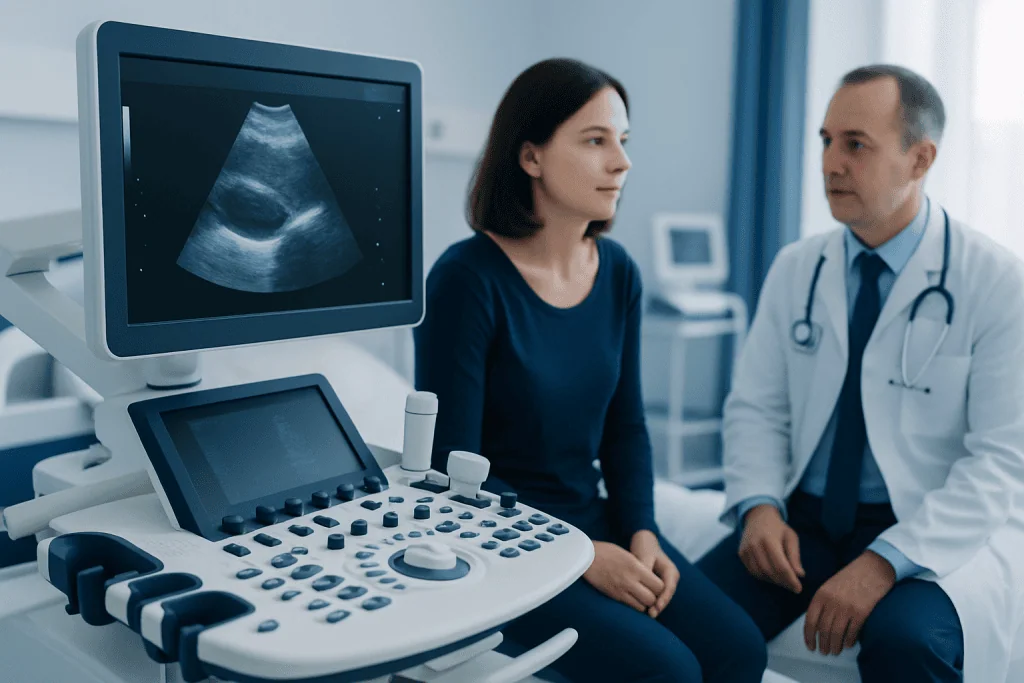
Keep every medical document in your hand luggage. Checked bags get delayed; your first consultation does not wait for the airline. Carry a printed set of the key reports and a digital copy on a USB drive or a secure cloud link you can open without your home network. Imaging files are frequently too large to email, and a disc that sits in a delayed suitcase helps nobody.
A workable travel file contains:
- Printed reports with dates and facility names
- Imaging on CD, DVD, USB or a tested download link — in DICOM format, not phone photos of a screen
- Pathology and biopsy reports, including the specimen or case number
- A medication and supplement list with doses and timing
- An allergy list and any significant medical history
- Previous operation notes and hospital discharge summaries
- Device documentation if you have one: pacemaker card, insulin pump details, CPAP settings, transplant card
- Passport and appointment confirmation
If your records are not in English or Turkish, you do not need every page professionally translated. What helps is a translated summary of the essentials: diagnosis, prior procedures, pathology findings, medication names in their generic (international) form, and any allergies or warnings. Hospitals that treat international patients routinely work with mixed-language files, and once records are shared they can usually say which pages need translation and which do not. A more detailed packing breakdown is covered in how to organise your test results before travelling to Turkey.
Why a hospital in Turkey may repeat tests

It is reasonable to feel frustrated when a test you paid for last month is scheduled again. Understanding the four usual reasons makes it easier to accept, and to see it for what it is: part of careful planning rather than a judgement on your previous care.
Timing. Some values describe your body right now, not last month. Blood counts, clotting values, kidney and liver markers, infection screens and pregnancy tests can all change between the test date and your arrival — after travel, an illness, a medication change or simply the passage of time. Before a procedure or anaesthesia, the team needs current numbers, whatever your earlier results showed.
Protocol. Imaging is only as useful as the way it was acquired. A scan may be technically fine yet unusable for planning because it lacks the contrast phases, slice thickness, coverage or sequences the specialist needs. Repeating it on the hospital’s own equipment, to its own protocol, produces images the team can measure and compare consistently.
Quality and completeness. Reports without images, images that will not open, tests missing reference ranges, or studies that examined a neighbouring area rather than the one now in question — all of these prompt a repeat, not because the original was wrong but because it cannot answer the current question.
Confirmation. Pathology sits in its own category. A hospital may ask for your original slides or tissue blocks so its own pathologists can review the material before treatment decisions are made. A new biopsy is generally considered only when the existing material is insufficient. Bringing the pathology report — and knowing how to request slides from your home laboratory — can spare you that step. The reasoning behind repeat testing is explored further in why blood tests and scans may be repeated before treatment in Turkey.
Which records travel well, and which are usually redone
No hospital can promise in advance exactly which of your results will be reused — that depends on your condition, the planned treatment and what the records actually contain. But patterns are consistent enough to plan around when you are flying to Turkey with recent test results.
| Record type | What usually happens |
|---|---|
| Specialist letters and consultation notes | Reused as context; rarely repeated |
| Operation notes and discharge summaries | Reused; there is no substitute for them |
| Pathology reports | Reused; slides or blocks may be requested for review |
| Imaging reports (written) | Reused for orientation even when scans are redone |
| Imaging files (MRI, CT, PET-CT) | Sometimes reused; repeated if protocol, quality or timing falls short |
| Routine blood work | Often repeated, especially before procedures |
| ECG and pre-anaesthesia checks | Usually performed close to the procedure date |
| Pregnancy testing, where relevant | Repeated on current timing |
Notice the pattern: records that describe events — surgery, diagnosis, tissue findings — travel well, because the event does not change. Tests that describe your current state travel poorly, because your current state does. Packing with that distinction in mind saves both weight and disappointment. How old is too old varies by test type; the detail is set out in how current your reports need to be.
Sharing records before you fly — and why it changes your trip
Most hospitals that receive international patients review documents before travel, and this review is the single most useful thing you can arrange. When records are shared in advance, the team can tell you which results will likely be reused, which tests to expect after arrival, whether original pathology material is worth requesting from your home laboratory, and whether a translated summary is needed. That knowledge shapes your itinerary: appointments can be sequenced sensibly, and you arrive knowing roughly what the first days hold rather than discovering it at the front desk.
When you send files, favour complete documents over summaries, and test any download links from a different device before relying on them. If a link requires a login, check that two-factor authentication will still reach you abroad — codes sent by SMS to a home number that will not roam are a common and entirely avoidable failure.
Even with a thorough advance review, keep expectations realistic: some repeat testing after arrival is normal and planned for. What happens in that scenario, and how it fits into a treatment timeline, is described in when you may need repeat tests after arriving in Turkey.
How to organise your file so the first appointment goes smoothly
Treat your records as a travel file for your health. Put the newest and most relevant items first, then group the rest by type: consultation notes, imaging, laboratory results, pathology, prior treatments. If your history spans years, write a one-page timeline — dates of diagnosis, surgeries, major scans, medication changes, hospital admissions. Doctors read timelines fast, and a good one can compress the first fifteen minutes of a consultation into two.
For imaging, label every file or disc with the body area and the date, and check before departure that the files actually open on a computer other than the one that made them. Patients arriving with unreadable discs is common enough to plan against. For portal access, store login details securely and confirm they work abroad.
Keep generic drug names on your medication list alongside brand names. Brands differ between countries; generic names do not, and they are what the receiving team will recognise.
What not to worry about
You do not need a flawless archive to have a productive first appointment. If a report is missing, a password is forgotten or you only hold part of your records, bring what you have and fill the gaps with a clear account in your own words: what started when, what was diagnosed, what treatment you have had, and what question you want answered now. A concise verbal history alongside partial records is far more useful than a perfect file that never gets assembled.
Nor should repeated testing be read as a bad sign. It usually reflects standard practice before treatment, anaesthesia or a change in plan — the team making sure every decision rests on current, comparable information measured to a single standard. And if the logistics of appointments in an unfamiliar country feel daunting, it helps to know that hospitals which regularly receive international patients have staff whose everyday work is scheduling, interpreting and the practical side of a medical trip — the paperwork rarely has to be managed alone.
Step by step
- Gather your core records. Start with what the first visit is most likely to need: recent reports, imaging, medication and allergy lists, previous procedure notes. Date everything and keep the newest items at the front.
- Request the actual image files, not only reports. Ask your home clinic for MRI, CT, PET-CT, ultrasound or X-ray studies in DICOM format on disc, USB or a download link. Specialists often need the pictures themselves.
- Share your records with the hospital in advance. A pre-travel document review tells you what will likely be reused, what may be repeated, and whether pathology slides are worth requesting from your home laboratory.
- Pack paper and digital copies together. Carry a printed set of key documents plus a digital backup, all in your cabin bag so they travel with you even if checked luggage does not.
- Test everything before you fly. Open the disc on another computer, click the download link from a different device, and confirm portal logins and two-factor codes will work abroad.
- Write a one-page medical timeline. Dates, diagnoses, procedures, treatments. It gives the doctor a fast overview and frees consultation time for the questions that matter.
- Expect some repeat testing. Even excellent records may be joined by fresh blood work, imaging or pre-procedure checks after arrival. Plan a little flexibility into your first days.
- Confirm the practical details. Where to go on day one, how long appointments may run, whether fasting is needed for possible tests, and whether interpreter support or a companion would help.
Your checklist
- Passport and appointment confirmation
- Printed copies of recent reports, dated, with facility names
- Imaging files on CD, USB or a tested secure link
- Medication and supplement list with generic names and doses
- Allergy list and key medical history
- Pathology or biopsy reports, with specimen numbers if relevant
- Previous surgery notes and discharge summaries
- One-page medical timeline
- Device cards, chargers, glasses, hearing aids
Key takeaways
- Bring complete, dated reports and the original image files — not summaries or screenshots.
- Keep all records in your hand luggage, with paper and digital copies.
- Time-sensitive tests are often repeated in Turkey for timing, protocol and safety reasons; this is standard practice, not a criticism of your home care.
- Sharing records before travel is the best way to learn what will be reused and what to expect after arrival.
- A clear medication list and one-page timeline do more for your first appointment than any single test report.
Frequently asked questions
Will my recent test results from another country be accepted in Turkey?
Often yes, particularly full, dated reports relevant to your condition — specialist letters, operation notes and pathology reports tend to be used as they are. Results may still be repeated if they are too old, incomplete, of insufficient quality or not performed to the protocol the treatment plan requires.
How recent do my blood tests need to be?
There is no universal window — it depends on the specific test, your condition, your medications and whether a procedure is planned. Because blood values can change quickly, hospitals commonly repeat them when current numbers matter for safety or anaesthesia planning, even if your earlier results were entirely normal.
Do I need the scan images, or is the written report enough?
Bring both whenever possible. The report gives context, but specialists usually want to review the actual MRI, CT or other image files in DICOM format before deciding whether a repeat scan is needed. Phone photos of a screen are not a substitute for the files.
What if my reports are not in English or Turkish?
Bring them anyway. A translated summary of the essentials — diagnosis, prior treatment, pathology findings, generic medication names, allergies — usually covers what the receiving team needs. Full page-by-page translation is rarely necessary.
Why would my pathology be reviewed again?
Pathology review lets the treating team’s own pathologists confirm the diagnosis against the same standards used for planning. Existing slides or tissue blocks are often sufficient for this; a new sample is generally considered only when the available material cannot answer the questions the plan depends on.
Should I wait until I know exactly which tests will be repeated before booking flights?
Where the situation is not urgent, sharing records in advance and letting the hospital review them first makes planning much easier. Even then, keep some flexibility in your itinerary, because certain checks are always performed close to a procedure date regardless of what you bring.
Can I just keep everything on my phone?
Use the phone as one backup, not the only copy. Large imaging files can be slow or impossible to open on a handset, and batteries, roaming, passwords and two-factor codes all fail at inconvenient moments. Paper plus a USB drive or tested cloud link is the resilient combination.
Add us as a Preferred Source to see more of our trusted health content across Google Search, AI Overviews and Discover.

Update history
- PublishedJuly 8, 2026
- Medical review approvedSeptember 1, 2026
- Last content updateSeptember 1, 2026
References2
- Personal Health Records and Patient Portals — MedlinePlus — medlineplus.gov
- Pack Smart — CDC Travelers' Health — wwwnc.cdc.gov
More Patient Guides
Sleep Apnea Testing in Turkey: What Happens During Your Evaluation
Sleep apnea testing in Turkey may include a consultation, overnight sleep study or home test, and a clear review of your results…
8 min read
Arriving Early for Tests in Turkey: Why Timing Matters
Arriving early for tests in Turkey helps with registration, preparation checks and a calmer visit. Plan extra time for Istanbul traffic and…
8 min read
How to Organize Your Test Results Before Traveling to Turkey
Organize your test results before traveling to Turkey by sorting records, images, medicines and timelines so your Istanbul care team can review…
8 min read
When Extra Tests Are Needed Before Treatment in Turkey
Extra tests before treatment in Turkey may be needed to confirm diagnosis, timing, and safety. Here is what you can expect in…
9 min read