

When You May Need Repeat Tests After Arriving in Turkey

Your specialist in Turkey may repeat blood tests, imaging or pathology review when previous results are outdated, incomplete, in an incompatible format, or when hospital safety protocols require fresh results before anaesthesia or admission. Repeating a test is usually a confirmation step, not a sign that something is wrong. Bringing original images, pathology materials and complete records reduces how much needs to be redone.
You did the blood tests. You had the scans. You packed every report. So why might your doctor in Turkey ask for some of them again? It happens more often than patients expect, and it is rarely bad news.
This guide explains why you may need repeat tests after arriving in Turkey, which tests are most commonly redone, how the process fits into your first days, what it can mean for your schedule, and how to prepare so that as little as possible needs repeating.
At a glance
- Why tests may be repeated: Results are outdated, images are missing or incompatible, symptoms have changed, or hospital safety protocols require fresh results before anaesthesia or admission
- Most commonly repeated: Blood tests, imaging, pathology review, ECG and cardiac checks, infection screening
- Best preparation: Bring original images (not just reports), pathology materials where relevant, dated lab results, a full medication list and translated summaries
- Who coordinates: Your international patient coordinator arranges appointments, interpreters and logistics; your treating doctor decides what is medically needed
- What it usually means: Confirmation and safety, not starting over: your existing records still count
Why you may need repeat tests after arriving in Turkey
When you travel for treatment, it is natural to hope that the reports you completed at home will be enough. Often they are genuinely useful: they guide your first consultation, tell your specialist what has already been investigated, and help the team plan your visit before you land. Even so, you may need repeat tests after arriving in Turkey before your treatment plan is confirmed. This is normal, and it does not mean your previous care was poor or that your documents are being ignored.
The core reason is simple: your doctors need current, complete and compatible information before making decisions that affect your safety. A blood value can shift in weeks. A tumour can change between scans. An anaesthetist cannot rely on a written summary of an ECG done months ago in another system. Small changes in blood counts, kidney function, infection status or heart and lung function can affect the timing of a procedure, the choice of anaesthesia, medication planning, or whether the approach itself should be adjusted.
At Acibadem, the medical decision about which tests are needed belongs to your treating team. The international patient services team handles the practical side, where to go, what time to arrive, whether fasting applies, when results are expected, so you are not left navigating an unfamiliar hospital alone. If you want a broader picture of what the process looks like day by day, the guide on what happens if you need extra tests after arriving in Turkey walks through it step by step.
Common reasons your doctor may request updated tests
The result is too old to rely on. Some tests have a short useful life. A blood count from three months ago may not reflect your condition today, particularly if you have had medication changes, an infection, bleeding, weight loss, chemotherapy or a hospital stay in the meantime. Before surgery or any intervention, your team may need results fresh enough to confirm that it is safe to proceed. This is the single most common reason you may need repeat tests after arriving in Turkey, and it applies even to patients whose home-country care was excellent.
The format or standard differs. Laboratories use different reference ranges. Imaging quality, slice thickness and contrast timing vary between machines and protocols. Pathology laboratories use different staining methods and terminology. Your specialist may ask for a new scan, a local laboratory test or a pathology review so the findings can be assessed within the hospital’s own system and discussed confidently by a multidisciplinary team. This is a compatibility issue, not a criticism of the original work.
The images or materials are missing. A written MRI report describes what a radiologist saw; it is not the same as the images themselves. If you arrive with reports but no images, or with a pathology diagnosis but no slides or blocks available for review, repeating or re-examining is often the only way for your specialist to see the evidence directly.
Your symptoms have changed. If you arrive with older imaging but now have new pain, weakness, fever or breathlessness, your doctor may need a current picture before advising you. In cancer care, a pathology review or updated staging scan can be decisive in choosing the sequence of treatment, because the plan should reflect the disease as it is now, not as it was when the last scan was done.
Hospital safety protocols require it. Certain infection screening, blood-type confirmation, anaesthesia assessments and cardiac evaluations may be required before admission or surgery regardless of what was done elsewhere. These are standing safety steps that protect coordination between surgeons, anaesthetists, nurses, the operating theatre and recovery units. The guide on why blood tests and scans before treatment may be repeated covers the pre-treatment side of this in more detail.
Which tests are most often repeated or reviewed

The exact list depends on your diagnosis, the planned treatment, your age and medical history, and the date and quality of your existing results. Doctors do not usually repeat everything automatically. The team decides what is genuinely needed to confirm the plan and protect your safety, and nothing more.
| Test type | Why it may be repeated |
|---|---|
| Blood tests (blood count, kidney and liver function, electrolytes, clotting, inflammatory markers, hormones) | Values change over weeks; fresh results are often required close to surgery, anaesthesia or drug-based treatment |
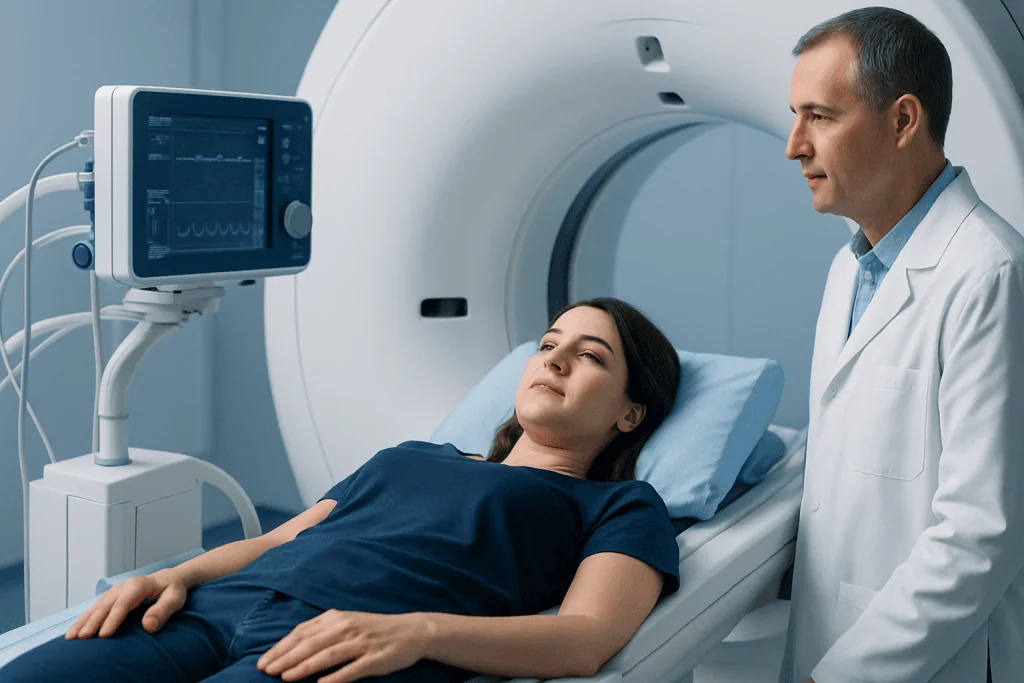
| Imaging (ultrasound, X-ray, CT, MRI, PET-CT, mammography, echocardiography) | Original images missing, outdated, or technically insufficient for planning; new symptoms since the last scan |
| Pathology slides or tissue blocks | Local expert review of the actual tissue, particularly in oncology where treatment depends on tumour type and markers |
| Cardiology and anaesthesia checks (ECG, chest imaging, pulmonary function tests) | Required close to the procedure date; a report from months ago cannot replace a current assessment |
| Infection screening | Standard requirement before admission, surgery, chemotherapy, dialysis or certain procedures, whatever was done at home |
A practical distinction worth understanding: for imaging, the written report is helpful but the actual images, on CD, USB or a secure digital link, are what may prevent a repeat scan. For pathology, ask your home hospital whether slides, blocks or official pathology materials can be released according to local rules. For laboratory work, a dated result with the reference ranges printed on it is far more useful than a summary line in a letter.
How repeat testing fits into your first days in Turkey
Your first days typically include registration, consultation, physical examination, document review and any tests your doctor requests. Depending on the complexity of your case, this can happen within a single day or be spread across several. When multiple departments are involved, the order may be adjusted so the right specialist reviews the right result at the right point. Simple blood work is often back the same day; pathology reviews and advanced molecular tests take longer, and your team should tell you what to expect for each one.
Keep your arrival days flexible. Avoid booking sightseeing, important work calls or onward domestic travel immediately after your first appointment unless your coordinator confirms it is realistic. Many patients find it easier to plan a buffer deliberately: the guide on arriving early for tests in Turkey explains why a day or two of margin at the start of the trip tends to pay for itself in reduced stress.
If a repeat test changes your treatment schedule, your team should explain the reason and the next step. Sometimes the change is minor: an added consultation, or an adjustment your doctor makes to the plan. In other cases, your doctor may recommend postponing a procedure until a value improves or until further information arrives. That is not a failure of planning. It is the system working as intended: a procedure goes ahead when the evidence says it is safe, not because a flight was booked.
What repeat tests mean for timing and cost
Two practical questions follow naturally: will this delay me, and what will it cost? On timing, the honest answer is that it depends on which test is repeated and how quickly the result returns. Routine blood work rarely moves a schedule. A pathology review or a scan that reveals something needing a further opinion can shift a treatment date. This is why coordinators consistently advise against booking a tight return flight before your treatment plan is confirmed in person.
On cost, no responsible hospital can give you a fixed figure for tests that have not yet been decided, because the price of testing depends on which tests your doctor orders, whether contrast or specialist review is involved, and how your case is structured. What you can reasonably do is ask in advance how additional tests are quoted, whether they sit inside or outside any treatment estimate you were given, and how you will be informed before a chargeable test is performed. The guide on how extra tests after arrival can affect timing and cost goes through these questions in detail, including what to ask before you travel.
If new symptoms appear while you are waiting for tests or results
Most of this guide is about routine confirmation. One situation is different, and it is worth stating plainly. If, at home before travel, or in Turkey between appointments, you develop chest pain, severe or worsening breathlessness, sudden weakness or numbness on one side, sudden severe headache, confusion, heavy bleeding, or a high fever that is climbing, do not wait for a scheduled test, a coordinator’s reply or your next consultation: call your local emergency number or go to the nearest emergency department now.
Emergency care is the correct route for anything that is deteriorating over hours. Scheduled testing, second opinions and travel planning can all resume afterwards. No appointment is ever more important than treating an urgent symptom where you are.
For symptoms that are new but not urgent: a mild cold before departure, a change in a long-standing symptom, a question about a test’s preparation, tell your coordinator or treating team before the test rather than after. Small facts change decisions: a recent infection can affect surgical timing, and a new symptom can change which scan is the right one to order.
How to prepare before you travel
The single best way to reduce unnecessary repeat testing is to share clear, complete and dated medical documents before you travel. Send reports in advance through the channel your coordinator recommends, and state the date of every test. If your documents are not in English or Turkish, ask whether translation is needed, discharge summaries, pathology reports, operative notes and medication instructions are the priorities.
Collect both reports and source materials. A written MRI report is useful; the MRI images may be essential. A pathology report gives a diagnosis; the slides or blocks may be needed for local review. A medication list is helpful; exact doses and schedules are better. Keep all of it in your hand luggage, never in checked baggage.
Ask before departure whether any test should be done at home close to your travel date, or whether it is better done at the hospital after arrival. The answer depends on urgency, reliability and whether your doctor needs the hospital’s own laboratory. The guide on pre-travel tests before treatment in Turkey covers which tests are usually worth doing before you fly. If you have a chronic condition, diabetes, heart disease, kidney disease, a bleeding disorder, sleep apnoea, tell the team early so the right assessments can be planned rather than discovered.
Bring the practical items that make testing safe: passport, insurance or payment documents if applicable, allergy information, implant or pacemaker cards, and details of any previous reaction to contrast dye or anaesthesia. If you are pregnant or could be, say so before any imaging or medication is given. And do not stop, start or change any prescribed medication on your own account before a test, only your treating doctor can advise on that, because the right answer depends on the drug, the test and your condition.
What to ask if you are unsure about repeating a test
It is entirely reasonable to ask why a test is being repeated. Your doctors and coordinators understand that you are managing travel time, expense and stress, and a clear explanation is part of good care. Useful questions include:
- Is my previous result too old, or is the original image or report incomplete?
- Is this test required before anaesthesia or admission, whatever my home results show?
- Will the result change my treatment plan, and if so, how?
- How long will the result take, and could it affect my return travel date?
- Is there any preparation: fasting, contrast, or anything I should mention first?
If you are concerned about discomfort, radiation exposure, contrast material or fasting, raise it before the test. Patients with kidney disease, contrast allergy, diabetes, blood thinners or implanted devices may need specific instructions, and those instructions must come from the treating team, not from a leaflet or a guess. Interpreters and coordinators can bridge the language, but your treating physician is the right person for clinical answers. If an explanation is not clear, ask for it again in simpler terms: that is a normal request, not an imposition.
Step by step
- Send your documents before you travel. Share recent reports, images, discharge summaries, pathology results, medication lists and previous treatment records through the channel your coordinator advises. Include the date of every test and note any new symptoms since the reports were written.
- Bring originals and digital copies. Carry printed and digital versions where possible, especially imaging files, pathology materials and official laboratory reports, in your hand luggage, not checked baggage.
- Confirm preparation instructions. Before each test, ask whether you need to fast, bring previous images, or arrive earlier for registration. Mention diabetes, kidney disease, allergies or blood thinners before the appointment, and take medication questions to your treating doctor only.
- Build slack into your first days. Consultations, tests and result reviews can take longer than expected. Do not book a tight return flight around a planned procedure until your medical team confirms the schedule.
- Ask what each test will decide. Understanding how a result affects your plan, timing or safety makes the process feel purposeful rather than repetitive.
- Use interpreter and coordinator support. If English is not your preferred language, request interpreter support early for consultations and important instructions.
- Keep your home doctor in the loop. Take copies of updated results and recommendations home with you, so your care continues smoothly after you leave Turkey. The guide on follow-up tests after treatment in Turkey explains what usually comes next.
Your checklist
- Passport and identification documents
- Recent blood test and imaging reports, each with its date
- Original imaging files: CD, USB or secure digital access
- Pathology reports, slides or tissue block details if relevant
- Current medication list with doses and timing
- Allergy list, including contrast dye, antibiotics, latex or anaesthesia reactions
- Medical device cards, implant details or pacemaker information
- Discharge summaries, operative notes and previous treatment records
- Translated summaries of key documents where available
- A flexible travel plan in case additional review is needed
Key takeaways
- You may need repeat tests after arriving in Turkey because results are time-sensitive, formats differ between countries, images or materials are missing, symptoms have changed, or hospital safety protocols require fresh results.
- The most commonly repeated items are blood tests, imaging, pathology review, cardiac and anaesthesia checks, and infection screening.
- Bringing original images, pathology materials and complete dated reports is the most effective way to reduce how much is redone.
- Costs and delays depend on which tests are ordered; ask how additional tests are quoted and whether they sit inside your estimate, before you travel.
- If an urgent symptom develops while you wait, call your local emergency number or go to the nearest emergency department now; scheduled testing can always resume afterwards.
- Keep travel plans flexible until your treatment schedule is confirmed after in-person review.
Frequently asked questions
Does repeating a test mean my previous results are not trusted?
Not necessarily. Previous results are often valuable and usually guide the first consultation. A repeat is typically requested because your condition may have changed, the result is too old, the original images are unavailable, or the hospital needs a specific format for safe planning. It is a confirmation step, not a verdict on your earlier care.
Will I need to repeat every test after arriving in Turkey?
Usually no. Your doctor reviews your documents and decides which tests are genuinely necessary for your diagnosis and planned care. The aim is to avoid unnecessary testing while confirming what is needed for safe decisions. Complete, dated, original-format records shrink the list considerably.
Can I complete all tests in my home country before I travel?
Some tests can and should be done before travel if your coordinator or doctor requests them. Others may still need to be done locally because they are time-sensitive, tied to hospital protocols, or required by the treating team shortly before a procedure. Ask before departure which category each test falls into.
How can I avoid unnecessary repeat imaging?
Bring the actual imaging files, not only the written report. Provide them in a standard digital format and include the scan date, body area, whether contrast was used, and the hospital name. Your specialist can then judge whether the existing images are sufficient for planning.
What if repeat testing delays my treatment date?
Short delays can happen if results need review, an additional specialist opinion is required, or a safety issue must be addressed first. Your team should explain the reason and the next step. Keep travel plans flexible until the final schedule is confirmed, and ask early how any change would be communicated to you.
How are extra tests charged if they were not in my original plan?
That depends on which tests are ordered and how your case is structured, so no fixed figure can be given in advance. Ask before you travel how additional tests are quoted, whether they fall inside or outside any estimate you received, and how you will be informed before a chargeable test is performed.
Are repeat tests safe?
Most common tests, such as blood work or an ECG, carry low risk. Imaging with contrast and invasive tests have specific considerations, so the team reviews allergies, kidney function, possible pregnancy, implanted devices and current medications where relevant. Tell your doctor about any previous reaction before testing. If a genuinely urgent symptom develops at any point, call your local emergency number or go to the nearest emergency department now.
Add us as a Preferred Source to see more of our trusted health content across Google Search, AI Overviews and Discover.

Update history
- PublishedJune 9, 2026
- Medical review approvedSeptember 13, 2026
- Last content updateSeptember 12, 2026
References3
More Patient Guides

Choosing Between Inpatient and Day-Case Treatment in Turkey
Inpatient and day-case treatment in Turkey differ mainly in overnight monitoring, recovery needs and travel planning. Learn how to choose safely.

How to Compare Hospitals in Turkey for Complex Treatment
Compare hospitals in Turkey for complex treatment by checking accreditation, specialist teams, ICU support, coordination, and follow-up.

At Acibadem, How We Explain Surgical Risks and Safety Checks Before You Travel
Surgical risks and safety checks before travel means understanding your personal risk, required tests, and travel timing before coming to Turkey.

At Acibadem, What to Check Before Comparing Treatment in Turkey With Care at Home
Comparing treatment in Turkey with care at home starts with safety, records, follow-up, travel timing and total support in Istanbul.