

Arriving Early for Tests in Turkey: Why Timing Matters
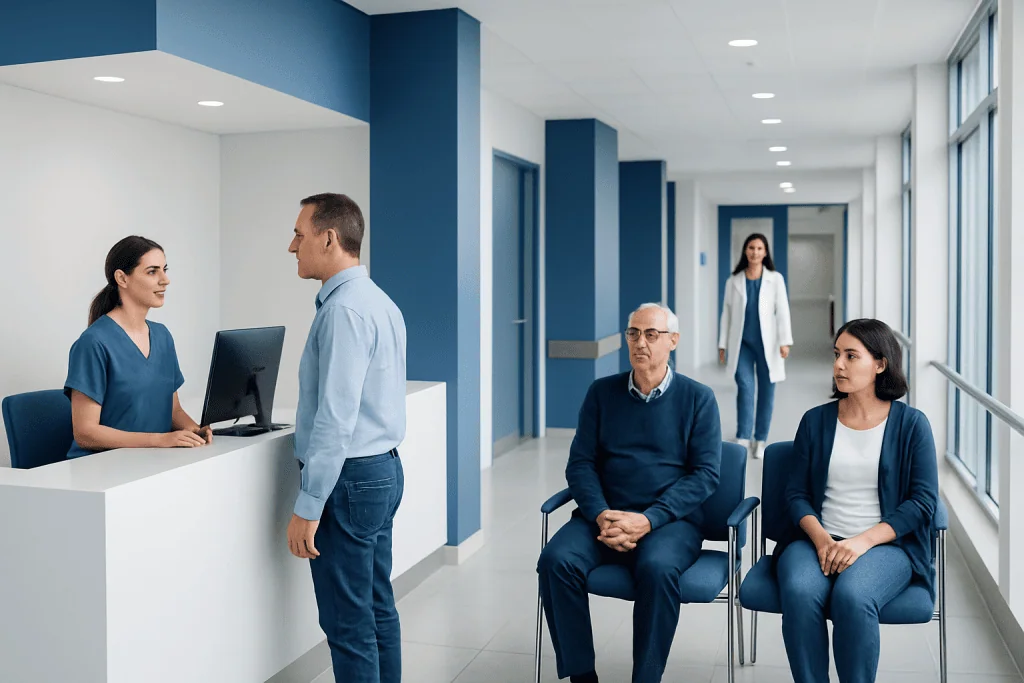
Arriving early for tests in Turkey helps with registration, preparation checks and a calmer visit. Plan extra time for Istanbul traffic and hospital navigation.
Arriving early gives you time to complete registration, confirm your preparation instructions and settle in before your test begins. This practical guide helps you plan a smooth hospital visit in Turkey, especially when travelling internationally or navigating Istanbul for the first time.
At a glance
- Recommended arrival: Usually 30–60 minutes early, unless your team advises otherwise
- Allow extra time for: Traffic, hospital entrances, registration and preparation checks
- Bring with you: Passport, appointment details, reports, medication list and insurance documents if relevant
- Fasting tests: Follow your individual instructions exactly; ask if anything is unclear
- Interpreter support: Request this in advance through International Patient Services
- If delayed: Call your care coordinator or hospital contact as soon as possible
Why arriving early matters for your test appointment
Arriving early for tests in Turkey is not simply about being punctual. Before many blood tests, scans and diagnostic appointments, the hospital team may need to confirm your identity, review your referral, check your preparation instructions and make sure it is safe to proceed. Having time for these steps can prevent an avoidable delay or the need to reschedule.
Some tests also depend on precise timing. You may need to have fasted for a stated period, avoid certain drinks or medicines, drink water before an ultrasound, or arrive at a particular time after taking a prescribed preparation. Your appointment confirmation and clinical team should tell you what applies to you; do not rely on general online guidance in place of your own instructions.
For international visitors, early arrival can be especially reassuring. It gives you time to find the correct building or department, speak with an interpreter if arranged, use the restroom, ask practical questions and feel settled before your appointment. A calmer start can make the overall experience easier for you and anyone accompanying you.
How much early should you arrive?
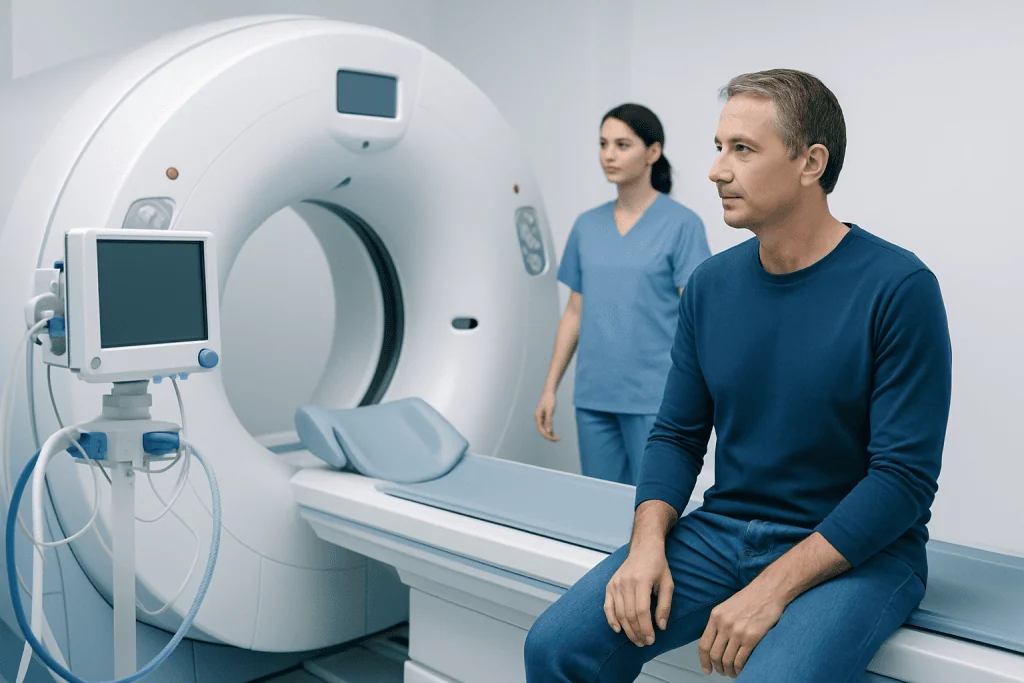
In many cases, planning to arrive 30 to 60 minutes before your scheduled test is sensible. The right timing depends on the type of examination, whether you are a new patient, whether you have paperwork to complete and whether preparation is needed on site. Your appointment message is the best source for the expected arrival time.
You may need more time for a first visit, a same-day set of multiple tests, advanced imaging, contrast-related screening, sedation-related arrangements, or an appointment at a large hospital campus. If your care coordinator has advised a particular arrival time, follow that instruction rather than a general rule.
At Acibadem International, International Patient Services can help you understand where to report, what documents are needed and whether interpreter support has been arranged. If you are unsure whether your booking time is your arrival time or the time the test starts, ask before leaving your hotel or accommodation.
- Allow 30–60 minutes for most standard appointments unless told otherwise.
- Allow additional time if it is your first hospital visit or you have several services booked.
- Plan a larger travel buffer during busy times in Istanbul.
- Arrive at the named campus and department, not only the hospital area.
Plan for Istanbul traffic and hospital navigation

Istanbul is a large, busy city, and travel times can change significantly due to traffic, weather, road works, events and the time of day. A journey that seems short on a map may take longer than expected, particularly during morning and evening rush hours. Build a realistic buffer into your plan rather than aiming to arrive exactly at your appointment time.
Check the exact hospital name, campus, entrance and contact details the day before. If you are using a taxi or private transfer, show the driver the full address or booking information. If transport has been arranged through Acibadem International, confirm your pickup point and pickup time, and keep a contact number available in case you cannot find your driver.
Once you arrive, you may need time to pass through the entrance, locate reception, register and travel between floors or departments. Large hospitals are designed to serve many patients and services, so asking for directions is completely normal. Wear comfortable clothing and shoes, particularly if your visit includes more than one test.
What happens when you check in
At check-in, the team will usually verify your personal details and appointment, and may ask to see your passport or another form of identification. Bring your appointment confirmation, previous medical reports, imaging discs or digital files, a current medication list and any insurance or payment documentation relevant to your visit.
You may be asked questions about allergies, pregnancy or the possibility of pregnancy, long-term health conditions, implanted devices, recent illnesses and medicines. These questions support safe test planning. Answer as accurately as you can, and tell the team if you have had a previous reaction to contrast material, feel unwell or have not been able to follow a preparation instruction.
If you need language support, let your coordinator know in advance and mention it again when you arrive. Acibadem International can coordinate interpreters for international patients where needed, helping you understand practical instructions and communicate questions to the care team. You should still feel comfortable asking for clarification at any point.
Preparation rules: do not guess
Preparation requirements vary widely. A blood test may require fasting, while another may not. An ultrasound may involve fasting or a full bladder depending on the area being examined. Some imaging studies may require screening questions, kidney-function information, removal of metal items or a period of observation afterwards.
Use only the instructions given for your own appointment. If you have diabetes, take blood thinners, use insulin, have kidney disease, are pregnant or breastfeeding, or take regular medicines, ask your clinical team how to prepare safely. Do not stop, delay or change prescribed medication unless a qualified clinician who knows your situation has advised you to do so.
If you accidentally eat, drink, take a medicine or miss another instruction that may affect the test, contact the hospital before travelling if possible. It is better to explain early than to arrive worried or have a test performed under unsuitable conditions. The team will advise whether you can still attend, need an adjustment or should be rescheduled.
If you are late, unwell or need to change plans
If you think you will be late, contact your Acibadem International coordinator, the International Patient Services team or the number on your appointment confirmation as soon as you can. The hospital may be able to advise you on the best next step, but availability can depend on the test, the preparation required and the day’s schedule.
Let the team know if you develop fever, vomiting, severe pain, breathing difficulty, a new rash, possible pregnancy or any other significant change in your health before the appointment. Some changes may not affect your test, while others may require clinical review first. If you have urgent or severe symptoms, seek emergency medical help rather than waiting for a routine diagnostic appointment.
Keep your day as flexible as possible after testing, particularly if you have multiple appointments or have been told that observation, recovery time or a driver may be needed. Your team can explain when you may return to usual activities and when results are likely to be discussed with you.
Step by step
- Review your appointment details the day before. Check the hospital campus, department, appointment time and advised arrival time. Read all preparation instructions again and ask your coordinator about anything that is unclear.
- Prepare your documents and medical information. Keep your passport, booking confirmation, referral, recent reports, imaging files and medication list together. Include allergy information and relevant insurance or payment documents if these apply to your visit.
- Confirm your travel plan. Estimate the journey using the time you will actually travel, not only an off-peak estimate. Arrange a taxi, transfer or public transport route with enough buffer for Istanbul traffic and finding the correct entrance.
- Follow your individual preparation instructions. Fast, hydrate, take or pause medication only as your healthcare team has instructed. If you cannot follow an instruction, contact the hospital rather than guessing what to do.
- Arrive and check in calmly. Aim to be at the designated reception 30–60 minutes early unless you were given a different time. Use the extra time to register, confirm your details and ask for directions or interpreter support.
- Tell the team about important changes. Mention allergies, pregnancy or possible pregnancy, implanted devices, regular medicines and previous contrast reactions. Tell staff if you feel unwell or if any preparation step was missed.
- Confirm the next steps before leaving. Ask when and how your results will be reviewed, whether you have another same-day appointment and whether you need to follow any after-test instructions. Make sure you know who to contact if questions arise later.
Your checklist
- Appointment confirmation with the correct hospital campus and department
- Passport or government-issued identification
- Referral letter and relevant insurance or payment documents
- Previous medical reports, laboratory results and imaging files
- A written list of medicines, doses, allergies and long-term conditions
- Your individual fasting, hydration or medication instructions
- Hospital or Acibadem International coordinator contact details
- Transport plan with extra time for Istanbul traffic
- Comfortable clothing; avoid metal items if instructed for imaging
- A companion or arranged driver if your team has recommended one
Key takeaways
- Plan to arrive 30–60 minutes early unless your appointment team gives a different instruction.
- Use your own preparation instructions; fasting, medication and hydration rules are test-specific.
- Allow extra travel time in Istanbul, and confirm the exact hospital campus and department before setting off.
- Bring identification, appointment details, prior records and an up-to-date medication list.
- Contact the hospital promptly if you are delayed, unwell or unable to complete a preparation step.
- International Patient Services can help with practical coordination, including interpreter and travel-related support.
Frequently asked questions
How early should I arrive for a test in Turkey?
For many appointments, arriving 30 to 60 minutes early is appropriate, but your confirmation may specify a different time. Allow longer if you are a new patient, have multiple tests, need special preparation or are attending a large hospital campus. Follow the timing provided by your own care team.
What should I do if Istanbul traffic makes me late?
Call your coordinator or the contact number on your appointment confirmation as soon as you expect a delay. Do not wait until you arrive, as some tests have fixed schedules or preparation windows. The team can tell you whether to continue to the hospital, adjust your check-in or discuss rescheduling.
Can I eat or drink before my test?
It depends entirely on the test you are having. Some tests require fasting, while others require you to drink water or follow no dietary restriction at all. Follow the written instructions for your appointment and contact the hospital if you are uncertain.
Should I take my regular medication before diagnostic tests?
Many medicines should be continued, but some may need individual adjustment depending on the test and your health condition. Never stop prescribed medicine based on general advice alone. Ask your clinical team, especially if you use insulin, diabetes medicine, blood thinners or medicines for blood pressure.
What documents should I bring to my test appointment?
Bring your passport or identification, appointment confirmation, referral if you have one, previous reports and relevant imaging files. It is also useful to bring a current medication list, allergy details and insurance or payment documents if applicable. Your coordinator can confirm any additional requirements.
Can Acibadem International arrange an interpreter for my appointment?
International patient services can help coordinate language support when needed, particularly if requested in advance. Let your coordinator know your preferred language before your visit. An interpreter can help you understand practical instructions, registration steps and questions from the care team.
What if I miss a fasting or preparation instruction?
Contact the hospital as soon as possible and explain exactly what happened, including what you ate, drank or took and when. The team will advise whether the test can still go ahead safely and accurately. Do not assume that the appointment must be cancelled or that the missed step does not matter.
Add us as a Preferred Source to see more of our trusted health content across Google Search, AI Overviews and Discover.
More Patient Guides
Sleep Apnea Testing in Turkey: What Happens During Your Evaluation
Sleep apnea testing in Turkey may include a consultation, overnight sleep study or home test, and a clear review of your results…
8 min read
How to Organize Your Test Results Before Traveling to Turkey
Organize your test results before traveling to Turkey by sorting records, images, medicines and timelines so your Istanbul care team can review…
8 min read
When Extra Tests Are Needed Before Treatment in Turkey
Extra tests before treatment in Turkey may be needed to confirm diagnosis, timing, and safety. Here is what you can expect in…
9 min read